
UPSC CMS 2026 General Medicine and Paediatrics Answer Key; Download PDF
UPSC CMS 2026 General Medicine and Paediatrics Answer Key PDF is available here, along with detailed solutions for all questions. The UPSC CMS 2026 Paper 1 was conducted on Aug 02, 2026, from 9:30 AM to 11:30 AM. Candidates can use the answer key to calculate their probable scores and review the correct answers with explanations.
UPSC CMS 2026 Paper 1 Question Paper with Solutions PDF
| Question Paper PDF | Detailed Solution |
|---|---|
UPSC CMS 2026 General Medicine and Paediatrics Question Paper PDF (SET A) |
Attempt Now |
Ques: 1 A 35-year-old man presented with serial blood pressure recordings of above 140/90 mmHg. Which one of the following signs is not a clue for an underlying cause of hypertension (secondary hypertension)?
(a) Radio-femoral delay
(b) Enlarged kidneys
(c) Bull neck and buffalo hump
(d) Vitiligo
Ans: (d) Vitiligo
Ques: 2 A 71-year-old male presents with headache, dizziness, nausea with palpitations. The patient is already on treatment for diabetes and hypertension. The blood pressure reading is 220/140 mmHg. Which of the following statements is/are correct?
1. This is a case of hypertensive emergency which can be managed by intravenous sodium nitroprusside.
2. An immediate normalization of the blood pressure should be the target.
3. Secondary causes of hypertension like renovascular disease are uncommon in patients with hypertensive emergency.
Select the answer using the code given below:
(a) 1 only
(b) 1, 2 and 3
(c) 2 and 3 only
(d) 1 and 3 only
Ans: (a) 1 only
Ques: 3 Match List I with List II and select the correct answer using the code given below the lists:
List I (Drug used in heart failure)
A. Metoprolol
B. Telmisartan
C. Enalapril
D. Eplerenone
List II (Mechanism of action)
1. Aldosterone antagonist
2. Angiotensin-receptor blocker
3. ACE inhibitor
4. Beta-blocker
Code:
(a) A-4, B-3, C-2, D-1
(b) A-4, B-2, C-3, D-1
(c) A-1, B-3, C-2, D-4
(d) A-1, B-2, C-3, D-4
Ans: (b) A-4, B-2, C-3, D-1
Ques: 4 Consider the following statements regarding Takotsubo cardiomyopathy:
1. There is acute right ventricular dysfunction characterized by dilatation of the right ventricular apex.
2. It can be precipitated by acute emotional stress and is frequently associated with an underlying neuro-psychiatric disorder.
3. Symptoms and ECG findings often mimic acute ST-elevation myocardial infarction.
4. Ventriculography shows normal left ventricle and apical ballooning of the right ventricle.
Which of the statements given above are correct?
(a) 1 and 2
(b) 2 and 3
(c) 1 and 4
(d) 3 and 4
Ans: (b) 2 and 3
Ques: 5 With regard to Hypertrophic Cardiomyopathy, match List I with List II and select the correct answer using the code given below the lists:
List I (Mutation)
A. Beta-myosin heavy chain mutations
B. Troponin mutations
C. Myosin-binding protein-C mutations
List II (Phenotype)
1. Marked ventricular hypertrophy
2. Hypertension and arrhythmia
3. Myocardial fibre disarray with minimal hypertrophy
Code:
(a) A-1, B-2, C-3
(b) A-1, B-3, C-2
(c) A-2, B-1, C-3
(d) A-3, B-2, C-1
Ans: (d) A-3, B-2, C-1
Ques: 6 'Tumour Plop' is a characteristic auscultatory finding seen in which one of the following conditions?
(a) Atrial myxoma
(b) Arrhythmogenic ventricular cardiomyopathy
(c) Constrictive pericarditis
(d) Dilated cardiomyopathy
Ans: (a) Atrial myxoma
Ques: 7 Retinal ischaemia, flame-shaped haemorrhages and cotton-wool exudates are fundoscopy findings in which of the following grades of hypertensive retinopathy?
1. Grade 1
2. Grade 2
3. Grade 3
4. Grade 4
Select the correct answer using the code given below:
(a) 1 and 2 only
(b) 3 and 4 only
(c) 2, 3 and 4 only
(d) 1, 2, 3 and 4
Ans: (b) 3 and 4 only
Ques: 8 Aschoff Nodules are a pathognomonic cardiac finding in which one of the following conditions?
(a) Rheumatic carditis
(b) Infective endocarditis
(c) Rheumatoid arthritis
(d) Takayasu's arteritis
Ans: (a) Rheumatic carditis
Ques: 9 Consider the following statements regarding Eisenmenger Syndrome:
1. In patients with severe and prolonged pulmonary hypertension, the right-to-left shunt gets reversed to a left-to-right shunt.
2. There is marked cyanosis, which may be more apparent in the feet and toes than in the upper part of the body.
3. Antihypertensives which cause peripheral vasodilatation can exacerbate the shunting and worsen the symptoms.
Which of the statements given above is/are correct?
(a) 1 only
(b) 2 only
(c) 1 and 3
(d) 2 and 3
Ans: (d) 2 and 3
Ques: 10 Consider the following statements regarding the murmur of Patent Ductus Arteriosus:
1. It is a continuous 'machinery' murmur.
2. There is a late diastolic accentuation.
3. It is maximal in the second left intercostal space below the clavicle.
4. With the development of Eisenmenger Syndrome, the murmur becomes louder and rumbling in character.
Which of the statements given above is/are correct?
(a) 1 only
(b) 1 and 3
(c) 2 and 3 only
(d) 2, 3 and 4
Ans: (b) 1 and 3
Ques: 11 A patient presented with pain on the left side of the chest. On examination, there was dullness on percussion on left infra-axillary area. X-ray Chest showed left opaque hemithorax. Which one of the following is an indication for tube thoracentesis in this case?
(a) Presence of straw-coloured fluid
(b) Pleural fluid pH > 7.2
(c) Pleural fluid glucose < 60 mg/dL
(d) Pleural fluid LDH < 600 IU/L
Ans: (c) Pleural fluid glucose < 60 mg/dL
Ques: 12 A patient with a history of smoking presents to the emergency with a complaint of breathlessness for the last two days. On examination, he was found to be cyanosed and had bilateral rhonchi. ABG was done, which shows:
pH: 7.12
PaCO2: 80 mmHg
PaO2: 46 mmHg
HCO3-: 29 mEq/L
Based on the history, clinical examination and ABG finding, the most likely diagnosis is:
(a) Pulmonary embolism
(b) Pneumonia
(c) COPD exacerbation
(d) Pulmonary fibrosis
Ans: (c) COPD exacerbation
Ques: 13 A patient with a history of chronic smoking presented with breathlessness for the last one year. On examination, there were bilateral rhonchi in the chest. The Chest X-ray was suggestive of hyper-inflated lung field. Which of the following parameters of the pulmonary function test are consistent with the diagnosis of chronic obstructive pulmonary disease in this case?
1. Decreased FEV1
2. Increased diffusion capacity
3. Increased residual volume
4. Decreased peak expiratory flow rate
Select the correct answer using the code given below:
(a) 1, 2 and 3
(b) 1, 3 and 4
(c) 2, 3 and 4
(d) 2 and 4 only
Ans: (b) 1, 3 and 4
Ques: 14 Omalizumab is helpful in which of the following diseases?
1. Asthma
2. Idiopathic pulmonary fibrosis
3. Nasal polyposis
Select the correct answer using the code given below:
(a) 1 and 3 only
(b) 1 and 2 only
(c) 1, 2 and 3
(d) 2 and 3 only
Ans: (a) 1 and 3 only
Ques: 15 A 50-year-old male working in a stone industry presents with breathlessness and cough. CT Chest shows calcified mediastinal lymph nodes and pulmonary nodules. He is diagnosed with silicosis. Which of the following statements are correct?
1. Silicosis typically involves lower lobes of the lung.
2. The patient is at a higher risk of developing pulmonary tuberculosis.
3. Pulmonary fibrosis after occupational exposure to silica is dose-dependent.
Select the correct answer using the code given below:
(a) 1 and 2 only
(b) 1, 2 and 3
(c) 1 and 3 only
(d) 2 and 3 only
Ans: (d) 2 and 3 only
Ques: 16 A 70-year-old male, with a history of smoking presents with progressive dyspnea and dry cough. Examination reveals clubbing and fine basal crackles. Spirometry shows low forced vital capacity (FVC) and low diffusion capacity (DLCO). CT Chest shows extensive bilateral reticular shadows and subpleural honeycombing. What is the most likely diagnosis?
(a) Idiopathic pulmonary fibrosis
(b) Sarcoidosis
(c) Chronic obstructive pulmonary disease
(d) Bronchiectasis
Ans: (a) Idiopathic pulmonary fibrosis
Ques: 17 A 40-year-old obese bank accountant presents with complaints of excessive daytime sleepiness and fatigue. His spouse reports that he has loud snoring and early morning tiredness. Which of the following statements is/are correct?
1. The patient is most likely suffering from obstructive sleep apnea.
2. The diagnosis requires CT/MRI of the neck.
3. Treatment of choice is Zolpidem.
Select the correct answer using the code given below:
(a) 1 only
(b) 2 only
(c) 2 and 3
(d) 1 and 3
Ans: (a) 1 only
Ques: 18 A 34-year-old medical student has fever, chest pain, severe breathlessness, and dry cough. Chest X-ray shows right homogeneous opacity. Ultrasound lung confirms massive pleural effusion on the right side. Which of the following statements are correct?
1. A therapeutic pleural tap should be done to relieve dyspnoea and sent for analysis.
2. If pleural fluid analysis is inconclusive, a thoracoscopy may be done.
3. Thoracoscopy should be done under general anesthesia.
Select the correct answer using the code given below:
(a) 1 and 2 only
(b) 2 and 3 only
(c) 1 and 3 only
(d) 1, 2 and 3
Ans: (a) 1 and 2 only
Ques: 19 A 42-year-old male with chronic kidney disease undergoing chronic dialysis presents with worsening breathlessness. Examination reveals muffled heart sounds. Chest X-ray image is shown below (enlarged, globular cardiac silhouette). What is the most likely diagnosis of this patient?
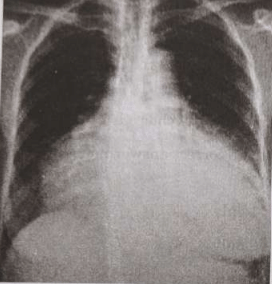
(a) Pneumothorax
(b) Pleural effusion
(c) Pericardial effusion
(d) Pulmonary embolism
Ans: (c) Pericardial effusion
Ques: 20 A 22-year-old male presents with left-sided chest pain and breathlessness after a road traffic accident. Examination reveals absent left-sided breath sounds. CT Chest image is shown below (showing bowel loops within the left hemithorax). What is the diagnosis of this patient?
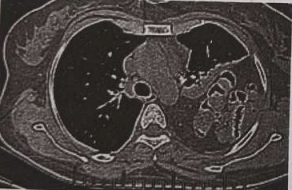
(a) Pneumothorax
(b) Pleural effusion
(c) Lung cavity
(d) Bowel loops herniation
Ans: (d) Bowel loops herniation
Ques: 21 Infiltration of the small-intestine mucosa with 'foamy' macrophages, which stain positive with Periodic Acid-Schiff (PAS) reagent, is a characteristic feature of which one of the following conditions?
(a) Radiation enteropathy
(b) Coeliac disease
(c) Tropical sprue
(d) Whipple's disease
Ans: (d) Whipple's disease
Ques: 22 Which one of the following is not a risk factor for the acquisition of chronic hepatitis C?
(a) Intravenous drug abuse
(b) Unscreened infected blood transfusion
(c) Vertical transmission
(d) Sharing food
Ans: (d) Sharing food
Ques: 23 Which one of the following is a predictor of liver fibrosis?
(a) Serum transaminase levels
(b) AST-to-Platelet Ratio Index
(c) Coagulation profile
(d) Serum albumin and pre-albumin
Ans: (b) AST-to-Platelet Ratio Index
Ques: 24 A 30-year-old female with irritable bowel syndrome presents with predominant symptom of diarrhea. Which of the following will be helpful in her treatment?
1. Loperamide
2. Lactulose
3. Lubiprostone
4. Sorbitol
Select the correct answer using the code given below:
(a) 1 and 2
(b) 1 only
(c) 2 and 3
(d) 2 and 4
Ans: (b) 1 only
Ques: 25 'Melanosis coli' (brownish discoloration of colonic mucosa) can occur due to the long-term consumption of which one of the following?
(a) Stimulant laxatives
(b) Non-steroidal anti-inflammatory drugs
(c) Proton pump inhibitors
(d) 3rd generation cephalosporins
Ans: (a) Stimulant laxatives
Ques: 26 Patients suffering from which of the following condition(s) can get symptomatic relief by consuming a gluten-free diet?
1. Coeliac disease
2. Peptic ulcer disease
3. Dermatitis herpetiformis
Select the correct answer using the code given below:
(a) 1 only
(b) 1 and 3 only
(c) 2 and 3 only
(d) 1, 2 and 3
Ans: (b) 1 and 3 only
Ques: 27 The '13C-urea breath test' and the 'faecal antigen test' are non-invasive techniques to diagnose infection with which one of the following?
(a) Haemophilus influenzae
(b) Leishmania donovani
(c) Giardia lamblia
(d) Helicobacter pylori
Ans: (d) Helicobacter pylori
Ques: 28 Consider the following statements regarding Ménétrier's disease:
1. There is excessive production of Transforming Growth Factor-alpha (TGF-alpha).
2. Majority of the patients present with features of protein-losing enteropathy.
3. Mucus secreting cells are replaced by parietal and chief cells.
4. The mucosal folds of the body and fundus of the stomach are greatly enlarged.
Which of the statements given above are correct?
(a) 1, 2 and 3
(b) 1, 2 and 4
(c) 1, 3 and 4
(d) 2, 3 and 4
Ans: (b) 1, 2 and 4
Ques: 29 Consider the following statements regarding 'Barrett's Oesophagus':
1. It is a pre-malignant condition.
2. The normal columnar mucosa of lower oesophagus is replaced by squamous cells.
3. It is an adaptive response to chronic gastro-oesophageal reflux.
Which of the statements given above is/are correct?
(a) 3 only
(b) 1 and 2 only
(c) 1 and 3 only
(d) 1, 2 and 3
Ans: (c) 1 and 3 only
Ques: 30 The presence of which of the following is suggestive of metastatic spread of an underlying gastrointestinal malignancy?
1. Krukenberg Tumour
2. Virchow's Node
3. Meigs' Syndrome
4. Sister Mary Joseph's Nodule
Select the correct answer using the code given below:
(a) 1, 2 and 3
(b) 1, 2 and 4
(c) 1, 3 and 4
(d) 2, 3 and 4
Ans: (b) 1, 2 and 4
Ques: 31 Sodium zirconium cyclosilicate and patiromer are commonly prescribed to chronic kidney disease patients because of their property of binding to which one of the following electrolytes?
(a) Calcium
(b) Sodium
(c) Potassium
(d) Phosphate
Ans: (c) Potassium
Ques: 32 Calcium resonium, which is used to treat hyperkalaemia over a short-term in chronic kidney disease, is associated with the development of which one of the following conditions?
(a) Prostatomegaly
(b) Myocarditis
(c) Renal Artery Stenosis
(d) Bowel Necrosis
Ans: (d) Bowel Necrosis
Ques: 33 In multiple myeloma, monoclonal immunoglobulin light chains combine with Tamm-Horsfall protein precipitate in the renal tubules which leads to the development of which one of the following conditions?
(a) IgA Nephropathy
(b) Cast Nephropathy
(c) Membranous Glomerulonephritis
(d) Interstitial Nephritis
Ans: (b) Cast Nephropathy
Ques: 34 Multiple myeloma can cause proximal tubular injury due to light chain deposition in the tubular epithelium causing acquired Fanconi Syndrome. Which of the following are characteristic findings in this condition?
1. Little/no proteinuria
2. Aminoaciduria
3. Phosphaturia
4. Glycosuria
Select the correct answer using the code given below:
(a) 1, 2 and 3
(b) 1, 2 and 4
(c) 1, 3 and 4
(d) 2, 3 and 4
Ans: (d) 2, 3 and 4
Ques: 35 Which one of the following hereditary tubulo-interstitial kidney diseases shows Autosomal Recessive pattern of inheritance?
(a) Nephronophthisis
(b) Juvenile hyperuricaemic nephropathy
(c) Medullary cystic kidney disease type 1
(d) Medullary cystic kidney disease type 2
Ans: (a) Nephronophthisis
Ques: 36 Which one of the following is a contraindication of Renal Biopsy?
(a) Nephritic syndrome
(b) Acute renal injury of uncertain etiology
(c) Uncontrolled hypertension
(d) Renal transplant dysfunction
Ans: (c) Uncontrolled hypertension
Ques: 37 Anti-PLA2R antibodies, which are directed against the 'M-type phospholipase A2 receptor', are a key biomarker for which one of the following conditions?
(a) Primary membranous nephropathy
(b) IgA Nephropathy
(c) Crescentic glomerulonephritis
(d) Mesangioproliferative glomerulonephritis
Ans: (a) Primary membranous nephropathy
Ques: 38 Which one of the following stages of chronic kidney disease corresponds to a glomerular filtration rate of 55 mL/min/1.73 m2?
(a) 1
(b) 2
(c) 3A
(d) 3B
Ans: (c) 3A
Ques: 39 Which one of the following hereditary neuropathies is characterized by elevated serum 'phytanic acid' levels and manifests with the tetrad of peripheral neuropathy, retinitis pigmentosa, cerebellar ataxia and elevated protein concentration in cerebrospinal fluid?
(a) Krabbe's disease
(b) Fabry's disease
(c) Tangier disease
(d) Refsum's disease
Ans: (d) Refsum's disease
Ques: 40 Which one of the following is true regarding asymmetrical motor diabetic neuropathy?
(a) Weakness and wasting of proximal muscles of lower limbs
(b) Painless wasting of muscles
(c) Hyper-exaggerated reflexes in the affected limb
(d) Glucocorticoids are the treatment of choice
Ans: (a) Weakness and wasting of proximal muscles of lower limbs
Ques: 41 Which of the following are the clinical features of multiple sclerosis?
1. Loss or blurring of vision
2. Tingling in limbs on neck flexion
3. Generalized tonic-clonic seizures
4. Gait ataxia
Select the correct answer using the code given below:
(a) 1, 2 and 4
(b) 2, 3 and 4
(c) 2 and 4 only
(d) 1 and 3
Ans: (a) 1, 2 and 4
Ques: 42 A 42-year-old labourer developed a sudden, severe and persistent headache, accompanied by vomiting and neck pain. He was evaluated at the nearest hospital where an emergency computed tomography was negative for stroke. Which one of the following investigations is best to confirm the diagnosis?
(a) Electroencephalogram
(b) Carotid Doppler
(c) Lumbar puncture after 12 hours
(d) Upper gastrointestinal endoscopy
Ans: (c) Lumbar puncture after 12 hours
Ques: 43 Consider the following pairs with respect to muscle channelopathies:
(Channel) - (Muscle disease)
1. Sodium - Paramyotonia congenita
2. Calcium - Malignant hyperthermia
3. Ryanodine receptor - Becker disease
4. Chloride - Thomsen disease
Which of the pairs given above are correctly matched?
(a) 1, 2, 3 and 4
(b) 1, 3 and 4 only
(c) 1, 2 and 4 only
(d) 2 and 3 only
Ans: (c) 1, 2 and 4 only
Ques: 44 A 47-year-old man with a large frontoparietal lesion in the right hemisphere was asked to circle all the A's. Only targets on the right were circled. This is a manifestation of:
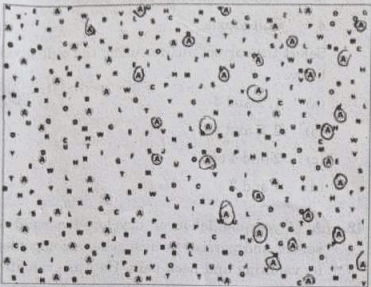
(a) Left hemispatial neglect
(b) Simultanagnosia
(c) Constructional apraxia
(d) Alien hand syndrome
Ans: (a) Left hemispatial neglect
Ques: 45 A 40-year-old man was found to have weakness of the right shoulder and arm 6 hours before presentation. This was followed by weakness of the ipsilateral leg, then left leg, followed by left arm (around-the-clock pattern). Where in the neuraxis is the lesion likely to be present?
(a) Cerebral cortex
(b) Foramen magnum
(c) Midbrain
(d) Pons
Ans: (b) Foramen magnum
Ques: 46 Which one of the following refers to agraphesthesia?
(a) Inability to identify common objects by palpation recognising their shape, texture and size
(b) Inability to recognize with eyes closed, letters or numbers drawn by the examiner's fingertip on the palm of the hand
(c) Inability to discriminate two points set 3 mm apart on fingertips
(d) Inability to stand and walk with both the eyes closed
Ans: (b) Inability to recognize with eyes closed, letters or numbers drawn by the examiner's fingertip on the palm of the hand
Ques: 47 Which one of the following is a type of Mitochondrial myopathy?
(a) Myoclonic epilepsy with ragged red fibres
(b) Familial focal epilepsy with variable foci
(c) Sleep related hypermotor epilepsy
(d) Severe myoclonic epilepsy of infancy
Ans: (a) Myoclonic epilepsy with ragged red fibres
Ques: 48 Which one of the following is a childhood onset epilepsy syndrome characterized by multiple seizure types, developmental delay and slow (< 3 Hz) spike-and-wave discharges on an electroencephalogram?
(a) Juvenile Myoclonic Epilepsy Syndrome
(b) Lennox–Gastaut Syndrome
(c) Mesial Temporal Lobe Epilepsy Syndrome
(d) Rasmussen Syndrome
Ans: (b) Lennox–Gastaut Syndrome
Ques: 49 With regard to the treatment of phaeochromocytoma, beta-blocker should never be given before alpha-blocker because it may cause:
(a) Paradoxical rise in blood pressure due to unopposed alpha-mediated vasoconstriction
(b) Paradoxical fall in blood pressure due to unopposed alpha-mediated vasoconstriction
(c) Paradoxical rise in blood pressure due to unopposed alpha-mediated vasodilatation
(d) Paradoxical fall in blood pressure due to unopposed alpha-mediated vasodilatation
Ans: (a) Paradoxical rise in blood pressure due to unopposed alpha-mediated vasoconstriction
Ques: 50 Which of the following may be seen during clinical examination in a patient of Diabetes mellitus?
1. Necrobiosis lipoidica
2. Charcot neuroarthropathy
3. Exudative maculopathy
4. Acanthosis nigricans
Select the correct answer using the code given below:
(a) 1 only
(b) 1 and 2 only
(c) 2 and 3 only
(d) 1, 2, 3 and 4
Ans: (d) 1, 2, 3 and 4
Ques: 51 Consider the following statements regarding glucagon-like peptide-1 (GLP-1) and gastric inhibitory polypeptide (GIP):
1. GLP-1 is an incretin hormone.
2. GIP is an incretin hormone.
3. GLP-1 is released from gastrointestinal 'L-cells'.
4. GIP is released from gastrointestinal 'M-cells'.
Which of the statements given above are correct?
(a) 1 and 2 only
(b) 1, 2 and 3
(c) 3 and 4 only
(d) 2, 3 and 4
Ans: (b) 1, 2 and 3
Ques: 52 Consider the following statements regarding 'Factitious Thyrotoxicosis':
1. Induced when patients consume excessive amounts of levothyroxine.
2. The exogenous levothyroxine suppresses secretion of pituitary TSH (thyroid-stimulating hormone).
3. Serum thyroglobulin level is elevated.
4. T4 : T3 ratio is high.
Which of the statements given above are correct?
(a) 1, 2 and 3
(b) 1, 2 and 4
(c) 1, 3 and 4
(d) 2, 3 and 4
Ans: (b) 1, 2 and 4
Ques: 53 Deficiency of which of the following mineral(s) can lead to hypocalcemia by impairing the ability of the parathyroid gland to secrete parathyroid hormone?
1. Phosphate
2. Magnesium
3. Sodium
4. Potassium
Select the correct answer using the code given below:
(a) 1 and 2
(b) 2 only
(c) 3 and 4
(d) 3 only
Ans: (b) 2 only
Ques: 54 Which of the following are long-acting insulin analogues?
1. Lispro
2. Glargine
3. Detemir
4. Degludec
Select the correct answer using the code given below:
(a) 2 only
(b) 2 and 4
(c) 1, 3 and 4
(d) 2, 3 and 4
Ans: (d) 2, 3 and 4
Ques: 55 Which one of the following levels of hypoglycaemia corresponds to a blood glucose level of 50 mg/dL leading to cognitive impairment and need for corrective treatment?
(a) Level 0
(b) Level 1
(c) Level 2
(d) Level 3
Ans: (c) Level 2
Ques: 56 Liquorice misuse, by inhibiting 11 beta-hydroxysteroid dehydrogenase type 2 enzyme, can cause a condition which resembles the clinical features of:
(a) Gonadotropin excess
(b) Thyrotropin excess
(c) Mineralocorticoid excess
(d) Parathyroid hormone excess
Ans: (c) Mineralocorticoid excess
Ques: 57 Which of the following is/are growth hormone receptor antagonist(s) indicated in the treatment of Acromegaly?
1. Octreotide
2. Lanreotide
3. Pasireotide
4. Pegvisomant
Select the correct answer using the code given below:
(a) 1 and 2 only
(b) 3 and 4
(c) 1, 2 and 3
(d) 4 only
Ans: (d) 4 only
Ques: 58 Which of the following statements regarding Autoimmune Polyendocrine Syndromes (APS) is/are correct?
1. APS Type 1 is more common than APS Type 2.
2. APS Type 1 is inherited as an autosomal recessive condition.
3. APS Type 2 is inherited as an autosomal dominant condition.
Select the correct answer using the code given below:
(a) 1 only
(b) 1 and 2 only
(c) 2 and 3 only
(d) 1, 2 and 3
Ans: (b) 1 and 2 only
Ques: 59 Which one of the following drugs is not a secondary cause of weight gain?
(a) Sulphonylureas
(b) Glucocorticoids
(c) Thyroxine
(d) β-blockers
Ans: (c) Thyroxine
Ques: 60 Which one of the following is true for Teriparatide for treatment of osteoporosis?
(a) It inhibits bone resorption by neutralizing effect of RANKL.
(b) It is a fragment of human PTH and works by stimulating new bone formation.
(c) It is administered subcutaneously once a year for 5 years.
(d) Teriparatide should be combined with bisphosphonates for better efficacy.
Ans: (b) It is a fragment of human PTH and works by stimulating new bone formation.
Ques: 61 Post-transplant lymphoproliferative disorder, a lymphoma that follows organ transplantation, is associated with infection with which one of the following?
(a) Epstein-Barr virus
(b) Mycobacterium tuberculosis
(c) Capnocytophaga canimorsus
(d) Histoplasma capsulatum
Ans: (a) Epstein-Barr virus
Ques: 62 'Exanthem Subitum' is caused due to infection of which of the following viruses? 1. Human herpesvirus 6 2. Hepatitis-B virus 3. Human herpesvirus 7 4. Hepatitis-C virus. Select the correct answer using the code given below: (a) 2 and 4 (b) 1 and 2 (c) 1 and 3 (d) 3 and 4
(a) 2 and 4
(b) 1 and 2
(c) 1 and 3
(d) 3 and 4
Ans: (c) 1 and 3
Ques: 63 'Slapped-cheek' rash is caused by infection with which one of the following viruses?
(a) Zika virus
(b) Human herpesvirus 6
(c) Parvovirus B-19
(d) Varicella zoster virus
Ans: (c) Parvovirus B-19
Ques: 64 The neuropsychiatric manifestations of the infections caused by which one of the following infectious agents presents as 'Muttering Delirium' or 'Coma Vigil' in which patients pick randomly at bed clothes or imaginary objects?
(a) Neisseria gonorrheae
(b) Cardiobacterium hominis
(c) Salmonella typhi
(d) Campylobacter jejuni
Ans: (c) Salmonella typhi
Ques: 65 Necrotizing fasciitis caused by fungi such as mucoraceous moulds is classified as which one of the following types?
(a) Type 1
(b) Type 2
(c) Type 3
(d) Type 4
Ans: (d) Type 4
Ques: 66 Infusion of which one of the following antibacterial agents may cause the 'Red Man Syndrome' characterized by rapid onset of erythematous rash and pruritus on the head, face, neck and upper trunk?
(a) Vancomycin
(b) Minocycline
(c) Levofloxacin
(d) Metronidazole
Ans: (a) Vancomycin
Ques: 67 Which one of the following can be classically elicited in a patient of Staphylococcal scalded skin syndrome?
(a) Auspitz sign
(b) Koebner phenomenon
(c) Gottron's sign
(d) Nikolsky sign
Ans: (d) Nikolsky sign
Ques: 68 A 35-year-old female presents with generalized muscle rigidity, difficulty in swallowing and laryngeal spasms for the past one week. She has developed trismus over the past 2 days and has a pulse rate of 130 beats/minute and a respiratory rate of 35 breaths/minute on presentation. She gives a history of getting her ears pierced from a roadside jewellery seller 2 weeks ago. What is the most probable diagnosis?
(a) Enteric fever
(b) Pertussis
(c) Diphtheria
(d) Tetanus
Ans: (d) Tetanus
Ques: 69 A 25-year-old male presents with complaints of urethral discharge and dysuria for the past 1 week. The discharge was scant and mucoid for a few days but he reports profuse and yellowish discharge since 2 days. Gram staining of the urethral discharge reveals gram-negative intracellular monococci and diplococci. On further questioning, he gives a history of unprotected sexual intercourse 15 days ago. Which one of the following conditions will be your most probable diagnosis?
(a) Gonorrhea
(b) Chancroid
(c) Syphilis
(d) Lymphogranuloma venereum
Ans: (a) Gonorrhea
Ques: 70 A 40-year-old male, upon returning from a beach holiday, noticed a serpiginous, intensely pruritic linear lesion over the dorsum of foot which moved slowly across the skin to reach up to his toes in 5-6 days. The most likely clinical diagnosis is:
(a) Cutaneous larva migrans
(b) Anisakiasis
(c) Cutaneous larva currens
(d) Schistosomiasis
Ans: (a) Cutaneous larva migrans
Ques: 71 Consider the following statements regarding gas gangrene: 1. It is caused by clostridial species, e.g., Clostridium perfringens. 2. It is characterized by a foul-smelling, painful wound containing serosanguineous discharge and gas bubbles. 3. It requires an aerobic environment and affects sites which are richly supplied with blood. 4. Radical amputation carries a high risk of advancing the infection to healthy tissue and is strictly contraindicated. Which of the statements given above are correct? (a) 1 and 2 (b) 2 and 3 (c) 3 and 4 (d) 1 and 4
(a) 1 and 2
(b) 2 and 3
(c) 3 and 4
(d) 1 and 4
Ans: (a) 1 and 2
Ques: 72 Which of the following correctly denote(s) the clinical manifestations of diphtheria? 1. Dermatosis characterized by punched-out ulcerative lesions with necrotic sloughing 2. Dysphonia, dysphagia and headache 3. Myocarditis, cardiac arrhythmias and congestive heart failure 4. Massive tonsillar, submandibular and paratracheal oedema presenting as 'bull-neck' appearance. Select the correct answer using the code given below: (a) 1 only (b) 1 and 3 only (c) 2 and 3 only (d) 1, 2, 3 and 4
(a) 1 only
(b) 1 and 3 only
(c) 2 and 3 only
(d) 1, 2, 3 and 4
Ans: (d) 1, 2, 3 and 4
Ques: 73 Which one of the following is the vector for Leishmania donovani, the causative organism of Visceral Leishmaniasis?
(a) Tsetse fly
(b) Sandfly
(c) Anopheles mosquito
(d) Reduviid bug
Ans: (b) Sandfly
Ques: 74 Casal's Necklace is a characteristic erythema seen in deficiency of which one of the following vitamins?
(a) Thiamin
(b) Riboflavin
(c) Niacin
(d) Pyridoxine
Ans: (c) Niacin
Ques: 75 Wickham's striae are typically seen in which one of the following diseases?
(a) Iron-deficiency anemia
(b) Psoriasis
(c) Lichen planus
(d) Pityriasis versicolor
Ans: (c) Lichen planus
Ques: 76 Consider the following statements regarding Molluscum contagiosum:
1. It is caused by Papilloma virus skin infection.
2. It occurs frequently in immunosuppressed patients.
3. Lesions are dome-shaped, umbilicated, skin-coloured papules with central punctum.
4. Gently squeezing the lesions with forceps after bathing can hasten resolution.
Which of the statements given above are correct?
(a) 1, 2 and 3
(b) 1, 2 and 4
(c) 1, 3 and 4
(d) 2, 3 and 4
Ans: (d) 2, 3 and 4
Ques: 77 Which one of the following refers to the appearance of punctate bleeding spots on scraping the surface of a skin lesion?
(a) Punshi's sign
(b) Barnett's sign
(c) Gottron's sign
(d) Auspitz's sign
Ans: (d) Auspitz's sign
Ques: 78 Consider the following statements regarding Complex Regional Pain Syndrome (CRPS):
1. Type 1 CRPS may be precipitated by a traumatic event such as a fracture.
2. Type 1 CRPS is associated with peripheral nerve damage.
3. Type 2 CRPS is associated with peripheral nerve damage.
4. Budapest criteria are used for diagnosis of CRPS.
Which of the statements given above are correct?
(a) 1, 2 and 3
(b) 1, 2 and 4
(c) 1, 3 and 4
(d) 2, 3 and 4
Ans: (c) 1, 3 and 4
Ques: 79 Consider the following statements regarding Dual X-ray Absorptiometry (DXA):
1. DXA is used to measure bone mineral density.
2. It works on the principle that calcium in bone attenuates passage of X-rays through the tissue in proportion to the amount of mineral present.
3. Osteoporosis is defined to be present when the T-score lies between (-1.0) and below (+2.5).
4. Co-existing conditions, e.g., aortic calcification or degenerative disc disease can cause high bone mineral density even in the presence of osteoporosis.
Which of the statements given above are correct?
(a) 1, 2 and 3
(b) 1, 2 and 4
(c) 1, 3 and 4
(d) 2, 3 and 4
Ans: (b) 1, 2 and 4
Ques: 80 Which of the following classical disease-modifying anti-rheumatic drugs is/are considered safe for use during pregnancy?
1. Methotrexate
2. Sulfasalazine
3. Hydroxychloroquine
4. Leflunomide
Select the correct answer using the code given below:
(a) 1 only
(b) 1 and 3 only
(c) 2 and 3
(d) 1, 3 and 4
Ans: (c) 2 and 3
Ques: 81 Finkelstein's sign/test is done to diagnose which one of the following conditions?
(a) Adhesive capsulitis
(b) Golfer's elbow
(c) Trochanteric bursitis
(d) de Quervain's tenosynovitis
Ans: (d) de Quervain's tenosynovitis
Ques: 82 Which of the following are 'first-rank' symptoms of acute schizophrenia?
1. Auditory hallucinations
2. Broadcasting of thoughts
3. Memory loss
4. Delusional perceptions
Select the correct answer using the code given below:
(a) 1, 2 and 3
(b) 1, 2 and 4
(c) 1, 3 and 4
(d) 2, 3 and 4
Ans: (b) 1, 2 and 4
Ques: 83 A 44-year-old woman has fear of contamination leading to her repeated hand-washing. With regard to her management, consider the following statements:
1. Diagnosis is made on the basis of history.
2. The disorder responds to antidepressant drugs.
3. Patients may be subjected to cognitive behaviour therapy.
4. Admission to a psychiatry ward is mandatory.
Which of the statements given above is/are correct?
(a) 1, 2 and 3
(b) 4 only
(c) 3 and 4
(d) 1 only
Ans: (a) 1, 2 and 3
Ques: 84 Consider the following statements with regard to point mutations:
1. If a purine is replaced by another purine, it is called 'transition'.
2. If a purine is replaced by a pyrimidine, it is called 'transversion'.
3. If a pyrimidine is replaced by another pyrimidine, it is called 'transversion'.
Which of the statements given above are correct?
(a) 1 and 2 only
(b) 2 and 3 only
(c) 1 and 3 only
(d) 1, 2 and 3
Ans: (a) 1 and 2 only
Ques: 85 Which one of the following correctly denotes a flat, coloured lesion, < 2 cm in diameter, not raised above the surface of the surrounding skin?
(a) Macule
(b) Patch
(c) Papule
(d) Nodule
Ans: (a) Macule
Ques: 86 Which one of the following terms correctly denotes the mechanism and phenotypic changes that are not a result of variation in the underlying DNA sequence, but are caused by secondary modifications of DNA or histones in response to other heritable or environmental influences?
(a) Pleiotropy
(b) Epigenetics
(c) Co-dominance
(d) Epistasis
Ans: (b) Epigenetics
Ques: 87 'Latrodectism', characterized by local pain and sweating, is caused by the bite of which one of the following animals?
(a) Widow spider
(b) King cobra
(c) Lonomia caterpillar
(d) Solenopsis ants
Ans: (a) Widow spider
Ques: 88 A farmer was suspected of some unknown substance poisoning, as he presented with bronchorrhoea, sweating and excessive salivation. Examination revealed bradycardia with bilateral miosis. Consider the following statements regarding his poisoning:
1. The symptoms represent Anti-Cholinergic Syndrome.
2. Activation of Acetylcholinesterase (AChE) enzyme is the underlying mechanism.
3. Intravenous Atropine should be given for treatment.
Which of the statements given above is/are correct?
(a) 1 and 2
(b) 2 and 3
(c) 1 and 3
(d) 3 only
Ans: (d) 3 only
Ques: 89 Which of the following pairs of parasites and associated clinical manifestations are correct?
1. Ancylostoma duodenale : Anemia
2. Ascaris lumbricoides : Loffler Syndrome
3. Loa loa : Katayama Fever
4. Trichinella spiralis : Myositis
Select the answer using the code given below:
(a) 1, 2 and 4
(b) 2, 3 and 4
(c) 1, 3 and 4
(d) 1, 2 and 3
Ans: (a) 1, 2 and 4
Ques: 90 Which of the following features are present in Locked-in syndrome?
1. Cerebral cortex is intact.
2. Bilateral motor tracts are damaged.
3. Some response to verbal stimuli may be present.
4. Limb movement occurs in response to noxious stimuli.
Select the correct answer using the code given below:
(a) 1 and 4
(b) 1 and 2 only
(c) 2, 3 and 4
(d) 1, 2 and 3
Ans: (d) 1, 2 and 3
Ques: 91 A 26-year-old female complains of severe fatigue and myalgia. Examination reveals pallor and mild splenomegaly. Haematological investigations are shown below:
Haemoglobin - 10 g/dL
Peripheral smear - Microcytic hypochromic picture with anisocytosis
Reticulocyte count - 5%
Serum ferritin - 300 microgram/L
What is the most likely underlying diagnosis?
(a) Iron deficiency
(b) Folic acid deficiency
(c) Vitamin B12 deficiency
(d) β-Thalassemia
Ans: (d) β-Thalassemia
Ques: 92 Which of the following infectious agents are associated with the development of lymphoid malignancies?
1. HIV
2. Hepatitis B
3. Hepatitis C
Select the correct answer using the code given below:
(a) 1, 2 and 3
(b) 1 and 2 only
(c) 1 and 3 only
(d) 2 and 3 only
Ans: (c) 1 and 3 only
Ques: 93 Which of the following statements regarding Blood component transfusion related acute lung injury are correct?
1. Transfusion related acute lung injury (TRALI) usually manifests within 6 hours of transfusion.
2. Risk factors for TRALI include high titre anti-HLA class II antibodies in donor plasma.
3. TRALI due to cytokines or chemokines can occur even in the absence of HLA mediated interactions.
Select the answer using the code given below:
(a) 1, 2 and 3
(b) 1 and 2 only
(c) 1 and 3 only
(d) 2 and 3 only
Ans: (a) 1, 2 and 3
Ques: 94 Match List I with List II and select the correct answer using the code given below the lists:
List I (Drug)
A. Aspirin
B. Enoxaparin
C. Dabigatran
D. Alteplase
List II (Mechanism of action)
1. Thrombolytic
2. Antiplatelet
3. Anticoagulant
4. Direct thrombin inhibitor
Code:
(a) A-2, B-3, C-4, D-1
(b) A-2, B-4, C-3, D-1
(c) A-1, B-3, C-4, D-2
(d) A-1, B-4, C-3, D-2
Ans: (a) A-2, B-3, C-4, D-1
Ques: 95 A 3-year-old boy is brought with barking cough and noisy breathing of 2 days' duration. He has a history of running nose and some fever for the preceding 3-4 days. Examination reveals respiratory rate of 40 per min, subcostal retractions and stridor. The most important step in the management is:
(a) Nebulized adrenaline
(b) Nebulized salbutamol
(c) Subcutaneous adrenaline
(d) Intravenous hydrocortisone
Ans: (a) Nebulized adrenaline
Ques: 96 A 3-year-old boy presents to the emergency room with seizures. He has been receiving oral phenytoin since the age of 6 months and has a history of epileptic spasms despite therapy. Examination reveals some hypopigmented lesions over the chest. MRI brain shows subependymal nodules. Which one of the following is the best anti-epileptic drug for him after stabilization in the emergency room?
(a) Oral Phenytoin
(b) Oral Zonisamide
(c) Oral Topiramate
(d) Oral Vigabatrin
Ans: (d) Oral Vigabatrin
Ques: 97 A 10-year-old girl presents to the emergency with high grade fever of 2-weeks duration and rashes over lower limbs for the last 7 days. Examination reveals mild pallor, generalized petechiae and hepatosplenomegaly. Investigations reveal: Hemoglobin 9 g/dL, total leucocyte count 2100/mm3, platelet count 20,000/mm3, peripheral smear shows pancytopenia, SGOT 50 IU/dL, SGPT 64 IU/dL, serum ferritin 1200 microgram/L, serum fibrinogen 100 mg/dL and serum triglycerides of 350 mg/dL. The most likely diagnosis is:
(a) Aplastic anemia
(b) Immune thrombocytopenic purpura
(c) Hemophagocytic lymphohistiocytosis
(d) Acute promyelocytic leukemia
Ans: (c) Hemophagocytic lymphohistiocytosis
Ques: 98 A 5-year-old boy, started on induction chemotherapy for acute lymphoblastic leukemia, develops acute abdominal pain on day 14 of chemotherapy. On abdominal examination, there is marked abdominal tenderness and Cullen's sign is positive. The most likely chemotherapeutic drug which can be implicated is:
(a) Vincristine
(b) Daunorubicin
(c) L-asparaginase
(d) Methotrexate
Ans: (c) L-asparaginase
Ques: 99 A 5-year-old boy who was started on treatment for Burkitt lymphoma develops acute onset respiratory distress and decreased urine output. Investigations reveal: Hb 8 g/dL, TLC 15000/mm3, platelet count 1 lakh/mm3, serum potassium 6.5 mEq/L, corrected serum calcium 6.7 mg/dL and serum creatinine 2 mg/dL. The most important drug for emergency management is:
(a) Dexamethasone
(b) Broad-spectrum antibiotics
(c) Rasburicase
(d) Folinic acid rescue
Ans: (c) Rasburicase
Ques: 100 Consider the following statements regarding human milk banking:
1. The banks accept voluntary milk donations from lactating women who are given nominal payments governed by law.
2. Donor mothers are screened via blood tests for HIV, and Hepatitis B and C, similar to blood donation.
3. Pasteurized donor milk reduces the chances of NEC in preterm neonates.
4. Pasteurized donor milk is non-inferior to fresh mother's own milk (MOM).
Which of the statements given above are correct?
(a) 1, 2 and 3
(b) 2 and 3 only
(c) 3 and 4 only
(d) 1, 2, 3 and 4
Ans: (b) 2 and 3 only
Ques: 101 A term neonate weighing 2 kg, delivered to a primigravida mother through vaginal route and through clear liquor, is found having gasping respiratory efforts after performing the initial steps in the delivery room. The next step in resuscitation is:
(a) Initiate positive pressure ventilation with bag and mask using 30% oxygen
(b) Intubate and initiate positive pressure ventilation using 30% oxygen
(c) Initiate positive pressure ventilation with bag and mask using room air
(d) Intubate and initiate positive pressure ventilation using room air
Ans: (c) Initiate positive pressure ventilation with bag and mask using room air
Ques: 102 A newborn delivered at 37 weeks gestation and birth weight 2.7 kg, presents at 12 h of life with bilious vomiting. On examination, RR is 36/m, HR is 110/m, CRT is < 3s, and there is abdominal distention. Abdominal radiograph reveals multiple air-fluid levels with absent distal gas pattern. The most likely etiology is:
(a) Malrotation leading to volvulus
(b) Congenital hypertrophic pyloric stenosis
(c) Jejunal-ileal atresia
(d) Necrotizing enterocolitis
Ans: (c) Jejunal-ileal atresia
Ques: 103 Consider the following statements regarding the management of trachea-esophageal fistula in neonates:
1. The baby should be nursed in prone position.
2. The neonate should be kept nil per orally and started on intravenous fluids.
3. The neonate needs continuous oral suction using a slow suction device.
4. Surgery should be planned once the neonate attains 2.5 kg weight.
Which of the statements given above are correct?
(a) 1 and 2 only
(b) 1, 2 and 3
(c) 2 and 3 only
(d) 3 and 4
Ans: (c) 2 and 3 only
Ques: 104 An apparently well male neonate delivered by vaginal route in hospital is discharged on day 2 of life. He is brought to the outpatient department on day 4 of life as the mother complains of pink staining of his diapers. There is no bleeding from urethra or per rectum noticed during examination, and urine dipstick test for RBCs is negative. The baby is appearing playful and active. The most likely etiology of pink staining of diapers is:
(a) Porphyria
(b) Urate crystals in urine
(c) Hemoglobinuria
(d) Hematuria
Ans: (b) Urate crystals in urine
Ques: 105 A preterm neonate is brought to the emergency and the body temperature is noted to be 32°C. Which one of the following metabolic complications is unlikely?
(a) Metabolic alkalosis
(b) Hypoglycemia
(c) Hyperbilirubinemia
(d) Hypoxemia
Ans: (a) Metabolic alkalosis
Ques: 106 A 3-year-old boy is brought to the outpatient department with complaints of developmental delay. He can feed himself a biscuit, can draw a line, can climb steps, and only says bisyllables. Which one of the following developmental screening tools is not suitable for him?
(a) Phatak's Baroda Screening Test
(b) Ages and Stages Questionnaire
(c) Trivandrum Development Screening Chart
(d) Denver II
Ans: (a) Phatak's Baroda Screening Test
Ques: 107 An 8-year-old girl is provided a few cubes and asked to create the structure in the image provided (Structure A: an irregular block arrangement; Structure B: a staircase arrangement). If she can create Structure A, but cannot make Structure B, her developmental quotient (DQ) in the fine motor domain is:
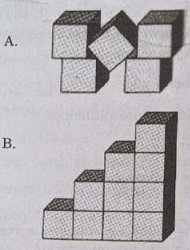
(a) 50
(b) 62.5
(c) 75
(d) 100
Ans: (a) 50
Ques: 108 A 2-year-old boy was brought to the emergency when his mother noticed that he had developed dusky appearance and lethargy over the past 6-8 hours. The child had been prescribed some medicine for vomiting by a local practitioner. Examination revealed normal sized pupils reacting to light, GCS 9, and shallow breathing with cyanosis. Arterial blood gas revealed a PaO2 of 80 mmHg and SpO2 of 60%. Which one of the following drugs may be implicated?
(a) Domperidone
(b) Granisetron
(c) Aprepitant
(d) Metoclopramide
Ans: (d) Metoclopramide
Ques: 109 A 12-year-old boy is brought to the emergency in an unconscious state with a history of shallow breathing and increasing drowsiness noticed for two hours. He is noticed to have a dry mouth, cold extremities, is limp and has pin point pupils. The emergency physician suspects poisoning. Which one of the following antidotes should be administered?
(a) Flumazenil
(b) Adrenaline
(c) Pralidoxime
(d) Naloxone
Ans: (d) Naloxone
Ques: 110 A neonate is noted to have bilious vomiting at 6 hours of life with abdominal distention. An X-ray is ordered (see image, showing a large rounded gas-filled bubble with a paucity of distal bowel gas). The most likely diagnosis is:
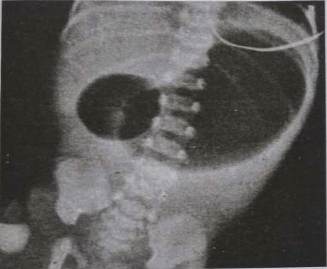
(a) Pyloric stenosis
(b) Esophageal atresia
(c) Duodenal atresia
(d) Hirschsprung's disease
Ans: (c) Duodenal atresia
Ques: 111 A 6-year-old boy is brought with complaints of involuntary, non-rhythmic, jerky movements of upper limbs and snorting sounds, noticed for the past 12 months. His MRI brain and EEG are normal. The child was mocked at by classmates in school and he stopped attending classes for the past 6 months. His ASLO titres and serum ceruloplasmin are non-contributory. The ideal therapy would be a trial of:
(a) Oral Clonidine
(b) Oral Methylphenidate
(c) Oral Benzodiazepines
(d) Oral Olanzapine
Ans: (a) Oral Clonidine
Ques: 112 A 4-year-old unimmunized HIV-positive child on antiretroviral therapy for the last 2 years and weighing 15 kg is brought for vaccination. His records reveal a recent CD4 count of 750/mm3, with no evidence of any opportunistic infections in the past. Which of the following statements are applicable to this child?
1. Recombinant Hepatitis B vaccine can be safely administered.
2. MMR vaccine is always contraindicated.
3. BCG may be administered if chest radiograph is normal.
4. IPV is preferred over OPV.
Select the correct answer using the code given below:
(a) 1 and 2
(b) 2 and 3
(c) 1 and 4
(d) 2 and 4
Ans: (c) 1 and 4
Ques: 113 As per the National Immunization Schedule, PCV (Pneumococcal Conjugate Vaccine) is offered at:
(a) 6 weeks, 10 weeks and 14 weeks
(b) 6 weeks and 14 weeks
(c) 6 weeks, 10 weeks and 9 months
(d) 6 weeks, 14 weeks, 9 months
Ans: (d) 6 weeks, 14 weeks, 9 months
Ques: 114 Which one of the following vaccines is an exception to the principle "At least 4 weeks interval is needed between two doses of the same vaccine to ensure adequate immune response"?
(a) Rabies vaccine
(b) HPV vaccine
(c) Varicella vaccine
(d) Hepatitis B vaccine
Ans: (a) Rabies vaccine
Ques: 115 Administration of immunoglobulins interferes with the response to live vaccines, except:
(a) Measles vaccine
(b) Rubella vaccine
(c) Oral typhoid vaccine
(d) Mumps vaccine
Ans: (c) Oral typhoid vaccine
Ques: 116 A 14-year-old boy is reported by his neighbour to the police for repeated aggressive activities including beating up children in the neighbourhood. The boy's neighbour also noticed that he also snorts heroin sometimes. He will be categorized legally as suffering from:
(a) Oppositional defiant disorder
(b) Conduct disorder
(c) Juvenile delinquency
(d) Drug addiction
Ans: (c) Juvenile delinquency
Ques: 117 As per the National Vector Borne Disease Control Programme, the first-line agent for treatment of Kala-azar (visceral leishmaniasis) is:
(a) Amphotericin B, liposomal, IV, single dose
(b) Sodium stibogluconate, IV, 30-day regimen
(c) Oral Miltefosine, 28-day regimen
(d) Amphotericin B deoxycholate, IV, 30 doses
Ans: (a) Amphotericin B, liposomal, IV, single dose
Ques: 118 Which one of the following illnesses is not covered under the Rashtriya Bal Swasthya Karyakram?
(a) Childhood cancer
(b) Down syndrome
(c) Goitre
(d) Rheumatic heart disease
Ans: (a) Childhood cancer
Ques: 119 A 2-year-old child is brought with complaints of not growing well. On examination, he weighs 8.1 kg, height 80 cm (WFL score between 0 and -2 SD), has a mid-arm circumference (MUAC) of 11.5 cm and both his palms are white. There is no edema of the feet. As per IMNCI, he will be classified as:
(a) No acute malnutrition and anemia
(b) No acute malnutrition and severe anemia
(c) Moderate acute malnutrition and anemia
(d) Moderate acute malnutrition and severe anemia
Ans: (d) Moderate acute malnutrition and severe anemia
Ques: 120 A 2-year-old previously unimmunized girl is brought with poor feeding and fever for 6 days. On day 4 of fever, her mother noticed a maculopapular reddish rash starting from the face and spreading over the neck, chest, arms and trunk over the next one day and she has developed extensive mouth ulcers. The child has a mid-arm circumference of 11 cm but no edema. As per IMNCI, she will be classified as:
(a) Measles with eye or mouth complications
(b) Measles
(c) Severe complicated measles
(d) Measles with severe acute malnutrition
Ans: (c) Severe complicated measles
UPSC CMS 2026 Paper 1 Exam Pattern
UPSC CMS 2026 Paper 1 was conducted offline as a pen-paper based examination for a total of 250 marks. The paper consisted of 120 objective-type multiple-choice questions, including 96 questions from General Medicine and 24 questions from Paediatrics. Candidates were given 2 hours to complete the paper, and the questions were provided in English only. One-third of the marks assigned to a question was deducted for every incorrect answer, while no marks were deducted for unattempted questions.
| UPSC CMS 2026 Paper 2 Question Paper PDF | UPSC CMS 2026 Paper 2 Answer Key PDF |
| UPSC CMS 2026 Exam Analysis | |
UPSC CMS 2026 Selection Process
The UPSC CMS selection process consists of a written examination followed by a Personality Test. The written examination contains two papers carrying 250 marks each, while the Personality Test carries 100 marks.
| Stage | Component | Maximum Marks |
|---|---|---|
| Written Examination | Paper 1: General Medicine and Paediatrics | 250 |
| Written Examination | Paper 2: Surgery, Gynaecology and Obstetrics, and Preventive and Social Medicine | 250 |
| Personality Test | Interview | 100 |
| Total | 600 | |
Candidates who qualify for the 500-mark written examination will be shortlisted for the 100-mark Personality Test.
UPSC CMS 2026 Paper 1 Answer Key FAQs
Ques: When was UPSC CMS 2026 Paper 1 conducted?
Ans: UPSC CMS 2026 Paper 1 was conducted on Aug 02, 2026, from 9:30 AM to 11:30 AM.
Ques: How can I download the UPSC CMS 2026 Paper 1 Answer Key PDF?
Ans: Candidates can download the UPSC CMS 2026 General Medicine and Paediatrics Answer Key PDF from the links provided on this page once it is uploaded.
Ques: How many questions were asked in UPSC CMS Paper 1?
Ans: UPSC CMS Paper 1 contained 120 objective-type questions, including 96 questions from General Medicine and 24 questions from Paediatrics.
Ques: What were the total marks and duration of UPSC CMS General Medicine and Paediatrics Paper?
Ans: The General Medicine and Paediatrics paper carried a total of 250 marks, and candidates were given 2 hours to complete it.
Ques: Was there negative marking in UPSC CMS 2026 Paper 1?
Ans: Yes. One-third of the marks assigned to a question was deducted for every incorrect answer. No marks were deducted for unanswered questions.
Ques: How can candidates calculate their probable UPSC CMS Paper 1 scores?
Ans: Candidates can compare their responses with the answer key, add marks for correct answers and deduct one-third of the marks assigned to each incorrectly answered question.
Download the PREPP App and attempt FREE UPSC CMS Mock Tests and get complete study material!


Comments