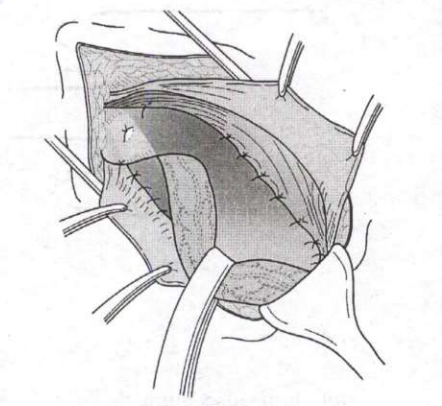
Consider the following statements regarding the management of trachea-esophageal fistula in neonates: 1. The baby should be nursed in prone position. 2. The neonate should be kept nil per orally and started on intravenous fluids. 3. The neonate needs continuous oral suction using a slow suction device. 4. Surgery should be planned once the neonate attains 2.5 kg weight. Which of the statements given above are correct?
2 and 3 only
Correct pre-operative management is nil-per-orally with IV fluids (statement 2) and continuous gentle oral/pharyngeal suction of secretions from the upper pouch to prevent aspiration (statement 3). The baby should be nursed in a propped-up (head-elevated), not prone, position to reduce gastric reflux into the airway, and surgery is not delayed for weight gain to 2.5 kg — it is typically done early once the baby is stable, so statements 1 and 4 are incorrect.
Similar Questions
A term neonate weighing 2 kg, delivered to a primigravida mother through vaginal route and through clear liquor, is found having gasping respiratory efforts after performing the initial steps in the delivery room. The next step in resuscitation is:
An apparently well male neonate delivered by vaginal route in hospital is discharged on day 2 of life. He is brought to the outpatient department on day 4 of life as the mother complains of pink staining of his diapers. There is no bleeding from urethra or per rectum noticed during examination, and urine dipstick test for RBCs is negative. The baby is appearing playful and active. The most likely etiology of pink staining of diapers is:
Consider the following statements regarding human milk banking:
1. The banks accept voluntary milk donations from lactating women who are given nominal payments governed by law.
2. Donor mothers are screened via blood tests for HIV, and Hepatitis B and C, similar to blood donation.
3. Pasteurized donor milk reduces the chances of NEC in preterm neonates.
4. Pasteurized donor milk is non-inferior to fresh mother's own milk (MOM).
Which of the statements given above are correct?
A preterm neonate is brought to the emergency and the body temperature is noted to be 32°C. Which one of the following metabolic complications is unlikely?
Important Questions from Neonatal Care
During Neonatal Resuscitation, chest compressions should be discontinued once the heart rate is:
A 5 day-old neonate is brought with abdominal distention and non-passage of meconium since birth. On per rectal examination, the anal tone is normal and the rectum is empty of faeces. There is rapid expulsion of faces after the digital examination. Which test will help you to establish the diagnosis?
Which of the following advantages is NOT associated with delayed cord clamping in term babies?
A term neonate delivered through meconium stained liquor, is found to be having poor respiratory efforts soon after birth. The most appropriate management for this child would be:
- A newborn weighing 1.5 kg at birth presents at 6 hours of age with lethargy, weak and high
pitched cry and difficulty in feeding. What is the next step in management?