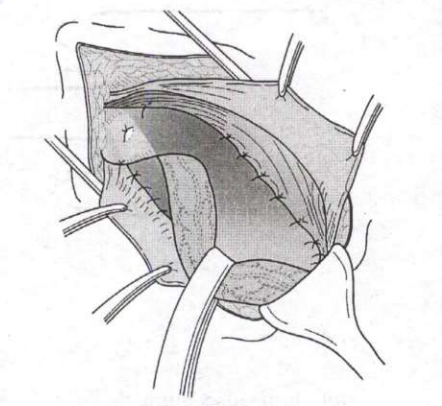
A neonate is noted to have bilious vomiting at 6 hours of life with abdominal distention. An X-ray is ordered (see image, showing a large rounded gas-filled bubble with a paucity of distal bowel gas). The most likely diagnosis is: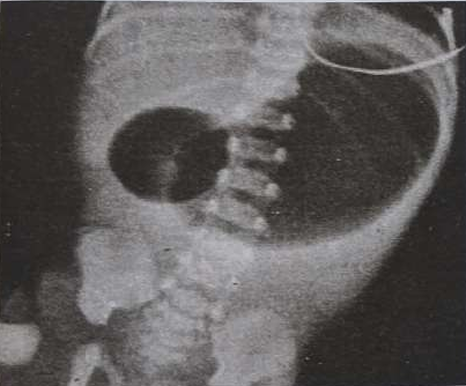
Duodenal atresia
Bilious vomiting presenting within the first hours of life with a radiograph showing a dilated stomach and proximal duodenum (the classic 'double bubble' sign) with absent distal gas is pathognomonic of duodenal atresia. Pyloric stenosis presents later (3-6 weeks) with non-bilious vomiting, and esophageal atresia typically causes non-bilious regurgitation/drooling rather than bilious vomiting.
Similar Questions
A newborn delivered at 37 weeks gestation and birth weight 2.7 kg, presents at 12 h of life with bilious vomiting. On examination, RR is 36/m, HR is 110/m, CRT is < 3s, and there is abdominal distention. Abdominal radiograph reveals multiple air-fluid levels with absent distal gas pattern. The most likely etiology is:
Important Questions from Congenital Disorders
Which of the following is NOT a maternal risk factor for the development of a neural tube defect?
- Trisomy 13 is also known as:
- Which one of the following is a type of glycogen storage disease?
Which of the following biochemical tests for the detection of aneuploidies is performed in the first trimester of pregnancy?
Which of the following is NOT a birth defect related to a disorder in the development of the whole eyeball?