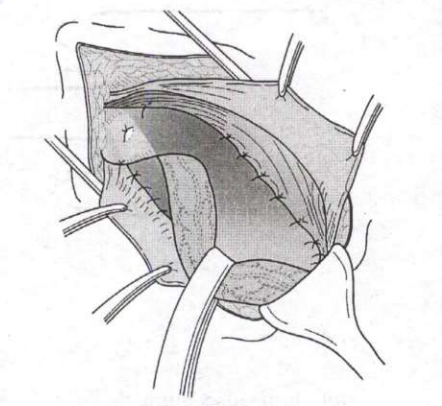
Consider the following statements regarding the murmur of Patent Ductus Arteriosus: 1. It is a continuous 'machinery' murmur. 2. There is a late diastolic accentuation. 3. It is maximal in the second left intercostal space below the clavicle. 4. With the development of Eisenmenger Syndrome, the murmur becomes louder and rumbling in character. Which of the statements given above is/are correct?
1 and 3
The classic PDA murmur is a continuous 'machinery' murmur (statement 1 correct) with late systolic accentuation (not late diastolic - statement 2 is incorrect as worded), heard maximally in the second left intercostal space, infraclavicular area (statement 3 correct). With development of Eisenmenger syndrome, the murmur actually diminishes or disappears as the shunt reverses and pulmonary pressures equalize, so statement 4 is incorrect. Hence statements 1 and 3 are correct.
Similar Questions
Consider the following statements regarding Takotsubo cardiomyopathy:
1. There is acute right ventricular dysfunction characterized by dilatation of the right ventricular apex.
2. It can be precipitated by acute emotional stress and is frequently associated with an underlying neuro-psychiatric disorder.
3. Symptoms and ECG findings often mimic acute ST-elevation myocardial infarction.
4. Ventriculography shows normal left ventricle and apical ballooning of the right ventricle.
Which of the statements given above are correct?
With regard to hypertrophic cardiomyopathy, match List I with List II and select the correct answer using the code given below the lists:
List I (Mutation) List II (Phenotype) A. Beta-myosin heavy chain mutations
B. Troponin mutations
C. Myosin-binding protein-C mutations1. Marked ventricular hypertrophy
2. Hypertension and arrhythmia
3. Myocardial fibre disarray with minimal hypertrophy'Tumour Plop' is a characteristic auscultatory finding seen in which one of the following conditions?
Consider the following statements regarding Eisenmenger Syndrome:
1. In patients with severe and prolonged pulmonary hypertension, the right-to-left shunt gets reversed to a left-to-right shunt.
2. There is marked cyanosis, which may be more apparent in the feet and toes than in the upper part of the body.
3. Antihypertensives which cause peripheral vasodilatation can exacerbate the shunting and worsen the symptoms.
Which of the statements given above is/are correct?
Important Questions from Ischemic Heart Disease
- Which amongst the following should be considered in a patient with acute chest pain and ST segment elevation in the precordial leads?
1. Acute myocardial infarction
2. Acute hyperkalemia
3. Pericarditis
4. Hypocalcemia
5. Oesophagitis
6. Pneumothorax
Select the correct answer using the code given below. - Which amongst the following is the most powerful independent risk factor for atherosclerosis?
- A 40-year old woman presents with sudden onset palpitations. An ECG done reveals narrow-QRS complex tachycardia. The most likely diagnosis is:
- An elderly-man with history of Diabetes mellitus and Coronary Artery Disease comes for follow-up, with complaints of muscle pains. Which one of the following drugs could be the most likely cause?
- All of the following are indications for treadmill testing/exercise-testing EXCEPT: