Which of the following features are present in Locked-in syndrome? 1. Cerebral cortex is intact. 2. Bilateral motor tracts are damaged. 3. Some response to verbal stimuli may be present. 4. Limb movement occurs in response to noxious stimuli. Select the correct answer using the code given below:
1, 2 and 3
Locked-in syndrome typically results from a ventral pontine lesion (often stroke) that damages bilateral corticospinal and corticobulbar tracts while sparing the cerebral cortex and ascending reticular activating system, so the patient is conscious and may respond to verbal stimuli via eye movements. Voluntary limb movement in response to noxious stimuli is absent due to quadriplegia, making statement 4 incorrect and 1, 2 and 3 the correct features.
Similar Questions
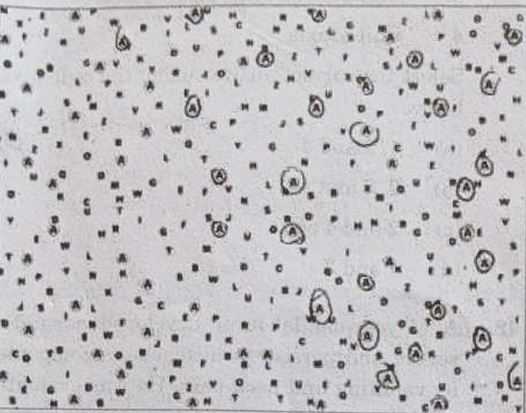
A 47-year-old man with a large frontoparietal lesion in the right hemisphere was asked to circle all the A's. Only targets on the right were circled. This is a manifestation of:
A 42-year-old labourer developed a sudden, severe and persistent headache, accompanied by vomiting and neck pain. He was evaluated at the nearest hospital where an emergency computed tomography was negative for stroke. Which one of the following investigations is best to confirm the diagnosis?
A 40-year-old man was found to have weakness of the right shoulder and arm 6 hours before presentation. This was followed by weakness of the ipsilateral leg, then left leg, followed by left arm (around-the-clock pattern). Where in the neuraxis is the lesion likely to be present?
Important Questions from Stroke
- Transient Monocular blindness may be due to small platelet emboli that occludes:
- The phenomenon of sparing of macular vision is due to collateral circulation between:
- The commonest cause for new-onset seizures in patients older than 65 years is:
- Ipsilateral $3^{rd}$ cranial nerve palsy with contralateral cerebellar signs is seen in:
- Incongruous contralateral homonymous hemianopia is due to lesion at: