Types of Soil - Agriculture Notes
In soil science, a soil type is a taxonomic unit. Soil types are formed by all soils that have a specific set of well-defined properties. Soil type is a technical term of soil classification, the discipline that deals with the systematic categorization of soils. Soil is a component of the earth's surface that consists of decomposed rock, humus, inorganic and organic components. It takes an average of 500 years or more for soil to develop from rocks. Soil is often generated when rocks are broken down into their essential pieces. This article will explain to you about Types of soil which will be helpful in preparing the Agriculture Syllabus for the UPSC Civil Service exam.
|
Table of Contents |
What is Soil?
- Soil is described as the organic and inorganic components on the earth's surface that offer a substrate for plant development.
- It gradually evolves over time, is made up of numerous components, and changes owing to its content and structure.
- It is essential for an ecosystem's survival since it acts as the natural medium for vegetation development.
- Soil is classified as a nonrenewable resource, and its creation is a long process. The soil profile is akin to the fingerprint of the soil.
- It will differ from other soil samples in terms of texture, structure, colour, and thickness, as well as chemical makeup.
- It takes around 500 years for soil to form only one inch of the top layer.
- Weathering, rain, erosion, flooding, thunderstorms, hurricanes, tornadoes, and other natural phenomena all contribute to soil formation.
|
|
|
|---|---|
| Saline soils | Sodic soils |
| Acid soils | Sandy soils |
Types of Soil
Following are some types of soil:
- Sandy soil
- Silty soil
- Clay soil
- Peaty soil
- Saline soil
- Loam soil
- Acidic soil
- Sodic soil
Sandy Soil
- Sandy soil, the most prevalent type of soil, has the largest particles.
- When touched, it feels gritty and dry due to the large voids between the particles, and it will not be able to contain water.
- Water drains quickly and directly to regions where roots, particularly seedlings, cannot reach.
- Plants have little chance of successfully using the nutrients contained in this soil since they are washed away by runoff.
- Sandy soils, which are common in desert environments, warm fast in sunshine and hold less moisture and nutrients than other soil types.
- The soil type is tested by moistening the soil and rolling it into a ball to determine the predominant soil particle.
- When wet sandy soil is rolled between our hands, there should be no ball formation and it should crumble readily through our fingers.
- Sandy soil is composed of small particles weathered from rocks. It's also low in nutrients and water retention, making it one of the poorest types of farming soil.
- This sort of soil is frequently washed away after heavy storms.
- It contains less nutrients for the plants since it heats up faster.
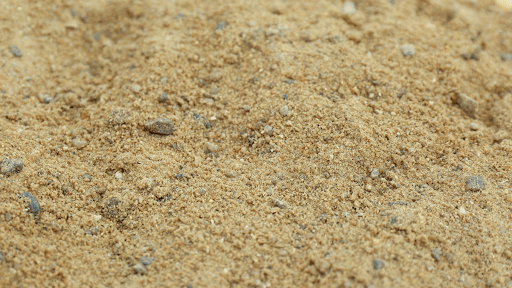
Sandy Soil
*For detailed notes of this topic, check this link Sandy soils
Silty Soil
- When opposed to sandy soil, silty soil is smaller in size, smoother, and becomes soapy slick when moistened.
- When we roll silty soil between our fingers, it deposits dirt on our skin. Silt, as opposed to sand, has smaller particles.
- It also includes rock and mineral pieces. Because of its fine texture, it also retains water better than sand.
- Because of the aforementioned qualities, it is also beneficial to agriculture.
- This soil, while nutritious, cannot contain as many nutrients but may keep water for a longer length of time.
- It is cool in nature due to its moisture-retention ability, and it also compacts quickly.
- If the drainage system is properly channelized, the plants benefit significantly.
- This soil is less difficult to cultivate than others.
- It has a foamy, smooth feel and is good at retaining moisture.
- Suitable for almost every form of fruit and vegetable, crop may thrive on this soil if the drainage is adequate.
- Grass, perennials, climbers, shrubs, and other plants thrive in this soil.
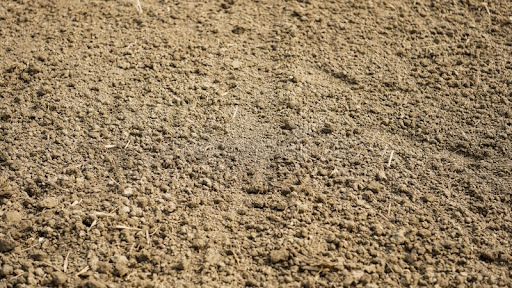
Silty Soil
Clay Soil
- When compared to the other soils listed, clay soil has the lowest particle composition and good water storage characteristics.
- Because of the microscopic size of its particles and their inclination to clump together, only a small amount of air can move through its gaps.
- Because of its slower drainage nature, plant nutrients will be firmly kept, making this soil rich in plant food for improved development.
- The tiniest particles are found in clay. Because the particles are so densely packed, there is very little or no airspace.
- As a result, this property efficiently retains water. However, moisture and air permeation become problematic, restricting plant development.
- This soil is chilly in the spring, and it will take time to warm up since the water within the soil must also warm up.
- When the soil dries up, it becomes quite heavy to work with. During the heat, it may also become hard and compact.
- When wet, it feels sticky, rolls up easily, and turns into a sausage-like shape.
- It is more difficult to cultivate and takes longer to warm up in the spring.
- This soil has a low water-drainage capacity and fewer air spaces.
- This soil is hard and rocky while dry, yet sticky and bumpy when wet.
- This soil is excellent for growing decorative plants and fruit trees.
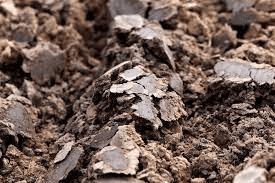
Clay Soil
Peaty Soil
- The peaty soil will be either black or dark brown in hue.
- It compresses quickly due to its high water content and feels soft when handled; it is also high in organic materials.
- These soil farmers utilise it to prevent disease by regulating pH levels or soil chemistry, and it also includes acidic water.
- When we roll peat soil in our palms, no balls form, and when we crush it, the water content is driven out.
- When touched, this dirt will feel spongy. When properly drained and treated, peaty soil may yield good rice crops.
- Because the acidic state of the soil delays the breakdown process, fewer nutrients are provided.
- This soil warms very rapidly and contains a lot of water.
- This soil is appropriate for plants that include legumes, salad crops, root crops, and shrubs such as Witch hazel, Lantern trees, Heather, and others.
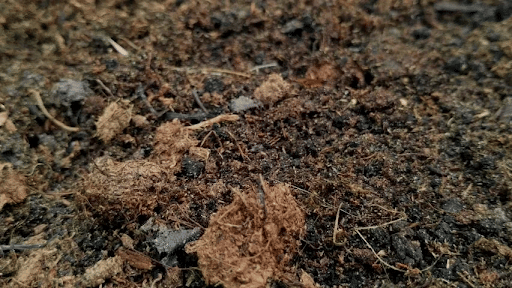
Peaty Soil
Saline Soil
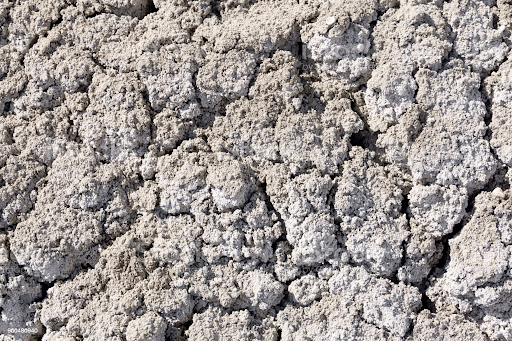
- Because of its high salt concentration, this soil is generally brackish under exceptionally dry circumstances.
- Saline soil can harm and even halt plant development, make watering difficult, and delay germination.
- Because of the high salt concentration, the plants are unable to absorb water, resulting in drought stress.
- Saline soil is easily identified because it forms a white layer on the soil's top and plants develop poorly, suffering from leaf tip burn, which is notably visible in young leaves.
- This soil is stonier and grainier than others.
- This soil is usually found on limestone or chalk bedrock.
- In rare situations, the alkaline content of this soil may produce yellowing leaves and limited plant development.
- It is suitable for: Pinks, Lilacs, Mock Oranges, Weigela, Madonna Lillie, Cabbage, sweet corn, spinach, beets, and other vegetables.
Saline Soil
*For detailed notes of this topic, check this link Saline soils
Loam Soil
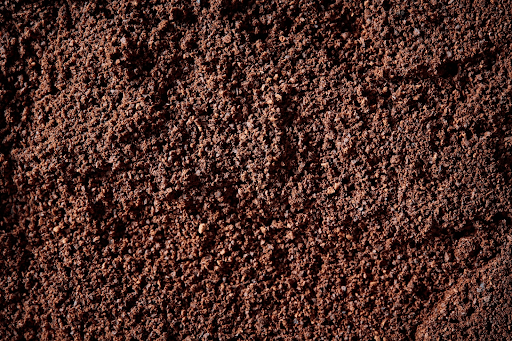
- Loam soil is regarded to be the perfect form of soil since the plants and gardeners really adore it.
- This soil has a balance of three materials: silt, clay & humus, and sand.
- It will have greater calcium and pH levels due to its past organic matter concentration.
- This dirt is black in colour, dry, and crumbles when touched. The air travels easily down to the roots between the soil particles.
- It has the proper quantities of each type of soil and humus, both of which are necessary for growth.
- Loam soils are ideal for plant growth because sand, silt, and clay mix to provide advantageous qualities.
- This soil is simple to cultivate and heats fast without getting too dry in the summer. This dirt is ideal for growing plants outside.
- This soil is suitable for practically all fruit and vegetable crops.
- Bamboos, climbers, perennials, tubers, and shrubs such as Dog's tooth violets, Wisteria, Rubus, and others flourish in this soil.
Loam Soil
Acid Soils
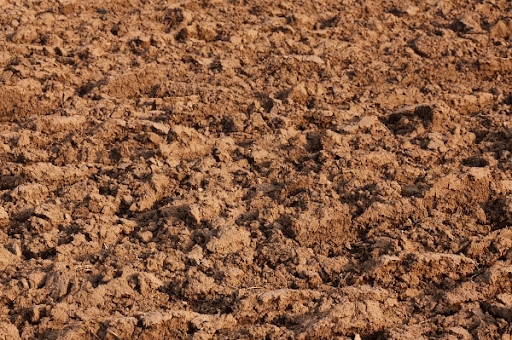
- If the pH number is less than 7, the soil is considered acidic, and if the pH value is less than 5.5, the soil is considered severely acidic.
- Soils in heavy rainfall areas are acidic because soluble basic salts such as Calcium, Magnesium, Potassium, Sodium are leached away by drainage water, leaving insoluble acidic residues made mostly of oxides and silicates of iron, silicon, and aluminium, which accumulate in significant amounts.
- Soil acidification is caused by the accumulation of hydrogen cations, which lowers the pH of the soil.
- Acidification can also occur when base cations from the soil, such as calcium, magnesium, potassium, and sodium, are leached.
- Soil acidity happens naturally as lichens and algae begin to erode rock surfaces. Acids continue to dissolve as soil forms.
- Soils in natural ecosystems grow increasingly acidic with time and weathering.
- Acid rain, agriculture, and pollution can all contribute to increased soil acidification rates.
Acidic Soil
*For detailed notes of this topic, check this link Acid soils
Sodic Soils
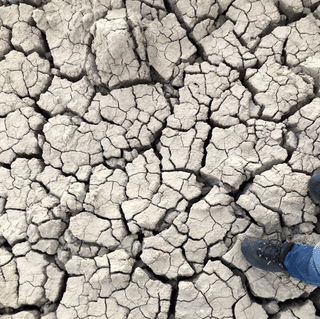
- Sodic soils form when soil is saturated with sodium salts and the exchange sites contain exchangeable sodium, which generally persists long after the soluble salts have been removed.
- Sodicity in soil is defined as a high concentration of sodium ions in comparison to other cations.
- The main indicator of sodicity is the amount of sodium in the soil, which is referred to as the Exchangeable Sodium Percentage (ESP).
- Sodicity in soil degrades soil properties by weakening soil particle bonds.
- An ESP of 6% is considered the threshold at which sodium cation in soil has a negative impact on soil structure when in contact with fresh water, causing clay dispersion.
- Some sodium stays attached to clay particles as sodium salts are leached through the soil, displacing other cations.
- Soils are often considered sodic when the amount of sodium impacts soil structure.
- By decreasing the link between soil particles, sodicity impairs soil characteristics.
- The soluble salts must be leached from the soil profile, and the exchangeable sodium must be replenished with calcium by gypsum treatments.
- Sodic soils can and frequently do include significant levels of soluble salts, in which case they are formally referred to as saline-sodic soils and provide unique management challenges.
Sodic soil
*For detailed notes of this topic, check this link Sodic soils
Conclusion
All soils with a certain set of clearly defined qualities are grouped together to form soil types. In general, "soil" is a very broad term that refers to the loose layer of earth that covers the planet's surface. Soil is a component of the earth's surface that consists of disintegrated rock, humus, inorganic and organic materials. It takes an average of 500 years or more for soil to form from rocks. Soil is typically formed when rocks are broken down into their constituent parts. When various forces act on the rocks, they break down into smaller pieces to form the soil.
FAQs
Question: What are the main types of soil found in India?
Answer: The major types of soil in India are Alluvial, Black, Red, Laterite, Desert, and Mountain soils, each varying in texture, fertility, and suitability for different crops.
Question: How does alluvial soil benefit agriculture in India?
Answer: Alluvial soil is rich in minerals and organic matter, making it highly fertile. It is ideal for growing crops like rice, wheat, and sugarcane, especially in the Indo-Gangetic plains.
Question: What are the characteristics of black soil?
Answer: Black soil, also known as Regur soil, is rich in lime, iron, magnesia, and alumina. It is known for its moisture retention capacity and is ideal for cotton cultivation.
Question: Why is red soil less fertile compared to alluvial soil?
Answer: Red soil is low in nitrogen, phosphorus, and organic matter, making it less fertile compared to alluvial soil. It is suitable for crops like millets and groundnuts but requires irrigation and fertilization.
Question: What role does laterite soil play in Indian agriculture?
Answer: Laterite soil is rich in iron and aluminum, often found in tropical and subtropical regions. It is not ideal for cultivation but can support crops like tea, coffee, and rubber with proper treatment.
MCQs
1. Which soil type is most suitable for cotton cultivation in India?
A) Alluvial soil
B) Black soil
C) Red soil
D) Laterite soil
Answer: (B) See the Explanation
Black soil, also known as Regur soil, is ideal for cotton cultivation due to its moisture retention capacity and rich mineral content.
2. Which of the following is a characteristic of alluvial soil?
A) Rich in organic matter
B) Poor in minerals
C) Found in desert regions
D) High in iron content
Answer: (A) See the Explanation
Alluvial soil is rich in organic matter, making it highly fertile and suitable for growing a variety of crops like rice, wheat, and sugarcane.
3. What is the primary characteristic of red soil?
A) High in nitrogen
B) Rich in minerals like iron and alumina
C) Found in hilly areas
D) Suitable for paddy cultivation
Answer: (B) See the Explanation
Red soil is characterized by its high content of iron and alumina, making it less fertile than alluvial soil. It requires proper irrigation and fertilizers for optimal crop yield.
4. Which soil type is typically found in the desert regions of India?
A) Desert soil
B) Alluvial soil
C) Laterite soil
D) Black soil
Answer: (A) See the Explanation
Desert soil is typically found in arid regions of India, such as Rajasthan, where water retention is low and the soil is poor in nutrients.
5. Laterite soil is mostly found in which part of India?
A) Himalayan region
B) Deccan Plateau
C) Coastal regions
D) Gangetic plains
Answer: (C) See the Explanation
Laterite soil is predominantly found in the coastal regions of India, especially in Kerala, Karnataka, and parts of Tamil Nadu and Odisha.
GS Mains Questions and Model Answers
Q1: Evaluate the role of soil conservation techniques in promoting sustainable agriculture in India. How can the government address the issue of soil degradation?
Answer: Soil conservation techniques such as terracing, contour farming, and agroforestry play a critical role in preventing soil erosion, improving soil fertility, and increasing agricultural productivity. The government can address soil degradation by promoting organic farming, providing subsidies for soil conservation practices, and encouraging the use of sustainable agricultural inputs. Additionally, raising awareness about the importance of soil health and implementing stricter regulations on land use will help preserve soil resources.
Q2: Discuss the factors affecting soil fertility in India and suggest measures to enhance it.
Answer: Soil fertility in India is affected by factors such as climate, irrigation practices, crop rotation, and use of chemical fertilizers. Over-exploitation of soil leads to depletion of essential nutrients. To enhance soil fertility, measures such as adopting organic farming, increasing the use of bio-fertilizers, practicing crop rotation, and improving water management are essential. Additionally, the government should promote the use of natural fertilizers and reduce dependence on harmful chemical inputs to maintain soil health.
Q3: Analyze the impact of soil erosion on agriculture in India and propose solutions to mitigate its effects.
Answer: Soil erosion in India, caused by deforestation, overgrazing, and improper agricultural practices, leads to the loss of topsoil, reducing soil fertility and impacting crop yields. To mitigate soil erosion, techniques such as afforestation, contour plowing, and constructing check dams can be employed. Furthermore, improving land management practices and promoting soil conservation education among farmers are crucial steps toward sustainable agriculture in erosion-prone areas.
Previous Year Questions on Types of Soil
1. UPSC CSE 2020
Question: Discuss the importance of soil types in determining the agricultural patterns of India. How do different soils support different crops?
Answer: Different types of soils in India, such as alluvial, black, and red soils, support distinct crops due to variations in mineral content, moisture retention capacity, and organic matter. Alluvial soil, rich in nutrients, supports crops like wheat and rice, while black soil is ideal for cotton cultivation. Red soil, though less fertile, supports crops like groundnut and millet.
2. UPSC CSE 2019
Question: Explain the challenges posed by soil erosion in India and the strategies adopted to counter it.
Answer: Soil erosion in India leads to reduced agricultural productivity, loss of fertile land, and water pollution. To counter this, the government has implemented soil conservation programs like the National Watershed Development Project and afforestation campaigns. Farmers are also being encouraged to use crop rotation, no-tillage farming, and mulching to prevent soil erosion.
Download the PREPP App and attempt FREE IAS Exam Mock Tests and get complete study material!

Full Test - 04: UPSC CSE Prelims CSAT (Paper-II)
Full Test - 03: UPSC CSE Prelims CSAT (Paper-II)
UPSC CSE Prelims 2026 GS Paper 1 Question Paper (24-May-2026)
UPSC CSE Prelims 2026 CSAT Paper 2 Question Paper (24-May-2026)

17 February 2025 | The Hindu Must Read Articles | Current Affairs

16 February 2026 | The Hindu Must Read Articles | Current Affairs

13 February 2026 | The Hindu Must Read Articles | Current Affairs









Comments