Sodic Soils - Agriculture Notes
Sodic soils provide unique difficulties since they frequently have very poor structural qualities that restrict or completely preclude water penetration and drainage. In the root zone, they frequently build up elements like boron and molybdenum to amounts that may be harmful to plants. A soil classified as sodic has a high proportion of exchangeable sodium. This article will explain to you about Sodic soils which will help prepare the Agriculture Syllabus for the UPSC Civil Service exam.
|
Table of Contents |
What are Sodic Soils?
- Sodic soils form when soil is saturated with sodium salts and the exchange sites contain exchangeable sodium, which generally persists long after the soluble salts have been removed.
- Sodicity in the soil is defined as a high concentration of sodium ions in comparison to other cations.
- The main indicator of sodicity is the amount of sodium in the soil, which is referred to as the Exchangeable Sodium Percentage (ESP).
- Sodicity in soil degrades soil properties by weakening soil particle bonds.
- An ESP of 6% is considered the threshold at which sodium cation in soil hurts soil structure when in contact with fresh water, causing clay dispersion.
- Some sodium stays attached to clay particles as sodium salts are leached through the soil, displacing other cations.
- Soils are often considered sodic when the amount of sodium impacts soil structure.
- By decreasing the link between soil particles, sodicity impairs soil characteristics.
- The soluble salts must be leached from the soil profile, and the exchangeable sodium must be replenished with calcium by gypsum treatments.
- Sodic soils can and frequently do include significant levels of soluble salts, in which case they are formally referred to as saline-sodic soils and provide unique management challenges.
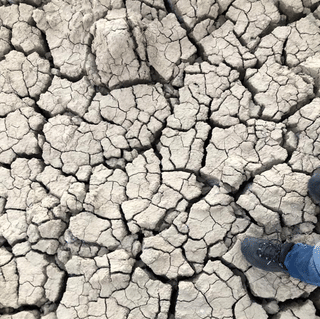
Sodic Soil
|
|
|
|---|---|
| Types of soil | Acid soils |
| Saline soils | Sandy soils |
Indicators of Sodic Soil
- Due to structural instability, the soil is prone to becoming boggy when wet.
- After the rain, milky-coloured water collects on the soil's surface.
- Water slowly percolates into the soil.
- Water erosion is a problem with soils.
- When the soil dries, it hardens and forms a surface crust.
- Cracks may form in some dispersive soils as the soil shrinks when it dries.
- A lack of vegetation or crop growth.
- Subsoil that is dense or hard.
- The subsoil has a prismatic or columnar structure.
- A soapy sensation when wetting and working up soil textures.
- pH > 8.5
- Rooting depth is shallow.
Characteristics of Sodic Soils
- Except for a few hardy types of grass, there will be no natural vegetation.
- Alkali soils turn black when wet due to the humic acid fraction of organic matter that is dissolved by Na2CO3 at high pH.
- When wet, they are very slippery and soft, but when dry, they are extremely hard.
- When the soil dries, deep cracks 1-2 cm wide form, which closes when wet.
- The surface soil forms a hard crust with convex surfaces.
- The sealing effect of Na- clays restricts water movement. As a result, a few centimetres beneath the surface may be almost saturated with water while the surface is dry, and vice versa.
- Because of the poor physical conditions, runoff water is always turbid.
- At varying depths, clay pan formation or kankar pan formation occurs.
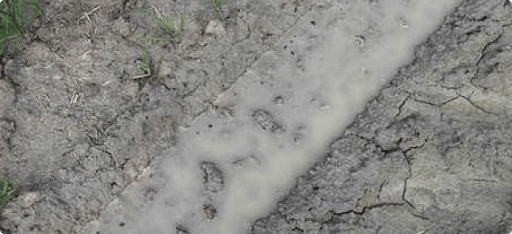
Waterlogged Sodic Soil
Effects of Soil Sodicity
- Sodicity reduces water flow through soil, limiting leaching, causing salt to accumulate over time, and resulting in the formation of saline subsoils.
- Wetting Sodic soil causes dispersion on the surface, resulting in crusting, waterlogging, low hydraulic conductivity rates, excessive runoff, and erosion.
- The erosion process is accelerated due to dispersion in the subsoil, which can result in the formation of gullies and tunnels.
- Sodic soil prevents water storage due to swelling and dispersion, which block the pores and reduce the soil's internal drainage.
- This hurts soil tilling, seed germination, root growth, and vulnerability to wind and water erosion.
- It disrupts aggregation, resulting in dense, cloddy, and structureless soils.
- Sodic soils may affect plant growth by:
- Toxicity to sodium-sensitive plants in particular;
- Deficiencies or imbalances in nutrients;
- pH is high;
- Dispersion of soil particles, resulting in poor soil physical condition.
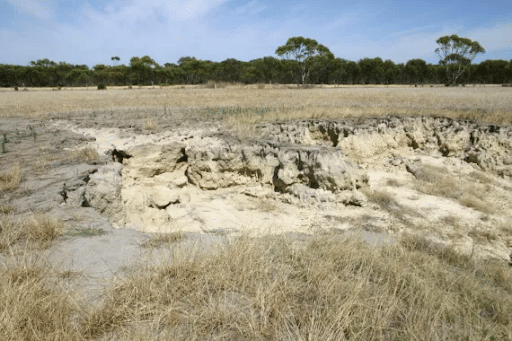
Effects of Sodicity of Soil
Sodicity and Salinity
- Saline and sodic soils both are associated with sodium and contain an excess of salt, which can harm the plants that thrive in them, they are frequently confused.
- However, there is a distinction between the two, and it is critical to correctly identify the problem to correct the soil.
- Saline soils are frequently sodic, but they do not exhibit sodicity indicators. Soil salts prevent soil particles from dispersing.
- As a result, soil sodicity cannot be determined solely by the level of sodium in the soil.
- Salinity levels must also be determined. If this salt level falls below the minimum for soil stability, even a small amount of sodium can cause problems.
- Soils with high sodium levels and low salt levels will have extremely poor physical conditions.
Distribution of Sodic Soil
- Sodic soils are found mostly in the Indo-Gangetic plains, the arid and semi-arid regions of western and central India, and the Peninsular area in southern India.
- They are caused mostly by weathering of rocks and minerals having high sodium minerals, irrigation with groundwater containing excessive amounts of carbonates and bicarbonates, rise in groundwater table owing to canal irrigation, and salt-laden run-off from adjacent areas and un-drained basins.
- Uttar Pradesh has the most area covered by saline soils.
- Gujarat and West Bengal account for more than 72% of coastal saline soils.
Reclamation Methods
The removal or replacement of exchangeable sodium is required for the reclamation and improvement of sodic soil. Physical, chemical, and biological techniques, can all be used to accomplish this.
Physical Methods
- Deep Tillage: The process of deep tillage is a physical method of improving sodic soil. It aids in the recovery of sodic soil by effectively breaking down soil ploughs, increasing total porosity (particularly large porosity), decreasing soil bulk density, and promoting root extension into the deep soil.
- Diluting with High Salt Water: Sodic soil regeneration is possible in areas where water is not a constraint. It is possible to achieve this by continuously diluting the soil with divalent cation-rich high-salt water.
- Water with a high EC limits soil dispersion and causes soil colloids to flocculate. At the same time, the Ca ions in the water reduce sodicity by displacing the exchangeable sodium.
Chemical Methods
- Gypsum (Calcium sulphate) treatment is excellent for improving sodic soil. It combines with the exchangeable sodium in the soil to form sodium sulphate. To lower soil pH, sodium sulphate is leached from the soil.
- To manage sodic soils, gypsum is used to enhance salt concentration. This helps to reduce dispersion by increasing the level of salts in the soil.
- There is no set rate for applying gypsum to improve sodic soil. This is mostly due to the topography, climate, and soil type.
- Some sodic soils with high levels of exchangeable sodium also have high levels of exchangeable hydrogen. In the presence of exchangeable hydrogen, an acidic reaction occurs, lowering the pH of the soil.
- Sulfuric acid is an oily, caustic liquid with a purity of approximately 95%. When applied to sodic soil containing calcium carbonate, it immediately reacts to form calcium sulphate, providing soluble calcium indirectly.
- Iron sulphate and aluminium sulphate (alum) are typically highly pure and water soluble. When applied to soil, it dissolves in the presence of water, resulting in a hydrolysis reaction.
- Sulfuric acid is formed as a result, and it reacts with the calcium carbonate in the sodic soil to provide soluble calcium.
Biological Methods
- Organic matter, compost, and plant roots aid in the dissolution of insoluble calcium compounds found in sodic soil. Despite the fact that this technique has been extensively tested, it is widely accepted that selecting a suitable recovery strategy is dependent on soil geography and physicochemical properties.
- It has been reported that improving sodic soil through agroforestry systems can also improve sodic soil biological production.
- Plant-microbe interaction is a beneficial link between plants and microorganisms and an effective method for soil reclamation.
Conclusion
Simply put, sodic soils form when an excess of sodium overwhelms the cation exchange sites in soils, causing physical problems. Before beginning the salt leaching process to reclaim sodic soils, it is critical to first replace the excess sodium from the cation exchange sites with large amounts of calcium supplements. To manage sodic soils, gypsum is used to increase the salt content. This helps to suppress dispersion by increasing the level of salts in the soil.
FAQs
Question: What are sodic soils?
Answer: Sodic soils are characterized by high levels of sodium ions, which negatively affect soil structure, reducing permeability and fertility. This makes it challenging for water and air to penetrate the soil, impacting plant growth.
Question: How does high sodium content affect soil?
Answer: High sodium content causes poor soil structure, waterlogging, crusting, and reduced aeration, which can hinder root development and limit crop productivity.
Question: What are common methods to reclaim sodic soils?
Answer: Reclamation involves using amendments like gypsum to replace sodium ions with calcium, enhancing soil structure. Proper drainage and organic amendments can further improve soil conditions.
Question: What role does gypsum play in sodic soil management?
Answer: Gypsum helps replace sodium ions with calcium in the soil, improving structure, permeability, and fertility, making it more suitable for crop cultivation.
Question: Why is water management crucial for sodic soils?
Answer: Effective water management prevents waterlogging and further accumulation of sodium, facilitating better crop growth and soil structure improvement.
MCQs
- Sodic soils are primarily characterized by:
A) High potassium levels
B) High sodium content
C) High calcium levels
D) Low organic matter
Answer: (B) See the Explanation
Sodic soils contain excess sodium ions, which negatively affect soil structure and fertility.
- Which soil amendment is commonly used for reclaiming sodic soils?
A) Lime
B) Gypsum
C) Potash
D) Urea
Answer: (B) See the Explanation
Gypsum helps displace sodium with calcium, improving soil structure and reducing sodicity.
- Sodic soils often lead to:
A) Improved plant growth
B) Soil waterlogging and crusting
C) Increased permeability
D) Higher crop yields
Answer: (B) See the Explanation
High sodium content causes soil compaction, leading to waterlogging and crusting.
- Effective water management for sodic soils involves:
A) Over-irrigation
B) Proper drainage and controlled irrigation
C) No irrigation
D) Only rainwater management
Answer: (B) See the Explanation
Water management helps prevent sodium buildup, improving soil conditions and crop growth.
- The main impact of sodic soils on plant growth is due to:
A) High nutrient availability
B) Poor soil structure and permeability
C) High organic matter
D) Rapid drainage
Answer: (B) See the Explanation
Sodic soils restrict water and air movement, leading to poor root development and reduced crop growth.
GS Mains Questions and Model Answers
Q1: Explain the challenges posed by sodic soils to agriculture and strategies for reclamation.
Answer: Sodic soils pose challenges like poor soil structure, reduced permeability, waterlogging, and low fertility, hindering crop productivity. Reclamation strategies include applying gypsum to replace sodium ions, improving soil permeability, and promoting drainage. Organic amendments and controlled water management help restore soil health, ensuring sustainable agricultural practices. Effective management involves community awareness, monitoring soil health, and integrating traditional and modern techniques for long-term soil productivity.
Q2: Discuss the role of soil amendments in managing sodic soils.
Answer: Soil amendments like gypsum play a crucial role in reclaiming sodic soils by displacing sodium ions with calcium, enhancing soil structure and permeability. This process reduces crusting, improves aeration, and increases water infiltration. Organic amendments can also boost microbial activity and enhance nutrient availability. Proper application of these amendments, combined with effective drainage and water management practices, ensures improved soil health and crop productivity.
Q3: Analyze the impact of water management on the productivity of sodic soils.
Answer: Water management is vital for maintaining the productivity of sodic soils. Excessive water can lead to waterlogging, while inadequate water prevents leaching of sodium ions. Controlled irrigation, coupled with effective drainage, ensures that sodium is flushed out, improving soil structure. Proper water management reduces crusting and compaction, creating a better environment for root growth and plant development, ultimately enhancing agricultural productivity.
Previous Year Questions on Sodic Soils
1. UPSC CSE 2018
Question: Evaluate the impact of sodic soils on agricultural productivity and suggest measures for sustainable management.
Answer: Sodic soils negatively impact agricultural productivity by reducing soil permeability, causing waterlogging, and limiting root growth. Sustainable management measures include applying gypsum to replace sodium with calcium, improving drainage systems, and using organic amendments to enhance soil structure. Proper water management, including controlled irrigation, is crucial for maintaining soil health. Community awareness and government policies play a significant role in the effective reclamation of sodic soils.
2. UPSC CSE 2020
Question: Discuss the challenges and strategies for managing sodic soils in India.
Answer: Managing sodic soils in India involves addressing challenges like poor soil structure, reduced permeability, and low fertility, which hinder crop productivity. Strategies include applying gypsum, enhancing drainage, and using organic amendments. Effective water management and community-based interventions are essential to prevent sodium accumulation. Integrating traditional knowledge with scientific approaches ensures long-term soil health and agricultural sustainability.
Download the PREPP App and attempt FREE IAS Exam Mock Tests and get complete study material!

Full Test - 04: UPSC CSE Prelims CSAT (Paper-II)
Full Test - 03: UPSC CSE Prelims CSAT (Paper-II)
UPSC CSE Prelims 2026 CSAT Paper 2 Question Paper (24-May-2026)
UPSC CSE Prelims 2026 GS Paper 1 Question Paper (24-May-2026)

17 February 2025 | The Hindu Must Read Articles | Current Affairs

16 February 2026 | The Hindu Must Read Articles | Current Affairs

13 February 2026 | The Hindu Must Read Articles | Current Affairs









Comments