Stages of Soil Erosion - Agriculture Notes
Erosion is a comprehensive natural process of detachment and removal of loosened rock materials and soils by exogenetic processes that are unaffected by human activity. It is also known as geological erosion. Soil Erosion is the process by which things erode, break, or gradually deteriorate. Erosion typically occurs on the surface of soil, rock, or dissolved material from one location on the Earth's crust and is carried to another by wind or water flow. In this article, we will discuss Stages of Soil Erosion which will be helpful for UPSC exam preparation.
| To Read update on this topic: |
|
Table of Contents |
What is Soil Erosion?
- Soil erosion is the loosening and displacement of topsoil from the land caused by agents such as wind and water.
- Topsoil is the most fertile layer of soil because it contains the most organic, nutrient-rich materials.
- In nature, soil erosion can be a slow process (geological erosion) or a fast process accelerated by human activities such as overgrazing and deforestation.
- Weathering and erosion cause 'degradation' and 'aggradation' to occur at the same time.
- Weathering is a static process, whereas erosion is a mobile process (there is no motion of disintegrated material except the falling down under the force of gravity).
- Water, wind, and tillage erosion all involve three distinct actions: soil detachment, movement, and deposition.
- Topsoil, which is rich in organic matter, fertility, and soil life, is either moved "on-site" where it accumulates over time or transported "off-site" where it fills drainage channels.
- Soil erosion reduces cropland productivity while also polluting nearby watercourses, wetlands, and lakes.
- Soil erosion can be a slow process that goes unnoticed for a long time, or it can happen quickly and cause significant loss of topsoil.
- Other serious soil degradation conditions that can accelerate the soil erosion process include soil compaction, low organic matter, loss of soil structure, poor internal drainage, salinisation, and soil acidity.
|
|
|
|---|---|
| Splash erosion | Rill erosion |
| Sheet erosion | Gully erosion |
| Tillage | Micro Irrigation |
| Desertification | Water logging |
Causes of Erosion
- Land depletion by water can be either natural or accelerated, depending on the cause.
- Natural water erosion is uncontrollable and has no significant impact on soil fertility. It is caused by natural forces such as rainfall, melted snow, or runoff.
- Each soil type has its own natural erosion rate, which is determined by farmland characteristics and the climate in which it is located.
- On the contrary, irrational farming causes accelerated erosion. It happens when the wrong irrigation method, amount of water, and timing of application result in the destruction of the fertile layer of land.
- Soil erosion occurs when dirt is exposed to strong winds, heavy rains, and flowing water. In some cases, human activities, particularly farming and land clearing, expose soil to erosion.
- Overgrazing by farm animals such as cattle and sheep can also deplete large areas of land of ground-covering plants, which would otherwise keep the soil in place.
- Deforestation, particularly clearcutting, a common practise in the industrial logging industry, is another practise that has disastrous consequences for soil health.
Factors Contributing to Soil Erosion
Climate
- The main climatic factor governing soil erosion by water is the amount and intensity of precipitation.
- The relationship is especially strong when heavy rain falls at times or in places where the soil's surface is not well protected by vegetation.
- This could happen when agricultural activities strip the soil bare, or in semi-arid regions where vegetation is naturally sparse.
- Wind erosion necessitates strong winds, especially during droughts when vegetation is scarce and soil is dry (and so is more erodible).
- Other climatic factors, such as average temperature and temperature range, can influence erosion by influencing vegetation and soil properties.
Soil Structure and Composition
- The composition, moisture, and compaction of soil are all important factors in determining the erosivity of rainfall.
- Because clay helps bind soil particles together, sediments containing more clay are more resistant to erosion than those containing sand or silt.
- Organic-rich soil is often more resistant to erosion because the organic materials coagulate soil colloids and create a stronger, more stable soil structure.
- The amount of water present in the soil prior to precipitation is also important because it limits the amount of water that can be absorbed by the soil (and hence prevented from flowing on the surface as erosive runoff).
Vegetative Cover
- Vegetation acts as a barrier between the atmosphere and the soil. It improves the soil's permeability to rainwater, reducing runoff.
- It protects the soil from wind erosion and causes beneficial changes in the microclimate.
- Plant roots bind the soil together and intertwine with other roots, forming a more solid mass that is less susceptible to both water and wind erosion.
- The removal of vegetation accelerates the rate of surface erosion.
Topography
- The topography of the land determines the velocity at which surface runoff flows, which in turn determines the erosivity of the runoff.
- Longer, steeper slopes (especially those lacking adequate vegetative cover) are more prone to very high rates of erosion during heavy rains than shorter, less steep slopes.
- Steeper terrain is also more prone to mudslides, landslides, and other forms of gravitational erosion.
Stages of Erosion Process
Splash Erosion
- Splash erosion is the first stage of erosion. It happens when raindrops hit bare soil.
- The explosive impact breaks up soil aggregates, causing individual soil particles to be 'splashed' onto the soil surface.
- The splashed particles can rise up to 60cm above the ground and travel up to 1.5 metres from the point of impact.
- The particles obstruct the spaces between soil aggregates, causing the soil to form a crust that reduces infiltration and increases runoff.
- Raindrops' impact loosens the material that holds it together, allowing small fragments to detach.
- If the rain continues, water collects on the ground, causing water flow on the land surface, which is referred to as surface water runoff.
*For detailed notes of this topic, check this link Splash erosion
Sheet Erosion
- The removal of soil in thin layers by raindrop impact and shallow surface flow is known as sheet erosion.
- It results in the loss of the finest soil particles, which contain the majority of the soil's available nutrients and organic matter.
- It usually occurs after crusting, which is caused by the previous stage of water damage to the soil.
- Soil loss is so gradual that it often goes unnoticed, but the cumulative impact accounts for significant soil losses.
- Overgrazed and cultivated soils with little vegetation to protect and hold the soil are the most vulnerable to sheet erosion.
- Bare areas, water puddling as soon as rain falls, visible grass roots, exposed tree roots, and exposed subsoil or stony soils are early signs of sheet erosion.
- Active sheet erosion may be indicated by soil deposits on the high side of obstructions such as fences.
- Surface water flows that cause sheet erosion rarely travel more than a few metres before condensing into rills.
*For detailed notes of this topic, check this link Sheet erosion
Rill Erosion
- Rills are shallow drainage lines that are no deeper than 30cm.
- They form when surface water collects in depressions or low points in paddocks, eroding the soil.
- Rill erosion is common in bare agricultural land, especially overgrazed land, and in freshly cultivated soil with a loosened soil structure. Rills are typically removed with farm machinery.
- By reducing the volume and speed of surface water with grassed waterways and filter strips, ripped mulch lines, and contour drains, rill erosion can be reduced.
- Rill erosion is frequently referred to as the transitional stage between sheet erosion and gully erosion.
*For detailed notes of this topic, check this link Rill erosion
Gully Erosion
- Gully erosion is a visible type of soil erosion that reduces soil productivity and restricts land access and use.
- Gully soil can also cause infrastructure damage by burying fence lines, silting up waterways, clogging road culverts, and filling dams and reservoirs.
- Controlling gully erosion can be challenging and expensive. It may be justified on higher-quality soils where there is a reasonable chance of success, or in strategic locations such as where a road or building is under threat by an advancing gully.
- Gully erosion is a more advanced stage of rill erosion in which surface channels have eroded to the point where tillage operations cannot remove them.
- A gully head forms when rill erosion deepens and widens, resulting in a distinctive nick point or headwall. As a result of headwall migration, most gullies extend up slope.
- However, the collapse and slumping of sidewalls is usually responsible for the greatest proportion of soil loss.
- Human land use, particularly changes in land use, may hasten gully expansion through head cutting, sidewall collapse, piping, floor erosion, and other processes, resulting in widespread land degradation and potential damage to human structures and activities.
- A gully is traditionally distinguished from a rill by having a critical cross-sectional area of at least one square foot, i.e., the size of a channel that can no longer be erased by normal tillage operations.
*For detailed notes of this topic, check this link Gully erosion
Consequences of Soil Erosion
- Soil erosion destroys the fine particles of topsoil, which contain the majority of the nutrients and organic matter required by plants.
- Wind erosion removes finer soil material, such as organic matter, clay, and slit, in a suspension (colloidal) form, leaving behind coarser, less fertile material.
- Erosion can cause the removal of seeds or seedlings, resulting in bare soil. The removal of seeds and seedlings reduces the ability of soil to store water.
- River, stream, and field siltation is also caused by sheet, rill, gully, and stream bank erosion.
- Silt deposition causes crop and pasture damage, as well as sedimentation in water bodies such as streams, dams, and reservoirs.
- Water body sedimentation reduces water quality and harms aquatic habitats and organisms.
- Large amounts of soil are also lost due to gully erosion. Wider deep gullies can reach 30 m in width and severely limit land use. Large gullies disrupt normal farm operations.
- Streambank erosion not only results in land loss, but it also alters the course of a river or stream. Erosion of stream banks also causes damage to public roads.
- Wind erosion also harms roads and agricultural fields by depositing large amounts of airborne soil particles.
- Landslides and mass land movement also impede farm production and land use. It also kills both animals and humans.
- The adjacent land is covered in sand as a result of coastal erosion.
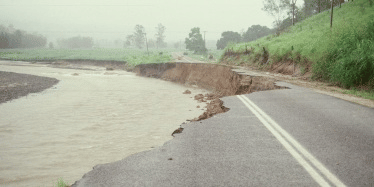
Damage to road due to erosion
Prevention and Management of Erosion
- Build soil organic matter: For soil to be healthy, the right combination of water, air, minerals, and organic matter is required.
- According to research, increasing organic matter from 1 to 3 percent can reduce erosion by 20 to 33 percent by increasing soil's water-holding capacity.
- Soil organic matter, which is composed of decomposing plant and animal material, is the glue that holds soil together and keeps it in place.
- Plant vegetation: Trees, shrubs, hedgerows, and ground plants can provide wind protection. Ensuring continuous ground cover, such as by planting cover crops, also aids in the binding of soil to roots.
- Use erosion control matting: This ground covering, also known as an erosion control blanket, is often made of open-weave, biodegradable materials that shield the soil and provide support for growing vegetation on bare ground.
- This method of erosion control is frequently used on solar farms and construction sites where large areas are left barren and vulnerable to wind and water erosion.
- No-Till/Minimum Tillage Methods: Farmers have been ploughing farm fields for centuries, but agriculture scientists have helped prove that a no-till approach may offer more benefits in recent decades.
- Farmers have been able to reduce erosion and runoff by not disturbing the soil, which benefits crop productivity and water quality.
- No-till practises can also help to reduce nitrogen and other important soil nutrients loss.
- Erosion-reducing grazing practises: Rotational grazing is a method of moving livestock from one pasture paddock to the next. Each paddock is given a rest period and is allowed to regrow naturally, reducing soil compaction and erosion.
- Other beneficial practises include fencing and stream crossings to protect pastures from erosion.
- Other Methods include:
- Terracing is an extremely effective method of erosion control that has been used for thousands of years by people all over the world.
- Windbreaks (also known as shelterbelts) are rows of trees and shrubs planted along the edges of agricultural fields to provide wind protection.
- In addition to significantly reducing wind erosion, windbreaks provide numerous other benefits such as improved microclimates for crops, habitat for beneficial bird species, carbon sequestration, and aesthetic improvements to the agricultural landscape.
Conclusion
Erosion is one of many factors that reduce farmland productivity, eventually rendering the land unfit for agriculture. There are various types of erosion caused by water, depending on its causes and stages. To prevent any type of water erosion and its negative effects, one must understand what each type means and how to treat the soil to ensure that any water-related issues do not occur. Modern agriculture provides a variety of methods for farmers to monitor the health of their soil. Soil erosion can pose a serious environmental threat to everyone on the planet. The extent of soil erosion can have an impact on all aspects of our lives and be hazardous to our health.
FAQs
Question: What is soil erosion?
Answer: Soil erosion is the process by which the top layer of soil is removed from the land surface, primarily due to wind, water, and human activities. This phenomenon can lead to the degradation of land quality, loss of nutrients, and reduced agricultural productivity. Understanding soil erosion is crucial for implementing effective conservation practices to maintain soil health and prevent environmental degradation.
Question: What are the primary causes of soil erosion?
Answer: The primary causes of soil erosion include water runoff, wind action, deforestation, overgrazing by livestock, and improper agricultural practices. Natural factors such as heavy rainfall, storms, and topography also contribute to the erosion process. Human activities, particularly those that disturb the soil, can exacerbate these natural factors, leading to accelerated erosion.
Question: What are the stages of soil erosion?
Answer: The stages of soil erosion can be categorized into three main phases: 1. Initial Stage - where minor surface erosion occurs due to water and wind action. 2. Moderate Stage - characterized by noticeable soil loss and the formation of small rills or gullies. 3. Severe Stage - where significant erosion leads to deep gullies and substantial loss of topsoil, rendering the land less productive. Understanding these stages helps in identifying and addressing soil erosion early on.
Question: How can soil erosion be prevented?
Answer: Soil erosion can be prevented through various conservation practices such as planting cover crops, implementing crop rotation, using contour plowing, constructing terraces, and maintaining vegetation cover. These methods help protect the soil surface, reduce runoff, and promote the retention of soil moisture and nutrients. Additionally, implementing policies for sustainable land management can significantly reduce the risk of soil erosion.
Question: What is the impact of soil erosion on the environment?
Answer: Soil erosion has significant negative impacts on the environment, including loss of fertile topsoil, decreased agricultural productivity, disruption of water cycles, and increased sedimentation in water bodies. This sedimentation can lead to water quality degradation and harm aquatic ecosystems. Furthermore, soil erosion can contribute to climate change by releasing stored carbon into the atmosphere, thus exacerbating global warming.
MCQs
1. What is the primary factor contributing to soil erosion?
A) Deforestation
B) Urbanization
C) Soil compaction
D) All of the above
Answer: (D) See the Explanation
Explanation: All of the above factors contribute to soil erosion, as they disturb the soil structure and promote loss of soil integrity.
2. In which stage of soil erosion are deep gullies formed?
A) Initial Stage
B) Moderate Stage
C) Severe Stage
D) None of the above
Answer: (C) See the Explanation
Explanation: Deep gullies are formed in the severe stage of soil erosion, indicating significant loss of topsoil and soil structure.
3. Which method is NOT effective in preventing soil erosion?
A) Cover cropping
B) Clear-cutting
C) Overgrazing
D) Terracing
Answer: (C) See the Explanation
Explanation: Overgrazing is detrimental and exacerbates soil erosion, while cover cropping, contour plowing, and terracing are effective prevention methods.
4. What is a major consequence of soil erosion on agriculture?
A) Increased crop yields
B) Loss of fertile topsoil
C) Improved soil structure
D) Enhanced biodiversity
Answer: (B) See the Explanation
Explanation: Loss of fertile topsoil is a major consequence of soil erosion, leading to decreased agricultural productivity.
5. Which of the following practices helps in reducing soil erosion?
A) Monoculture
B) Clear-cutting
C) Crop rotation
D) Soil compaction
Answer: (C) See the Explanation
Explanation: Crop rotation helps in reducing soil erosion by maintaining soil health and preventing nutrient depletion.
GS Mains Questions and Model Answers
Q1: Discuss the causes and consequences of soil erosion in agricultural landscapes.
Answer: Soil erosion in agricultural landscapes is primarily caused by factors such as water runoff, wind action, deforestation, and poor agricultural practices like overgrazing and monoculture. The consequences of soil erosion are profound, leading to the loss of fertile topsoil, reduced agricultural productivity, and degradation of land quality. As topsoil is eroded, the nutrient content diminishes, making it increasingly difficult for crops to thrive. This degradation can result in increased reliance on chemical fertilizers, further harming the soil ecosystem. Additionally, soil erosion contributes to water quality issues as sediments enter water bodies, affecting aquatic life. The economic implications for farmers can be severe, as diminished yields lead to reduced income and food insecurity. Therefore, understanding the causes and consequences of soil erosion is crucial for implementing effective soil conservation strategies.
Q2: Evaluate the effectiveness of various soil conservation techniques in mitigating soil erosion.
Answer: Various soil conservation techniques have proven effective in mitigating soil erosion, including the use of cover crops, contour farming, terracing, and agroforestry. Cover crops help protect the soil from erosion during off-seasons, enhancing soil structure and fertility. Contour farming, which involves plowing along the contour lines of a slope, reduces water runoff and encourages water infiltration, thereby minimizing erosion. Terracing converts steep slopes into a series of steps, significantly reducing the speed of water runoff and controlling soil loss. Agroforestry integrates trees and shrubs into agricultural landscapes, providing windbreaks and enhancing soil stability. The effectiveness of these techniques depends on factors such as local soil conditions, climate, and land use practices. Overall, implementing a combination of these methods can create a sustainable approach to soil conservation, preserving soil health for future generations.
Q3: Analyze the impact of soil erosion on the environment and suggest mitigation strategies.
Answer: Soil erosion significantly impacts the environment by degrading land quality, reducing agricultural productivity, and contributing to sedimentation in waterways. This sedimentation leads to increased turbidity, which can harm aquatic ecosystems by reducing light penetration and disrupting habitat. Additionally, soil erosion can lead to the loss of soil organic matter, which is critical for maintaining soil health and supporting biodiversity. To mitigate soil erosion, strategies such as implementing conservation tillage, establishing vegetative cover, practicing crop rotation, and restoring degraded lands are essential. Government policies promoting sustainable land management and community awareness programs can also play a vital role in reducing soil erosion. By adopting these strategies, it is possible to enhance soil conservation, protect ecosystems, and promote sustainable agricultural practices.
Previous Year Questions on Soil Erosion
1. UPSC CSE Prelims 2021:
Question: Which of the following is a significant cause of soil erosion?
A) Reforestation
B) Urbanization
C) Overgrazing
D) Organic farming
Answer: (C)
Explanation: Overgrazing is a significant cause of soil erosion as it removes vegetation cover, leading to soil destabilization.
2. UPSC CSE Mains 2020 (GS Paper 3):
Question: "Discuss the importance of soil conservation practices in sustainable agriculture."
Answer: Soil conservation practices are crucial in sustainable agriculture as they help maintain soil health, enhance productivity, and prevent land degradation. By implementing methods such as cover cropping, contour farming, and agroforestry, farmers can improve soil structure, retain moisture, and enhance nutrient cycling. These practices not only mitigate soil erosion but also support biodiversity and improve resilience to climate change. In sustainable agriculture, the goal is to create a balanced ecosystem that ensures food security while protecting natural resources, making soil conservation a fundamental aspect of agricultural sustainability.
Download the PREPP App and attempt FREE IAS Exam Mock Tests and get complete study material!

Full Test - 04: UPSC CSE Prelims CSAT (Paper-II)
Full Test - 03: UPSC CSE Prelims CSAT (Paper-II)
UPSC CSE Prelims 2026 GS Paper 1 Question Paper (24-May-2026)
UPSC CSE Prelims 2026 CSAT Paper 2 Question Paper (24-May-2026)

17 February 2025 | The Hindu Must Read Articles | Current Affairs

16 February 2026 | The Hindu Must Read Articles | Current Affairs

13 February 2026 | The Hindu Must Read Articles | Current Affairs









Comments