Rill Erosion - Agriculture Notes
Rill erosion is a type of erosion that produces small but distinct streams. It occurs when rainwater does not soak into the soil but instead runs across it. The rills or small channels (often only 30cm deep) form when water flowing across the ground collects in a natural depression in the soil, and erosion is concentrated as the water flows through the depression. In this article, we will discuss Rill Erosion which will be helpful for UPSC exam preparation.
|
Table of Contents |
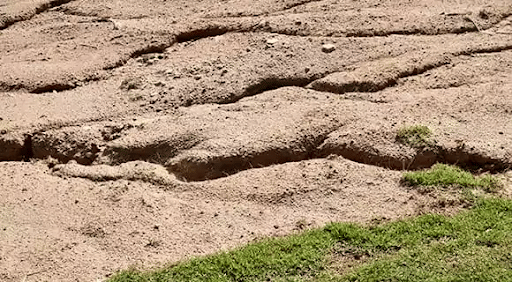
Rill Erosion
What is Soil Erosion?
- Soil erosion is the loosening and displacement of topsoil from the land caused by agents such as wind and water.
- Topsoil is the most fertile layer of soil because it contains the most organic, nutrient-rich materials.
- In nature, soil erosion can be a slow process (geological erosion) or a fast process accelerated by human activities such as overgrazing and deforestation.
- Weathering and erosion cause 'degradation' and 'aggradation' to occur at the same time.
- Weathering is a static process, whereas erosion is a mobile process (there is no motion of disintegrated material except the falling down under the force of gravity).
- Water, wind, and tillage erosion all involve three distinct actions: soil detachment, movement, and deposition.
- Topsoil, which is rich in organic matter, fertility, and soil life, is either moved "on-site" where it accumulates over time or transported "off-site" where it fills drainage channels.
- Soil erosion reduces cropland productivity while also polluting nearby watercourses, wetlands, and lakes.
- Soil erosion can be a slow process that goes unnoticed for a long time, or it can happen quickly and cause significant loss of topsoil.
- Other serious soil degradation conditions that can accelerate the soil erosion process include soil compaction, low organic matter, loss of soil structure, poor internal drainage, salinisation, and soil acidity.
|
|
|
|---|---|
| Splash erosion | Sheet erosion |
| Micro Irrigation | Gully erosion |
| Desertification | Water logging |
What is a Rill?
- A rill is a shallow channel (no more than a few tens of centimetres deep) cut into soil by the erosive action of flowing water in hillslope geomorphology.
- Microrills are similar but smaller incised channels, while gullies are larger incised channels.
- Artificial rills are channels built to transport water from a remote source.
- Constructed rills are a visually appealing water feature in landscape or garden design.
What is Rill Erosion?
- Rill erosion occurs when water concentrates deeper in the soil and begins to form faster-flowing channels.
- These channels, which can be up to 30cm deep, cause soil particle detachment and transportation.
- Rill erosion can progress into gully erosion. That is when the rills reach a depth of at least 0.3 m.
- Rills are narrow, shallow channels eroded into unprotected soil by hillslope runoff.
- Because soil is frequently left bare during agricultural operations, rills may form on farmland during these vulnerable times.
- Rills can also form when bare soil is left exposed after deforestation or during construction activities.
- Rills are fairly visible when first incised, so they are frequently the first indication of an ongoing erosion problem.
- Unless soil conservation measures are implemented, rills on regularly eroding areas may eventually develop into larger erosional features such as gullies or even (in semi-arid regions) badlands.
Formation of Rills
- Rills are formed when water erodes the topsoil on hillsides and are thus heavily influenced by seasonal weather patterns. They appear more frequently during the rainy season.
- Rills form when runoff shear stress, the ability of surface runoff to detach soil particles, exceeds soil shear strength, the ability of soil to resist force acting parallel to the soil's surface.
- This starts the erosion process, as water breaks up soil particles and carries them down the slope. These forces explain why sandy, loamy soils are especially prone to rill formation, whereas dense clays tend to resist rill formation.
- Rills cannot form on every surface, and their formation is inextricably linked to the steepness of the hillside slope.
- Gravity determines the force of the water, which provides the power required to initiate the erosional environment required to create rills.
- The formation of rills is primarily determined by the slope of the hillside. The slope determines the depth of the rills, while the length of the slope and the permeability of the soil determine the number of incisions in an area.
- Each type of soil has a threshold value, a slope angle below which water velocity cannot produce enough force to dislodge enough soil particles for rills to form.
- After rills form, they are subjected to a variety of other erosional forces that can increase their size and output volume.
- Up to 37% of erosion in a rill-ridden area can be attributed to mass movement or collapse of rill sidewalls. As water flows through a rill, it undercuts the walls, causing them to collapse.
- In addition, as water seeps into the soil of the walls, it weakens them, increasing the likelihood of wall collapse.
Impact of Rill Erosion
- Despite their small size, rills transport a significant amount of soil each year.
- According to some estimates, rill flow has a carrying capacity that is nearly ten times that of non-rill, or interrill, areas. Drill flow can carry rock fragments up to 9 cm in diameter downslope in moderate rainfall.
- Unfortunately, the significant impact rills have on landscapes frequently has a negative impact on human activity.
- Archaeological sites have been washed away by rills. They are also very common in agricultural areas because continuous agriculture depletes the soil of much of its organic content, increasing the soil's erodibility.
- Tractors, for example, compact the soil to the point where water flows over the surface rather than into the soil.
- Tractor wheel impressions frequently channel water, creating an ideal environment for the formation of rills. If left alone, these rills have the potential to erode significant amounts of arable soil.
Prevention of Rill Erosion
Once runoff has begun, rill erosion can be avoided by lowering flow velocity or hardening the soil to erosion.
- Reduced flow velocity can be achieved by either decreasing flow volume or roughening the soil surface.
- Surface roughness is increased by using grassed waterways and grassed filter strips, which causes entrained soil particles to fall out of suspension.
- By not allowing sheet flow to accumulate, flow volume can be reduced.
- Techniques like ripped mulched lines and contour drains keep runoff from accumulating enough volume and speed to detach and entrain soil particles.
- Surface soils can be protected from scouring by hardening the surface when options for reducing runoff volume or velocity are limited.
Conclusion
Rill erosion occurs when sheet flows begin to concentrate on the land surface. While sheet erosion is generally imperceptible, rill erosion results in visible scouring on the landscape. When the duration or intensity of rain increases and runoff volumes increase, this type of erosion occurs. Rills are small and easily repaired with proper field management by contour tilling the soil. This will keep the rills from growing and eroding the landscape more quickly for a while.
FAQs
Question: What is rill erosion, and how does it occur?
Answer: Rill erosion is a type of soil erosion characterized by the formation of small channels or rills on the surface of the soil, typically less than 30 cm deep. This phenomenon occurs when water runoff from rainfall or irrigation flows over the soil surface, causing it to detach and transport soil particles. Rill erosion is more pronounced in areas with insufficient vegetation cover, steep slopes, and loose soil, which allows water to concentrate and gain velocity, exacerbating the erosion process. Over time, rill erosion can lead to significant loss of topsoil, impacting agricultural productivity and soil health.
Question: What factors contribute to rill erosion in agricultural fields?
Answer: Several factors contribute to rill erosion in agricultural fields. These include soil type, slope steepness, vegetation cover, and land management practices. Soils that are sandy or have low cohesion are more susceptible to erosion. Steep slopes facilitate faster runoff, increasing the likelihood of rill formation. Lack of vegetation cover reduces the soil's protective layer, making it more vulnerable to erosion from rainfall and surface runoff. Additionally, poor agricultural practices such as overgrazing, tillage, and monoculture can exacerbate soil degradation, leading to increased rill erosion.
Question: How does rill erosion impact agricultural productivity?
Answer: Rill erosion significantly impacts agricultural productivity by removing the nutrient-rich topsoil necessary for plant growth. As soil is eroded, essential nutrients are lost, leading to reduced soil fertility. This loss can hinder crop yields and result in decreased agricultural output over time. Furthermore, the formation of rills can disrupt the uniformity of the land surface, making it challenging for farmers to irrigate and cultivate their fields effectively. The economic implications of reduced productivity due to rill erosion can be severe for farmers, especially in regions dependent on agriculture for livelihood.
Question: What measures can be implemented to control rill erosion?
Answer: Several measures can be adopted to control rill erosion effectively. These include the establishment of vegetation cover through planting cover crops or maintaining grass strips to reduce runoff velocity and promote water infiltration. Implementing contour farming and terracing on slopes can help slow down water flow and minimize erosion. Additionally, utilizing mulching techniques can protect the soil surface from the impact of raindrops and reduce soil displacement. Employing conservation tillage practices that minimize soil disturbance can also enhance soil structure and stability, further mitigating rill erosion.
Question: How can farmers assess and monitor rill erosion on their fields?
Answer: Farmers can assess and monitor rill erosion by regularly inspecting their fields for signs of soil displacement and channel formation. Simple visual observations can help identify areas prone to erosion. Additionally, using tools such as erosion pins or stakes can provide quantitative measurements of soil loss over time. Implementing erosion monitoring techniques, such as aerial imagery or drone technology, can also offer insights into erosion patterns and help farmers devise effective management strategies to reduce rill erosion in their fields.
MCQs
1. What defines rill erosion?
A) Deep gullies formed by heavy rainfall
B) Small channels less than 30 cm deep formed by water runoff
C) Soil erosion caused by wind
D) Erosion that occurs only in desert regions
Answer: (B) See the Explanation
Explanation: Rill erosion is defined by the formation of small channels or rills, typically less than 30 cm deep, caused by concentrated water runoff from rainfall or irrigation.
2. Which of the following is a major cause of rill erosion in agricultural fields?
A) Excessive vegetation
B) Poor land management practices
C) Flat terrain
D) High organic matter content in soil
Answer: (B) See the Explanation
Explanation: Poor land management practices, such as overgrazing and inadequate soil conservation methods, are major causes of rill erosion in agricultural fields.
3. How can rill erosion affect crop yields?
A) By improving soil structure
B) By increasing water retention
C) By removing nutrient-rich topsoil
D) By enhancing biodiversity
Answer: (C) See the Explanation
Explanation: Rill erosion removes the nutrient-rich topsoil essential for plant growth, leading to reduced soil fertility and consequently lower crop yields.
4. What practice can help reduce rill erosion on sloped land?
A) Monoculture planting
B) Terracing
C) Deep plowing
D) Overgrazing
Answer: (B) See the Explanation
Explanation: Terracing is a practice that helps reduce rill erosion on sloped land by slowing down water flow and allowing it to infiltrate into the soil.
5. Which of the following is NOT a method to control rill erosion?
A) Cover cropping
B) Conservation tillage
C) Excessive tillage
D) Mulching
Answer: (C) See the Explanation
Explanation: Excessive tillage is not a method to control rill erosion; instead, it can exacerbate soil erosion by disturbing the soil structure.
GS Mains Questions and Model Answers
Q1: Analyze the causes and effects of rill erosion in agricultural practices.
Answer: Rill erosion is a significant concern in agricultural practices, primarily driven by several factors including soil type, land management practices, and climatic conditions. The most prominent cause of rill erosion is the concentration of water runoff, which can occur due to heavy rainfall or inadequate vegetation cover. Areas with sandy or loose soil are particularly vulnerable, as the soil particles are easily displaced. The effects of rill erosion are far-reaching; the immediate impact is the loss of nutrient-rich topsoil, which is essential for plant growth. This loss not only diminishes soil fertility but also leads to decreased agricultural productivity and increased costs for farmers who may need to replace lost nutrients through fertilizers. Additionally, rill erosion can lead to increased sedimentation in waterways, affecting water quality and aquatic ecosystems. Over time, these factors can contribute to land degradation, making it imperative for farmers to adopt sustainable practices to mitigate the impact of rill erosion.
Q2: Discuss the strategies for managing rill erosion in agricultural landscapes.
Answer: Managing rill erosion in agricultural landscapes requires a comprehensive approach that combines effective land management practices with conservation techniques. One effective strategy is to maintain vegetation cover, which serves to protect the soil from the impact of raindrops and reduces runoff velocity. Implementing contour farming, where crops are planted in rows that follow the natural contours of the land, can help slow down water flow and minimize soil erosion. The use of cover crops during off-seasons is another beneficial practice, as these plants not only provide ground cover but also enhance soil structure and fertility. Mulching with organic materials can protect the soil surface and retain moisture, further preventing rill formation. Educating farmers on the importance of sustainable practices and providing resources for implementing these strategies are critical for reducing rill erosion and promoting long-term agricultural sustainability.
Q3: Evaluate the implications of rill erosion on food security and sustainable agriculture.
Answer: Rill erosion poses significant implications for food security and sustainable agriculture, primarily by threatening the productivity of arable land. As rill erosion removes nutrient-rich topsoil, it diminishes the soil's fertility, directly impacting crop yields. This decline in agricultural productivity can lead to food shortages, especially in regions that rely heavily on agriculture for subsistence. Additionally, the economic burden placed on farmers to replace lost nutrients through fertilizers can make farming less viable and sustainable in the long run. Furthermore, as climate change intensifies, with increased rainfall events and extreme weather conditions, the prevalence of rill erosion may rise, exacerbating these challenges. To ensure food security, it is essential to address rill erosion through integrated soil management practices that promote soil health and resilience. Implementing sustainable agricultural techniques that conserve soil resources will be crucial for maintaining productivity and ensuring food security in the face of ongoing environmental changes.
Previous Year Questions on Rill Erosion
1. UPSC CSE Prelims 2021:
Question: Which of the following best describes the impact of rill erosion?
A) It increases soil fertility
B) It leads to water retention
C) It results in the loss of topsoil
D) It enhances crop yields
Answer: (C)
Explanation: Rill erosion results in the loss of topsoil, which is crucial for plant growth and soil fertility, ultimately impacting agricultural productivity negatively.
2. UPSC CSE Mains 2019 (GS Paper 1):
Question: "Assess the relationship between agricultural practices and soil erosion, particularly rill erosion." Discuss management strategies.
Answer: The relationship between agricultural practices and soil erosion is significant, with certain practices exacerbating phenomena like rill erosion. Intensive tillage, monocropping, and lack of crop rotation can leave soil exposed and vulnerable to erosion by water runoff. Poor land management, such as overgrazing and improper irrigation practices, further contributes to the development of rills in agricultural fields. To mitigate these issues, farmers can adopt conservation tillage, implement cover cropping, and utilize contour farming techniques. These practices help maintain soil structure, enhance water retention, and ultimately reduce the risk of rill erosion. Integrating sustainable agricultural practices is essential for preserving soil health and ensuring long-term productivity in farming systems.
Download the PREPP App and attempt FREE IAS Exam Mock Tests and get complete study material!

Full Test - 04: UPSC CSE Prelims CSAT (Paper-II)
Full Test - 03: UPSC CSE Prelims CSAT (Paper-II)
UPSC CSE Prelims 2026 GS Paper 1 Question Paper (24-May-2026)
UPSC CSE Prelims 2026 CSAT Paper 2 Question Paper (24-May-2026)

17 February 2025 | The Hindu Must Read Articles | Current Affairs

16 February 2026 | The Hindu Must Read Articles | Current Affairs

13 February 2026 | The Hindu Must Read Articles | Current Affairs









Comments