Soil Components - Agriculture Notes
The components of the soil is a key part of nutrient management. Soil water is what easily offers nutrients for plant uptake, whereas soil minerals and organic matter keep and store nutrients. Soil air is also important because many of the microorganisms that reside in the soil require air to perform the biological processes that release extra nutrients into the soil. This article will explain to you about Soil Components which will be helpful in preparing the Agriculture Syllabus for the UPSC Civil Service exam.
|
Table of Contents |
What is Soil and its Components?
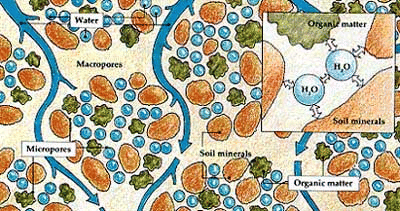
- A soil is merely a porous medium that contains minerals, water, gases, organic matter, and microorganisms.
- Soil is a dynamic natural body with properties derived from the combined effects of climate and biotic activities, as modified by topography, acting on parent materials over time.
- There are five basic soil components that, when present in sufficient quantities, form the foundation of all terrestrial plant ecosystems.
- Soil is one of the most significant components of an ecosystem, containing both biotic and abiotic constituents.
- These soil components are classified into two types.
- The first group includes biotic factors, which include all living and once-living entities in the soil, such as plants and insects.
- Abiotic variables, which encompass all non living substances such as minerals, water, and air, make up the second group.
- Phosphorus, potassium, and nitrogen gas are the most prevalent minerals present in soil that encourage plant development. Calcium, magnesium, and sulphur are among less common minerals.
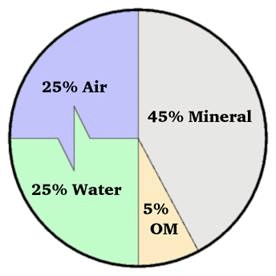
- Soils are typically composed of 25% air, 25% water, 45% mineral stuff, and 5% organic matter (humus, tiny living organisms, and sometimes plant residue).
- Soil scientists perform a variety of experiments on soils to understand more about their composition.
- Soil testing can determine the concentrations of biotic and abiotic components in the soil.
- The results of these tests can also tell if the soil has too much of a particular mineral or whether it needs extra nutrients to sustain plants.
Composition of a typical Soil
Components in Soil
There are five essential soil components that, when present in sufficient quantities, provide the foundation of all terrestrial plant communities
- Minerals
- Water
- Organic Matter
- Gases
- Microorganisms
Soil Components
Minerals
- The mineral part of soil is the biggest component, accounting for around 45% to 49% of the volume.
- Soil minerals are derived from two types of minerals.
- Primary minerals are soil components that are comparable to the parent material from which they developed, such as sand and silt. They're usually spherical or uneven in form.
- Secondary minerals, on the other hand, are formed when primary minerals weather, releasing essential ions and forming more stable mineral forms such as silicate clay.
- Clays have a huge surface area, which is beneficial to soil chemistry and water retention capacity.
- The amount of sand, silt, and clay contained in a soil determines its texture. The size of sand, silt, and clay is used to identify it.
Water
- Water is the second most important component of soil. Water can account for 2% to 25% of the soil volume.
- Water is necessary for nutrient transfer to developing plants and soil organisms, as well as for biological and chemical breakdown.
- Soil water availability refers to a soil's ability to store water that is available for plant usage.
- The ability of a soil to store water is primarily determined by its texture. The more tiny particles there are in soil, the more water it can hold.
- As a result, clay soils have the highest water-holding capacity while sands have the lowest.
- Furthermore, because organic matter has a strong affinity for water, it impacts soil water-holding capacity.
- The larger the percentage of organic material in soil, the greater the capacity of the soil to store water.
Gases
- The next essential component of soil is gases or air. Because air may fill the same areas as water, it can account for 2% to 25% of soil volume.
- Oxygen is required for root and microbial respiration, which aids plant development.
- Carbon dioxide and nitrogen are also essential for below ground plant processes like nitrogen-fixing bacteria.
- Soils that stay waterlogged (where gas is displaced by excess water) might hinder root gas exchange, resulting in plant mortality, which is a typical issue following floods.
Organic Matter
- Organic matter is the next fundamental component present in soils at quantities ranging from 2% to 5%.
- Organic matter is formed from deceased plants and animals and, as such, has a great potential to retain and/or supply vital components and water for plant development.
- Organic matter also has a very high "plant available" water-holding capacity, which can help soils with low water-holding capacity, such as sand, grow more.
- As a result, the percentage of decomposed organic matter in or on soils is frequently employed as a predictor of productive and rich soil.
- However, prolonged breakdown of organic materials might cause it to become inaccessible for plant use over time, resulting in stubborn carbon storage in soils.
Microorganisms
- Microorganisms are the final fundamental constituent of soils; they are abundant in the soil but account for less than 1% of its volume.
- One thimble worth of dirt is thought to contain more than 20,000 microbial species.
- Earthworms and nematodes are the biggest of these creatures, whereas bacteria, actinomycetes, algae, and fungus are the smallest.
- The major decomposers of raw organic materials are microorganisms.
- Decomposers use organic matter, water, and air to recycle raw organic matter into humus, which is high in plant nutrients.
- Other specialised microorganisms, such as nitrogen-fixing bacteria, develop symbiotic interactions with plants, allowing them to collect this vital ingredient.
- These "nitrogen-fixing" plants are a key source of nitrogen in the soil and are necessary for soil growth throughout time.
- Mycorrhizae are fungal complexes that interact with plant roots in a mutualistic manner.
- The fungus develops inside a plant's root, where the plant supplies sugar to the fungus in exchange for water and access to minerals in the soil via its complicated web of hyphae scattered throughout the soil matrix.
- A soil is essentially lifeless without bacteria and might be limited in its ability to sustain plant development.
Conclusion
The soil's composition can change on a daily basis, depending on a variety of factors such as water supply, cultivation practises, and/or soil type. In nature, the solid phase of soil, which includes minerals and organic matter, is generally stable. However, if organic matter is not managed properly, it may be depleted from the soil. The soil's most dynamic properties are its liquid and gas phases, which are water and air, respectively. As the soil wets or dries, the relative amounts of water and air in the soil change
FAQs
Question: What are the main components of soil?
Answer: Soil is made up of four primary components: mineral particles, organic matter (humus), water, and air. The mineral particles come from the breakdown of rocks and vary in size, including sand, silt, and clay. Organic matter is derived from the decomposition of plant and animal material, providing essential nutrients. Water and air fill the pores between soil particles, and their balance is crucial for soil fertility and plant health. The relative proportions of these components determine the soil's texture, structure, and its ability to support plant growth.
Question: How does soil texture affect plant growth?
Answer: Soil texture is determined by the relative proportions of sand, silt, and clay. Sandy soils have larger particles, which allow for good drainage but poor nutrient retention. Clay soils have smaller particles and retain water well but may become waterlogged, restricting air flow to plant roots. Loamy soils, which are a balanced mixture of sand, silt, and clay, are considered ideal for most plant growth because they provide good drainage, nutrient retention, and air circulation. The soil texture directly influences water retention, nutrient availability, and root development.
Question: What role does organic matter play in soil fertility?
Answer: Organic matter, primarily in the form of humus, plays a crucial role in soil fertility. It improves soil structure by binding particles together, which enhances water retention and air circulation. Humus is a rich source of nutrients such as nitrogen, phosphorus, and potassium, which are essential for plant growth. It also promotes beneficial microbial activity in the soil, which further decomposes organic material and releases nutrients. The presence of organic matter increases the soil’s ability to hold moisture and nutrients, which supports healthy plant development.
Question: How do soil pH levels affect agriculture?
Answer: Soil pH refers to the acidity or alkalinity of the soil and affects nutrient availability for plants. Soils that are too acidic (low pH) or too alkaline (high pH) can reduce the effectiveness of essential nutrients, making them less accessible to plants. Most plants thrive in slightly acidic to neutral soils (pH 6-7). If the soil is too acidic, lime can be added to raise the pH, while sulfur or organic matter can be used to lower the pH of alkaline soils. Proper pH management ensures optimal nutrient uptake, leading to healthier plants and better crop yields.
Question: What are the different types of soil erosion and their impact on agriculture?
Answer: Soil erosion occurs when the topsoil is removed by wind, water, or human activity. There are three main types of soil erosion: wind erosion, water erosion, and sheet erosion. Wind erosion occurs in arid and semi-arid regions where the soil is dry and loose. Water erosion happens when rainfall or irrigation water carries away soil particles, especially in areas with poor vegetation cover. Sheet erosion is the gradual removal of thin layers of soil across large areas, often unnoticed until significant damage is done. Soil erosion leads to the loss of fertile topsoil, reducing agricultural productivity, and can also cause sedimentation in water bodies, affecting water quality.
MCQs
1. Which of the following is the most important component for soil fertility?
A) Air
B) Organic matter
C) Water
D) Mineral particles
Answer: (B) Organic matter
Explanation: Organic matter, primarily in the form of humus, is essential for soil fertility. It enriches the soil with nutrients, improves soil structure, and supports beneficial microbial activity.
2. What does soil pH affect in terms of plant growth?
A) Water drainage
B) Nutrient availability
C) Soil texture
D) Air circulation
Answer: (B) Nutrient availability
Explanation: Soil pH affects the availability of nutrients for plants. A pH that is too high or too low can make nutrients less available, thus affecting plant growth and crop yield.
3. Which of the following is a method of preventing soil erosion?
A) Overgrazing
B) Strip cropping
C) Intensive plowing
D) Deforestation
Answer: (B) Strip cropping
Explanation: Strip cropping involves growing crops in alternating strips to prevent soil erosion by wind and water. The vegetation acts as a barrier that reduces the movement of soil particles.
4. Which soil type is most beneficial for agriculture?
A) Clay
B) Sandy
C) Loamy
D) Peaty
Answer: (C) Loamy
Explanation: Loamy soil is ideal for agriculture because it has a balanced mixture of sand, silt, and clay. This combination ensures good water retention, nutrient availability, and proper drainage.
5. What is the primary role of soil microorganisms?
A) To promote plant disease
B) To decompose organic material
C) To make soil acidic
D) To compact soil
Answer: (B) To decompose organic material
Explanation: Soil microorganisms, including bacteria and fungi, play a crucial role in decomposing organic material. This process converts organic matter into nutrients that are essential for plant growth, thus improving soil fertility.
GS Mains Questions and Model Answers
Q1: Discuss the different soil components and their role in maintaining soil health for agriculture.
Answer: Soil is composed of mineral particles, organic matter, water, and air. Each of these components plays a vital role in maintaining soil health and supporting agriculture. The mineral particles, which include sand, silt, and clay, determine the soil's texture and drainage capacity. Organic matter, primarily humus, improves soil fertility by providing essential nutrients and enhancing microbial activity. Water in the soil is crucial for plant growth as it carries nutrients to plant roots, while air in the soil is necessary for the respiration of plant roots and soil organisms. The balance of these components is essential for soil health, influencing crop yield and plant health. Effective soil management, such as the addition of organic matter and proper irrigation, is essential for sustainable agriculture.
Q2: Analyze the impact of soil erosion on agriculture and the measures to prevent it.
Answer: Soil erosion is the removal of the topsoil layer by wind, water, or human activity. It leads to the loss of fertile soil, which reduces the soil's ability to support plant growth, resulting in lower agricultural productivity. Erosion can also contribute to the siltation of water bodies, affecting water quality. Preventing soil erosion requires measures such as contour plowing, terracing, crop rotation, and the planting of cover crops. Implementing sustainable farming practices, such as agroforestry and mulching, also helps in protecting the soil from erosion. Additionally, reducing deforestation and managing water resources effectively play a crucial role in combating soil erosion.
Q3: Evaluate the relationship between soil pH and agricultural productivity. How can soil pH be managed for optimal crop growth?
Answer: Soil pH plays a critical role in agricultural productivity as it directly influences nutrient availability to plants. Soils that are too acidic or too alkaline can prevent plants from absorbing essential nutrients. Most crops thrive in slightly acidic to neutral soils (pH 6-7). Soils that are too acidic can be neutralized by adding lime, while alkaline soils can be amended with organic matter or sulfur to lower pH. Regular soil testing is essential to monitor pH levels, and appropriate soil amendments should be applied based on the crop’s needs. Proper management of soil pH helps in improving nutrient availability, promoting healthy plant growth, and ensuring higher crop yields.
Previous Year Questions on Soil and Agriculture
1. UPSC CSE Prelims 2020:
Question: Which of the following is the most effective method for preventing soil erosion?
A) Planting cover crops
B) Excessive irrigation
C) Overgrazing
D) Excessive use of fertilizers
Answer: (A) Planting cover crops
Explanation: Cover crops are planted to protect the soil from erosion by stabilizing the soil and preventing wind and water from removing the topsoil.
2. UPSC CSE Mains 2019 (GS Paper 1):
Question: Discuss the role of organic matter in soil health and its significance in sustainable agriculture.
Answer: Organic matter plays a critical role in maintaining soil health by improving its structure, nutrient content, and water-holding capacity. It supports microbial activity in the soil, which in turn decomposes organic material to release essential nutrients for plant growth. Organic matter also enhances the soil's ability to retain moisture, reducing the need for frequent irrigation. In sustainable agriculture, the addition of organic matter through composting, mulching, and cover cropping is essential for maintaining soil fertility and preventing soil degradation. Organic farming practices that focus on soil health lead to long-term agricultural productivity and environmental sustainability.
Download the PREPP App and attempt FREE IAS Exam Mock Tests and get complete study material!

Full Test - 04: UPSC CSE Prelims CSAT (Paper-II)
Full Test - 03: UPSC CSE Prelims CSAT (Paper-II)
UPSC CSE Prelims 2026 CSAT Paper 2 Question Paper (24-May-2026)
UPSC CSE Prelims 2026 GS Paper 1 Question Paper (24-May-2026)

17 February 2025 | The Hindu Must Read Articles | Current Affairs

16 February 2026 | The Hindu Must Read Articles | Current Affairs

13 February 2026 | The Hindu Must Read Articles | Current Affairs









Comments