Saline Soils - Agriculture Notes
Saline soil refers to a soil that has an excessive amount of soluble salts. Soils with a high enough concentration of soluble salts prevent plants from absorbing water. Usara soils are another name for saline soils. Saline soils go by several regional names, including Reh, Kallar, Chopan, Rakar, Thur, and Karl. If the soil is to be reclaimed or leached of excessive salt concentrations, it is crucial to comprehend that the surface layers of saline soil frequently contain extremely good soil structure. This article will explain to you about Saline soils which will help prepare the Agriculture Syllabus for the UPSC Civil Service exam.
|
Table of Contents |
What are Saline Soils?
- Saline soils are distinguished by the presence of sufficient neutral soluble salts to inhibit the growth of most crop plants.
- Saline soils have an electrical conductivity of the saturation soil extract greater than 4 dS/m at 25°C.
- The chlorides and sulfates of sodium, calcium, and magnesium are the most common soluble salts. Nitrates are rarely found in significant quantities.
- Although calcium and magnesium are usually present in sufficient quantities to meet the nutritional needs of crops, sodium and chloride are by far the most dominant ions, particularly in highly saline soils.
- Many saline soils have significant amounts of gypsum (CaSO4, 2H2O) in the profile. Soluble carbonates are never present.
- The salts can seep into the subsoil in areas with low water tables or are washed away by running water in areas with adequate drainage.
- However, in areas with inadequate drainage, water with a high salt content gets stagnant and, after evaporating, deposits all the salts in the topsoil.
- Dangerous salts are transmitted from below by capillary action in areas with high subsoil water tables as a result of evaporation during the dry season.
- Saline soils are sandstone to loamy in structure.
- The magnitude of the effects of excessive soil salt on crop stands, growth patterns, and yields depends on the salinity level.

Saline Soil
|
|
|
|---|---|
| Types of soil | Sodic soils |
| Acid soils | Sandy soils |
Causes of Soil Salinity
- When excessive salts are not flushed from the earth, dry climates, and low precipitation result.
- A high rate of evaporation, adds salts to the ground surface.
- Due to a lack of water transportation, poor drainage, or waterlogging when salts are not washed.
- Irrigation with salty water increases the salt content of the earth.
- As a result of the removal of deep-rooted vegetation, the water table has risen.
- Leakage from geological deposits and groundwater penetration.
- When sea salts seep into lower lands, sea levels rise.
- Coastal breezes that transport salty air masses to neighboring territories;.
- Submergence of seawater followed by salt evaporation.
- Improper fertilizer application when excess nitrification accelerates soil salinization.
Indicators of Soil Salinity
- Saline soils can be identified in the field by the uneven growth of crops and the presence of white salt crusts on the surface.
- Growing plants with a mild salt problem often have a blue-green tinge.
- In cereal or forage crops grown in saline areas, barren spots and stunted plants may appear.
- The extent and frequency of bare spots are frequent indicators of salt concentrations in the soil.
- If the salinity level is not high enough to cause barren spots, the crop's vegetative vigor may be irregular.
- Moderate salinity, on the other hand, especially if it is uniform throughout the field, can often go undetected because it causes no visible injuries other than restricted growth.
- Plants growing in salt-infested areas may have smaller and darker blue-green leaves than normal leaves.
- Increased succulence is frequently caused by salinity, especially if the concentration of chloride ions in the soil solution is high.
- Plants in salt-affected soils frequently resemble plants growing in moisture stress (drought) conditions, though wilting is far less common because the osmotic potential of the soil solution usually changes gradually and plants adjust their internal salt content sufficiently to maintain turgor and avoid wilting.
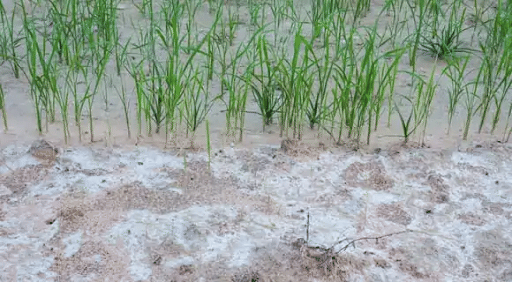
Indicator of Soil Salinity
Distribution of Saline Soils
- These soils can be found in places with high subsurface water tables and canal irrigation.
- These soils can be found in some areas of Andhra Pradesh, Telangana, Karnataka, Bihar, Uttar Pradesh, Haryana, Punjab (side effects of insufficient or excessive irrigation), Rajasthan, and Maharashtra.
- These salts build up in the soil, making it infertile and unusable for farming.
- The Gulf of Khambhat in the region of Gujarat is impacted by salt-laden sediments carried by sea tides.
- As a result, large regions surrounding the estuaries of the Narmada, Tapi, Mahi, and Sabarmati have become unproductive.
- When storms make landfall along a coastline, salty sea waters penetrate into coastal zones during storm surges, rendering the soil unsuitable for farming.
- This type of soil deterioration is prevalent in the low-lying coastal areas of Andhra Pradesh and Tamil Nadu.
- If salt-tolerant plants are produced, high amounts of soil salinity can be tolerated.
Impact of Saline Soils
- Soil salinization has a negative impact on plant development and contributes to land degradation.
- Saline earth reduce agricultural productivity, worsen farmer well-being, and worsen the region's economic situation.
- Sensitive crops lose vigor in somewhat salty soils, most crops suffer from (moderately) saline soils, and only salinity-tolerant crops survive in highly saline soils.
- The main impact of excessive salinity is that it reduces the amount of water that is accessible to plants. This is due to the fact that when the salt content rises, the osmotic pressure of the soil solution also rises.
- In addition to the osmotic action of the salts in the soil solution, an excessive concentration and absorption of certain ions may be harmful to the plants and/or hinder the uptake of other crucial nutrients.
- It contaminates drinking and irrigation water and contributes to the further salinization of drylands.
- Due to poor plant growing conditions, salinity causes continuous wetness of the land surface and a lack of cover. This makes lands extremely prone to erosion.
- The earth's ability to absorb water is reduced as the water table rises due to salinization. Soils cannot withstand high water flows caused by heavy rains or river flooding. As a result of insufficient absorption, runoff and flooding occur.
Prevention of Soil Salinity
- Optimize irrigation (use less salty water, use drip irrigation, desalinated, recycled, rain-harvested water, and don't over irrigate).
- To retain moisture and reduce irrigation, add organic matter and manure.
- Deep tillage and heavy machinery should be avoided in order to avoid transferring soil salts to the root zone, which causes salinization.
- Protect the ground surface with cover crops or mulch.
- Improve flushing by increasing drainage (to remove salts from the ground surface).
- Plant salt-tolerant crops to mitigate economic risks and maintain land cover.
- Mechanically remove salt crystals from the surface.
- Using chemical amendments, restore the balance (e.g., gypsum or sulfuric acid).
- To promote seed germination, pre-treat seeds with NaCl.
- Grow crops that can properly absorb moisture to avoid prolonged land wetness.
- Overuse of certain chemicals promotes salinization, so use fertilizers wisely.
Conclusion
Early management of soil salinity aids in its reversal. However, due to the negative effect of salinity on soil properties, heavy contamination results in the complete loss of farmlands and desertification. According to the United Nations University, approximately 5,000 acres per day have been lost worldwide due to salinization since the 1990s as of 2014.
FAQs
Question: What are saline soils?
Answer: Saline soils are characterized by high concentrations of soluble salts, primarily sodium chloride, and other salts like magnesium sulfate and calcium carbonate. These soils are typically found in arid and semi-arid regions where evaporation rates exceed precipitation, leading to the accumulation of salts. Saline soils can adversely affect plant growth by reducing soil permeability and affecting nutrient availability, making them challenging for agricultural use.
Question: What causes soil salinity?
Answer: Several factors contribute to soil salinity, including:
- Evaporation: High evaporation rates in hot climates cause water to rise through capillary action, bringing salts to the surface.
- Irrigation Practices: Poor irrigation management can lead to waterlogging and the accumulation of salts in the root zone.
- Natural Factors: Weathering of mineral rocks and the presence of saline parent materials can also contribute to soil salinity.
- Rainfall: Low rainfall in arid regions does not wash away accumulated salts, resulting in higher salinity levels.
Question: How does soil salinity affect agriculture?
Answer: Soil salinity negatively impacts agriculture in various ways:
- Reduced Crop Yield: High salt concentrations hinder seed germination and plant growth, leading to lower crop yields.
- Nutrient Deficiency: Salinity affects the availability of essential nutrients, causing deficiencies that can impair plant development.
- Soil Structure Degradation: Saline soils often lose their structure, leading to poor aeration and drainage, further affecting plant health.
- Pest and Disease Vulnerability: Saline stress can make plants more susceptible to pests and diseases, further compromising crop productivity.
Question: What are the management practices for saline soils?
Answer: Effective management practices for saline soils include:
- Leaching: Applying sufficient water to wash away accumulated salts from the root zone.
- Soil Amendments: Adding organic matter and gypsum can help improve soil structure and reduce salinity.
- Crop Selection: Planting salt-tolerant crops can enhance agricultural productivity in saline conditions.
- Improved Irrigation Practices: Adopting efficient irrigation techniques, such as drip irrigation, to minimize waterlogging and salt buildup.
- Regular Soil Testing: Conducting soil tests to monitor salinity levels and adjust management practices accordingly.
Question: What role does soil salinity play in environmental sustainability?
Answer: Soil salinity has significant implications for environmental sustainability. High salinity levels can lead to desertification, loss of biodiversity, and degradation of land resources. As saline soils become less productive, farmers may be forced to abandon affected lands, leading to increased pressure on more fertile areas. Additionally, saline soils can disrupt local water cycles and affect aquatic ecosystems through runoff. Addressing soil salinity is crucial for maintaining land productivity, ensuring food security, and promoting sustainable agricultural practices that protect the environment.
MCQs
1. What defines saline soils?
A) High organic matter content
B) High concentration of soluble salts
C) High fertility
D) Low moisture content
Answer: (B) See the Explanation
Explanation: Saline soils are defined by high concentrations of soluble salts, which can adversely affect plant growth and soil health.
2. Which of the following is a primary cause of soil salinity?
A) High rainfall
B) Evaporation exceeding precipitation
C) Excessive organic matter
D) Low evaporation rates
Answer: (B) See the Explanation
Explanation: Soil salinity is primarily caused by conditions where evaporation exceeds precipitation, leading to the accumulation of salts.
3. What is one effective management practice for saline soils?
A) Ignoring salinity levels
B) Continuous cropping
C) Leaching with water
D) Reducing water usage
Answer: (C) See the Explanation
Explanation: Leaching with water is an effective management practice for saline soils, as it helps wash away accumulated salts from the root zone.
4. Which of the following crops is considered salt-tolerant?
A) Wheat
B) Rice
C) Barley
D) Corn
Answer: (C) See the Explanation
Explanation: Barley is considered a salt-tolerant crop that can grow under saline conditions, making it suitable for saline soils.
5. What is a potential consequence of high soil salinity?
A) Increased agricultural productivity
B) Reduced crop yields
C) Enhanced soil structure
D) Improved water quality
Answer: (B) See the Explanation
Explanation: High soil salinity can lead to reduced crop yields due to its adverse effects on plant growth and nutrient availability.
GS Mains Questions and Model Answers
Q1: Discuss the causes and effects of saline soils on agricultural productivity in India.
Answer: Saline soils are a significant challenge to agricultural productivity in India, particularly in arid and semi-arid regions. The primary causes of saline soils include high evaporation rates, poor irrigation practices, and natural geological factors that lead to the accumulation of soluble salts. The effects of saline soils are profound; they diminish crop yields, hinder seed germination, and reduce overall soil fertility. As a result, farmers face economic hardships due to decreased productivity, which threatens food security. Addressing the issue of saline soils through effective management practices, such as leaching, crop rotation with salt-tolerant species, and improved irrigation techniques, is crucial for enhancing agricultural sustainability and productivity in affected regions.
Q2: Analyze the impact of saline soils on water quality and ecosystem health.
Answer: Saline soils can significantly impact water quality and ecosystem health. The runoff from saline soils can carry high concentrations of salts into nearby water bodies, leading to increased salinity levels in freshwater systems. This can disrupt aquatic ecosystems, harm fish populations, and reduce biodiversity. Additionally, the presence of saline soils can alter local hydrology by affecting groundwater recharge and surface water flows. As ecosystems are interconnected, the degradation of water quality from saline soils can have cascading effects on plant and animal species dependent on these water resources, further exacerbating environmental challenges.
Q3: Evaluate the effectiveness of various strategies for managing saline soils in India.
Answer: Various strategies can be employed to manage saline soils effectively in India. These include the implementation of proper irrigation management practices, such as adopting drip irrigation to minimize waterlogging and salt buildup. The use of organic amendments, such as compost and gypsum, can help improve soil structure and reduce salinity levels. Planting salt-tolerant crops and implementing agroforestry systems can also enhance productivity in saline areas. However, the effectiveness of these strategies is contingent upon local conditions, community engagement, and adequate policy support. Continuous monitoring and research are essential to adapt these strategies to changing environmental conditions and improve their overall effectiveness in combating soil salinity.
Previous Year Questions on Saline Soils
1. UPSC CSE Prelims 2021:
Question: Which of the following factors is most likely to lead to the formation of saline soils?
A) High rainfall
B) Poor drainage
C) Excessive tilling
D) Organic farming
Answer: (B)
Explanation: Poor drainage can lead to water accumulation and increased evaporation, resulting in the formation of saline soils through the concentration of salts.
2. UPSC CSE Mains 2019 (GS Paper 1):
Question: "Evaluate the significance of addressing saline soils for achieving sustainable agriculture in India." Discuss the challenges and strategies for management.
Answer: Addressing saline soils is crucial for achieving sustainable agriculture in India, as salinity directly affects crop productivity and soil health. The challenges in managing saline soils include inadequate knowledge among farmers, lack of infrastructure for proper irrigation, and limited availability of salt-tolerant crop varieties. Effective strategies for management involve educating farmers about sustainable practices, implementing efficient irrigation systems, and conducting research on salt-resistant crops. By overcoming these challenges, it is possible to enhance agricultural productivity, ensure food security, and promote sustainable land management practices in regions affected by salinity.
Download the PREPP App and attempt FREE IAS Exam Mock Tests and get complete study material!

Full Test - 04: UPSC CSE Prelims CSAT (Paper-II)
Full Test - 03: UPSC CSE Prelims CSAT (Paper-II)
UPSC CSE Prelims 2026 GS Paper 1 Question Paper (24-May-2026)
UPSC CSE Prelims 2026 CSAT Paper 2 Question Paper (24-May-2026)

17 February 2025 | The Hindu Must Read Articles | Current Affairs

16 February 2026 | The Hindu Must Read Articles | Current Affairs

13 February 2026 | The Hindu Must Read Articles | Current Affairs









Comments