Concentrated Organic Manures - Agriculture Notes
Concentrated organic manures are those that are organic in nature and have higher concentrations of vital plant nutrients including nitrogen, phosphorus, and potash. These concentrated manures are produced using basic materials that are either plant- or animal-derived. Oil cakes, bone meal, fish meal, blood meal, and green leaf manures are some of the concentrated organic manures that are frequently employed. This article will explain to you about Concentrated Organic Manures which will be helpful in preparing the Agriculture Syllabus for the UPSC Civil Service exam.
|
Table of Contents |
What are Concentrated Organic Manures?
- Concentrated organic manures are those that are naturally organic and have higher concentrations of important plant nutrients like N, P2O5, and K2O than bulky organic manures.
- These concentrated manures are made from basic materials that are either plant- or animal-derived.
- These are also referred to as organic nitrogen fertilizers. Before their organic nitrogen is utilized by the crops, it is transformed by bacterial action into easily available ammoniacal nitrogen and nitrate nitrogen.
- As a result, these organic fertilizers are relatively slow acting, but they provide available nitrogen for a longer period of time.
Concentrated Organic Manure - Types
Oil Cakes
- Oil cake, which is made up of the leftovers from the oil extraction process at the processing plant and contains a high nitrogen content, is one of the natural organic fertilizers.
- Among the products whose processing results in oil cakes are olives for olive oil, peanuts for peanut oil, coconut flesh for coconut cream and milk (sapal), grapes for wine, apples for cider, and soybeans for soy milk.
- Other frequent oil cakes are made from sunflower, cottonseed, and flax seed (also known as linseed).
- Some specific varieties, however, may be poisonous and are instead utilized as fertilizer.
- For instance, cottonseed includes the toxic pigment gossypol, which must be removed before processing.
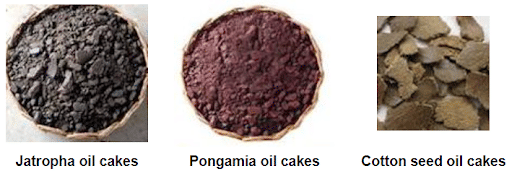
Different Types of Oil Cakes
*To know more about the topic, click this link Oil Cakes
Fish Meal
- Fish meal is a type of fertilizer made from dried fish waste after the rancid oil has been removed and preservatives have been added.
- This slow-releasing fertilizer is beneficial for leafy plants.
- It is a great all-purpose organic fertilizer due to its high levels of nitrogen and phosphorus and the presence of significant trace elements.
- Fish meal is a good source of micronutrients and feeds the beneficial soil microorganisms, promoting the growth of larger, more robust plants.
- With the help of fish meal fertilizer, fertilizing is more effective since the nitrogen from the stored protein can attach to the plant rather than the soil.
- The soil should be thoroughly irrigated once the fish meal has been incorporated.
*To know more about the topic, click this link Fish Meal
Bone Meal
- A bone meal is organic manure manufactured from heating animal bones that are then ground into a fine powder or granules for use on plants or crops.
- The plants will benefit from the nutrients and minerals found in bones, especially calcium and phosphorous which will help them grow stronger and healthier.
- It provides plants with Phosphorus, Calcium, and a small quantity of Nitrogen as a slow-release organic fertilizer.
- Hydroxiapathite is used as a dietary supplement to give monogastric animals calcium (Ca) and phosphorus (P).
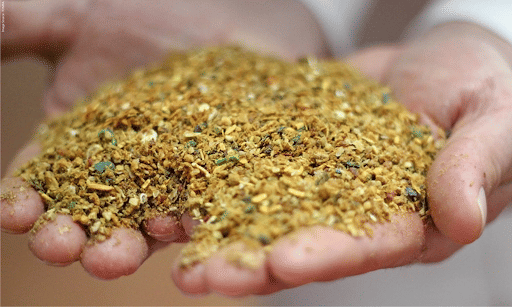
Bone Meal Manure for Plants
*To know more about the topic, click this link Bone Meal
Meat Meal
- Meat meal is currently produced on a small scale in India. The manufacturing of meat-meal is a very simple process.
- For two to three hours, the bones and meat are cooked or digested in a special container.
- The meat is then separated from the bones. This meat is powdered after being dried in a sand bath until it is brittle.
- The drying can be done in double-jacket trays heated with steam for an hour and the material dried over the steam.
- Meat-meal is fast-acting manure that is suitable for all crops and soil types. Its use is similar to that of oilcakes.
- Meat meal contains approximately 10.5% N and 2.5% P2Os.
Blood Meal
- Slaughterhouse floors should be pucca or concrete, with a central drain leading into a blood storage tank.
- First, the blood is treated with commercial copper sulphate. On a sand bath, it is then evaporated to dryness.
- It is then spread on a concrete floor covered by a net and left to dry in the sun.
- It is powdered, bagged, and marketed as bloodmeal once completely dried.
- Bloodmeal is fast-acting manure that is suitable for all crops and soil types. It should be applied in the same way that oil cakes are.
- Bloodmeal contains 10% to 12% nitrogen and 1% to 2% P2Os.
Concentrated Organic Manures - Benefits
- Concentrated Organic Manure makes the soil porous and allows gases to flow freely.
- Numerous specialized consumer goods, including plant growth media, seed starter pots, fertilizer garden sculptures, paper, and building materials, have been made using concentrated organic manure fiber.
- Additionally, worms, bug larvae, algae, and other living things can be grown using the nutrients in concentrated organic manure.
Concentrated Organic Manures - Disadvantages
- Despite their potential agricultural benefits, there is enough scientific evidence that this manure contains growing amounts of pathogen organisms, and veterinary antibiotic residues, which may lead to the expansion of antimicrobial-resistant bacteria in soils.
- Nitrate levels in the manure above a certain threshold can be hazardous to cattle and humans.
- In some cases, high nitrate concentrations have been created by stored or land-applied manures or nitrogen fertilizers.
- Nitrogen that is not utilized for crop or plant growth can quickly reach the groundwater because nitrates freely leach down through the soil profile.
- They ultimately pollute the soil apart from other implications.
Conclusion
Concentrated organic manure aids in lowering soil alkalinity and provides food for rodents, ants, and earthworms. In exchange, these organisms increase aeration and drainage. However, concentrated organic manures are significantly more expensive and nutrient-poor. For a successful crop, a lot of manure must be supplied. Due to the complexity of the procedure involved in producing this manure, farmers that are struggling financially cannot afford it.
FAQs
Question: What are concentrated organic manures?
Answer: Concentrated organic manures are nutrient-rich organic fertilizers derived from natural sources that provide essential nutrients to plants. These manures are produced through processes such as composting, fermentation, or extraction and contain a higher concentration of nutrients compared to traditional organic manures like farmyard manure. Examples include well-decomposed compost, vermicompost, and specific organic products like fish emulsion or bone meal, which offer an effective way to enhance soil fertility and plant growth.
Question: What are the benefits of using concentrated organic manures in agriculture?
Answer: The benefits of using concentrated organic manures in agriculture include:
- Improved Soil Fertility: These manures enrich the soil with essential nutrients, enhancing fertility and structure.
- Enhanced Nutrient Availability: Concentrated manures provide a readily available source of nutrients that can be quickly absorbed by plants.
- Increased Microbial Activity: They stimulate beneficial microbial populations in the soil, improving overall soil health.
- Reduced Chemical Dependency: Using organic manures can decrease the need for synthetic fertilizers, promoting sustainable farming practices.
- Soil Moisture Retention: Organic matter from these manures aids in retaining soil moisture, reducing the need for frequent irrigation.
Question: How are concentrated organic manures different from conventional fertilizers?
Answer: Concentrated organic manures differ from conventional fertilizers in several ways. While conventional fertilizers are often synthetic and provide specific nutrients in concentrated forms, concentrated organic manures are derived from natural sources and contain a mix of nutrients, beneficial microbes, and organic matter. This holistic approach enhances soil health over time, while conventional fertilizers can lead to soil degradation and nutrient leaching if used excessively. Additionally, concentrated organic manures promote sustainable agricultural practices by improving soil structure and fostering an eco-friendly approach to nutrient management.
Question: What are some common types of concentrated organic manures?
Answer: Common types of concentrated organic manures include:
- Vermicompost: Produced through the decomposition of organic waste by earthworms, rich in nutrients and beneficial microorganisms.
- Compost: A mixture of decomposed organic matter, providing a balanced source of nutrients and improving soil structure.
- Fish Emulsion: A liquid fertilizer made from fish byproducts, high in nitrogen and trace elements.
- Bone Meal: A slow-release source of phosphorus and calcium made from ground animal bones.
- Liquid Manure: Concentrated solutions derived from animal waste or plant extracts, used for foliar feeding and soil application.
Question: How should concentrated organic manures be applied in agriculture?
Answer: Concentrated organic manures should be applied based on soil test results and specific crop nutrient requirements. Generally, these manures can be incorporated into the soil before planting or applied as a top dressing during the growing season. For liquid manures, foliar application can be effective for quick nutrient uptake. It's essential to follow recommended application rates to prevent nutrient overloading, which can lead to environmental issues. Additionally, timing the application with the crop's growth stages can optimize nutrient use efficiency and enhance plant health.
MCQs
1. What is the primary source of concentrated organic manures?
A) Synthetic chemicals
B) Animal byproducts
C) Natural organic materials
D) Inorganic fertilizers
Answer: See the Explanation
Explanation: The primary source of concentrated organic manures is natural organic materials, derived from composting, fermentation, or extraction processes.
2. Which of the following is a benefit of using concentrated organic manures?
A) Immediate nutrient depletion
B) Soil degradation
C) Increased microbial activity
D) Reduced soil moisture retention
Answer: See the Explanation
Explanation: A benefit of using concentrated organic manures is increased microbial activity, which improves soil health and nutrient cycling.
3. What differentiates concentrated organic manures from synthetic fertilizers?
A) Nutrient content
B) Source material
C) Environmental impact
D) All of the above
Answer: See the Explanation
Explanation: All of the above factors differentiate concentrated organic manures from synthetic fertilizers, including nutrient content, source material, and environmental impact.
4. How does vermicompost benefit soil health?
A) By increasing soil acidity
B) By providing beneficial microorganisms
C) By reducing soil structure
D) By depleting nutrients
Answer: See the Explanation
Explanation: Vermicompost benefits soil health by providing beneficial microorganisms that enhance nutrient availability and soil structure.
5. When should concentrated organic manures typically be applied?
A) During winter only
B) Before planting or during crop growth
C) Only after soil testing
D) At random times
Answer: See the Explanation
Explanation: Concentrated organic manures should typically be applied before planting or during crop growth to optimize nutrient availability and uptake.
GS Mains Questions and Model Answers
Q1: Analyze the role of concentrated organic manures in sustainable agriculture.
Answer: Concentrated organic manures play a critical role in sustainable agriculture by enhancing soil fertility and promoting environmentally friendly farming practices. These manures provide essential nutrients in a natural form, reducing reliance on chemical fertilizers, which can lead to soil degradation and water pollution. By improving soil structure and microbial activity, concentrated organic manures help retain soil moisture and increase resilience against erosion. Additionally, their use supports the principles of organic farming and encourages practices that enhance biodiversity and ecosystem health. As sustainable agriculture aims to balance productivity with ecological integrity, the incorporation of concentrated organic manures becomes a fundamental aspect of achieving long-term agricultural sustainability.
Q2: Discuss the challenges associated with the use of concentrated organic manures in farming.
Answer: While concentrated organic manures offer numerous benefits, they also present certain challenges in their application. One challenge is the variability in nutrient content, which can depend on the source and production method, making it essential for farmers to conduct soil tests and adjust application rates accordingly. There is also the potential for nutrient imbalances if used excessively, which can lead to environmental issues such as nutrient runoff and water pollution. Additionally, the preparation and application of concentrated organic manures may require specific knowledge and skills, which can be a barrier for some farmers, particularly in regions with limited access to training and resources. Addressing these challenges is crucial for maximizing the effectiveness and sustainability of concentrated organic manure use in agriculture.
Q3: Evaluate the impact of concentrated organic manures on crop yield and quality.
Answer: Concentrated organic manures have a positive impact on crop yield and quality by providing a balanced source of nutrients essential for plant growth. The nutrients from these manures enhance root development, promote flowering and fruiting, and improve overall plant health. Studies have shown that crops grown with concentrated organic manures often exhibit higher yields compared to those treated with synthetic fertilizers, due to better nutrient absorption and increased microbial activity in the soil. Furthermore, the organic matter in these manures improves soil structure and moisture retention, which can enhance crop resilience during dry periods. Quality-wise, crops grown with concentrated organic manures tend to have improved nutritional profiles and taste, making them more desirable in the market. Overall, the use of concentrated organic manures contributes significantly to sustainable agricultural productivity.
Previous Year Questions on Concentrated Organic Manures
1. UPSC CSE Prelims 2021:
Question: Which of the following is a benefit of using organic manures?
A) Enhanced soil health
B) Immediate nutrient depletion
C) Increased chemical runoff
D) Soil erosion
Answer: (A)
Explanation: One of the key benefits of using organic manures is enhanced soil health, which improves fertility and structure over time.
2. UPSC CSE Mains 2019 (GS Paper 1):
Question: "Examine the significance of organic manures in modern agriculture." Discuss their role in enhancing sustainability.
Answer: Organic manures are significant in modern agriculture as they provide a sustainable alternative to chemical fertilizers. They contribute to soil fertility and health by adding organic matter, improving nutrient retention, and enhancing microbial activity. The role of organic manures in enhancing sustainability is evident in their ability to reduce soil erosion and runoff, promote biodiversity, and minimize chemical dependency. Furthermore, organic manures support the principles of ecological balance by fostering healthy ecosystems, thus contributing to long-term agricultural sustainability and resilience against climate change.
Download the PREPP App and attempt FREE IAS Exam Mock Tests and get complete study material!

Full Test - 04: UPSC CSE Prelims CSAT (Paper-II)
Full Test - 03: UPSC CSE Prelims CSAT (Paper-II)
UPSC CSE Prelims 2026 CSAT Paper 2 Question Paper (24-May-2026)
UPSC CSE Prelims 2026 GS Paper 1 Question Paper (24-May-2026)

17 February 2025 | The Hindu Must Read Articles | Current Affairs

16 February 2026 | The Hindu Must Read Articles | Current Affairs

13 February 2026 | The Hindu Must Read Articles | Current Affairs









Comments