Genetically Modified Crops and Regulations in India – Science & Technology Notes
A genetically modified organism (GMO) or living modified organism (LMO), is any organism whose genetic material has been altered through laboratory-based genetic material transfer from another organism. In this article, we will discuss in detail regarding Genetically Modified (GM) Crops and Regulations in India which will be helpful for UPSC exam preparation.
Table of Contents
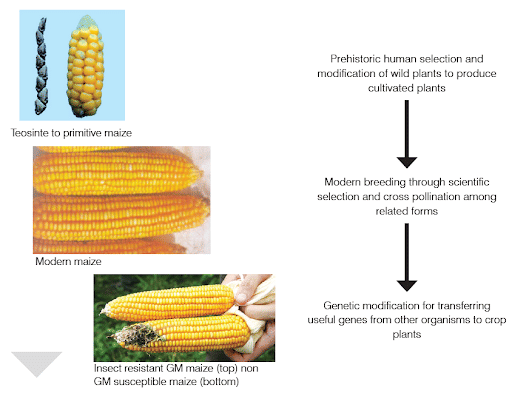
Evolution of Crop Improvement
What are Genetically Modified (GM) Crops?
- GM foods are derived from plants whose genes have been artificially modified, typically by inserting genetic material from another organism, to give it a new property, such as increased yield, herbicide tolerance, disease or drought resistance, or nutritional value.
- Most of the time, the goal is to introduce a new trait to the plant that does not occur naturally in the species, such as resistance to specific pests, diseases, environmental conditions, herbicides, and so on.
- Genetic modification is also used to improve nutritional value, bioremediation, and other purposes such as the production of pharmaceutical agents, biofuels, and so on.
- Only one GM crop, Bt cotton, has been approved for commercial cultivation in India.
- In India, no GM food crop has ever been approved for commercial cultivation.
- However, confined field trials for at least 20 GM crops have been permitted.
- This includes GM rice varieties with improved insect and disease resistance, as well as hybrid seed production and nutritional enhancements like golden rice.
- The United States, Brazil, Argentina, India, and Canada are the top five GM growing countries, accounting for approximately 90% of total GM cultivation area.
- The major GM crops grown worldwide are soybean, maize, cotton, and canola with herbicide tolerance and insect resistance.
What are Transgenic Crops?
|
Development of GM Crops
- The development of GM crops begins with the isolation of the gene of interest from the host organism.
- Using a laboratory-based gene gun or agrobacterium approaches, the gene is inserted into the DNA of a crop plant.
- The performance of the GM crop is evaluated in both the laboratory and in the field.
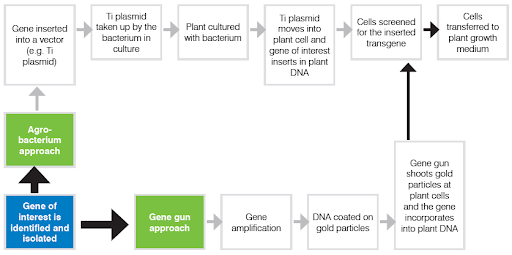
Developing GM Crop
Regulation of GM Crops in India
- The development, cultivation, and transboundary movement of GM crops are strictly regulated to protect animal health, human health, and biodiversity.
- Such regulations are provided in India under the Environment Protection Act (1986) in the Rules for Manufacture, Use, Import, Export, and Storage of Hazardous Microorganisms (HM) Genetically Engineered Organisms or Cells, 1989. The rules apply to:
- All activities involving GMO research and development, including transgenic crops, pharmaceuticals, industrial products, food and foodstuffs.
- Clinical and field trials
- Intended or unintentional release
- Import, export, and production
- The Union Ministry of Environment, Forest and Climate Change (MoEFCC) regulates all activities related to GMOs and products in India under the provisions of the Environment (Protection) Act, 1986.
- The MoEFCC's Genetic Engineering Appraisal Committee (GEAC) is authorised to review, monitor, and approve all activities involving GMOs, including import, export, transportation, manufacturing, use, or sale.
- The Food Safety and Standards Authority of India (FSSAI) regulates GM foods under the Food Safety and Standards Act of 2006.
- Acts and Rules that regulate GM Crops in India are:
- Environment Protection Act, 1986 (EPA)
- Biological Diversity Act, 2002
- Plant Quarantine Order, 2003
- GM policy under Foreign Trade Policy, Food Safety and Standards Act, 2006
- Drugs and Cosmetics Rule (8th Amendment), 1988
Statutory Bodies on GM Crops Regulation
| Statutory Body | Function |
|---|---|
| Recombinant DNA Advisory Committee (RDAC) |
|
| Institutional Biosafety Committee (IBSC) |
|
| Review Committee on Genetic Manipulation (RCGM) |
|
| Genetic Engineering Appraisal Committee (GEAC) |
|
| State Biotechnology Coordination Committee (SBCC) |
|
| District Level Committee (DLC) |
|
What is Genetic Engineering Appraisal Committee (GEAC)?
|
Benefits of Genetically Modified Crops
- Safer and More Affordable Vaccines: Genetic engineering has transformed the pharmaceutical industry by enabling the production of safer and more affordable vaccines and therapeutics.
- It has facilitated the mass production of drugs such as human insulin, vaccines, and growth hormones, increasing access to life-saving pharmaceuticals.
- Weed Control: GM technology has also played an important role in the development of herbicide-tolerant crops.
- Crops such as soybean, maize, cotton, and canola have been genetically modified to withstand specific broad-spectrum herbicides, allowing farmers to control weeds effectively while preserving the cultivated crop.
- Food security is being ensured by the development of GM crops that can adapt to changing environmental conditions.
- Researchers are developing rice, maize, and wheat strains that can withstand longer droughts and wetter monsoon seasons, ensuring food security in harsh climates.
- Solution for Crop Growth in Salty Oils: GM has also been used to create salt-tolerant plants, which could be useful for growing crops in salty soils. Plants can thrive in high-salt environments by inserting genes that remove sodium ions from water and maintain cell balance.
- It boosts production and increases farmer income.
- It reduces the use of pesticides and insecticides during farming, which could be beneficial to the food supply.
- Because of its dramatically increased yields, it can feed a rapidly growing population.
- It is capable of producing more in small areas of land.
Concerns Regarding Genetically Modified Crops
- Lack of Nutritional Value: Despite increased production and pest resistance, GM foods can sometimes lack nutritional value. This is due to the fact that the emphasis is frequently placed on enhancing specific traits rather than nutritional content.
- Ecosystem Risks: GM production can also endanger ecosystems and biodiversity. It has the potential to disrupt gene flow and harm indigenous varieties, resulting in a loss of diversity in the long run.
- Allergic Reactions: Since genetically modified foods are biologically altered, they have the potential to cause allergic reactions.
- Endangered Species: Wildlife is also threatened by GM crops. Genetically modified plants, for example, used to make plastic or pharmaceuticals, can endanger animals such as mice and deer that eat crop debris left in fields after harvest.
- It is believed that eating these genetically modified foods will lead to the development of antibiotic-resistant diseases.
- Ecological Balance: The GMO's ability to escape and potentially introduce engineered genes into wild populations, disrupting the fragile ecological balance. The reduction in the diversity of other plants, as well as the loss of biodiversity.
- Permanence Danger: As time passes, genetic changes become permanent and irreversible, and undesirable and uncontrolled mutations can occur.
- Another issue is the evolution of resistant pests and weeds known as superbugs and superweeds. When selective pressure is high enough, resistance can emerge. This can result in the evolution of resistant insects in a matter of years, negating the effects of the transgenic.
- Geopolitics: As the use of GM products increases, developing countries will become more reliant on industrial countries, as food production will most likely be controlled by developed countries in the future.
- Many religious and cultural communities are opposed to such foods because they see it as an unnatural method of producing food. Many people are also uneasy about transferring animal genes into plants and vice versa.
Genetically Modified Crops in India
Bt Cotton
- In 2002-03, Indian farmers began growing Bt cotton, a pest-resistant, genetically modified variety of cotton.
- Bt modification is a type of genetic modification in which the Bt gene from the soil bacterium Bacillus thuringiensis is introduced into the target crop, in this case cotton.
- Cotton that has been genetically modified (Bt) is resistant to bollworm, a pest that destroys cotton plants.
- By 2014, Bt cotton accounted for approximately 96% of the area under cotton cultivation in India, making it the fourth-largest cultivator of GM crops by acreage and the second-largest cotton producer.
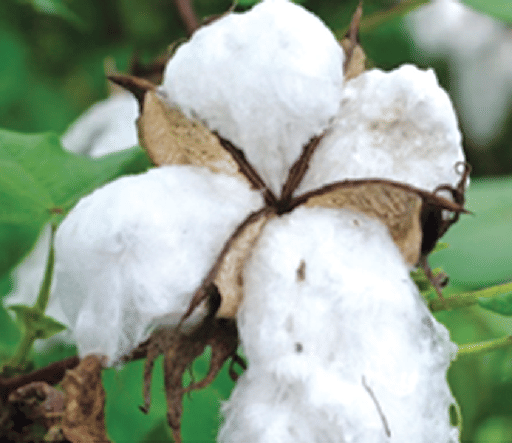
Bt Cotton
Bt Brinjal
- In 2007, the GEAC recommended the commercial release of Bt Brinjal, which was developed in collaboration with the Dharward University of Agricultural Sciences and the Tamil Nadu Agricultural University by Mahyco (Maharashtra Hybrid Seeds Company). However, the initiative was stymied in 2010.
GM Mustard
- Dhara Mustard Hybrid-11, also known as DMH-11, is a genetically modified mustard variety developed by Delhi University's Centre for Genetic Manipulation of Crop Plants.
- The researchers at Delhi University used "barnase / barstar" technology for genetic modification to create hybridised mustard DMH-11. It is a herbicide-tolerant crop (HT).
- If approved by the Centre, this will be the country's second GM crop, following Bt Cotton, and the first transgenic food crop.
Way Forward
- Focused GM research agenda in relation to agricultural development priorities.
- Building capacity in GM research, development, and regulation.
- Increasing public awareness of GM crops and products through reliable evidence-based information.
- Consistent regulatory policy based on science.
- Modules for risk assessment and management that have been simplified.
Conclusion
In the face of new developments, the regulatory regime must be strengthened for the benefit of both domestic and export consumers. Technology approvals must be streamlined, and scientifically sound decisions must be implemented. To prevent the spread of illegal GM crops, strict monitoring is required to ensure that safety protocols are strictly followed, and enforcement must be taken seriously.
| Other Relevant Links | |
|---|---|
| Science & Technology Policy in India | Scientific Policy Resolution 1958 |
| Science & Technology Policy of 1983 | Science & Technology Policy of 2003 |
| Science, Technology and Innovation Policy 2013 | New Initiatives Aligned with the National Agenda |
| India and World collaboration in science projects | National Intellectual Property Rights Policy |
FAQs
Question: What are genetically modified (GM) crops?
Answer: Genetically modified crops are plants whose DNA has been altered using genetic engineering techniques to introduce desirable traits, such as resistance to pests, diseases, or environmental conditions.
Question: What are the main benefits of GM crops?
Answer: GM crops offer benefits like increased yield, improved resistance to pests and diseases, reduced need for pesticides, enhanced nutritional content, and better adaptability to harsh environmental conditions.
Question: Are GM crops regulated in India?
Answer: Yes, GM crops are regulated in India by the Genetic Engineering Appraisal Committee (GEAC), which evaluates the safety of genetically modified organisms (GMOs) before they are approved for commercialization.
Question: What is the status of GM crop cultivation in India?
Answer: Currently, only Bt cotton, a genetically modified variety resistant to bollworms, is commercially grown in India. Other GM crops are yet to be approved for cultivation, though research is ongoing.
Question: What are the concerns regarding GM crops in India?
Answer: Concerns include potential health risks, environmental impact, loss of biodiversity, and the control of seed patents by multinational companies, which may affect farmers' autonomy and seed sovereignty.
MCQs
1. Which of the following is a major benefit of genetically modified (GM) crops?
A) Increased pesticide use
B) Increased crop yield
C) Reduced resistance to diseases
D) Reduced nutritional value
Answer: (B) See the Explanation
Explanation: One of the major benefits of GM crops is increased crop yield due to improved resistance to pests, diseases, and better adaptation to environmental stresses.
2. Which committee is responsible for the approval of GM crops in India?
A) Genetic Engineering Appraisal Committee (GEAC)
B) Central Pollution Control Board (CPCB)
C) Indian Council of Agricultural Research (ICAR)
D) Ministry of Environment, Forest and Climate Change (MoEFCC)
Answer: (A) See the Explanation
Explanation: The Genetic Engineering Appraisal Committee (GEAC) is the body responsible for the approval and regulation of genetically modified crops in India.
3. What is the primary GM crop currently grown in India?
A) Bt cotton
B) Bt maize
C) GM rice
D) GM wheat
Answer: (A) See the Explanation
Explanation: Bt cotton is the only genetically modified crop that is commercially grown in India, designed to resist bollworm pests.
4. What are the concerns regarding the use of GM crops in India?
A) Loss of biodiversity
B) Increased agricultural subsidies
C) Reduced food security
D) Increased demand for fertilizers
Answer: (A) See the Explanation
Explanation: Concerns about GM crops include potential loss of biodiversity, environmental impact, and dependency on multinational companies for seed patents, affecting farmer sovereignty.
5. What is the main purpose of the Genetic Engineering Appraisal Committee (GEAC) in India?
A) Monitor food safety
B) Approve new GM crop varieties
C) Conduct agricultural research
D) Promote organic farming
Answer: (B) See the Explanation
Explanation: The GEAC is responsible for evaluating and approving new genetically modified crop varieties and ensuring their safety for commercial cultivation in India.
GS Mains Questions and Model Answers
Q1: Critically examine the regulations surrounding genetically modified (GM) crops in India. Discuss the benefits and concerns associated with GM crop cultivation.
Answer: India has a stringent regulatory framework for genetically modified crops, with the Genetic Engineering Appraisal Committee (GEAC) overseeing their approval. The benefits of GM crops include higher yields, reduced pesticide use, and improved resistance to diseases. However, concerns regarding GM crops include potential health risks, environmental damage, and loss of biodiversity. The control over seed patents by multinational companies may affect the autonomy of farmers. Despite these concerns, ongoing research into GM crops focuses on addressing these challenges while improving agricultural sustainability and food security.
Q2: Discuss the potential economic and social impacts of the widespread adoption of genetically modified (GM) crops in India. What role should the government play in regulating this technology?
Answer: The widespread adoption of GM crops in India could lead to increased agricultural productivity, reduce input costs, and potentially increase farmers' incomes. However, the economic benefits may be uneven, with small farmers facing challenges related to high seed costs and dependency on multinational corporations. Socially, there is a risk that GM crop adoption could exacerbate the divide between wealthy and poor farmers. The government should play a crucial role in regulating GM crops by ensuring safety, promoting transparency in approvals, supporting farmer education, and ensuring equitable access to benefits. Public awareness campaigns can also help alleviate concerns over health and environmental risks.
Q3: What are the ethical and environmental concerns related to the use of genetically modified organisms (GMOs) in agriculture? Discuss their implications for India's food security.
Answer: Ethical concerns surrounding GMOs in agriculture include the potential loss of traditional farming practices and seed sovereignty, as large corporations control the distribution of GM seeds. Environmentally, there is the risk of unintended cross-pollination, which may affect biodiversity and create resistance in pests. These factors could disrupt local ecosystems and agricultural practices. Regarding food security, while GMOs could increase crop yields and food availability, these technologies may not be accessible to all farmers, particularly small-scale ones, unless the government ensures equitable distribution and regulation. Proper management and regulations are essential to minimize negative impacts on both food security and the environment.
Previous Year Questions on GM Crops
1. UPSC CSE Prelims 2017:
Question: The use of genetically modified (GM) crops has been a subject of considerable debate. Which of the following is one of the potential benefits of GM crops?
A) Reduced water usage
B) Increased pesticide use
C) Increased food crop yield
D) Loss of biodiversity
Answer: (C)
Explanation: One of the primary benefits of GM crops is the increase in food crop yield due to improved pest resistance, better disease management, and environmental adaptability.
2. UPSC CSE Mains 2016 (GS Paper 3):
Question: “Discuss the advantages and disadvantages of genetically modified crops in the context of India’s agricultural economy. How can the government balance innovation with precautionary regulation?”
Answer: GM crops have the potential to increase agricultural productivity, reduce pesticide use, and improve resilience to environmental stress. However, challenges such as market control by multinational corporations, environmental impact, and health risks must be addressed. The government can balance innovation with regulation by strengthening oversight, investing in research, and ensuring that benefits are distributed equitably among farmers. Public awareness and transparency are essential to addressing the concerns of consumers and farmers.
Download the PREPP App and attempt FREE IAS Exam Mock Tests and get complete study material!

Full Test - 04: UPSC CSE Prelims CSAT (Paper-II)
Full Test - 03: UPSC CSE Prelims CSAT (Paper-II)
UPSC CSE Prelims 2026 GS Paper 1 Question Paper (24-May-2026)
UPSC CSE Prelims 2026 CSAT Paper 2 Question Paper (24-May-2026)

17 February 2025 | The Hindu Must Read Articles | Current Affairs

16 February 2026 | The Hindu Must Read Articles | Current Affairs

13 February 2026 | The Hindu Must Read Articles | Current Affairs









Comments