Coronavirus (COVID-19): Outbreak, Impact, and Prevention – Science & Technology Notes
The SARS-CoV-2 virus causes COVID-19. COVID-19 has the potential to cause mild to severe respiratory illness, including death. Getting vaccinated, wearing a mask during times of high transmission, keeping 6 feet apart, washing hands frequently, and avoiding sick people are the best preventive measures. In this article we discuss regarding the Outbreak, Impact and Prevention of Coronavirus (COVID-19) which will be helpful for UPSC exam preparation.
Table of Contents
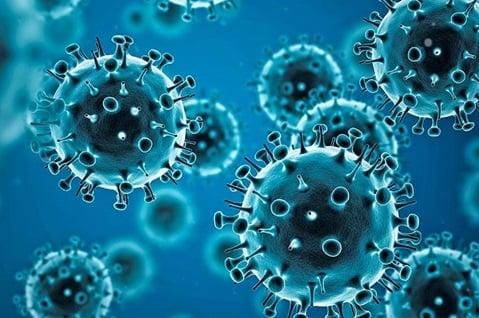
Crown-like spikes on Coronavirus
What is Coronavirus (COVID-19)?
- Coronaviruses are a type of virus that causes respiratory illness in humans.
- The virus is called a "corona" because it has crown-like spikes on its surface.
- Coronaviruses that cause illness in humans include severe acute respiratory syndrome (SARS), Middle East respiratory syndrome (MERS), and the common cold.
- SARS-CoV-2, a new coronavirus strain, was first identified in December 2019 in Wuhan, China. Since then, it has spread to every country on the planet.
- The WHO has officially named the Novel Coronavirus COVID-19 where "co" stands for "corona," "vi" for "virus," and "d" for "disease," with "19" representing the year the outbreak was first discovered (December 31, 2019).
Origin of Coronavirus (COVID-19)
- Coronaviruses are frequently discovered in bats, cats, and camels.
- The viruses live in the animals but do not infect them. These viruses can then spread to other animal species.
- Viruses may change (mutate) as they spread to new species. The virus can eventually jump between animal species and infect humans.
- The first people infected with SARS-CoV-19 are thought to have contracted the virus at a food market that sold meat, fish, and live animals.
- The first known case of COVID-19 was reported in December 2019 in the Chinese city of Wuhan and was traced to the city's animal market.
Transmission of Coronavirus (COVID-19)
- The virus that causes COVID-19, SARS-CoV-2, enters your body through your mouth, nose, or eyes (directly from airborne droplets or through virus transfer from your hands to your face).
- It then moves to the back of your nasal passages and the mucous membrane in your throat.
- It attaches to the cells, multiplies, and moves into the lung tissue. The virus can then spread to other body tissues.
- When an infected person coughs, sneezes, talks, sings, or breathes near you, respiratory droplets are released into the air, allowing the virus to spread. If you inhale these droplets, you could become infected.
- Close contact (touching, shaking hands) with an infected person and then touching your face is another way to contract coronavirus.
- The basic reproduction number (R_0) is a transmissibility metric that attempts to describe the average number of people infected by a new case.
- WHO estimates R_0 = 1.4 to 2.5 for COVID-19. Many researchers, however, believe that this figure is understated.
Symptoms of Coronavirus (COVID-19)
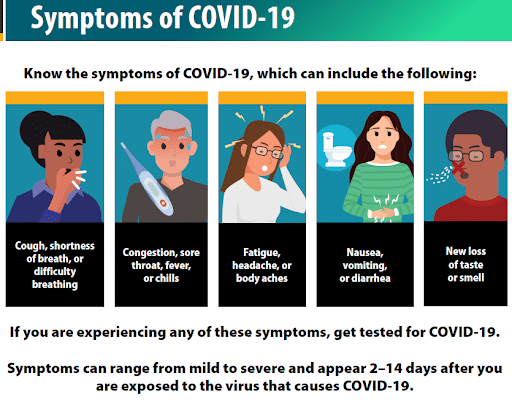
- COVID-19 has different effects on different people. The majority of infected people will develop mild to moderate illness and recover without the need for hospitalisation.
- People who have mild symptoms but are otherwise healthy should manage them at home.
- The average time for symptoms to appear after being infected with the virus is 5-6 days, but it can take up to 14 days.
| Most Common Symptoms | Less Common Symptoms | Serious Symptoms |
|---|---|---|
|
|
|
Prevention of Coronavirus (COVID-19)
Do the following to avoid infection and slow the spread of COVID-19:
- When a vaccine is available, get vaccinated.
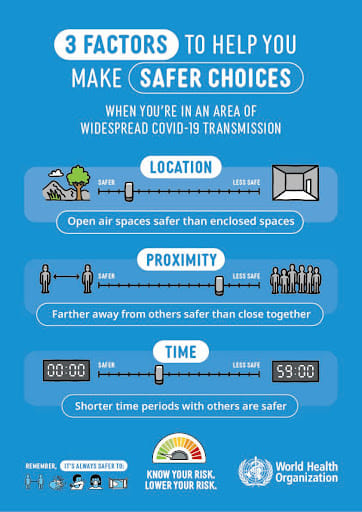
- Even if they don't appear to be sick, keep at least one metre apart.
- When physical separation is not possible or when the environment is poorly ventilated, wear a properly fitted mask.
- Open, well-ventilated spaces are preferable to closed ones. If you are indoors, open a window.
- Hands should be washed with soap and water on a regular basis, or cleaned with an alcohol-based hand rub.
- When coughing or sneezing, cover your mouth and nose.
- Stay at home and isolate yourself until you feel better.
Global Impact of Coronavirus (COVID-19)
Economic Impact
- The Coronavirus 2019 has had a significant impact on the global supply chain.
- The emergence of COVID-19 coincides with a slowing Chinese economy, increased trade, and tariff-related tensions.
- China is the world's largest exporter of intermediate manufactured goods, and economies that rely on Chinese imports will be impacted.
- Wuhan, for example, is home to hundreds of automotive, hardware, electrical equipment, consumer products, and other industries that serve many major manufacturers whose connections to the global supply chain have now been severed.
- China accounts for approximately 17% of global GDP and is the largest trading partner for the majority of its neighbours. China-dependent economies will be hit the hardest.
- Regardless of the impact on the supply chain, other industries such as airlines and tourism are directly impacted.
- Markets around the world have reacted negatively, raising fears of a global recession.
- The 2003 SARS pandemic is estimated to have cost the global economy $40 billion.
- COVID-19 will have a greater impact because China's share of global GDP has quadrupled since then.
- According to some economists, the expected annual losses from pandemic risk are around $500 billion per year, accounting for both lost income and the intrinsic cost of increased mortality.
Political Impact
- The COVID-19 incident has sparked public outrage at the Chinese authorities' initial cover-up attempts.
- Following the initial phase, authoritarian attempts to halt the disease, the use of high-tech surveillance, mass quarantine camps, and a state of lockdown have raised questions about the balance between citizens' freedom and dealing with a serious national problem.
- The impact of the crisis on the legitimacy of Chinese President Xi Jinping and the reputation of the Communist Party of China will be measured. This episode, however, has revealed a systemic flaw in China's top-down model.
Social Impact
- Direct health consequences for infected people can be disastrous. Pandemics have a disproportionately greater impact on young people.
- Due to panic buying and hoarding, there is a shortage of protective equipment and other necessities.
- Increased burden on health-care infrastructure and a lack of access to routine health-care services.
- Rapid population movement caused by large-scale disease outbreaks can be destabilising. Migration also increases the risk of disease spread.
- Infectious disease outbreaks can further stigmatise already vulnerable social groups and exacerbate existing social inequalities.
- The spread of rumours and misinformation, aided and accelerated by social media, makes it more difficult for people to find trustworthy information.
- People in lockdown have a negative social impact.
Conclusion
Being well informed about the disease and how the virus spreads is the best way to prevent and slow down transmission. Stay at least one metre apart from others, wear a properly fitted mask, and wash your hands or use an alcohol-based rub frequently to protect yourself and others from infection. A coordinated strategy between the central and state governments is required to deal with future epidemics.
| Other Relevant Links | |
|---|---|
| Science & Technology Policy in India | Scientific Policy Resolution 1958 |
| Science & Technology Policy of 1983 | Science & Technology Policy of 2003 |
| Science, Technology and Innovation Policy 2013 | New Initiatives Aligned with the National Agenda |
| India and World collaboration in science projects | National Intellectual Property Rights Policy |
FAQs
Question: What are the main impacts of the COVID-19 pandemic on global health systems?
Answer: The COVID-19 pandemic severely strained global health systems, overwhelming hospitals, and disrupting essential medical services. It also highlighted gaps in healthcare infrastructure, medical supply chains, and emergency preparedness, necessitating systemic reforms in health systems worldwide.
Question: How did COVID-19 affect the global economy?
Answer: COVID-19 caused a global economic downturn, leading to widespread unemployment, disruptions in supply chains, and a decline in global trade. Governments introduced stimulus measures, but the long-term impact included recessions, business closures, and a rise in poverty levels worldwide.
Question: What measures are most effective in preventing the spread of COVID-19?
Answer: Preventive measures include wearing masks, maintaining physical distancing, frequent hand washing, and vaccination campaigns. Quarantine and isolation of infected individuals, along with testing and contact tracing, have been key to reducing transmission in affected areas.
Question: How has COVID-19 impacted education systems around the world?
Answer: The pandemic caused widespread school closures, disrupting education for millions of students. It accelerated the adoption of online education, but also highlighted digital divides and the challenges of providing quality education in crisis situations, especially in developing countries.
Question: What are the long-term health impacts of COVID-19 on survivors?
Answer: Long-term health impacts, often referred to as "long COVID," include chronic fatigue, neurological issues, and respiratory problems. Studies have shown that some survivors experience prolonged symptoms, impacting their quality of life and requiring ongoing healthcare support.
MCQs
1. Which of the following is a primary preventive measure against COVID-19 transmission?
A) Vaccination
B) Social distancing
C) Hand hygiene
D) All of the above
Answer: (D) See the Explanation
All of the above measures are critical in preventing the spread of COVID-19. Vaccination, social distancing, and hand hygiene are the most effective strategies for reducing transmission in communities.
2. What is the primary reason COVID-19 caused such a large-scale global health crisis?
A) Lack of vaccines
B) High transmissibility and asymptomatic spread
C) Limited access to healthcare
D) Delayed response by governments
Answer: (B) See the Explanation
The high transmissibility of COVID-19, coupled with asymptomatic carriers spreading the virus unknowingly, made it difficult to control its spread. This led to widespread infections and overwhelmed health systems globally.
3. Which of the following is a common long-term symptom experienced by COVID-19 survivors?
A) Chronic fatigue
B) Rapid weight loss
C) Loss of vision
D) Hair loss
Answer: (A) See the Explanation
Chronic fatigue is one of the most common long-term symptoms experienced by COVID-19 survivors. Many patients report feeling tired and weak for months after recovering from the acute infection phase.
4. Which of the following vaccines was developed to combat COVID-19?
A) Polio vaccine
B) mRNA vaccines (Pfizer, Moderna)
C) Hepatitis B vaccine
D) BCG vaccine
Answer: (B) See the Explanation
mRNA vaccines, such as Pfizer-BioNTech and Moderna, were developed specifically to combat COVID-19. These vaccines have shown high efficacy in preventing severe illness and transmission of the virus.
5. How can COVID-19 vaccines contribute to herd immunity?
A) By preventing all infections
B) By reducing the severity of infections
C) By preventing transmission entirely
D) By reducing the spread of the virus in the population
Answer: (D) See the Explanation
Vaccines contribute to herd immunity by reducing the spread of the virus in the population. As more individuals are vaccinated, fewer people are able to transmit the virus, eventually leading to decreased overall infection rates.
GS Mains Questions and Model Answers
Q1: Analyze the global impact of the COVID-19 pandemic on public health systems and suggest reforms to address future health crises.
Answer: The COVID-19 pandemic exposed significant vulnerabilities in global public health systems, including insufficient healthcare infrastructure, lack of preparedness for pandemics, and inadequate access to medical supplies. It is essential to reform health systems by strengthening universal healthcare, improving global cooperation, and investing in health infrastructure and preparedness. Governments should enhance data-sharing, improve emergency response frameworks, and ensure equitable access to healthcare services and vaccines to mitigate the effects of future pandemics.
Q2: Discuss the socio-economic challenges posed by the COVID-19 pandemic and recommend policy measures to support recovery.
Answer: The COVID-19 pandemic has led to widespread economic disruptions, including job losses, business closures, and supply chain interruptions. Socio-economically disadvantaged populations have been the most affected, with increased poverty and inequality. To support recovery, governments should implement stimulus packages, strengthen social safety nets, and focus on job creation through infrastructure development. Additionally, supporting small businesses, enhancing digital transformation, and addressing health inequalities are critical for a comprehensive recovery.
Q3: How did the rapid development of COVID-19 vaccines demonstrate advancements in science and technology? Discuss the implications for future vaccine development.
Answer: The rapid development of COVID-19 vaccines, particularly mRNA vaccines, is a testament to significant advancements in scientific research, technology, and global collaboration. The use of mRNA technology has opened new avenues for developing vaccines against other diseases. The success of COVID-19 vaccines demonstrates the potential of biotechnology in combating global health threats, and future vaccine development will likely involve faster production methods, greater efficiency, and better distribution mechanisms, enabling more rapid responses to emerging pandemics.
Previous Year Questions on COVID-19
1. UPSC CSE Prelims 2021:
Question: What is the primary benefit of using mRNA technology in COVID-19 vaccines?
A) It provides long-term immunity
B) It enables rapid vaccine development
C) It prevents all infections
D) It reduces vaccine side effects
Answer: (B)
Explanation: mRNA technology enables rapid vaccine development by using synthetic mRNA to instruct cells to produce the spike protein of the virus, triggering an immune response without using live virus particles.
2. UPSC CSE Mains 2020 (GS Paper 2):
Question: "Evaluate the role of international cooperation in tackling the COVID-19 pandemic and the challenges faced in ensuring global access to vaccines."
Answer: International cooperation was essential in combating the COVID-19 pandemic, enabling shared research, coordinated health strategies, and the development of global supply chains for vaccines. However, challenges such as vaccine nationalism, uneven distribution, and logistical constraints impeded equitable access to vaccines. Enhanced global governance, stronger partnerships between governments, and international organizations are needed to address such disparities and ensure that future pandemic responses are more inclusive and efficient.
Download the PREPP App and attempt FREE IAS Exam Mock Tests and get complete study material!

Full Test - 04: UPSC CSE Prelims CSAT (Paper-II)
Full Test - 03: UPSC CSE Prelims CSAT (Paper-II)
UPSC CSE Prelims 2026 GS Paper 1 Question Paper (24-May-2026)
UPSC CSE Prelims 2026 CSAT Paper 2 Question Paper (24-May-2026)

17 February 2025 | The Hindu Must Read Articles | Current Affairs

16 February 2026 | The Hindu Must Read Articles | Current Affairs

13 February 2026 | The Hindu Must Read Articles | Current Affairs









Comments