Rare Earth Elements (REE) - Why are they Strategically Important? – Science & Technology Notes
Rare earth elements (REE) are a collection of seventeen metallic elements. These include the periodic table's fifteen lanthanides, as well as scandium and yttrium. They are distinguished by their catalytic, metallurgical, nuclear, electrical, magnetic, and luminescent properties. While they are referred to as 'rare earths,' they are not in fact that rare and are relatively abundant in the Earth's crust. Rare earth elements are used in many high-tech devices. In this article, we will discuss regarding Rare Earth Elements which will be helpful for UPSC exam preparation.
Table of Contents
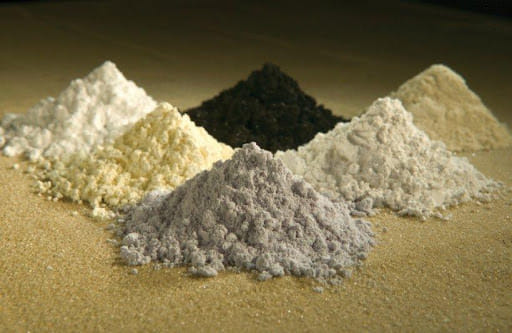
Rare Earth Elements
Rare Earth Elements – Background
- In 1993, China accounted for 38% of global REE production, while the United States accounted for 33%, Australia accounted for 12%, and Malaysia and India accounted for 5% each.
- The remainder was made up of several other countries, including Brazil, Canada, South Africa, Sri Lanka, and Thailand.
- However, in 2008, China accounted for more than 90% of global REE production, and by 2011, China accounted for 97% of global production.
- Supply of REEs became an issue in the 1990s and beyond as the Chinese government began to restrict the amount of REEs that could be produced and exported.
- In addition, the Chinese government began to restrict the number of Chinese and Sino-foreign joint venture companies that could export REEs from China.
What are Rare Earth Elements?
- The rare earth elements consist of 15 lanthanides - lanthanum, cerium, praseodymium, neodymium, promethium, samarium, europium, gadolinium, terbium, dysprosium, holmium, erbium, thulium, ytterbium, and lutetium along with scandium and yttrium.
- The rare earth elements are all metals, and the group is also known as "rare earth metals."
- Because these metals have many similar properties, they are frequently found together in geologic deposits.
- They're also known as "rare earth oxides" because many of them are sold as oxide compounds.
- REEs have a high density, a high melting point, a high conductivity, and a high thermal conductance.
- Heavy REEs and Light REEs are the two types of REEs.
- REEs do not exist in their natural state. Mineral oxide ores contain them.
- Bastnaesite, xenotime (found in mineral sand deposits), loparite (found in alkaline igneous rocks), and monazite are the primary sources of rare earth elements.
- Rare-earth elements (REE) are required components of over 200 products in a wide range of applications, particularly high-tech consumer products like cellular phones, computer hard drives, electric and hybrid vehicles, and flat-screen monitors and televisions.
- Although the amount of REE used in a product may be insignificant in terms of weight, value, or volume, the REE may be required for the device to function.
- Magnets made of REE, for example, are often only a small fraction of the total weight, but without them, desktop and laptop spindle motors and voice coils would not be possible.
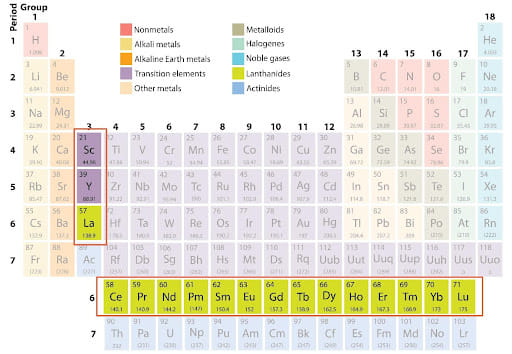
Strategic Importance of Rare Earth Elements
- Electrical, metallurgical, catalytic, nuclear, magnetic, and luminescent properties distinguish them.
- They are strategically significant because they use emerging and diverse technologies to meet the needs of today's society.
- Its applications range from every day (e.g., lighter flints, glass polishing mediums, car alternators) to high-tech (lasers, magnets, batteries, fibre-optic telecommunication cables).
- Even futuristic technologies (for example, high-temperature superconductivity, safe hydrogen storage and transport for a post-hydrocarbon economy, environmental global warming, and energy efficiency issues) require these REMs.
- The global demand for REMs has increased significantly as they have expanded into high-end technology, the environment, and the economy.
- They are critical for many modern technologies, such as consumer electronics, computers and networks, communications, clean energy, advanced transportation, health care, and environmental protection, national defense, etc.
- Because of their unique magnetic, luminescent, and electrochemical properties, they aid in the performance of technologies with reduced weight, emissions, and energy consumption, resulting in greater efficiency, performance, miniaturisation, speed, durability, and thermal stability.
Application of Rare Earth Elements
| Field | Application |
|---|---|
| Electronics | Television screens, computers, cell phones, silicon chips, monitor displays, long-life rechargeable batteries, camera lenses, light-emitting diodes (LEDs), compact fluorescent lamps (CFLs), baggage scanners, and marine propulsion systems are all examples of electronic devices. |
| Defense Sector | Rare earth elements are critical to our national defence. Night-vision goggles, precision-guided weapons, communications equipment, GPS equipment, batteries, and other defence electronics are all used by the military. Rare earth metals are essential components in the production of extremely hard alloys used in armoured vehicles and projectiles that shatter on impact. |
| Renewable Energy | Solar panels, hybrid vehicles, wind turbines, next-generation rechargeable batteries, and bio-fuel catalysts are all examples of green technologies. |
| Manufacturing | Metal alloys, stress gauges, ceramic pigments, glassware colourants, chemical oxidising agents, polishing powders, plastics creation, as additives for strengthening other metals, automotive catalytic converters. |
| Medical Science | Portable x-ray machines, x-ray tubes, magnetic resonance imaging (MRI) contrast agents, nuclear medicine imaging, cancer treatment applications, and medical and dental lasers are all available. |
| Technology | Lasers, optical glass, fibre optics, masers, radar detection devices, nuclear fuel rods, mercury-vapor lamps, highly reflective glass, computer memory, nuclear batteries, and high-temperature superconductors are all examples of high-temperature superconductors. |
Current Status of Reserves of REEs
- China currently controls 94% of the production and mining of REMs, and it also has very large natural reserves of these.
- According to recent reports, China is even purchasing these reserves in other countries and regions in order to maintain a monopoly over production for an extended period of time.
- And for these reasons, it has become a critical metal for India, as the country lacks sufficient resources and faces technological constraints in mining its own reserves of REEs.
- A study conducted by the think-tank Council on Energy, Environment, and Water identifies 12 minerals out of 49 as 'most critical' for India's manufacturing sector by 2030.
- Beryllium, chromium, germanium, limestone, niobium, graphite, rare earth, rhenium, strontium, tantalum, and zirconium are some of them.
- Other minerals, such as limestone and graphite, which are currently abundant in India, are considered 'critical' because extractable resources may become scarce in the future.
- According to the report, India is completely reliant on imports for seven of the twelve identified critical minerals and has no declared resources for any of them, with the exception of light rare earth (found in conjunction with monazite sands) and beryllium.
Minerals Security Partnership (MSP)
|
Challenges Related to Rare Earth Elements
- The extraction of REMs is one of the most environmentally harmful and toxic mining practises.
- Excessive rare earth mining has caused landslides, clogged rivers, environmental pollution emergencies, and even major accidents and disasters, causing significant harm to people's safety and health, as well as the ecological environment.
- Every year, China generates tens of millions of tonnes of wastewater while extracting rare earth minerals.
| Other Relevant Links | |
|---|---|
| Science & Technology Policy in India | Scientific Policy Resolution 1958 |
| Science & Technology Policy of 1983 | Science & Technology Policy of 2003 |
| Science, Technology and Innovation Policy 2013 | New Initiatives Aligned with the National Agenda |
| Technology Vision Document 2035 | National Intellectual Property Rights Policy |
Conclusion
The 'Make in India' programme, which aims to transform India into a manufacturing economy, will require massive amounts of REEs. Although India has one of the top five reserves of rare-earth minerals, there is no technology in place to extract them in an environmentally sustainable manner. As a result, India will need to strengthen diplomatic trade channels as well as long-term supply contracts. There is also a need to develop appropriate technologies and promote R&D in order to tap the potential.
FAQs
Question: What are Rare Earth Elements (REE)?
Answer: Rare Earth Elements (REE) are a group of 17 chemical elements that are essential in the production of high-tech devices like smartphones, computers, and renewable energy technologies. These elements include the lanthanide series and scandium and yttrium.
Question: Why are Rare Earth Elements considered strategically important?
Answer: REEs are critical for manufacturing advanced electronics, renewable energy technologies, military systems, and electric vehicles. Their strategic importance lies in their rarity, unique properties, and the reliance on foreign suppliers for many countries.
Question: Which countries are the largest producers of Rare Earth Elements?
Answer: China is the largest producer of REEs, followed by countries like Australia, the United States, and Myanmar. China controls the majority of global production and supply of these critical minerals.
Question: How are Rare Earth Elements used in modern technologies?
Answer: REEs are used in a wide range of applications, including magnets for motors, catalysts for refining oil, phosphors in display technologies, and in various military and defense systems. They are essential for clean energy technologies such as wind turbines and electric vehicle batteries.
Question: What are the environmental concerns associated with the mining of Rare Earth Elements?
Answer: Mining and processing REEs can have significant environmental impacts, including the release of toxic chemicals, pollution, and habitat destruction. The extraction process is energy-intensive and poses health risks to workers and surrounding communities.
MCQs
1. What is the primary use of Rare Earth Elements (REE)?
A) Agriculture
B) Military systems
C) Renewable energy and high-tech devices
D) Food production
Answer: (C) See the Explanation
Explanation: REEs are primarily used in the production of renewable energy technologies, electronics, and high-tech devices, including smartphones, wind turbines, and electric vehicles.
2. Which country is the largest producer of Rare Earth Elements?
A) United States
B) Australia
C) China
D) India
Answer: (C) See the Explanation
Explanation: China is the world's largest producer of Rare Earth Elements, with a dominant share of global production and supply.
3. Which of the following is NOT a typical application of Rare Earth Elements?
A) Electric vehicle batteries
B) Solar panel production
C) Nuclear weapons
D) Smartphone manufacturing
Answer: (C) See the Explanation
Explanation: REEs are not typically used in nuclear weapons production. They are, however, essential for clean energy technologies, electric vehicle batteries, and smartphones.
4. What is a major environmental concern with the mining of Rare Earth Elements?
A) Habitat destruction
B) Water scarcity
C) Soil erosion
D) High carbon emissions
Answer: (A) See the Explanation
Explanation: Mining for REEs can lead to habitat destruction, water pollution, and the release of toxic chemicals that negatively affect the environment and local communities.
5. Why are Rare Earth Elements considered a strategic resource?
A) They are abundant in nature
B) They are critical for high-tech industries and defense applications
C) They are easily recyclable
D) They have low economic value
Answer: (B) See the Explanation
Explanation: REEs are considered strategic because they are crucial for advanced technologies in energy, defense, and electronics, with limited suppliers making them highly valuable.
GS Mains Questions and Model Answers
Q1: Discuss the strategic importance of Rare Earth Elements (REE) in the context of modern technologies and global geopolitics.
Answer: Rare Earth Elements (REE) are critical to the manufacturing of high-tech devices, renewable energy systems, and defense technologies. Their importance is amplified by their relatively limited global supply, with China dominating production. This creates a geopolitical imbalance, as countries relying on REE imports are vulnerable to supply chain disruptions. The strategic control of REE resources can enhance national security and economic growth, prompting countries to seek alternatives or develop domestic sources. The growing demand for REEs in sectors such as electric vehicles and solar energy further elevates their geopolitical importance, making them central to both global trade and national security strategies.
Q2: What are the environmental and economic implications of the growing demand for Rare Earth Elements (REE)?
Answer: The increasing demand for REEs poses significant environmental challenges, including habitat destruction, water pollution, and the release of toxic chemicals during mining and processing. Economically, countries that control REE production, such as China, gain significant leverage in global markets. For countries dependent on REE imports, it creates supply chain vulnerabilities and heightens the need for sustainable sourcing methods. Economically, the push for greener alternatives to conventional mining processes presents both a challenge and an opportunity for innovation in recycling and responsible mining practices, helping balance the demand for REEs with environmental protection.
Q3: Evaluate the potential for developing alternative technologies to reduce the global reliance on Rare Earth Elements (REE).
Answer: The growing reliance on REEs for a variety of technological applications has sparked efforts to reduce dependency by developing alternative materials and technologies. Researchers are exploring the use of abundant materials for key applications like magnets and batteries, which could reduce the need for REEs in industries such as electric vehicles and renewable energy. Additionally, advancements in recycling REEs from used electronics and wind turbines offer a sustainable path to mitigate resource depletion. Despite these efforts, fully replacing REEs in high-performance technologies remains a challenge due to their unique properties, making it unlikely that alternatives will replace them entirely in the near future. However, ongoing research into materials science and improved recycling technologies offers a promising solution to reduce global reliance on REEs over time.
Previous Year Questions on Rare Earth Elements (REE)
1. UPSC CSE Mains 2020 (GS Paper 3):
Question: "Discuss the strategic importance of Rare Earth Elements (REE) and the challenges associated with their supply chain."
Answer: Rare Earth Elements (REE) are essential for advanced technologies, including electronics, renewable energy systems, and defense applications. China’s dominance in REE production creates supply chain vulnerabilities for other nations. Geopolitical tensions and trade restrictions have highlighted the strategic importance of securing alternative sources and enhancing recycling efforts to ensure a stable supply of these critical materials.
2. UPSC CSE Mains 2021 (GS Paper 3):
Question: "Evaluate the environmental challenges posed by the mining of Rare Earth Elements (REE) and suggest ways to mitigate their impact."
Answer: The mining of Rare Earth Elements (REE) is associated with significant environmental challenges, including habitat destruction, water pollution, and the release of toxic chemicals. To mitigate these impacts, adopting cleaner mining technologies, improving recycling efforts, and shifting towards more sustainable energy sources for REE production can help reduce the environmental footprint. Additionally, the implementation of stricter environmental regulations and the development of greener alternatives to REEs are necessary to ensure sustainable development.
Download the PREPP App and attempt FREE IAS Exam Mock Tests and get complete study material!

Full Test - 04: UPSC CSE Prelims CSAT (Paper-II)
Full Test - 03: UPSC CSE Prelims CSAT (Paper-II)
UPSC CSE Prelims 2026 GS Paper 1 Question Paper (24-May-2026)
UPSC CSE Prelims 2026 CSAT Paper 2 Question Paper (24-May-2026)

17 February 2025 | The Hindu Must Read Articles | Current Affairs

16 February 2026 | The Hindu Must Read Articles | Current Affairs

13 February 2026 | The Hindu Must Read Articles | Current Affairs









Comments