Sheep and Goat Droppings - Bulky Organic Manure - Agriculture Notes
Sheep and Goat Droppings are generally used as fertilizers for plants as they contain higher nutrients than farmyard manure and compost manure. The manure has an average N content of 3%, a P2O5 content of 1%, and a K2O content of 2%. The sweeping of sheep or goat shelters is disposed of in pits for subsequent application to the field. It is also known to loosen up heavy and tight soils. This article will explain to you about Sheep and Goat Droppings which will be helpful in preparing the Agriculture Syllabus for the UPSC Civil Service exam.
|
Table of Contents |
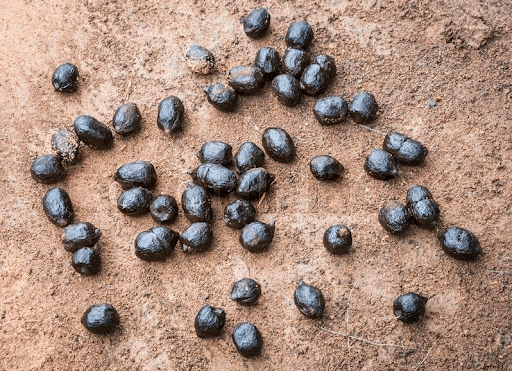
Typical Goat Droppings
What are Sheep and Goat Droppings?
- Fertilizer is one of the most popular uses for goat manure.
- Farmers can increase crop yields and plant health by using fertilizer made from goat and sheep droppings.
- Sheep and Goat Droppings are naturally in the form of pellets and are cleaner.
- Sheep and goat droppings in general don't often burn plants or attract insects like those of cows or horses.
- Both are practically odorless and good for the soil.
- Sheep and goat droppings can be used in the following ways:
- Sweeping of sheep or goat sheds is placed in pits for decomposition before being applied to the field. In this method, the nutrients in the urine are wasted.
- The second method is sheep penning, which involves keeping sheep and goats overnight in the field and incorporating urine and faecal matter into the soil to a shallow depth with a working blade harrow or cultivator.
Sheep and Goat Droppings - Application
- One of the best ways to improve the soil is to use goat and sheep droppings in garden areas.
- Its pelleted form allows for direct application to vegetable and flower gardens without having to worry about burning the plants.
- The pellets are additionally simple to toss and till into the garden.
- Another method is to mix equal amounts of goat manure, sand, and straw into the spring beds, adding more or less manure as the plants mature.
- One can nourish the garden with goat dung and then let it seep into the soil during the winter.
Sheep and Goat Droppings - Benefits
- For growing herbs, vegetables, and other crops, goat and sheep manure is a great fertilizer. It is renowned for enhancing the soil's ability to store water.
- Sheep and goat droppings are generally drier than the droppings of cows and horses.
- It is easier to spread, easier to work with, and has a milder odor. Additionally, it composts faster.
- With 22 pounds of nitrogen per tonne, it has a higher nitrogen content than typical horse and cow manures.
- The pelletized droppings allow for increased airflow into compost piles, which reduces the amount of time it takes for compost to mature and is another advantage of utilizing this as fertilizer.
- For both new and old gardens, goat and sheep droppings are a great soil conditioner.
- By enhancing the soil's texture, more oxygen can reach the roots and water may be used more effectively.
- It provides an inexpensive, organic supply of nitrogen and other nutrients.
Conclusion
Sheep and goat droppings are excellent fertilizers. However, since goats consume hay and grass, weed seeds may be found in their dropping. Most grazing animals, including sheep and horses, also pose the same danger. To lessen this issue, it is always advised to use well-composted goat manure. To prevent weeds, spreading mulch over the soil, and then removing any weeds that emerge immediately before they go to seed is mandatory.
FAQs
Question. What are sheep and goat droppings used for in agriculture?
Answer: Sheep and goat droppings are used as bulky organic manure, a natural fertilizer that improves soil fertility. They are rich in essential nutrients like nitrogen, phosphorus, and potassium, which are necessary for plant growth.
Question. Why are sheep and goat droppings considered good for soil?
Answer: Sheep and goat droppings are considered beneficial for soil because they enhance soil texture, improve water retention, and promote the growth of beneficial soil organisms. The organic matter in the droppings increases the microbial activity in the soil, helping to break down organic matter and release nutrients.
Question. How are sheep and goat droppings prepared as manure?
Answer: Sheep and goat droppings are collected and composted for several months to break down the raw organic matter. Composting helps to reduce the pathogen load and makes the nutrients more available to plants. They can also be directly applied to soil in smaller quantities, depending on the plant requirements.
Question. What are the advantages of using sheep and goat droppings as manure?
Answer: The advantages include improved soil fertility, better water retention, reduced need for chemical fertilizers, and increased microbial activity. They are a sustainable and cost-effective option for organic farming practices.
Question. Can sheep and goat droppings be used for all types of crops?
Answer: Yes, sheep and goat droppings can be used for a wide variety of crops, including vegetables, fruits, and grains. However, the amount and timing of application should be adjusted based on the crop's nutrient requirements.
MCQs
- Which of the following is a primary benefit of using sheep and goat droppings as manure?
A) Increased soil erosion
B) Improved soil fertility
C) Increased water drainage
D) Decreased microbial activity
Answer: (B) See the Explanation
Sheep and goat droppings enrich the soil with essential nutrients like nitrogen, phosphorus, and potassium, leading to improved soil fertility.
- How are sheep and goat droppings typically prepared for use as manure?
A) By directly applying them to the soil
B) By drying them in the sun
C) By composting them for several months
D) By mixing with chemical fertilizers
Answer: (C) See the Explanation
Sheep and goat droppings are composted to decompose organic matter, kill pathogens, and release nutrients in a form that plants can absorb.
- What nutrients are abundant in sheep and goat droppings?
A) Iron, zinc, and magnesium
B) Nitrogen, phosphorus, and potassium
C) Calcium and sulfur
D) Potassium and chlorine
Answer: (B) See the Explanation
Sheep and goat droppings are rich in the essential nutrients nitrogen, phosphorus, and potassium, which are critical for plant growth.
- What effect do sheep and goat droppings have on soil texture?
A) They make the soil more compact
B) They improve the soil's aeration and water retention
C) They reduce soil organic matter
D) They make the soil acidic
Answer: (B) See the Explanation
Sheep and goat droppings improve soil texture by increasing organic matter, which enhances aeration and water retention, especially in sandy soils.
- Can sheep and goat droppings be used for all crops?
A) No, only for root crops
B) Yes, but the amount should vary based on crop needs
C) Only for ornamental plants
D) No, they should be used for trees only
Answer: (B) See the Explanation
Sheep and goat droppings can be used for a variety of crops, but the amount and timing of application should be adjusted according to the crop's specific nutrient needs.
GS Mains Questions and Model Answers
Q1: Discuss the role of organic manure, such as sheep and goat droppings, in sustainable agriculture.
Answer: Organic manure, including sheep and goat droppings, plays a crucial role in sustainable agriculture by enhancing soil fertility and structure. It provides essential nutrients like nitrogen, phosphorus, and potassium, promoting plant growth without the harmful effects of synthetic fertilizers. The addition of organic matter increases microbial activity, improving soil health and water retention. Furthermore, using organic manure reduces the dependency on chemical fertilizers, contributing to environmentally friendly farming practices. The practice of using animal droppings as manure also supports organic farming, reduces waste, and promotes a circular farming system.
Q2: Evaluate the environmental benefits of using sheep and goat droppings as manure compared to chemical fertilizers.
Answer: Using sheep and goat droppings as manure offers several environmental benefits over chemical fertilizers. Organic manure improves soil structure and increases its water-holding capacity, which helps prevent soil erosion and reduces water runoff. Unlike chemical fertilizers, organic manure supports long-term soil health by enhancing its microbial activity and fertility. Chemical fertilizers, on the other hand, can lead to soil degradation, water pollution, and greenhouse gas emissions. By opting for organic manure, farmers can reduce their carbon footprint, promote biodiversity, and ensure the sustainability of agricultural systems.
Q3: Analyze the challenges of using sheep and goat droppings as manure in large-scale farming.
Answer: While sheep and goat droppings are beneficial for small-scale and organic farming, they pose challenges in large-scale agricultural operations. These include the high labor costs and time required for composting, potential difficulties in sourcing sufficient quantities of manure for large fields, and the need for adequate storage facilities. Additionally, improper handling of animal droppings can lead to the spread of pathogens and pests. Another challenge is the inconsistency in nutrient levels, as the composition of animal droppings can vary depending on the animals' diet, making it difficult to apply the right amounts of nutrients for different crops. Despite these challenges, the integration of manure management systems and scaling up composting processes can mitigate these issues.
Previous Year Questions on Sheep and Goat Droppings
1. UPSC CSE 2018
Question: "Explain the benefits of organic farming practices, such as using animal droppings, and how they contribute to sustainable agricultural practices."
Answer: Organic farming practices, including the use of animal droppings as manure, offer several benefits such as improved soil fertility, better water retention, and increased biodiversity. By using organic manure, farmers can enrich the soil with essential nutrients while avoiding the environmental harms associated with chemical fertilizers. The practice helps to maintain ecological balance, reduce soil erosion, and minimize the carbon footprint of farming. Moreover, organic farming practices promote the health of the ecosystem by encouraging the growth of beneficial microorganisms in the soil.
2. UPSC CSE 2020
Question: "Discuss the advantages and challenges of using animal droppings, such as sheep and goat manure, in modern agriculture."
Answer: The use of animal droppings, such as sheep and goat manure, offers several advantages, including improved soil structure, enhanced nutrient content, and increased microbial activity, which contribute to long-term soil health. It is an environmentally friendly alternative to chemical fertilizers and helps reduce dependence on external inputs. However, challenges include the need for proper composting to avoid pathogen contamination, inconsistent nutrient content, and the difficulty of sourcing large quantities of manure in large-scale farming operations. Efficient management systems and the integration of organic waste processing technologies can help overcome these challenges.
Download the PREPP App and attempt FREE IAS Exam Mock Tests and get complete study material!

Full Test - 04: UPSC CSE Prelims CSAT (Paper-II)
Full Test - 03: UPSC CSE Prelims CSAT (Paper-II)
UPSC CSE Prelims 2026 CSAT Paper 2 Question Paper (24-May-2026)
UPSC CSE Prelims 2026 GS Paper 1 Question Paper (24-May-2026)

17 February 2025 | The Hindu Must Read Articles | Current Affairs

16 February 2026 | The Hindu Must Read Articles | Current Affairs

13 February 2026 | The Hindu Must Read Articles | Current Affairs









Comments