Farm Yard Manure (FYM) - Bulky Organic Manure - Agriculture Notes
Farmyard manure is a simple byproduct of farmyard animal waste, often cow dung and urine, but there are other kinds of manure that are used as fertilizer and are common all over the world depending on the location. Farmyard manure helps to improve the soil structure. It expands the capacity of the soil to hold more water and minerals. It also boosts the soil's microbial activity, which improves mineral delivery and plant nutrition. Other examples of farmyard manures include poultry wastes, droppings of sheep and goats, and fish wastes. This article will explain to you about Farm Yard Manure which will be helpful in preparing the Agriculture Syllabus for the UPSC Civil Service exam.
|
Table of Contents |
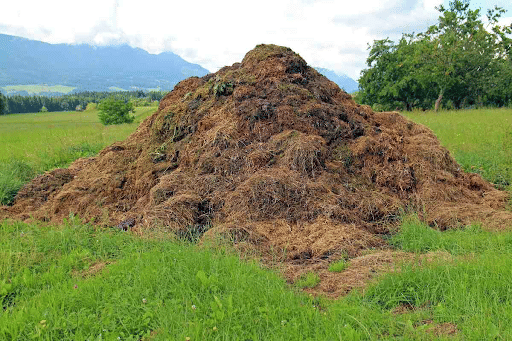
Farm Yard Manure
What are Manures?
- Manure is the degraded form of dead plants and animals that are spread on the soil to boost productivity.
- Manures are a cost-effective and natural source of fertilizer.
- Excreta from humans and animals are also utilized as manure. The nitrogen, phosphorus, and potassium content in livestock manure is high.
- Because manure is high in organic matter and humus, it promotes soil fertility.
- These are more cost-effective in the long term. It is a resource that is both valuable and renewable.
- Manures are plant and animal wastes used to provide plant nutrients. After decomposition, they release nutrients.
- The practice of collecting and utilizing waste from animal, human, and vegetable sources to improve crop productivity is as old as agriculture itself.
- Organic materials derived from animal, human, and plant residues that contain plant nutrients in complex organic forms are referred to as manures.
- Manures with low nutrient content per unit quantity have a longer residual effect than fertilizers with high nutrient content, in addition to improving soil physical properties.
- Manuring is the process of adding manures to a garden. Manuring should be done on a regular basis, or the plants will get feeble.
- Based on the concentration of nutrients, manures can also be classified as bulky organic manures or concentrated organic manures.
What is Farm Yard Manure?
- Basically, cow dung, cow urine, waste straw, and other dairy wastes are used to create farmyard manure.
- FYM contains a high proportion of organic material, which feeds soil organisms and is necessary for maintaining active soil life, and it is high in nutrients.
- A small amount of nitrogen is directly available to plants, while the majority is made available as the Farmyard Manure decomposes.
- When cow dung and urine are combined, the plants receive balanced nutrition.
- Potassium and Phosphorus availability from farmyard manure is comparable to that of inorganic sources.
- Farmyard manure is made up of two parts: solid phase (dung) and liquid phase (urine).
- Using farmyard manure increases soil fertility.
- Farmyard manure is made of simple ingredients (cow dung), but the process of turning it into a functional product takes time and labor.
- Farmyard manure is most beneficial to vegetables such as carrot, tomato, sweet potato, potato, radish, onion, and so on, as well as crops such as rice, sugarcane, napier grass, coconuts, mango, banana, and oranges.
Preparation of Farmyard Manure
- There is no complicated procedure for preparing farmyard manure.
- All you have to do is collect the cow dung and urine into an even layer beneath a simple roof to keep it from getting too wet and exposed to direct sunlight.
- If the mixture becomes too dry, more dung and urine are added, along with some water.
- In about six months, the farmyard manure is ready for use as fertilizer on fields.
- Manure spreaders can be used to apply partially-decomposed farmyard manure to the ground three to four weeks before planting crops.
- This exposure to the elements will allow the manure to decompose more quickly and provide nutrients to the soil.
- If there is a long period of time between spreading the manure and planting the crops, the nutrients may be washed out of the soil by heavy rain.
- If the manure has aged sufficiently, it can be applied immediately before the crops are planted. Farmyard manure is beneficial to vegetable and fruit crops.
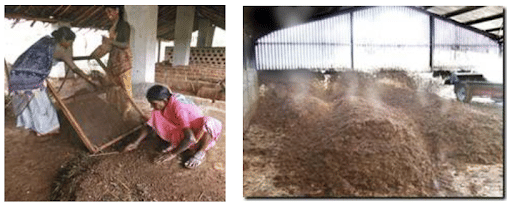
Preparation of Farm Yard Manure
Farm Yard Manure - Common Process
- Farmyard manure is a decomposed mixture of cattle dung, urine, bedding materials like straw and litter, and leftovers from the feed the animals were given.
- Daily collections of the dung and urine-soaked waste from the cattle shed are made and dumped into trenches that are 6-7 meters long, 1.5–2 meters wide, and 1 meter deep.
- Up to a height of roughly 0.5 m above the ground level, each trench is filled.
- The heap's top needs to be shaped like a dome and covered in cow dung earth slurry plaster. After three to four months, it is ready to be applied.
- This method can prepare 7 to 8.5 cubic meters of manure annually for each cow.
Farm Yard Manure - Factors Affecting Nutritional Build up
- Age of Animal: Growing animals and cows that produce milk retain in their systems the nitrogen and phosphorus needed for productive functions like growth and milk production, and the excreta do not contain all of the plant food elements present in the feed.
- Older animals that are inferior excrete more than what they do consume, including waste from their body tissues.
- Feed: Excreta produced are similarly enhanced when the feed is high in plant food elements.
- Nature of Litter Used: Leguminous plant waste and cereal straw were both employed as litter, which add nitrogen to the manure.
- Aging of Manure: As manure ages, it becomes richer and less voluminous.
Farm Yard Manure - Benefits
- Farmyard manure enriches the soil with humus and slowly-released nutrients which helps retain nutrients and water.
- Heavy soils are broken down with its aid. Farmyard manure gives sandy and light soils more texture.
- Farmyard manure is a natural source of readily available nitrogen.
- By applying farmyard manure, worms are drawn to the soil and are excellent for mulching.
Farm Yard Manure - Disadvantages
- Its decomposition releases harmful gases into the atmosphere, polluting it.
- Certain micronutrient availability is reduced.
- When compared to fertilizer, FYM necessitates a higher cost per unit weight of nutrients during handling, storage, and application.
Conclusion
The application of farmyard manure has numerous advantages. However, their application not always holds good because as it breaks down, toxic gases are released into the air, polluting it. Farmyard manure also reduces the availability of some micronutrients. In comparison to fertilizer, farmyard manure requires more nutrients per unit of weight for handling, storage, and application.
FAQs
Question: What are the main components of Farm Yard Manure (FYM)?
Answer: Farm Yard Manure is composed of animal dung, urine, and bedding materials like straw or hay. It may also include kitchen waste and crop residues, which contribute to its nutrient content and organic matter.
Question: How does FYM improve soil fertility?
Answer: FYM improves soil fertility by providing essential nutrients such as nitrogen, phosphorus, and potassium. It enhances the organic matter content in the soil, improving its structure, water retention capacity, and microbial activity, which are crucial for plant growth.
Question: What are the benefits of using FYM in agriculture?
Answer: The benefits of using FYM include improved soil structure, increased nutrient availability, enhanced moisture retention, reduced soil erosion, and promotion of beneficial soil microorganisms. Additionally, it helps in maintaining ecological balance and promoting sustainable farming practices.
Question: How is FYM prepared and applied to the soil?
Answer: FYM is prepared by collecting animal dung and bedding materials, allowing them to decompose in a heap or pit for several weeks to months. Once fully decomposed, it can be applied to the soil either as a top dressing or incorporated into the soil before planting, ensuring even distribution of nutrients.
Question: What are the limitations of using FYM?
Answer: Limitations of FYM include variability in nutrient content depending on the source and preparation methods, potential presence of pathogens or weed seeds, and the requirement for larger quantities compared to chemical fertilizers, which may not always be feasible for farmers.
MCQs
1. What is the primary purpose of Farm Yard Manure (FYM)?
A. To control pests
B. To provide organic matter and nutrients
C. To enhance soil acidity
D. To reduce soil erosion
Answer: (B) See the Explanation
The primary purpose of FYM is to provide organic matter and essential nutrients to improve soil fertility and structure, thus enhancing plant growth.
2. Which of the following is NOT a component of FYM?
A. Animal dung
B. Crop residues
C. Chemical fertilizers
D. Bedding materials
Answer: (C) See the Explanation
Chemical fertilizers are not a component of FYM; instead, FYM consists of organic materials such as animal dung, crop residues, and bedding materials.
3. How does FYM contribute to soil health?
A. By increasing soil acidity
B. By promoting microbial activity
C. By reducing nutrient availability
D. By eliminating soil organic matter
Answer: (B) See the Explanation
FYM contributes to soil health by promoting microbial activity, which aids in nutrient cycling and organic matter decomposition, thereby enhancing soil fertility.
4. What is a significant disadvantage of using FYM?
A. It is environmentally friendly
B. It has a high nutrient content
C. It may contain pathogens
D. It improves soil structure
Answer: (C) See the Explanation
A significant disadvantage of using FYM is that it may contain pathogens or weed seeds, which can pose risks to plant health.
5. Which nutrient is primarily abundant in Farm Yard Manure?
A. Nitrogen
B. Phosphorus
C. Potassium
D. Calcium
Answer: (A) See the Explanation
Nitrogen is primarily abundant in Farm Yard Manure, making it essential for promoting plant growth and development.
GS Mains Questions and Model Answers
1. Discuss the significance of Farm Yard Manure (FYM) in sustainable agriculture.
Answer: Farm Yard Manure (FYM) plays a crucial role in sustainable agriculture by enhancing soil fertility and promoting ecological balance. By providing essential nutrients such as nitrogen, phosphorus, and potassium, FYM improves the nutrient content of the soil, leading to better crop yields. Additionally, FYM increases organic matter in the soil, which enhances soil structure, water retention, and microbial activity. This not only supports plant growth but also helps mitigate the impacts of chemical fertilizers, thereby reducing environmental pollution. Moreover, using FYM aligns with organic farming practices, contributing to the sustainability of agricultural ecosystems and ensuring food security while preserving the environment.
2. Analyze the challenges faced in the application of Farm Yard Manure (FYM) in modern farming.
Answer: The application of Farm Yard Manure (FYM) in modern farming faces several challenges. One significant issue is the variability in nutrient content, which can lead to inconsistent crop responses. Additionally, the labor-intensive nature of collecting and applying FYM can be a deterrent for many farmers, particularly in large-scale operations. The potential for pathogens and weed seeds in raw manure presents another challenge, necessitating proper composting practices to ensure safety. Furthermore, with the rise of chemical fertilizers, farmers may prioritize synthetic options due to their convenience and immediate nutrient availability. Addressing these challenges requires increased awareness of the benefits of FYM, education on proper management practices, and possibly government support for organic amendments in agricultural policies.
3. Evaluate the role of organic manures like FYM in combating soil degradation.
Answer: Organic manures, such as Farm Yard Manure (FYM), play a vital role in combating soil degradation by replenishing nutrients, enhancing soil structure, and increasing organic matter content. Soil degradation often results from intensive farming practices, chemical overuse, and erosion, leading to decreased fertility and productivity. FYM helps restore the balance by improving soil health, enhancing microbial activity, and promoting nutrient cycling. This not only improves crop yields but also helps in sequestering carbon, reducing the impacts of climate change. Additionally, the application of organic manures fosters biodiversity in the soil, leading to a more resilient ecosystem capable of withstanding environmental stressors. Thus, organic manures like FYM are essential tools in the sustainable management of soils and agricultural landscapes.
Previous Year Questions on Farm Yard Manure
1. UPSC CSE Prelims 2019
Question: Which of the following is an advantage of using organic manures like Farm Yard Manure?
A. Quick nutrient release
B. Improvement of soil structure
C. High solubility
D. Reduced microbial activity
Answer: B
Explanation: One of the significant advantages of using organic manures like Farm Yard Manure is the improvement of soil structure, which enhances water retention and aeration, benefiting plant growth.
2. UPSC CSE Mains 2020 (GS Paper 3)
Question: Discuss the significance of organic fertilizers, particularly Farm Yard Manure, in the context of sustainable agriculture.
Answer: Organic fertilizers like Farm Yard Manure are significant for sustainable agriculture as they provide essential nutrients while improving soil health. They enhance the organic matter in the soil, promoting microbial activity and nutrient cycling. This reduces dependency on chemical fertilizers, lowers the risk of soil degradation, and fosters an environmentally friendly farming approach. The use of organic fertilizers supports long-term agricultural productivity, contributing to food security and environmental sustainability.
Download the PREPP App and attempt FREE IAS Exam Mock Tests and get complete study material!

Full Test - 04: UPSC CSE Prelims CSAT (Paper-II)
Full Test - 03: UPSC CSE Prelims CSAT (Paper-II)
UPSC CSE Prelims 2026 CSAT Paper 2 Question Paper (24-May-2026)
UPSC CSE Prelims 2026 GS Paper 1 Question Paper (24-May-2026)

17 February 2025 | The Hindu Must Read Articles | Current Affairs

16 February 2026 | The Hindu Must Read Articles | Current Affairs

13 February 2026 | The Hindu Must Read Articles | Current Affairs









Comments