
Parliamentary Control over Executive - Indian Polity Notes
Parliamentary control over Executive ensures that the executive remains answerable for its actions, decisions, and policies. Through various mechanisms such as parliamentary debates, committees, motions, demands for grants and question hour, Parliament exercises control over the Executive. Parliamentary control over the executive branch is indeed a cornerstone of democratic governance. The UPSC Indian Polity and Governance Syllabus includes the topic Parliamentary Control over Executive which is described in this article.
Table of Contents

Parliamentary control of the executive refers to the mechanisms by which a legislative body exercises oversight and influence over the actions and decisions of the government or executive branch.
Parliamentary Control over Executive - Administrative Control
In general, Parliament does not intervene in administrative matters; but, if a policy is created in an incorrect manner, Parliament may request answers.
|
"Parliamentary control of the executive is the cornerstone of democratic governance, embodying the balance of power and ensuring accountability through checks and balances." |
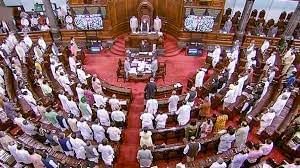
Parliamentary Control over Executive - Legislative Control
- When a law is enacted in Parliament, the government must explain all of its provisions and respond to queries from MPs. As a result, it prohibits the executive from taking arbitrary actions.
- According to the principle of Separation of Power, the role of the legislature is to make laws and of executive is to implement the laws. But in recent years there has been a growing trend of delegated Legislation which erodes the powers of the Parliament as law law-making body. Eg. Parliament has framed only broader laws like SEBI Act 1992, and Company Act 2013.
- The former Chairman of the Rajya Sabha advocated the idea of Legislative Impact Assessment which is the study of the impact of a law (being made and enforced) on society over a period of time to address the issue of delegated legislations.
Parliamentary Control over Executive - Financial Control
- The executive presents the budget to Parliament, where it is debated and scrutinized by MPs.
- Without Parliamentary approval, the government cannot withdraw any funds from the consolidated fund.
- Comptroller and Auditor General is authorised to audit all expenditures from the Consolidated Fund of India. This ensures transparency and accountability in financial matters.
Parliamentary Control over Executive - Representative Control
- Members of parliament (MPs) have the authority to question government ministers, scrutinize their actions, and hold them accountable for any shortcomings or failures.
- Question Hour: Members of Parliament (MPs) can pose questions to ministers regarding the functioning of their respective ministries during Question Hour. This allows for scrutiny of executive actions and policies.
- Debates and Discussions: Parliament conducts debates and discussions on various issues, including government policies and decisions. These sessions provide a platform for MPs to express their opinions and concerns regarding the executive's actions.
- Various motions: Through the passage of motions like No-Confidence Motion, calling Attention Motion, and Adjournment Motion parliament ensures accountability of the Executive.
- If a significant number of MPs feel that the government is not performing satisfactorily, they can bring a no-confidence motion against the government. If the motion passes, the government must resign, leading to potential changes in leadership or even early elections.
- Parliament has various committees, such as the Public Accounts Committee (PAC), Estimates Committee, Committee on Government Assurances which scrutinize the functioning of the executive. These committees play a crucial role in holding the government accountable for its actions.
Limitations of Parliamentary Control over Executive
- Party Loyalty: MPs often prioritize loyalty to their political party over their duty to hold the executive accountable. This can result in MPs being reluctant to criticize the government, especially if it can harm their party's interests or chances of reelection.
- Whipped Votes: Party leaders can enforce strict party discipline through the use of whipped votes, where MPs are required to vote along party lines. This diminishes the ability of individual MPs to scrutinize the actions of the executive independently and may lead to rubber-stamping of government decisions.
- Role of Anti-Defection Law: Anti-Defection Law discourages MPs from expressing dissent or holding views contrary to their party's position, as defection could result in disqualification from office. It limits the ability of MPs to voice their independent opinions about any particular issue.
- Limited Time for Scrutiny: Parliamentary sessions have finite durations, and there may be constraints on the time available for scrutinizing government actions and legislation. This can make it difficult for parliamentarians to thoroughly examine all matters requiring oversight, allowing the executive to evade accountability.
- Complexity of Issues: Some issues involve intricate policy issues and technical details that may be challenging for MPs without specialized knowledge to fully comprehend and evaluate.
- Financial bodies such as the Public Accounts Committee only do post-facto audits, which means they analyze expenditures after they have occurred.
Conclusion
While parliamentary control of the executive is essential for ensuring democratic governance, these limitations underscore the need for continuous reforms and improvements to strengthen the accountability of the executive to the legislative branch and, ultimately, to the citizens they represent.
FAQs
Question: What is the significance of Question Hour in parliamentary control over the executive?
Answer: The Question Hour allows Members of Parliament to ask ministers questions regarding government policies, actions, and decisions. It ensures that the executive remains accountable to the legislature and provides transparency in government functioning.
Question: How does a No-Confidence Motion function as a tool of parliamentary control?
Answer: A No-Confidence Motion allows MPs to express that they no longer have confidence in the government. If the government loses the support of the majority in the Lok Sabha, it must resign, making it a powerful tool of parliamentary control.
Question: What role do Parliamentary Committees play in controlling the executive?
Answer: Parliamentary Committees, such as the Public Accounts Committee and Estimates Committee, examine government policies, finances, and performance, ensuring thorough scrutiny and accountability of the executive.
Question: Why is budgetary control important for parliamentary oversight?
Answer: The Budget represents the government's plan for income and expenditure. Parliament exercises budgetary control by approving or rejecting budget proposals, ensuring that public money is spent responsibly and in the national interest.
Question: How do parliamentary debates contribute to executive accountability?
Answer: Parliamentary debates allow MPs to discuss government policies and actions, bringing transparency and public scrutiny to the executive's decisions. This ensures that the government remains accountable to the legislature and the public.
MCQs
1. What is the purpose of the Question Hour in Parliament?
A. To discuss new laws
B. To ask ministers questions on government policies
C. To introduce bills
D. To debate no-confidence motions
Answer: (B) See the Explanation
The Question Hour is a period during which Members of Parliament can ask questions to ministers about government policies and actions, ensuring accountability.
2. Which of the following motions can force the resignation of the government if passed?
A. Adjournment Motion
B. No-Confidence Motion
C. Call Attention Motion
D. Privilege Motion
Answer: (B) See the Explanation
A No-Confidence Motion, if passed, forces the government to resign because it indicates that the government no longer has the majority support in the Lok Sabha.
3. Which parliamentary committee is responsible for examining the public expenditure of the government?
A. Public Accounts Committee
B. Estimates Committee
C. Rules Committee
D. Business Advisory Committee
Answer: (A) See the Explanation
The Public Accounts Committee (PAC) is responsible for examining the expenditure of the government and ensuring that funds are spent according to the Parliament's approval.
4. What happens if the budget presented by the government is not passed by the Parliament?
A. The budget is revised and presented again
B. The government has to resign
C. The budget is passed automatically
D. The President of India approves the budget
Answer: (B) See the Explanation
If the budget is not passed by Parliament, it indicates a loss of confidence in the government, and the government must resign.
5. During which hour in Parliament can MPs raise matters of urgent importance?
A. Question Hour
B. Zero Hour
C. Budget Session
D. Legislative Hour
Answer: (B) See the Explanation
During Zero Hour, MPs can raise matters of urgent public importance without prior notice, providing an additional mechanism for holding the executive accountable.
GS Mains Questions and Model Answers
Q1: Analyze the significance of Parliamentary Committees in ensuring executive accountability in India.
Answer: Parliamentary Committees play a crucial role in ensuring executive accountability in India’s parliamentary democracy. These committees, such as the Public Accounts Committee (PAC) and Estimates Committee, are tasked with scrutinizing government spending, policies, and decisions. They provide a forum for detailed examination of issues that may not be possible during full parliamentary sessions. The PAC, for example, examines the reports of the Comptroller and Auditor General (CAG), ensuring that public funds are used efficiently and in accordance with parliamentary approval. Parliamentary Committees enable a more thorough investigation of government functioning and help bridge the gap between Parliament and the executive.
Q2: Discuss the role of Question Hour as a tool of parliamentary control over the executive in India.
Answer: Question Hour is one of the most significant tools for parliamentary control over the executive in India. It allows Members of Parliament to ask ministers questions regarding their ministries' policies and actions, ensuring transparency and accountability. By answering these questions, the executive is compelled to justify its decisions and provide information on its governance. Question Hour promotes public scrutiny of the government’s actions and ensures that the executive remains responsive to the legislature. It also provides an opportunity for MPs to raise issues of national importance, further strengthening the link between the legislature and the executive.
Q3: Evaluate the effectiveness of the No-Confidence Motion in maintaining parliamentary control over the executive.
Answer: The No-Confidence Motion is a powerful tool that ensures the executive remains accountable to the legislature. If a government loses the confidence of the majority in the Lok Sabha, it must resign, thereby reinforcing the principle of collective responsibility. The effectiveness of the No-Confidence Motion lies in its ability to prevent the executive from overstepping its mandate, as the threat of losing power compels the government to adhere to parliamentary norms and maintain majority support. While the motion is rarely used, its mere existence promotes political stability by ensuring that the government acts in accordance with the will of the majority in Parliament.
Previous Year Questions on Parliamentary Control over Executive
1. UPSC CSE Prelims 2020
Question: What is the primary function of the Public Accounts Committee in Parliament?
A. To draft the budget
B. To review government expenditures
C. To legislate financial bills
D. To advise the President on financial matters
Answer: B
Explanation: The Public Accounts Committee reviews government expenditures to ensure that funds are used efficiently and in accordance with Parliament's approval.
2. UPSC CSE Mains 2019 (GS Paper 2)
Question: Discuss the role of parliamentary control in a parliamentary form of government.
Explanation: In a parliamentary form of government, parliamentary control is essential to ensure that the executive remains accountable to the legislature. This control is exercised through various means, such as the Question Hour, No-Confidence Motion, Parliamentary Committees, and debates. These mechanisms enable the legislature to scrutinize government policies, decisions, and expenditures. The No-Confidence Motion is particularly significant, as it can compel the executive to resign if it loses the confidence of the majority in the Lok Sabha. Thus, parliamentary control is critical in maintaining transparency, preventing abuse of power, and ensuring good governance.
*email: contactus@prepp.in
Download the PREPP App and attempt FREE IAS Exam Mock Tests and get complete study material!


Comments