Salaries and allowances of Member of Parliament - Indian Parliament - Indian Polity Notes
Members of Parliament in India are entitled to salaries, allowances, and various perks as determined by the Parliament. They are governed by the Salaries, Allowances and Pension of Members of Parliament Act, 1954. The UPSC Indian Polity and Governance Syllabus includes the Salaries and allowances of Members of Parliament - Indian Parliament which is described in this article.
Table of Contents
In the world's largest democracy, the role of Members of Parliament (MPs) is pivotal, representing the voices and aspirations of millions of Indians. Therefore MPs in India are entitled to salaries, allowances, and various perks. It helps them to fulfil their parliamentary duties and to serve their constituencies effectively.
Constitutional Provisions Regarding the Salaries Of MPs
- Article 106 of the Constitution of India provides that the members of either House of Parliament shall be entitled to receive salaries and allowances as may be determined by Parliament by law.
- Salaries, allowances and pension of Members of Parliament are governed by the Salaries, allowances and pension of Members of Parliament Act, 1954.
- The Constitution of India has not prescribed provision of pensions for MPs but Parliament has provided it by law. From 1976 onwards, MPs have been given the pension facility.
- Besides pension, they are also provided with travelling facilities, free accommodation, telephone, vehicle advance, medical facilities etc.
|
Salaries, allowances and pension of Members of Parliament are governed by the Salaries, allowances and pension of Members of Parliament Act, 1954. |
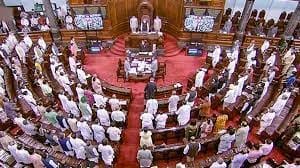
Salaries, Allowances and Pension of Members of Parliament (Amendment) Ordinance, 2020
- Salaries, Allowances and Pension of Members of Parliament (Amendment) Ordinance, 2020 amended the Salary, Allowances, and Pension of Members of Parliament Act, 1954 to reduce the salaries of MPs by 30% for one year.
- Certain rules notified under the 1954 Act were also amended to reduce certain allowances of MPs for one year like constituency allowance and office expenses allowance.
- These changes were temporary for a period of one year effective from April 1, 2020, to supplement the financial resources of the centre to tackle the COVID-19 pandemic situation.
Salaries and Allowances of Officers of Parliament
- Salaries and Allowances of Officers of Parliament Act 1953 provided salaries and allowances to Officers of Parliament namely Chairman and Deputy Chairman of the Council of States, the Speaker and the Deputy Speaker of the House of the People.
- They are charged on Consolidated Fund of India, therefore not subjected to the annual vote of the Parliament.
- Each officer of the Parliament other than the Chairman of the Rajya Sabha is entitled to receive the daily allowance at the same rate as payable to Members of Parliament.
Debates Surrounding Salaries and Pensions to MPs
Argument against
- Cost to Taxpayers: Providing salaries and pensions for MPs incurs costs to the taxpayer. In times of budget constraints or when public services are underfunded, allocating significant resources to political representatives can be seen as a misuse of public funds.
- Risk of Entitlement: Generous benefits for MPs may create a sense of entitlement among elected officials, potentially leading to abuse of privileges.
- Conflict of Interest: When MPs have the authority to determine their own salaries, there is a risk that they may prioritize personal or political interests over the broader public good. Many experts have advocated for the establishment of an independent authority or commission tasked with setting MPs' salaries.
- It is contrary to Article 14 (Right to Equality) of the Constitution as majority sectors in India do not provide pension facilities to their employees.
Arguments in Support
- MPs need pensions and benefits to uphold their dignity post-tenure.
- MPs have to regularly engage with and travel within their constituencies for election purposes every five years. Therefore need monetary resources.
- Providing a pension ensures financial security for MPs after they leave office, acknowledging their service to the nation.
Conclusion
From basic salaries to constituency allowances, travel reimbursements, and other benefits, each facet plays a crucial role in facilitating parliamentary duties and ensuring MPs can effectively serve their constituencies.
FAQs
Question: What are the main provisions regarding the salaries and allowances of Members of Parliament (MPs)?
Answer: The salaries and allowances of Members of Parliament (MPs) in India are governed by the Salaries, Allowances and Pension of Members of Parliament Act, 1954. According to this Act, MPs are entitled to a fixed monthly salary, constituency allowance, office expense allowance, and a daily allowance for attending sessions. In addition, they enjoy perks like free medical facilities, travel allowances, and pension benefits after retirement. These provisions are designed to support MPs in fulfilling their parliamentary duties and serving their constituencies.
Question: How are the salaries and allowances of MPs determined in India?
Answer: The salaries, allowances, and pensions of MPs are determined by the Parliament of India under the framework of the Salaries, Allowances and Pension of Members of Parliament Act, 1954. The salaries of MPs are revised periodically based on the recommendations of the Finance Ministry. Additionally, amendments to this Act have been made from time to time to address the changing economic conditions, such as the 2020 ordinance which temporarily reduced MPs’ salaries by 30% due to the financial impact of the COVID-19 pandemic.
Question: What are some of the key benefits and allowances that MPs receive?
Answer: In addition to their regular salaries, MPs in India are entitled to several allowances and benefits, which include:
- Constituency Allowance: MPs are given an allowance to cover the expenses related to their constituency duties.
- Office Expenses Allowance: This allowance helps MPs meet the administrative costs of running their offices.
- Daily Allowance: MPs are entitled to a daily allowance for attending parliamentary sessions.
- Travel Allowances: MPs receive reimbursements for travel expenses incurred during their official duties, including air and train travel.
- Medical Facilities: MPs are entitled to free medical care and reimbursement for health-related expenses.
Question: How does the salary of MPs compare to other government officials in India?
Answer: The salary of MPs in India is generally higher than that of many government officials, reflecting the responsibilities and powers that come with their position. However, MPs' salaries are also subject to periodic revisions and are often seen as a point of debate, especially during times of economic challenges or public dissatisfaction with the functioning of the legislature. The salary structure of MPs is usually compared to that of senior civil servants, though it is not directly linked to the pay scale of other government employees.
Question: How have the salaries and allowances of MPs been altered during economic crises?
Answer: During economic crises, such as the COVID-19 pandemic, the salaries and allowances of MPs have been subject to temporary reductions. For instance, the Salaries, Allowances, and Pension of Members of Parliament (Amendment) Ordinance, 2020, reduced MPs' salaries by 30% for a year as part of efforts to address the financial challenges posed by the pandemic. This reduction also applied to certain allowances, like constituency and office expenses allowances. Such amendments are temporary and aim to supplement national financial resources during emergencies.
MCQs
1. Who determines the salaries and allowances of Members of Parliament in India?
A) The President of India
B) The Parliament of India
C) The Supreme Court of India
D) The Prime Minister of India
Answer: (B) See the Explanation
Explanation: The salaries, allowances, and pensions of MPs in India are determined by the Parliament, under the provisions of the Salaries, Allowances, and Pension of Members of Parliament Act, 1954.
2. What is the primary purpose of the Constituency Allowance provided to MPs?
A) To cover the costs of running the MP's office
B) To support MPs in their personal travel expenses
C) To meet expenses related to their constituency duties
D) To provide for MPs' health-related costs
Answer: (C) See the Explanation
Explanation: The Constituency Allowance is provided to MPs to help them meet expenses related to their constituency duties, such as traveling within their constituency and interacting with voters.
3. Which of the following amendments temporarily reduced the salaries of MPs?
A) The 2008 Finance Act
B) The 2020 Ordinance
C) The 2014 Pay Commission
D) The 2019 Salary Amendment
Answer: (B) See the Explanation
Explanation: The Salaries, Allowances, and Pension of Members of Parliament (Amendment) Ordinance, 2020, temporarily reduced the salaries of MPs by 30% for a year to address financial challenges arising from the COVID-19 pandemic.
4. What benefit is provided to MPs regarding medical facilities?
A) Free healthcare for MPs and their families
B) Subsidized healthcare
C) Reimbursement for healthcare expenses
D) No healthcare benefits
Answer: (A) See the Explanation
Explanation: MPs in India are entitled to free medical care and reimbursement for health-related expenses, ensuring their well-being during their tenure.
5. What is the role of the Speaker of the Lok Sabha in the salary determination of MPs?
A) To approve the salary amount
B) To set the salary scale
C) To regulate the pension
D) No role in salary determination
Answer: (D) See the Explanation
Explanation: The Speaker of the Lok Sabha does not directly determine the salaries of MPs. The determination is carried out by Parliament under the Salaries, Allowances, and Pension of Members of Parliament Act, 1954.
GS Mains Questions and Model Answers
Q1: Discuss the constitutional provisions related to the salaries and allowances of Members of Parliament in India.
Answer: Article 106 of the Indian Constitution provides that the members of either House of Parliament are entitled to receive salaries and allowances as may be determined by Parliament. This provision ensures that MPs are adequately compensated for their services, allowing them to perform their legislative duties effectively. The details regarding the salaries, allowances, and pensions of MPs are governed by the Salaries, Allowances, and Pension of Members of Parliament Act, 1954, which is periodically amended to keep pace with the economic conditions and provide necessary adjustments to MPs' pay structure.
Q2: Examine the debates surrounding the provision of salaries and pensions to Members of Parliament. What are the pros and cons of such provisions?
Answer: The provision of salaries and pensions to MPs has been a subject of debate in India. On the one hand, MPs are entitled to salaries and allowances to help them perform their duties and represent their constituencies effectively. On the other hand, critics argue that the substantial salaries and pensions paid to MPs are a drain on public resources, especially during times of financial hardship. Supporters, however, argue that MPs require financial security to serve effectively and to maintain the dignity of their office, particularly post-retirement. To address this, several reforms and amendments have been made to ensure the proper balance between reasonable remuneration and cost-effectiveness.
Q3: Analyze the impact of salary reductions for MPs during economic crises like the COVID-19 pandemic. How effective was this measure in addressing national financial concerns?
Answer: The temporary reduction in the salaries of MPs during the COVID-19 pandemic was an important step in managing the national financial crisis. The 30% salary cut, along with the reduction in certain allowances, helped supplement the financial resources needed to address the pandemic's impact. This move was symbolic in demonstrating solidarity with the public, as it reflected the government's willingness to share the financial burden. While this measure was temporary, it highlighted the need for MPs to be flexible and responsive during national crises, especially in managing public funds effectively.
Previous Year Questions on MP Salaries
1. UPSC CSE Prelims 2020:
Question: Which of the following acts governs the salaries and allowances of Members of Parliament?
A) Indian Constitution
B) Parliament Act, 1952
C) Salaries, Allowances, and Pension of Members of Parliament Act, 1954
D) Finance Act, 1965
Answer: (C)
Explanation: The Salaries, Allowances, and Pension of Members of Parliament Act, 1954 governs the salaries and allowances of MPs in India.
2. UPSC CSE Mains 2019 (GS Paper 2):
Question: "Evaluate the fairness of the salaries and allowances provided to Members of Parliament in India. Should there be a review of MPs' remuneration?"
Answer: The remuneration of MPs is designed to enable them to fulfill their duties without financial strain, but it has been criticized for being disproportionately high compared to the average income of Indian citizens. A periodic review of MPs' salaries, allowances, and pensions, based on inflation and cost of living, is necessary to ensure that they remain fair and reasonable. At the same time, there should be transparency in the process and a clear rationale for any adjustments made.
*email: contactus@prepp.in
Download the PREPP App and attempt FREE IAS Exam Mock Tests and get complete study material!

Full Test - 04: UPSC CSE Prelims CSAT (Paper-II)
Full Test - 03: UPSC CSE Prelims CSAT (Paper-II)
UPSC CSE Prelims 2026 GS Paper 1 Question Paper (24-May-2026)
UPSC CSE Prelims 2026 CSAT Paper 2 Question Paper (24-May-2026)

17 February 2025 | The Hindu Must Read Articles | Current Affairs

16 February 2026 | The Hindu Must Read Articles | Current Affairs

13 February 2026 | The Hindu Must Read Articles | Current Affairs









Comments