Role of Parliament - Indian Polity Notes
Parliament plays a very important role in the democratic set up of a country. Its primary functions are law-making, representing the interests of the people, ensuring accountability of the executive and discussing important national issues. Parliament is vested with the authority to make laws on subjects enumerated in the Union List and Concurrent List under the Constitution of India. Parliament enables citizens of India to participate in decision making and control the government. Role of Parliament is a crucial topic under Polity and Governance Syllabus of the UPSC examination.
Table of Contents
- Parliament
- Indian Parliament - Multifunctional Role
- Legislative Powers and Functions
- Executive Powers and Functions
- Financial Powers and Functions
- Constituent Powers and Functions
- Judicial Powers and Functions
- Electoral Powers and Functions
- Other Powers and Functions
- Challenges in the Functioning of Parliament
- Conclusion
- FAQs
- MCQs
Parliament
- The Parliament of India is the supreme law-making body in India and plays a crucial role in the country's governance system.
- It comprises the President, Rajya Sabha (Council of States) and Lok Sabha (House of the People).
-
The Lok Sabha comprises representatives elected directly by the people through Universal Adult Suffrage and the Rajya Sabha is elected by the members of state legislative assemblies.
|
Parliament plays a very important role in the democratic set up of a country. Its primary functions are law-making, representing the interests of the people, ensuring accountability of the executive and discussing important national issues. |
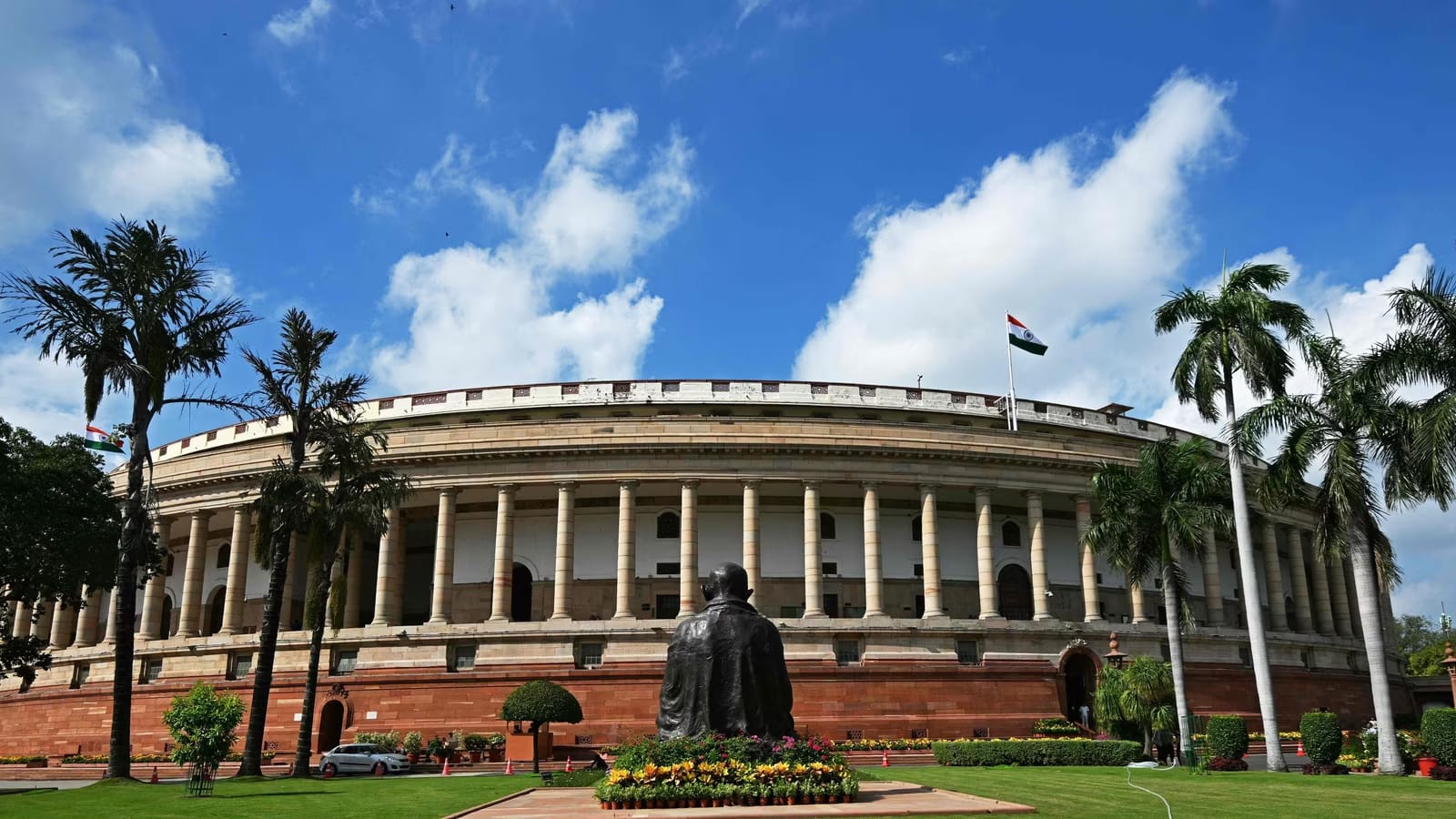


Multifunctional Roles of Indian Parliament
Indian Parliament - Multifunctional Role
Indian Parliament has extensive powers to perform a variety of functions towards the fulfillment of its constitutionally expected role. Role and functions of the Parliament are outlined in part V of the Constitution. Its powers and functions can be classified under the following heads:
- Legislative Powers and Functions
- Executive Powers and Functions
- Financial Powers and Functions
- Constituent Powers and Functions
- Judicial Powers and Functions
- Electoral Powers and Functions
- Other powers and Functions.
1. Legislative Powers and Functions
- Parliament has exclusive power to make laws on the subjects mentioned in the Union List.
- In the case of the subjects mentioned in the concurrent list, both Parliament and state legislatures have jurisdiction to make laws. However, in case of a conflict, parliament has overriding powers over states, that is, the law of Parliament prevails over the law of the state.
- The constitution also empowers the Parliament to make laws on the subjects enumerated in the State List under the following abnormal circumstances:-
- When Rajya Sabha passes a resolution (by 2/3 majority of its members present and voting) to that effect.
- When a proclamation of National Emergency is in operation.
- When two or more states under Article 252 make a joint request to the Parliament.
- When it is necessary to implement international agreements, treaties, and conventions.
- When President’s Rule (Article 356) is in operation in the state.
- It can also make laws on residuary subjects (subjects that are not mentioned in any of the three lists).
- Also, All the ordinances issued by the President (during the recess of the Parliament) must be approved by the Parliament within six weeks after its reassembly.
- The Parliament makes a broader framework of laws and authorises the Executive to make detailed rules and regulations within the framework of the parent law. It is called as delegated legislation. However such rules and regulations need parliamentary approval.
2. Executive Powers and Functions
- Being a parliamentary democracy Parliament exercises control over the Executive through various measures like question-hour, zero hours, adjournment motions, no-confidence motions, etc.
- It also supervises the activities of the Executive with the help of various committee like committees on government assurance, committees on subordinate legislation, etc.
- The ministers are collectively responsible to the Parliament in general and to the Lok Sabha in particular. Council of Ministers can be removed from office by the Lok Sabha by passing a no-confidence motion.
- The Lok Sabha can also express lack of confidence in the government in the following ways:
- By not passing a motion of thanks on the President’s inaugural address.
- By rejecting a money bill.
- By passing a censure motion.
- By defeating the government on a vital issue.
- By passing a cut motion.
- By passing an adjournment motion.
3. Financial Powers and Functions
- No tax can be levied or collected and no expenditure can be incurred by the Executive except under the authority and with the approval of Parliament.
- Every year the Union Budget prepared by the Cabinet is placed before the Parliament for its approval.
- It also scrutinizes government spending and financial performance with the help of its financial committees. These include the public accounts committee, estimates committee, and committee on public undertakings.
4. Constituent Powers and Functions
- The Constitution itself has given the power to the parliament to amend it by way of addition, variation, or repeal of any provision.
- Only parliament has the power to initiate any proposal for amendment of the constitution.
- For amendment, a bill can be initiated in either House of Parliament. The constituent powers of parliament is not unlimited, it is subject to the ‘basic structure’ of the Constitution.
The Parliament can amend the Constitution in three ways:
(a) By simple majority- It means a majority of members present and voting in each of the House;
(b) By special majority- In this, bills need to be passed by the majority of the House and two-thirds of the members present and voting in each of the House; and
(c) By special majority but with the consent of half of all the state legislatures: These types of bills must be passed by the special majority in each house. Besides that, at least half of the state legislatures should give consent to the bill.
5. Judicial Powers and Functions
The Judicial Powers and Functions of the Parliament Include the Following
- It can impeach the President for the violation of the Constitution.
- It can remove the Vice-President from his office.
- It can also recommend to the president of India the removal of judges (including the chief justice) of the Supreme Court and the high courts, chief election commissioner, comptroller, and auditor general.
- It has the power to punish its members or outsiders for the breach of its privileges or its contempt.
6. Electoral Powers and Functions
- The members of both the House of Parliament participate in the election of the president and also elect the Vice-President.
- The Lok Sabha elects its Speaker and Deputy Speaker, while the Rajya Sabha elects its Deputy Chairman.
- The Parliament is also authorized to make laws to regulate the elections to the offices of President and Vice-President, to both the Houses of Parliament, and to both the Houses of the state legislature.
7. Other Powers and Functions
- It has the power to discuss issues of national and international importance. The opposition plays an important role in this regard.
- It can regulate the organization and jurisdiction of the Supreme Court and high courts and can establish a common high court for two or more states.
- It has the power to increase or decrease the area, alter the boundaries and change the names of states of the Indian Union.
- On the recommendation of the concerned state legislative assemblies, it can abolish or create state legislative councils.
- It has the power to impose all three types of emergencies (national, state, and financial) which are proclaimed by the president.
Challenges in the Functioning of Parliament
- Frequent disruptions: The functioning of Parliament has been marred by frequent disruptions, often leading to adjournments and wastage of precious legislative time. This has hindered the passage of important bills and debates on crucial issues.
- Low productivity: The productivity of Parliament, measured by the number of bills passed and hours of debate conducted, has been relatively low. This is partly due to disruptions and also due to the inability of the government and opposition to reach consensus on various issues. Eg. During 17th Lok Sabha term, 58% of the Bills were passed within two weeks of their introduction without enough debates.
- Role of Anti-Defection Law: Anti-Defection Law discourages MPs from expressing dissent or holding views contrary to their party's position, as defection could result in disqualification from office. It limits the ability of MPs to voice their independent opinions about any particular issue.
- Misuse of Provisions of Money Bills: Sometimes, the government try to pass any other bill as money bill. This can be seen as an attempt by the executive to bypass the Rajya Sabha, where it may not have a majority. Eg. Passage of Aadhaar Bill, Amendments to Foreign Contributions Regulations Act, 2010, amendments to the Prevention of Money Laundering Act (PMLA) as a money bill.
- Party discipline over parliamentary duties: In many cases, party discipline has overridden parliamentarians' duties towards their constituencies and the nation at large. This has led to instances where MPs toe the party line rather than representing the interests of their constituents or engaging in constructive debates.
- Declining role of Parliamentary Committees: Given that Parliament convenes for only 70 to 80 days annually, there exists insufficient time to thoroughly deliberate on every proposed bill during sessions. Therefore for detailed scrutiny, bills are referred to the Parliamentary Committees. As per data from PRS, during the 17th Lok Sabha, only 14 Bills have been referred to the Parliamentary Committees as compared to 71% and 60% in the 15th and 14th Lok Sabha respectively.
Conclusion
The role of Parliament in a democratic system is paramount, serving as the cornerstone of legislative governance and representing the voice of the people. It is imperative for parliamentarians to prioritize their duties towards their constituents and the nation, engaging in meaningful debates, fostering consensus, and upholding democratic values. Only through collective efforts, Parliament can fulfil its crucial role as the custodian of democracy and effectively serve the interests of the people it represents.
FAQs
Question: What are the two Houses of Parliament in India?
Answer: The two Houses of Parliament in India are the Lok Sabha (House of the People) and the Rajya Sabha (Council of States).
Question: What is the main function of the Lok Sabha?
Answer: The main function of the Lok Sabha is to represent the electorate and legislate on national issues, ensuring that the voices of the people are heard in the law-making process.
Question: How does Parliament exercise its oversight function?
Answer: Parliament exercises its oversight function through question hours, debates, and committees that scrutinize the actions and policies of the executive branch, ensuring accountability and transparency.
Question: What is the significance of financial powers in Parliament?
Answer: Financial powers are significant because Parliament controls the allocation and expenditure of public funds, ensuring that government spending aligns with national priorities and fiscal responsibility.
Question: What role does Parliament play in constitutional amendments?
Answer: Parliament plays a crucial role in constitutional amendments, requiring the approval of both Houses to modify the Constitution, thereby adapting the legal framework to evolving societal needs.
Multiple Choice Questions (MCQs)
1. Which of the following is NOT a function of the Indian Parliament?
A) Legislation
B) Executive appointments
C) Representation
D) Financial control
Answer: B See the Explanation
Explanation: While Parliament has numerous functions, direct executive appointments are not one of them; such appointments are typically made by the President on the advice of the Prime Minister.
2. How many members are there in the Rajya Sabha?
A) 250
B) 543
C) 500
D) 200
Answer: A See the Explanation
Explanation: The Rajya Sabha can have a maximum of 250 members, out of which 238 are elected by the state legislatures, and 12 are nominated by the President for their expertise in various fields.
3. Which article of the Indian Constitution empowers Parliament to make laws?
A) Article 1
B) Article 368
C) Article 245
D) Article 21
Answer: C See the Explanation
Explanation: Article 245 empowers Parliament to make laws for the whole or any part of India, subject to the provisions of the Constitution.
4. What is the quorum required for a meeting of the Lok Sabha?
A) 1/4th of the total membership
B) 1/3rd of the total membership
C) 1/10th of the total membership
D) 1/2 of the total membership
Answer: A See the Explanation
Explanation: The quorum required for a meeting of the Lok Sabha is 1/10th of the total membership, which is essential for conducting the business of the House.
5. Which of the following statements is true regarding the President's role in Parliament?
A) The President can vote in both Houses.
B) The President summons and prorogues Parliament sessions.
C) The President can dissolve the Rajya Sabha.
D) The President is a member of the Lok Sabha.
Answer: B See the Explanation
Explanation: The President summons and prorogues sessions of Parliament and can dissolve the Lok Sabha, but cannot dissolve the Rajya Sabha, and does not have a voting role in either House except in the case of a tie.
GS Mains Questions and Answers
Q1: Analyze the role of Parliament in safeguarding democracy in India.
Answer: The Parliament of India plays a crucial role in safeguarding democracy through its functions of representation, legislation, and oversight. By providing a platform for elected representatives to voice the concerns of their constituents, Parliament ensures that diverse viewpoints are considered in the legislative process. Furthermore, the checks and balances embedded within the parliamentary system, including the scrutiny of government actions and policies, help prevent the concentration of power and promote accountability. Parliamentary debates and discussions foster public engagement and awareness, reinforcing the principles of democratic governance. Additionally, through its financial powers, Parliament can influence government priorities and resource allocation, ensuring that public funds are used effectively and transparently for the welfare of the nation. This multifaceted role of Parliament is essential for nurturing a robust democratic framework in India.
Q2: Discuss the significance of the financial powers of Parliament in shaping government policies.
Answer: The financial powers of Parliament are significant in shaping government policies as they establish the framework for budgetary allocations and fiscal governance. The requirement for the government to present its budget to Parliament ensures that all expenditures are subject to legislative scrutiny. This control over public finances allows Parliament to prioritize developmental programs, welfare schemes, and social justice initiatives, aligning government policies with the needs and aspirations of the populace. Moreover, the approval process for grants and expenditures reinforces accountability, compelling the executive to justify its fiscal decisions. In this way, the financial authority of Parliament acts as a safeguard against misallocation of resources and enhances the responsiveness of government actions to the citizens' welfare. Ultimately, these powers empower Parliament to play a pivotal role in the governance of the country.
Q3: Evaluate the challenges faced by Parliament in its legislative and oversight functions.
Answer: Parliament faces several challenges in executing its legislative and oversight functions effectively. One major challenge is the increasing complexity of governance and policy issues, which require informed and nuanced debate. Additionally, the growing tendency towards executive dominance can undermine the legislative function, leading to a situation where the government may bypass parliamentary scrutiny. The adequacy of time allocated for debates and discussions is another concern, often resulting in hurried legislation without thorough examination. Furthermore, the lack of adequate resources and expertise in parliamentary committees can hinder effective oversight of the executive branch. Moreover, political polarization and party discipline can stifle dissenting voices and hinder collaborative policymaking. Addressing these challenges is essential for strengthening the effectiveness and credibility of Parliament in the Indian democratic framework.
Previous Year Questions from UPSC CSE
1. UPSC CSE Prelims 2020:
Question: Which of the following statements regarding the Indian Parliament is incorrect?
A) The Rajya Sabha is a permanent body.
B) The Lok Sabha has a fixed term of 5 years.
C) Both Houses can be dissolved by the President.
D) The Rajya Sabha can delay the passage of money bills.
Answer: D See the Explanation
Explanation: The correct answer is D. Money bills can only be introduced in the Lok Sabha, and the Rajya Sabha cannot amend or reject them; it can only make recommendations.
2. UPSC CSE Mains 2019:
Question: Assess the impact of parliamentary committees on the legislative process in India.
Answer: Parliamentary committees play a significant role in enhancing the legislative process in India by facilitating detailed examination of issues and providing expert recommendations. These committees comprise members from various political parties, ensuring a broad representation of perspectives. They conduct inquiries, gather evidence, and prepare reports on specific subjects, which are crucial for informed decision-making. The work of committees allows Parliament to scrutinize legislation more effectively, ensuring that laws are well-considered and address the needs of society. Moreover, committees enhance transparency and accountability by bringing issues to public attention, fostering a culture of participatory governance. Therefore, parliamentary committees significantly contribute to the quality of legislation and the functioning of democracy in India.
*email: contactus@prepp.in
Download the PREPP App and attempt FREE IAS Exam Mock Tests and get complete study material!
UPSC IAS : CSAT - Mini Live Test

Live Test : UPSC CSE Prelims CSAT (Paper-II) (Oct 20 - 23)
Full Test - 04: UPSC CSE Prelims CSAT (Paper-II)
Full Test - 03: UPSC CSE Prelims CSAT (Paper-II)
UPSC CSE Prelims 2026 GS Paper 1 Question Paper (24-May-2026)
UPSC CSE Prelims 2026 CSAT Paper 2 Question Paper (24-May-2026)

17 February 2025 | The Hindu Must Read Articles | Current Affairs

16 February 2026 | The Hindu Must Read Articles | Current Affairs

13 February 2026 | The Hindu Must Read Articles | Current Affairs









Comments