Union Executive - Indian Polity Notes
Union Executive is the executive branch of the government which is responsible for implementing and enforcing laws, policies, and decisions at the national level. Union Executive include the President, the Vice President, the Prime Minister, the Council of Ministers, and the Attorney General of India. Chapter I of Part V of the Indian Constitution (Articles 52 to 78) deals with the Union Executive. Role of Union Executive is of immense importance in the Indian Parliamentary system. The UPSC Indian Polity and Governance syllabus includes Union Executive which is discussed in this article.
|
Table of Contents |

|
Union Executive is the executive branch of the government which include the President, the Vice President, the Prime Minister, the Council of Ministers, and the Attorney General of India.
|
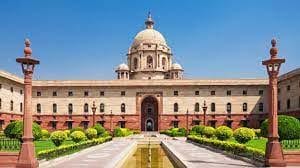
The Union Executive
- The Union Executive consists of the President, along with Vice-President, Council of Ministers, and Attorney-General.
- The President of India is the head of State and is indirectly elected. All the Executive decisions of the country are taken in the name of the President.
- President is the nominal or titular executive (de jure head).
- The Prime Minister and his council of ministers at the union level exercise all the power vested in the nominal executive. They constitute the real executive (de facto head).
The President
- The President is the executive head of the Indian State. The Indian Constitution under Article 53, vests the executive power of the Union in the President and shall be exercised by him either directly or through officers subordinate to him in accordance with the constitution.
- He is the Supreme Commander of the Armed Forces.
- He is the first citizen of India and occupies the first position under the warrant of precedence.
- All the executive actions are taken in his name.
*For detailed notes of this topic, check this link The President (Article 52 to 62)
Relation Between President And Council Of Ministers
- Before the 42nd Constitutional Amendment Act, 1976, there was no provision in the Constitution that made the advice of the Council of Ministers obligatory on the President.
- It amended Article 74 and made the advice of the Council of Ministers constitutionally binding on the President.
- 44th Amendment (1978) however added that the President can send the advice back for reconsideration once. But if the Council of Ministers sends the same advice again to the President then the President must accept it.
- It provided that the President may require the Council of Ministers to reconsider such advice and the President shall act in accordance with the advice tendered after such reconsideration.
Vice-president
- There shall be a vice-President under Article 63.
- He is the ex-officio Chairman of the Rajya Sabha/Council of State
- Acts as President in the case of Death of the existing President, resignation, or his removal from office (Article 65)
- Vice President may also discharge the duties of the President during his absence, illness or any other cause (Article 65)
*For detailed notes of this topic, check this link Vice President
Prime Minister
- Real executive power is vested in a Council of Ministers with the Prime Minister as head.
- The Prime Minister is also the chief adviser to the President of India and head of the Council of Ministers.
- He should have completed his 30 years if he is a member of the Rajya Sabha or can be 25 years of age if he is a member of the Lok Sabha.
- He can be a member of any of the two houses of Parliament but has to be the leader of the political party, having a majority in the Lok Sabha.
- He coordinates all the policies of the government.
- Article 75(1) of the Constitution says that “the Prime Minister shall be appointed by the President and the other Ministers shall be appointed by the President on the advice of the Prime Minister.”
- Article 78(a) casts on the Prime Minister a duty to keep the President informed of all the Cabinet decisions concerning the administration of the affairs of the Union and proposals for legislation and furnish all the information asked for by the President.
Council of Ministers
- Article 74 of the Constitution provides that there shall be a Council of Ministers with the Prime Minister at the head to aid and advise the President who shall, in the exercise of his functions, act in accordance with such advice.
- The total number of Ministers, including the Prime Minister, in the Council of Ministers, shall not exceed 15% of the total number of members of the House of the People (added by 91st Constitutional Amendment Act, 2003).
- The ministers hold office during the pleasure of the President.
- The Council of Ministers is collectively responsible to the House of the People/Lok Sabha.
- Before a minister takes over his office, the President administers to him the oath of office and secrecy according to the forms set out for the purpose in the Third Schedule.
- The salaries and allowances of ministers are such as the Parliament may from time to time determined by the law and, until Parliament so determines, shall be as specified in the Second Schedule.
*For detailed notes of this topic, check this link Prime Minister (Article 75)
Term of Office of Council of Ministers
- Ministers are appointed by the President and remain at his pleasure,it means President can remove a minister even at a time when the Council of Ministers enjoys the confidence of the Lok Sabha. However, removal is only possible with the advice of the Prime Minister.
- The Prime Minister has the authority to suggest the dismissal of any minister to the President, and the President always follows his advice.
- The maximum duration for which a minister can be in office is five years or one complete Lok Sabha term.
Qualification and Disqualification of Council of Ministers
- Ministers must be a member of either House of Parliament.
- If a person who is not a member of either House of the Parliament is appointed as a Minister, he shall cease to be a minister after six months unless in the meanwhile Minister has to get himself/herself elected to either House of Parliament within six months.
- Also, if a member of Parliament has been disqualified on the ground of defection, he would not be eligible to become a Minister. But if he again gets elected in the next freshly held Parliamentary election then he will be eligible to become a minister.
*For detailed notes of this topic, check this link Council of Ministers (Article 74)
Attorney General
- The Attorney General is the highest law officer in the country.
- Article 76 of the Constitution provides for the office of the Attorney General of India.
- The Attorney General is appointed by the President on the advice of the government.
- Attorney General can be removed by the President.
Duties and Functions
- He has the right to participate in the proceedings of the House or Houses of the Parliament.
- He has the right to an audience in any court in India.
- He enjoys all legislative privileges which are available to members of the Parliament.
- He performs such duties of legal matters as may be assigned to him by the President.
*For detailed notes of this topic, check this link Attorney General (Article 76)
Conclusion
The Union Executive of India, led by the President and the Prime Minister, forms the cornerstone of the nation's governance. The Council of Ministers, with its various ministries, executes policies and decisions crucial to the country's functioning. The President's ceremonial role and the Prime Minister's executive authority ensure a balanced and effective leadership. With its roots deeply embedded in the democratic framework, the Union Executive adapts to evolving political and societal landscapes.
FAQs
Q1: What is the role of the President in the Union Executive of India?
Answer: The President of India serves as the ceremonial head of state, exercising executive powers on the advice of the Council of Ministers, and plays a crucial role in upholding the Constitution.
Q2: Who are the members of the Union Executive?
Answer: The Union Executive comprises the President, the Vice President, and the Council of Ministers, headed by the Prime Minister.
Q3: What are the key functions of the Council of Ministers at the Union level?
Answer: The Council of Ministers formulates policies, implements laws, advises the President, and is responsible for the administration of the Union government.
Q4: How does the State Executive differ from the Union Executive?
Answer: The State Executive consists of the Governor, the Chief Minister, and the Council of Ministers of the respective states, while the Union Executive operates at the national level.
Q5: What powers does the Governor hold in the State Executive?
Answer: The Governor acts as the constitutional head of the state, appoints the Chief Minister, and has the authority to summon or dissolve the state legislature, among other functions.
MCQs
- Who is the head of the Union Executive in India?
A) Prime Minister
B) President
C) Vice President
D) Chief Justice
Answer: (B) See the Explanation
- Which article of the Indian Constitution provides for the establishment of the Union Executive?
A) Article 74
B) Article 52
C) Article 75
D) Article 76
Answer: (B) See the Explanation
- What is the minimum age required to be appointed as a Governor in India?
A) 30 years
B) 35 years
C) 40 years
D) 50 years
Answer: (B) See the Explanation
- Which of the following is NOT a function of the President of India?
A) Appointing the Prime Minister
B) Dissolving the Lok Sabha
C) Conducting elections
D) Issuing ordinances
Answer: (C) See the Explanation
- The Chief Minister of a state is appointed by whom?
A) The President
B) The Governor
C) The Chief Justice
D) The Assembly
Answer: (B) See the Explanation
GS Mains Questions and Model Answers
Q1. Discuss the powers and functions of the President of India in the context of the Union Executive.
Answer: The President of India, as the constitutional head of the Union Executive, wields significant ceremonial powers while functioning on the advice of the Council of Ministers. The President's responsibilities include appointing the Prime Minister, other ministers, governors of states, and various constitutional authorities. Additionally, the President summons and prorogues Parliament sessions, gives assent to bills, and has the power to dissolve the Lok Sabha. In times of constitutional crises, the President can exercise discretion, such as appointing a Prime Minister when no party has a clear majority. The President also plays a crucial role in safeguarding the Constitution, representing the nation in diplomatic matters, and addressing the Parliament in a ceremonial capacity. This delicate balance between ceremonial duties and constitutional responsibilities is vital in maintaining the democratic framework of India.
Q2. Analyze the role of the Governor in the State Executive and its impact on federalism in India.
Answer: The Governor acts as the constitutional head of the State Executive, representing the President at the state level. The Governor's role encompasses appointing the Chief Minister, summoning and dissolving the state legislature, and giving assent to bills passed by the assembly. In situations of political instability, the Governor holds significant powers, including recommending President's Rule under Article 356 if the state government is unable to function according to constitutional provisions. This authority can influence federalism, as it allows for central intervention in state matters, sometimes leading to tensions between state and central governments. The effectiveness and impartiality of a Governor in executing these powers can either strengthen or challenge the principles of federalism in India, emphasizing the need for a balanced and cooperative relationship between the center and states.
Q3. Evaluate the significance of the Council of Ministers in the functioning of the Union Executive.
Answer: The Council of Ministers, headed by the Prime Minister, plays a pivotal role in the functioning of the Union Executive, forming the core of the government’s decision-making process. This body is responsible for formulating and implementing government policies, ensuring the execution of laws passed by Parliament. The Council operates collectively and is accountable to the Lok Sabha, which reinforces parliamentary democracy. The Prime Minister's leadership is crucial in coordinating the efforts of various ministries, setting the government agenda, and representing the government in parliamentary debates. The effectiveness of the Council of Ministers directly impacts governance, policy-making, and the delivery of public services. Additionally, it embodies the principles of collective responsibility and accountability, ensuring that the government reflects the will of the electorate and responds to their needs.
Previous Year Questions on Union Executive & State Executive
1. UPSC CSE 2023
Question. Explain the significance of the distribution of powers between the Union Executive and State Executive in India.
Answer: The distribution of powers between the Union Executive and State Executive in India is a fundamental aspect of the federal structure enshrined in the Constitution. This division ensures a clear demarcation of responsibilities and functions, allowing for a balanced governance system. The Union Executive, led by the President and the Prime Minister, handles national and international matters, defense, and economic policy, while the State Executive, headed by the Governor and Chief Minister, addresses state-level issues such as education, health, and local governance. This distribution is significant as it enables localized decision-making, allowing state governments to address specific needs of their populations effectively. Additionally, it fosters autonomy and accountability within states, contributing to a diverse and pluralistic governance model. However, the arrangement also requires collaboration between the center and states to ensure coherent policy implementation and maintain national integrity.
2. UPSC CSE 2022
Queston. Assess the impact of the Prime Minister's leadership on the functioning of the Union Executive in India.
Answer: The Prime Minister's leadership is crucial in shaping the functioning of the Union Executive in India, serving as the key figure in decision-making and policy formulation. As the head of the Council of Ministers, the Prime Minister coordinates the efforts of various ministries and ensures collective responsibility. Strong leadership often leads to effective governance, as the Prime Minister sets the agenda, prioritizes issues, and mobilizes resources towards national goals. Additionally, the Prime Minister's relationship with the President, Parliament, and political parties can significantly influence legislative processes and the government's stability. The Prime Minister's ability to inspire confidence among allies and the electorate can also impact public perception and support for government initiatives. However, challenges arise when leadership styles lead to centralization of power or diminish the roles of other ministers and parliamentary procedures, necessitating a balance between strong leadership and collaborative governance.
*email: contactus@prepp.in
Download the PREPP App and attempt FREE IAS Exam Mock Tests and get complete study material!

Full Test - 04: UPSC CSE Prelims CSAT (Paper-II)
Full Test - 03: UPSC CSE Prelims CSAT (Paper-II)
UPSC CSE Prelims 2026 GS Paper 1 Question Paper (24-May-2026)
UPSC CSE Prelims 2026 CSAT Paper 2 Question Paper (24-May-2026)

17 February 2025 | The Hindu Must Read Articles | Current Affairs

16 February 2026 | The Hindu Must Read Articles | Current Affairs

13 February 2026 | The Hindu Must Read Articles | Current Affairs









Comments