Parliament and State Legislature - Indian Polity Notes
Parliament and State Legislature are the highest law making bodies in the union and the states respectively. Indian Parliament consists of Lok Sabha, Rajya Sabha, and the President of India. At the state level, the legislature is composed of the Legislative Assembly and Legislative Council and the Governor of the State. In addition to its legislative function, it keeps a check on the functioning of the government and passes the country’s budget. The most essential role of Parliament and state legislatures is to represent the people. As a representative institution, it also highlights important issues being faced by the people. This article explains the Parliament and State Legislature which is important for UPSC IAS exam preparation.
Table of Contents

|
The Indian federal system provides for a distribution of legislative powers at the level of the centre and state in the form of Parliament and state legislature respectively. |
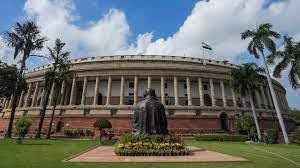
Parliament
India has adopted a parliamentary form of government. Parliament of India is the highest legislative body of the Republic of India. It is responsible for making laws, overseeing the administration, and representing the interests of the people.
Parliament consists of Lok Sabha, Rajya Sabha, and the President of India. Articles 79 to 122 in Part V of the Constitution deal with the organization, composition, duration, officers, procedures, powers and privileges of the Parliament.
Lok Sabha
- The Lok Sabha comprises representatives elected directly by the people through Universal Adult Suffrage.
- According to Article 81 of the Constitution, the maximum strength of Lok Sabha is 550 members, with 530 representing the States and 20 representing the Union Territories. Currently, the Lok Sabha consists of 543 seats occupied by elected members.
Rajya Sabha
- According to Article 80 of the Indian Constitution, Rajya Sabha can have a maximum strength of 250 members, comprising 238 representatives from States and Union Territories, and 12 members nominated by the President.
- Unlike the Lok Sabha, the Rajya Sabha is a permanent body and does not face dissolution.
The President of India
- The President is an integral part of the Parliament and enjoys various legislative powers.
- The President summons, prorogue the parliament, can even dissolve the Loksabha.
- No bill can become an act without the assent of the President. His prior recommendation is needed to introduce certain types of bills. For example money bill, a bill for the creation of a new state.
State Legislature
State Legislature is the legislative body at the state level, responsible for making laws for a particular state. At the state level, the legislature is generally composed of the Legislative Assembly, Legislative Council and the Governor of the State. Around 22 states have unicameral legislature and 6 states have bicameral legislature namely Andhra Pradesh, Bihar, Karnataka, Maharashtra, Telangana, and Uttar Pradesh.
Articles 168 to 122 in Part VI of the Constitution deal with the organisation, composition, duration, officers, procedures, powers and privileges of the State Legislature.
Legislative Assembly
- Legislative assembly at the state level is the primary legislative body responsible for making laws at the state level.
- All 28 states and 3 union territories have their own legislative assembly, These assemblies are responsible for enacting laws on subjects listed in the State List and Concurrent List of the Constitution of India.
Legislative Council
- Legislative Council is the upper house of the state legislature in those states that have a bicameral legislature.
- The maximum strength of the council is fixed at one-third of the total strength of the assembly and the minimum strength is fixed at 40.
Governor
- India follows a federal system of government where each state has a Governor as its constitutional head.
- The Governor summons and prorogues the state legislature (Vidhan Sabha) and can dissolve the legislative assembly if necessary. Bills passed by the state legislature require the Governor's assent to become law.
Functions of Parliament and State Legislature
Functions of the Parliament are elaborated in Chapter II of Part V of the Constitution.
Functions of Parliament
- Parliament plays a key role in shaping national policies. Through discussions, debates, and deliberations, MPs contribute to the formulation of policies related to economic development, social welfare, foreign affairs, defense, education, healthcare, and other important areas.
- Can legislate on State List matters under specific circumstances under articles 249, 253, and 252.
- Exercises control over the executive through mechanisms like no-confidence motion, adjournment motions, censure motions, question hours etc.
- Holds ultimate authority over finances, approving the Union Budget and tax proposals.
- Any amendment to the Constitution requires the approval of both houses of Parliament by a special majority. Parliament plays a crucial role in upholding the constitutional principles and ensures that the Constitution reflects the changing needs of society.
- Parliament represents the diverse interests and voices of the people of India. MPs are elected by the citizens through democratic elections.
- Although Parliament is primarily a legislative body, it also has limited judicial functions. It has the power to impeach the President of India, Vice President of India, and judges of the Supreme Court and High Courts for the violation of the Constitution or other specified grounds.
Functions of State Legislature
- State legislatures in India, as part of the federal structure of the country, play crucial roles in the governance and legislative process at the state level.
- State legislatures have the primary responsibility of making laws on matters as outlined in the State List and Concurrent List of the Seventh Schedule.
- State budgets are passed by the state legislatures, which outline the allocation of funds for various sectors and developmental activities within the state.
- State legislatures have the power to levy and collect taxes within their respective states.
- They allocate funds for different government programs and activities as per the state's financial requirements.
- State legislatures exercise control over the executive through various mechanisms such as Question Hour, Calling Attention Motions, and parliamentary committees.
- They provide a platform for elected representatives to voice the concerns of their constituencies.
- State legislatures have the power to impeach state officials, including the Governor, through a process outlined in the Constitution.
- Legislative Council acts as a check on hasty or populist legislation passed by state legislative assembly by providing a forum for thorough examination and debate. This helps in preventing arbitrary or ill-considered bills from being passed.
Conduct of Business
- The procedure and conduct of business in Parliament are regulated by rules made under Article 118 of the Constitution.
- Additionally, Article 119 of the Constitution allows Parliament to make laws concerning certain financial matters related to its functioning.
- Under Article 208 of the Constitution, State Legislatures can make rules for regulating its procedure and Conduct of Business.
- In a State having a Legislative Council, the Governor may make rules as to the procedure with respect to communications between the two Houses.
Parliamentary Privileges
- Parliamentary Privileges are the special rights, immunities and exemptions enjoyed by the two Houses, their Committees and their members.
- Constitution has extended Parliamentary privileges to persons who are entitled to take part in the proceedings of the House of Parliament or any committees. These include the Attorney General of India and the Union Ministers.
- Article 194 and Article 212 have made provisions for the privileges of the State Legislature.
- Constitution has extended privileges of the State Legislature to persons who are entitled to take part in the proceedings of the House of State Legislature or any of its committees. These include the Advocate General of state and state ministers.
Difference Between Parliament and State Legislature
| Aspect | Parliament | State Legislature |
|---|---|---|
| Jurisdiction |
|
|
| Composition |
|
|
| Strength |
|
|
| Method of election |
|
|
| Joint sitting |
|
|
| Overriding power |
|
|
| Money Bill |
|
|
Conclusion
In India, both the Parliament and State Legislatures hold significant roles in legislative processes and governance. While Parliament formulates laws at the national level, State Legislatures address regional concerns and enact laws specific to their respective states. This dual legislative structure ensures representation and responsiveness to both national and local interests. The synergy between these institutions strengthens democratic governance and fosters inclusive development across the country. Balancing the powers and responsibilities of Parliament and State Legislatures is vital for upholding federal principles and serving the diverse needs of India's populace.
FAQs
Q1: What are the key differences between Parliament and State Legislature in India?
Answer: Parliament is the supreme legislative body at the national level, while the State Legislature operates at the state level, focusing on regional laws and governance.
Q2: How many houses are there in the Parliament of India?
Answer: The Parliament of India consists of two houses: the Lok Sabha (House of the People) and the Rajya Sabha (Council of States).
Q3: What is the term duration for members of the Lok Sabha?
Answer: Members of the Lok Sabha serve a term of five years, unless the house is dissolved sooner.
Q4: What powers do State Legislatures possess?
Answer: State Legislatures have the authority to make laws on subjects enumerated in the State List and Concurrent List of the Constitution.
Q5: What is the procedure for passing a bill in Parliament?
Answer: A bill must be introduced, debated, and approved by both houses, followed by the President's assent to become law.
MCQs
- Which of the following is NOT a function of the Parliament?
a) Legislation
b) Budgeting
c) Judiciary
d) Representation
Answer: (C) See the Explanation
- Which house of Parliament is known as the Upper House?
a) Lok Sabha
b) Rajya Sabha
c) Vidhan Sabha
d) Vidhan Parishad
Answer: (B) See the Explanation
- What is the maximum strength of the Lok Sabha?
a) 500
b) 550
c) 600
d) 750
Answer: (B) See the Explanation
- Who has the authority to dissolve the Lok Sabha?
a) The President
b) The Prime Minister
c) The Speaker
d) The Chief Justice
Answer: (A) See the Explanation
- Which of the following is a power exclusive to State Legislatures?
a) Conduct elections
b) Make laws on agriculture
c) Taxation
d) Defense
Answer: (B) See the Explanation
GS Mains Questions and Model Answers
Q1: Explain the significance of the Parliament in the Indian political system.
Answer: The Parliament of India is the cornerstone of democracy, embodying the principles of representation, accountability, and legislation. It consists of two houses, the Lok Sabha and Rajya Sabha, ensuring diverse representation of the population and states. The Parliament holds the government accountable through questioning, debates, and budget approvals. Its legislative powers enable it to frame laws on various issues affecting the nation. Additionally, the Parliament plays a critical role in safeguarding the Constitution and protecting citizens' rights, making it vital for the functioning of democracy in India.
Q2: Discuss the relationship between the Parliament and State Legislatures in India.
Answer: The relationship between Parliament and State Legislatures in India is defined by the federal structure of governance. Parliament operates at the national level, while State Legislatures function at the state level, with both possessing distinct powers as per the Constitution. The Parliament has the authority to legislate on subjects in the Concurrent List, which overlaps with state jurisdiction. In case of conflicting laws, the central law prevails. This relationship ensures a balance of power, allowing for regional representation while maintaining national coherence. Moreover, State Legislatures can influence national policies through the Rajya Sabha, where representatives from states serve.
Q3: Analyze the legislative process in the Parliament of India.
Answer: The legislative process in the Parliament of India involves several stages to ensure thorough scrutiny and debate. A bill can be introduced in either house, following which it undergoes three readings. The first reading involves the introduction and general discussion, while the second reading focuses on detailed examination and amendments. The third reading concludes the debate, leading to a vote. If passed by one house, it proceeds to the other house for a similar process. After approval from both houses, the bill is sent to the President for assent. This comprehensive process safeguards against hasty legislation and ensures democratic participation.
Previous Year Questions on Parliament and State legislature
1. UPSC CSE 2020
Question: "Discuss the roles and responsibilities of the Parliament in shaping public policy in India."
Answer: The Parliament plays a pivotal role in shaping public policy in India through its legislative, representative, and oversight functions. By debating and enacting laws, Parliament directly influences policy areas such as health, education, and infrastructure. As representatives of the public, MPs express the concerns and needs of their constituents, thereby aligning government policies with public interests. Furthermore, Parliament holds the executive accountable through questioning, discussions, and committee reports, ensuring transparency and efficiency in governance. This multifaceted role reinforces the significance of Parliament in democratic policymaking.
2. UPSC CSE 2021
Question: "Examine the importance of State Legislatures in the federal structure of India."
Answer: State Legislatures are crucial to the federal structure of India as they represent regional interests and contribute to the country's diverse governance. Each State Legislature can legislate on state subjects, ensuring that local needs and priorities are addressed. They play a vital role in maintaining the balance of power between the center and states, facilitating cooperation and conflict resolution. The bicameral nature of some State Legislatures enhances representation, enabling broader public participation in governance. Moreover, State Legislatures also impact national policies through their representatives in the Rajya Sabha, reinforcing their importance in the federal framework of India.
*email: contactus@prepp.in
Download the PREPP App and attempt FREE IAS Exam Mock Tests and get complete study material!

Full Test - 04: UPSC CSE Prelims CSAT (Paper-II)
Full Test - 03: UPSC CSE Prelims CSAT (Paper-II)
UPSC CSE Prelims 2026 GS Paper 1 Question Paper (24-May-2026)
UPSC CSE Prelims 2026 CSAT Paper 2 Question Paper (24-May-2026)

17 February 2025 | The Hindu Must Read Articles | Current Affairs

16 February 2026 | The Hindu Must Read Articles | Current Affairs

13 February 2026 | The Hindu Must Read Articles | Current Affairs









Comments