Issues in Functioning of Parliament - Indian Polity Notes
A recently published report by PRS Legislative Research on the 17th Lok Sabha raises certain serious issues in functioning of Parliament. The role of Parliament is crucial in democratic governance, encompassing legislative duties, executive oversight, and representation. The functioning of Parliament has deteriorated over time, which is not a good sign for a healthy democracy. Issues in functioning of Parliament is an important topic under the Indian Polity and Governance Syllabus of the UPSC Examination.
Table of Contents
Key Functions of Parliament
Functions of the Parliament are outlined in part V of the Constitution.
- Legislative Function: Parliament is primarily responsible for making laws. Bills can be introduced in either house, and they undergo a process of debate, amendment, and voting before becoming laws.
- Executive Functions: Exercises control over the Executive through various measures like question-hour, no-confidence motions, etc. Ministers are collectively responsible to Parliament. Council of Ministers can be removed by the Lok Sabha by passing a no-confidence motion.
- Financial Functions: No tax can be levied or expenditure incurred without Parliament's approval. Union Budget presented annually for approval, scrutinizes spending through financial committees.
- Constituent Functions: Only parliament has the power to initiate any proposal for amendment of the constitution. For amendment, a bill has to be initiated in either House of Parliament.
- Judicial Functions: Impeachment of President, removal of Vice-President, recommendation of removal of judges, power to punish for breach of privileges or contempt are some of the judicial powers conferred to the Parliament.
- Electoral Functions: MPs Participate in the election of President and Vice-President, elects Speaker and Deputy Speaker in Lok Sabha, Deputy Chairman in Rajya Sabha, and makes laws regulating elections.
- Emergency Functions: National Emergency, Financial Emergency and Presidential Rule all need parliamentary approval.
|
“Parliament is the cornerstone of Indian democracy, where voices unite, debates thrive, and decisions shape the nation's destiny." |
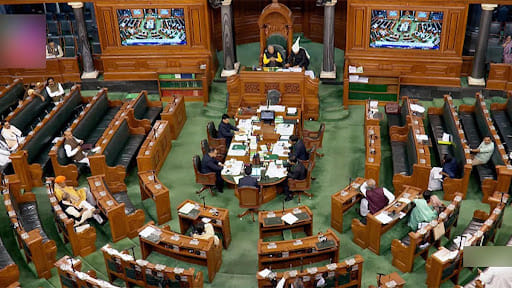
Issues with the Functioning of Parliament
- Frequent disruptions: The functioning of Parliament has been marred by frequent disruptions, often leading to adjournments and wastage of precious legislative time. This has hindered the passage of important bills and debates on crucial issues. Eg. Repeated disruptions of Houses over Farm Laws (2021), Adani-Hindenburg row (2023) and disruption over parliament security breach (December 2023).
- Low productivity: The productivity of Parliament, measured by the number of bills passed and hours of debate conducted, has been relatively low. This is partly due to disruptions and also due to the inability of the government and opposition to reach a consensus on various issues. Eg. During 17th Lok Sabha term, 58% of the Bills were passed within two weeks of their introduction without enough debates.
- Role of Anti-Defection Law: Anti-Defection Law law has created democracy of party and numbers rather than debates and discussions. It discourages MPs from expressing dissent or holding views contrary to their party's position. As defection could result in disqualification from office, it limits the ability of MPs to voice their independent opinions about any particular issue.
- Misuse of Provisions of Money Bills: Sometimes, the government try to pass any other bill as money bill. This can be seen as an attempt by the executive to bypass the Rajya Sabha, where it may not have a majority. Eg. Passage of Aadhaar Bill, Amendments to Foreign Contributions Regulations Act, 2010, amendments to the Prevention of Money Laundering Act (PMLA) as a money bill.
- Party discipline over parliamentary duties: In many cases, party discipline has overridden parliamentarians' duties towards their constituencies and the nation at large. This has led to instances where MPs toe the party line rather than representing the interests of their constituents or engaging in constructive debates.
- Declining role of Parliamentary Committees: Given that Parliament convenes for only 70 to 80 days annually, there exists insufficient time to thoroughly deliberate on every proposed bill during sessions. Therefore for detailed scrutiny, bills are referred to the Parliamentary Committees. As per data from PRS, during the 17th Lok Sabha, only 14 Bills have been referred to the Parliamentary Committees as compared to 71% and 60% in the 15th and 14th Lok Sabha respectively.
- Reducing Attendances: Average attendance is just 79 percent during the 17th Lok Sabha. It reflects the poor commitment of lawmakers to their duties and responsibilities towards their constituents. It also undermines the effectiveness of parliamentary oversight and accountability mechanisms.
- Decline in working hours of Parliament: Parliament's working hours are getting reduced day by day. Eg. 11 out of the 15 sessions held during this Lok Sabha were adjourned early. As a result, 40 scheduled sittings did not take place, In 2020, the Parliament convened for a total of only 33 days.
- Growing trend of passing the bills through Voice Votes: A major chunk of the bills in the Parliament are passed using ‘voice voting’, when compared to the much more reliable ‘division voting’ that can record the response of each member, including abstentions. Eg. Jan Vishwas Bill, 2023 and Farm Bills, 2020 were passed by a voice vote despite persistent Opposition protests.
Consequences of Reduced Functioning of Parliament
- Diminished Opposition Oversight: With reduced involvement of parliamentary committees, it becomes challenging for the opposition to effectively scrutinize the government's actions, limiting their ability to ensure accountability.
- Rushed Legislative Processes: Lengthy parliamentary debates serve the purpose of aiding lawmakers in understanding proposed legislation and making necessary improvements. Without such discussions, there's a risk of hastily passing laws, potentially leading to unintended consequences and increased legal disputes.
- Stifled Debate and Discussion: Parliament is a forum for debates and discussions on important issues facing the nation. Reduced functioning may result in limited opportunities for representatives to voice their opinions, discuss policies, and deliberate on matters of public interest. This can lead to a less informed electorate and a diminished democratic process.
- Feelings of disenfranchisement among citizens: Anti-Defection Law limits the ability of MPs to voice their independent opinions. Therefore their ability to represent their constituents effectively is hampered. This can erode trust in democratic institutions and lead to feelings of disenfranchisement among citizens.
- Weakening of Checks and Balances: Parliament serves as a check on the powers of the executive branch of government. Reduced functioning can weaken these checks and balances, allowing the government to wield power without sufficient accountability or oversight. This can undermine the democratic principle of separation of powers and lead to the concentration of power in the hands of the ruling party or individual.
How Parliamentary Functioning can be improved?
- Strengthening Committee System: Empower parliamentary committees to play a more active role in scrutinizing legislation, conducting inquiries, and holding the government accountable. Committees should be given more resources, autonomy, and research support to carry out their functions effectively. India should also follow the British practise of referring of all bills except money bills automatically to the parliamentary committees.
- Enhancing Parliamentary Debates: Encourage meaningful debates and discussions in Parliament by allocating sufficient time for deliberations on important issues without discriminating on the basis of party membership.
- Rational Use of Anti-Defection Law: Dinesh Goswami Committee recommended that disqualification under Anti-Defection Law should be only used for major decisions only. For example for passage of No-Confidence Motion,passage of annual budget. MPs should be allowed to express their views independently irrespective of party position.
- Promoting Transparency and Accountability: Enhance transparency in parliamentary proceedings by making information readily accessible to the public. This includes publishing detailed records of debates, votes, committee meetings, and expenditures.
- Capacity Building for MPs and Staff: Provide training and capacity-building programs for MPs and parliamentary staff to enhance their understanding of parliamentary procedures, legislative drafting, and governance issues.
- Intra-party democracy: There is urgent need to promote intra-party democracy. There should be scope for debates and discussions within party (170th Law Commission Report)
Conclusion
Overall, the reduced functioning of Parliament in India can have far-reaching consequences for democracy, affecting governance, representation, accountability, and public participation. It is essential for democratic institutions to function effectively to ensure the health and vitality of democracy.
FAQs
Q1: What are the primary issues in the functioning of the Indian Parliament?
Answer: Key issues include frequent disruptions, low productivity, rushed legislation, and lack of accountability in debates.
Q2: How do disruptions impact parliamentary functioning?
Answer: Disruptions lead to loss of productive hours, resulting in fewer debates and rushed decisions on crucial bills.
Q3: What is the significance of Question Hour in Parliament?
Answer: Question Hour allows MPs to hold the government accountable by raising queries and seeking clarifications on policies.
Q4: Why is the lack of deliberation on bills a concern?
Answer: Inadequate scrutiny compromises the quality of legislation and undermines democratic governance.
Q5: What reforms can improve Parliament’s functioning?
Answer: Suggested reforms include stricter discipline, enhanced scrutiny of bills by committees, and curbing unnecessary disruptions.
MCQs
- Which mechanism helps Parliament ensure executive accountability?
a) Zero Hour
b) Question Hour
c) Adjournment Motion
d) None of the above
Answer: (B) See the Explanation
- What is a major cause of the decline in parliamentary productivity?
a) Increased government bills
b) Lack of sessions
c) Frequent disruptions
d) Enhanced scrutiny by committees
Answer: (C) See the Explanation
- Which committee scrutinizes bills in detail before approval?
a) Public Accounts Committee
b) Estimates Committee
c) Standing Committee
d) Committee on Privileges
Answer: (C) See the Explanation
- What is the purpose of Zero Hour?
a) Introducing bills
b) Raising urgent issues
c) Conducting votes
d) Approving budgets
Answer: (B) See the Explanation
- Which reform is often suggested to improve Parliament’s efficiency?
a) Reducing Question Hour
b) Increasing disruptions
c) Strengthening committees
d) Abolishing sessions
Answer: (C) See the Explanation
GS Mains Questions and Model Answers
Q1: What are the major challenges facing the functioning of the Indian Parliament?
Answer: Challenges include frequent disruptions, low productivity, hasty passing of bills, inadequate debate, and poor attendance of members. These challenges reduce the quality of legislation and erode public trust in parliamentary processes. Reforms like curbing disruptions, empowering committees, and ensuring member accountability are essential to address these challenges.
Q2: How can parliamentary committees improve the legislative process in India?
Answer: Committees offer detailed scrutiny, which enhances the quality of legislation. They provide a forum for cross-party dialogue, enabling more informed decisions. Strengthening these committees with adequate resources can ensure better governance and help avoid rushed legislation.
Q3: Discuss the significance of Question Hour and Zero Hour in parliamentary functioning.
Answer: Question Hour ensures accountability by enabling MPs to question ministers. Zero Hour allows members to raise urgent matters without prior notice. Both mechanisms foster transparency and responsiveness, strengthening democratic processes. However, frequent disruptions and misuse have undermined their effectiveness, necessitating reforms.
Previous Year Questions on Issues in functioning of Parliament
1. UPSC CSE 2019
Question: "Parliamentary disruptions have become a recurring issue. Analyze the reasons and suggest measures to improve parliamentary functioning."
Answer: Disruptions in Parliament are caused by multiple factors, including political rivalries, lack of debate opportunities, and media-driven sensationalism. These interruptions lead to legislative inefficiency, reduced accountability, and loss of public trust. Suggested measures include stricter rules for discipline, empowering the Speaker to manage disruptions, ensuring more time for debates, and fostering consensus among political parties. Improving transparency through live telecasts and public outreach can also enhance parliamentary functioning.
2. UPSC CSE 2021
Question: "Discuss the role of parliamentary committees in improving the legislative process."
Answer: Parliamentary committees play a vital role in legislative scrutiny by offering detailed examination of bills. They act as forums for bipartisan discussions, fostering cooperation and reducing political friction. Committees enhance transparency by inviting experts, stakeholders, and public input. Strengthening these committees with timely meetings, greater independence, and proper resources can improve legislative outcomes. Additionally, their reports provide valuable insights that guide Parliament in informed decision-making, contributing to effective governance.
*email: contactus@prepp.in
Download the PREPP App and attempt FREE IAS Exam Mock Tests and get complete study material!

Full Test - 04: UPSC CSE Prelims CSAT (Paper-II)
Full Test - 03: UPSC CSE Prelims CSAT (Paper-II)
UPSC CSE Prelims 2026 GS Paper 1 Question Paper (24-May-2026)
UPSC CSE Prelims 2026 CSAT Paper 2 Question Paper (24-May-2026)

17 February 2025 | The Hindu Must Read Articles | Current Affairs

16 February 2026 | The Hindu Must Read Articles | Current Affairs

13 February 2026 | The Hindu Must Read Articles | Current Affairs









Comments