System of Elections for Lok Sabha – Indian Polity Notes
Lok Sabha elections are held every five years under the cover of general elections. The Indian Constitution established universal adult franchise as the foundation for elections to the Lok Sabha and state legislative assemblies. The Representation of the People Act, approved by the Indian Parliament in 1951, allocates representation to states and union territories. Certain constituencies are reserved for candidates from Scheduled Castes (SCs) and Scheduled Tribes (STs) to ensure adequate representation of these communities in the Lok Sabha.
This article explains the System of Elections to Lok Sabha which is important for UPSC IAS exam preparation.
|
Table of Contents |
System of Elections to Lok Sabha
The members of the Lok Sabha are elected on the basis of the following principles:
Territorial Constituencies
- Each state is split into geographical seats for the purpose of holding direct elections to the Lok Sabha.
- The Constitution makes the following two provisions in this regard:
- Each state is given a number of Lok Sabha seats in such a way that the ratio of that number to its population is the same for all states. This clause does not apply to states with fewer than six million people.
- Each state is split into territorial constituencies in such a way that the ratio of each constituency's population to the number of seats given to it is the same across the state.
Universal Adult Franchise (Article 326)
- Every citizen who has attained the minimum age of 18 years (61st Amendment Act) has the right to vote in the elections to the Lok Sabha.
- However, it is essential that his name should stand included in the voters list of his constituency.
Reservation of Seats for SCs and STs
- Some constituencies are reserved for Scheduled Castes and Scheduled Tribes. These are called Reserved Constituencies.
- From each reserved constituency only candidates belonging to SCs or STs, as the case may be, can contest elections.
- However, all the voters of each such constituency exercise their right to vote for electing one candidate belonging to SC or ST as their representative.
- Presently 131 seats stand reserved (84 for SCs and 47 for STs).
Single Member Territorial Constituencies
- The whole country is divided into as many territorial constituencies as is the number of members of the Lok Sabha to be elected. From each constituency, one MP is elected
First-Past-The-Post System
- The first-past-the-post (FPTP) voting system declares the candidate with the most votes in a constituency the winner. It is often referred to as the simple majority system. This method is used in India for direct elections to the Lok Sabha and state legislatures.
- All the members of the Lok Sabha are directly elected by the people. Any voter can cast his vote to elect any candidate of his choice from his constituency.
- A candidate securing the largest number of votes from amongst all the contestants from a constituency gets elected as the representative of the people of his constituency in the Lok Sabha.
|
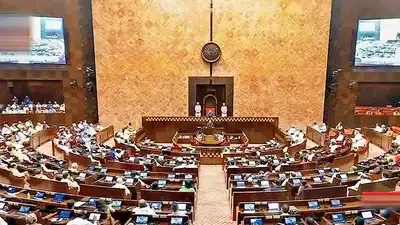
"The Lok Sabha, as the embodiment of the people's will, stands as the heart of India's democratic process.” |
Elections to Lok Sabha - Significance
- Our electoral system has allowed voters to not only freely choose representatives, but also to peacefully change governments at the state and national levels.
- Voters have consistently shown an interest and have participated in the election process.
- The number of candidates and political parties running for office is increasing.
- The electoral system has proven to be accommodating and inclusive. Our representatives' social composition has gradually changed.
- In most parts of the country, the election results do not reflect electoral malpractices or rigging.
- Elections have become an integral part of our democratic life. Nobody can imagine a situation in which a government would disregard the outcome of an election.
- Similarly, no one can imagine forming a government without first holding elections.
- Indeed, the regularity and periodicity of elections have earned India a reputation as a great democratic experiment.
Elections to Lok Sabha - Criticism
- Increasing election costs lead to unethical, illegal, and even mafia-provided electoral funding, corruption, criminalization, and the generation of black money in various forms.
- With the same constituents/electors for all directly elected representatives from the Panchayat level to the Lok Sabha level, there are competing role expectations and perceptions.
- With the electorate having no say in candidate selection and the majority of candidates being elected by a small number of votes under the first-past-the-post system, the representative character of the representatives is called into question, and their representational legitimacy is severely eroded.
- In many cases, the winning candidates receive more votes against them than for them.
- The mismatch between the majoritarian or first-past-the-post system and the multiplicity of parties and a large number of independents may be one of the significant probable causes.
- The Tenth Schedule and the issue of defections.
- Inadequate and flawed electoral rolls and voter identification lead to rigging and the denial of voting rights to a large number of citizens.
- Booth capturing, as well as fraudulent voting through rigging and impersonation.
- Using raw muscle power to intimidate voters into voting against their will or not voting at all, thereby robbing large sections of society of their right to vote freely and distorting the outcome.
- Officials and local governments are involved in undermining the electoral process.
- Engineered errors in vote counting.
- Criminalization of the electoral process – an increase in the number of candidates with serious criminal records.
- Divisive and disruptive tendencies, including the misuse of religion and caste in the process of non-ideological political mobilization of group identities.
- An ineffective and slow judicial process for dealing with election petitions, which often renders the entire process meaningless.
- Fake and non-serious candidates cause significant practical difficulties and are also used to subvert the electoral process indirectly.
- Inconsistencies in constituency delimitation result in poor representation.
Conclusion
A general election to the Lok Sabha is a massive undertaking. All the factors discussed above have earned our electoral system respect both within and outside of the country. The Indian voter has gained confidence. The Election Commission's legitimacy has grown in the eyes of the public. This validates the fundamental decisions made by our founding fathers. If the election process becomes more flawless, we as voters and citizens will be able to participate more effectively and meaningfully in this carnival of democracy.
FAQs
Question: What is the system of elections to the Lok Sabha in India?
Answer: The Lok Sabha, which is the lower house of India's Parliament, is elected through a system of direct elections. Members of the Lok Sabha are elected using the first-past-the-post (FPTP) electoral system, where the candidate with the highest number of votes in a constituency wins. The country is divided into 543 constituencies, and each constituency elects one member to the Lok Sabha. The elections are conducted by the Election Commission of India, which ensures free and fair polling processes.
Question: How often are Lok Sabha elections held?
Answer: Lok Sabha elections are held every five years, unless there is a dissolution of the Lok Sabha before the completion of its term. In such cases, elections may be conducted earlier to reconstitute the house. The President of India can dissolve the Lok Sabha based on the advice of the Prime Minister, usually when the government loses its majority or if a motion of no confidence is passed.
Question: What is the eligibility criteria to vote in Lok Sabha elections?
Answer: To be eligible to vote in Lok Sabha elections in India, a citizen must meet the following criteria:
- Be at least 18 years of age on or before the election date.
- Be a citizen of India.
- Be a registered voter in the electoral roll of the constituency where they wish to vote.
These criteria ensure that all citizens have the right to participate in the democratic process and elect their representatives.
Question: What role does the Election Commission of India play in Lok Sabha elections?
Answer: The Election Commission of India (ECI) plays a crucial role in conducting free and fair elections to the Lok Sabha. Its responsibilities include:
- Preparing and updating electoral rolls to ensure that eligible voters can participate.
- Conducting the elections in a transparent and impartial manner.
- Overseeing the election process, including the nomination of candidates, campaign regulation, and monitoring of polling booths.
- Addressing complaints and disputes related to the election process.
Question: What is the significance of the Lok Sabha elections in India's democracy?
Answer: The Lok Sabha elections are a cornerstone of India's democracy as they determine the composition of the lower house of Parliament, which is responsible for making laws and representing the people. These elections provide citizens with the opportunity to voice their preferences and hold their elected representatives accountable. The Lok Sabha plays a crucial role in shaping government policies and decisions that impact various aspects of life in India, including economic development, social justice, and national security. Thus, Lok Sabha elections are essential for maintaining the democratic fabric of the nation and ensuring that the government reflects the will of the people.
MCQs
1. How many members are elected to the Lok Sabha?
A) 500
B) 543
C) 550
D) 600
Answer: (B) See the Explanation
Explanation: The Lok Sabha consists of 543 elected members representing different constituencies across India.
2. Which electoral system is used for Lok Sabha elections?
A) Proportional representation
B) Single transferable vote
C) First-past-the-post
D) Alternative vote
Answer: (C) See the Explanation
Explanation: The first-past-the-post (FPTP) electoral system is used for Lok Sabha elections, where the candidate with the highest votes in a constituency wins.
3. What is the minimum age requirement to vote in Lok Sabha elections?
A) 16 years
B) 18 years
C) 21 years
D) 25 years
Answer: (B) See the Explanation
Explanation: The minimum age requirement to vote in Lok Sabha elections is 18 years.
4. What is the role of the Election Commission of India?
A) To conduct fair elections
B) To appoint members of Parliament
C) To draft laws
D) To oversee state governments
Answer: (A) See the Explanation
Explanation: The Election Commission of India is responsible for conducting free and fair elections in the country, including the Lok Sabha elections.
5. Which body is responsible for preparing electoral rolls for Lok Sabha elections?
A) The Parliament
B) The State Election Commission
C) The Election Commission of India
D) The Prime Minister's Office
Answer: (C) See the Explanation
Explanation: The Election Commission of India is responsible for preparing and updating electoral rolls for Lok Sabha elections.
GS Mains Questions and Model Answers
Q1: Analyze the electoral process of the Lok Sabha and its significance in the Indian democratic framework.
Answer: The electoral process for the Lok Sabha is a cornerstone of India's democratic framework, embodying the principles of universal suffrage and representative governance. Conducted through direct elections using the first-past-the-post system, it allows citizens to choose their representatives from various constituencies across the country. This process not only facilitates political participation but also serves as a mechanism for accountability, enabling voters to assess the performance of their elected officials. The significance of Lok Sabha elections lies in their ability to reflect the diverse political landscape of India, providing a platform for different ideologies and parties to compete. Ultimately, the electoral process ensures that the government remains answerable to the people, reinforcing the democratic ethos of the nation.
Q2: Discuss the challenges faced by the Election Commission of India in conducting free and fair elections.
Answer: The Election Commission of India (ECI) faces several challenges in ensuring free and fair elections. One significant challenge is managing electoral malpractices, such as vote-buying, intimidation, and misinformation, which can undermine the integrity of the electoral process. Additionally, ensuring a level playing field for all political parties, particularly smaller or regional parties, can be difficult amidst the influence of money and media. The ECI also contends with logistical challenges related to conducting elections in a vast and diverse country, including issues of accessibility in remote areas. Moreover, ensuring timely updates and accuracy in electoral rolls poses an ongoing challenge. Addressing these challenges requires continuous vigilance, innovative solutions, and public engagement to uphold the democratic process.
Q3: Evaluate the impact of electoral reforms on the Lok Sabha elections.
Answer: Electoral reforms have had a profound impact on Lok Sabha elections, contributing to increased transparency, fairness, and voter participation. Reforms such as the introduction of electronic voting machines (EVMs) have streamlined the voting process and reduced instances of electoral fraud. Measures like the establishment of the Model Code of Conduct help regulate the behavior of political parties during elections, promoting a level playing field. Additionally, reforms aimed at enhancing voter education and awareness have empowered citizens to make informed choices, increasing overall voter turnout. However, the need for continuous reforms remains, particularly concerning campaign financing, the representation of marginalized communities, and the use of technology in ensuring electoral integrity. Thus, ongoing electoral reforms are essential for sustaining the health of democracy in India.
Previous Year Questions on System of Elections to Lok Sabha
1. UPSC CSE Prelims 2021:
Question: How are members of the Lok Sabha elected?
A) Indirectly by the Rajya Sabha
B) Through a proportional representation system
C) Directly by the electorate
D) By the President of India
Answer: (C)
Explanation: Members of the Lok Sabha are elected directly by the electorate through the first-past-the-post electoral system.
2. UPSC CSE Mains 2019 (GS Paper 1):
Question: "Examine the significance of the Lok Sabha elections in the context of Indian democracy." Discuss the challenges involved in conducting these elections.
Answer: The Lok Sabha elections are a fundamental aspect of Indian democracy, as they determine the composition of the lower house of Parliament and represent the will of the people. The significance of these elections lies in their ability to empower citizens to choose their representatives, ensuring accountability and responsiveness in governance. However, conducting Lok Sabha elections comes with challenges, including managing electoral fraud, ensuring equitable access to resources for all candidates, and addressing voter apathy. Additionally, logistical complexities in conducting elections across a diverse and populous country further complicate the process. Overcoming these challenges is essential to uphold the democratic ideals of representation and fairness.
*email: contactus@prepp.in
Download the PREPP App and attempt FREE IAS Exam Mock Tests and get complete study material!

Full Test - 04: UPSC CSE Prelims CSAT (Paper-II)
Full Test - 03: UPSC CSE Prelims CSAT (Paper-II)
UPSC CSE Prelims 2026 GS Paper 1 Question Paper (24-May-2026)
UPSC CSE Prelims 2026 CSAT Paper 2 Question Paper (24-May-2026)

17 February 2025 | The Hindu Must Read Articles | Current Affairs

16 February 2026 | The Hindu Must Read Articles | Current Affairs

13 February 2026 | The Hindu Must Read Articles | Current Affairs









Comments