Parliamentary Privileges (Article 105 and 122) - Indian Polity Notes
Articles 105 and 122 of the Indian Constitution are about Parliamentary privileges. They are special rights, immunities and exemptions enjoyed by the two Houses of the Parliament, their committees and their members. Parliamentary privileges are not extended to the President though he/she is an integral part of the Parliament. UPSC Indian Polity and Governance Syllabus includes the topic Parliament privileges (105 and 122) which is described in this article.
Table of Contents

The Idea of Parliamentary Privileges
- These are the special rights and immunities enjoyed by the two Houses of the Parliament, their committees and their members.
- Constitution has also extended parliamentary privileges to those persons who are entitled to speak and take part in the proceedings of the House or any of its committees. These includes the attorney General of India and Union ministers.
|
“Privileges of Parliament do not place a Member of Parliament on a footing different from that of an ordinary citizen in the matter of the application of laws unless there are good and sufficient reasons in the interest of Parliament itself to do so.” |
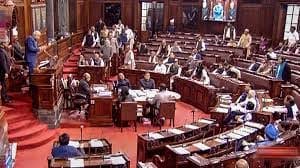
Classification of Parliamentary Privileges
Parliamentary privileges are classified into two broad categories. Some are enjoyed by each House of the Parliament collectively and some by members individually.
| Collective Privileges | Individual Privileges |
|---|---|
|
|
Sources of Privileges
Parliament till now has not made any special law to comprehensively codify all the privileges. They are based on the following five sources
- Constitutional provisions
- Various laws made by the Parliament
- Rules of both the Houses
- Parliamentary conventions
- Judicial interpretations
| Article 105 | No member of Parliament shall be liable to any proceedings in any court in respect of anything said or any vote given by him in Parliament or any committee. |
| Article 122 | It deals with the restrictions on courts not to inquire into proceedings of Parliament. The validity of any proceedings in Parliament shall not be called in question on the ground of any alleged irregularity of procedure. |
Freedom of Publication - Article 361-A
|
Significance of the Parliamentary Privileges
- MPs enjoy absolute freedom of speech and debate within the Parliament. They can express their views, criticize the government, and debate on matters of public interest without fear of legal consequences.
- Privileges protect the proceedings of the Parliament from any outside interference or influence.
- Parliament has the authority to summon witnesses, demand documents, and compel the attendance of individuals to assist in its proceedings. This privilege enables Parliament to gather information, conduct inquiries, and hold the government accountable for its actions.
- Parliament has the power to punish individuals for contempt of Parliament, including disobedience of its orders, disruption of proceedings, or any act that undermines its authority. This power reinforces the dignity and integrity of parliamentary institutions.
- Privileges ensure robust parliamentary discourse and accountability of the government to the people.
Issues with Parliamentary Privileges
- Parliamentary privileges can create a sense of invincibility among parliamentarians, leading to arrogance and potential abuse of power.
- Instances of lawmakers misusing their privileges, particularly freedom of speech, are concerning. This misuse can manifest in various forms, including making inflammatory or offensive remarks or baseless allegations. Such behavior not only damages the reputation of the legislative body but also erodes public trust in the political system.
- The exact scope and nature of parliamentary privileges are not explicitly defined in the constitution or statute. The opaque nature of the process for claiming and enforcing parliamentary privileges impedes accountability.
- Granting lawmakers immunity from arrest and legal process undermines the principle of equality.
Way Forward
- Awareness and Training: Conduct workshops and training sessions for MPs to educate them about their parliamentary privileges, rights, and responsibilities.
- Regular Review: Regularly review and update the rules and procedures governing parliamentary privileges to ensure they remain relevant and effective in the modern context.
- Transparency and Accountability: Promote transparency and accountability in the exercise of parliamentary privileges. MPs should be accountable for their actions and statements made under the guise of parliamentary privilege, ensuring that they are used responsibly and in the public interest.
- Strengthening Oversight Mechanisms: Enhance the oversight mechanisms within Parliament to ensure that parliamentary privileges are not misused or abused. This could involve empowering parliamentary committees to investigate breaches of privilege and recommend appropriate action.
- The Parliament of Canada has outlined the privileges in the Constitution Act, 1867 and the Parliament of Canada Act. India should also codify the Parliamentary privileges to prevent misuse.
Important Judgements Related to Parliamentary Privileges
|
Conclusion
Parliamentary privileges serve as essential tools for MPs to fulfill their responsibilities, uphold democratic values, and ensure effective governance. However, it's crucial for members to exercise these privileges responsibly and in the best interest of the nation.
FAQs
Q1: What are Parliamentary Privileges?
Answer: Parliamentary privileges are special rights, immunities, and exemptions granted to members of Parliament (MPs) to ensure that they can perform their duties without undue interference. These privileges are essential for maintaining the authority, dignity, and independence of Parliament.
Q2: Under which constitutional provisions are Parliamentary Privileges granted?
Answer: Parliamentary privileges are granted under Article 105 for MPs and Article 194 for members of State Legislatures. These articles empower MPs and MLAs to perform their legislative functions effectively without interference.
Q3: What are the individual privileges enjoyed by Members of Parliament?
Answer: Individual privileges enjoyed by MPs include freedom of speech in Parliament, freedom from arrest in civil cases during sessions, and exemption from jury service or being summoned as a witness in courts during sessions.
Q4: Can Parliamentary Privileges be challenged in a court of law?
Answer: No, Parliamentary privileges cannot be directly challenged in a court of law. Courts are generally barred from inquiring into proceedings within Parliament under Article 122, except in cases where fundamental rights are violated.
Q5: What is the Committee of Privileges in Parliament?
Answer: The Committee of Privileges is a parliamentary committee responsible for examining issues relating to breaches of privilege and contempt of the Parliament. It investigates complaints and recommends appropriate actions.
MCQs
- Which article of the Indian Constitution grants Parliamentary Privileges to MPs?
a) Article 110
b) Article 120
c) Article 105
d) Article 194
Answer: (C) See the Explanation
- Which of the following is NOT an individual privilege of MPs?
a) Freedom of speech in Parliament
b) Freedom from arrest in civil cases
c) Exemption from criminal cases
d) Exemption from jury duty during sessions
Answer: (C) See the Explanation
- The Committee of Privileges in Parliament is responsible for:
a) Reviewing government budgets
b) Examining issues of breaches of privilege
c) Conducting elections of the Speaker
d) Approving constitutional amendments
Answer: (B) See the Explanation
- What protection is provided to members of Parliament in terms of speech within Parliament?
a) Absolute freedom of speech
b) Limited freedom of speech
c) Freedom of speech restricted by party guidelines
d) Freedom of speech subject to judicial review
Answer: (A) See the Explanation
- Which of the following is true regarding Parliamentary Privileges in India?
a) They can be challenged in the Supreme Court
b) They are the same for Parliament and State Legislatures
c) They apply to both civil and criminal cases
d) They are guaranteed by the judiciary
Answer: (B) See the Explanation
GS Mains Questions and Model Answers
Q1. Discuss the significance of Parliamentary Privileges in maintaining the independence and authority of Parliament.
Answer: Parliamentary privileges are essential to ensure the independence, authority, and dignity of Parliament. These privileges allow Members of Parliament (MPs) to perform their duties without fear of external interference or legal action. The most significant of these privileges is the freedom of speech in Parliament, which allows MPs to express their views, debate issues, and criticize policies freely.
Privileges such as freedom from arrest in civil cases during sessions, exemption from jury duty, and protection from being summoned as witnesses enable MPs to focus on their legislative responsibilities without distractions. By shielding MPs from judicial intervention in their parliamentary conduct, these privileges help uphold the sanctity of Parliament and ensure the separation of powers between the legislative and judicial branches. However, the exercise of these privileges must be balanced with accountability to prevent misuse.
Q2. Analyze the limitations of Parliamentary Privileges in the context of constitutional checks and balances.
Answer: While Parliamentary Privileges are vital for ensuring the smooth functioning of legislative processes, they come with certain limitations to maintain constitutional checks and balances. For instance, MPs enjoy freedom of speech within Parliament, but this privilege does not extend to criminal acts or misconduct outside of Parliament.
Moreover, while parliamentary proceedings are immune from judicial scrutiny under Article 122, this protection is not absolute. Courts can intervene in instances where the fundamental rights of citizens are at stake, as demonstrated in cases of excessive privileges or contempt of Parliament. The balance between parliamentary privileges and judicial oversight is essential to prevent any abuse of power by legislators while upholding constitutional morality and rule of law.
Q3. Evaluate the role of the Committee of Privileges in addressing breaches of privilege and ensuring accountability in Parliament.
Answer: The Committee of Privileges plays a crucial role in addressing breaches of privilege and maintaining discipline within Parliament. By investigating complaints regarding breaches of privilege or contempt, the committee ensures that MPs uphold the dignity of the House and follow proper conduct during parliamentary proceedings.
The committee is empowered to recommend disciplinary action against those found guilty of violating parliamentary privileges, including reprimands, fines, or even imprisonment in extreme cases. Its role in maintaining accountability is significant, as it ensures that MPs do not misuse their privileges or engage in actions that tarnish the institution’s credibility. However, the committee’s functioning must be transparent and unbiased to maintain public trust in its decisions.
Previous Year Questions on Parliamentary Privileges
1. UPSC CSE Mains 2019
Question. Discuss the scope and extent of Parliamentary Privileges under the Indian Constitution.
Answer: Parliamentary Privileges, as provided under Article 105 for MPs and Article 194 for State Legislators, grant special rights and immunities to ensure the independence of the legislature. These privileges include freedom of speech in parliamentary proceedings, immunity from arrest in civil cases during sessions, and protection from being summoned as witnesses in courts during sessions.
The privileges aim to safeguard the legislative process from external interference and ensure that MPs and MLAs can perform their duties without fear of legal repercussions. However, these privileges are subject to limitations, especially concerning criminal conduct, and are not absolute. They cannot be used as a shield against actions that violate the law outside the context of parliamentary proceedings. Courts generally refrain from intervening in matters related to parliamentary privileges, as enshrined in Article 122, unless fundamental rights are infringed.
2. UPSC CSE Mains 2020
Question. Explain the role of freedom of speech in Parliament as a key parliamentary privilege and its limitations.
Answer: The freedom of speech in Parliament is one of the most important parliamentary privileges granted to MPs under Article 105 of the Constitution. This freedom ensures that MPs can express their opinions, debate policies, and criticize the government without fear of legal action or prosecution. This privilege is essential for maintaining a healthy democracy and enabling free and open discussions in Parliament.
However, this freedom is not without limitations. MPs cannot use this privilege to make defamatory statements outside Parliament or engage in criminal conduct under the pretext of parliamentary immunity. Additionally, freedom of speech within Parliament must be exercised within the boundaries of parliamentary decorum and rules. MPs may face disciplinary action from the Committee of Privileges or the Speaker if they abuse this privilege to disrupt proceedings or engage in misconduct.
*email: contactus@prepp.in
Download the PREPP App and attempt FREE IAS Exam Mock Tests and get complete study material!

Full Test - 04: UPSC CSE Prelims CSAT (Paper-II)
Full Test - 03: UPSC CSE Prelims CSAT (Paper-II)
UPSC CSE Prelims 2026 GS Paper 1 Question Paper (24-May-2026)
UPSC CSE Prelims 2026 CSAT Paper 2 Question Paper (24-May-2026)

17 February 2025 | The Hindu Must Read Articles | Current Affairs

16 February 2026 | The Hindu Must Read Articles | Current Affairs

13 February 2026 | The Hindu Must Read Articles | Current Affairs









Comments