Estimates Committee of Parliament - Indian Polity Notes
Estimates Committee is one of the standing committees of the Parliament with exclusive membership from the Lok Sabha. It was constituted for the first time in 1950. It is tasked with conducting thorough analyses of the budget proposals presented by the Government for each administrative department. This topic comes under the Indian Polity and Governance Syllabus of UPSC Prelim as well as the Mains Examination. In this article, we will try to understand the Estimates Committee’s role and functions.
Table of Contents
Estimates Committee - Historical Background
- The origin of this committee can be traced back to the pre-independence era to the standing financial committee set up in 1921.
- The first Estimates Committee after independence was constituted in 1950 on the recommendations of John Mathai, the then Finance Minister.
|
“Rather than waiting to restore fiscal responsibility after we pass legislation, we must work to ensure we remain committed to it as we draft legislation.” |
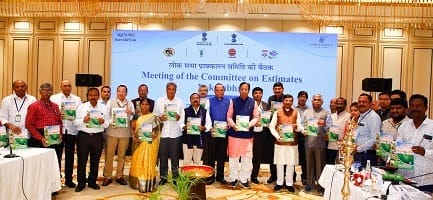
Estimates Committee - Composition
- Initially Estimates Committee had 25 members, but in 1956 its membership is increased to 30.
- All the 30 members are from Loksabha only
- Rajya Sabha has no representation in this committee.
- Members are elected every year from amongst Loksabha members according to the principle of proportional representation by means of a single transferable vote. Thus all parties get due representation in the committee.
- No minister can be a member of the estimates committee
- Chairman of the Estimates committee is appointed by Speaker of the Loksabha from amongst its members
- The chairman appointed invariably belongs to the ruling party.
Estimate Committee - Functions
The function of the Estimate Committee is to examine the expenditure estimates in the budget and give the economic suggestion in public expenditure. Hence it is also called the Continuous Economy Committee.
The detailed functions of the Estimates Committee are as follows:
- To report the kind of economies, progressive improvements in organization, efficiency, and administrative reforms in line with the policy underlying the estimates, can be affected.
- To suggest alternative policies to bring efficiency and economy in administration.
- To examine whether the money is well laid out within the limits of the policy implied in the estimates.
- To suggest the form in which the estimates are to be presented to Parliament.
- The committee will not look into the functioning of the Government undertaking as such issues are referred to the Committee on Public Undertakings.
- It shall not be incumbent on the Committee to examine the entire estimates of any one year.
Challenges Faced by the Estimates Committees
- The Estimate Committee examines the budget estimates only after they have been voted by the Parliament and not before that.
- Its mandate restricts it from questioning policy decisions, limiting its effectiveness in scrutinizing budgetary allocations.
- The recommendations put forth by the Committee are advisory in nature, lacking the force of binding directives.
- Given that the Committee focuses on a select few ministries and departments each year, it would require several years to thoroughly examine all government entities.
- It lacks expert assistance from the Comptroller and Auditor General (CAG) which is available to the Public Account Committee.
- Its work is in the nature of a Post-martem.
Steps to Improve the Effectiveness of the Estimates Committee
- Pre-budget Scrutiny: This can enable the Estimates Committee to review budget estimates before Parliament votes on them.
- Expanding Mandate: Broaden the Committee's scope to include policy decision examination, enhancing its ability to delve into budget allocations' rationale and policy effectiveness.
- Making recommendations obligatory: Empower the Committee to issue binding directives based on recommendations, ensuring greater impact and implementation of its suggestions.
- Increasing Resources: Allocate more manpower and expertise to the Committee to scrutinize a larger number of ministries annually, improving scrutiny capacity.
Conclusion
Estimates committee being one of the most important finance committees, it should be armed with more real-time responsibilities and not the post mortem work. By scrutinizing the expenditure of the government that has been proposed in the budget, the estimates committee can keep a better watch on the public purse and make the government more accountable and more transparent towards people’s money.
FAQs
Q1: What is the Estimates Committee of Parliament?
Answer: The Estimates Committee of Parliament is a crucial parliamentary committee tasked with reviewing and recommending the expenditure estimates of the government. It plays a significant role in the budgetary process, ensuring that the funds allocated are used effectively and efficiently.
Q2: How is the Estimates Committee constituted?
Answer: The Estimates Committee is constituted by the Speaker of the Lok Sabha. It comprises 30 members, all of whom are elected by the Lok Sabha from amongst its members. The committee is reconstituted every year after the general elections.
Q3: What are the primary functions of the Estimates Committee?
Answer: The primary functions of the Estimates Committee include examining the estimates of expenditure, suggesting economies in expenditure, and evaluating the performance of various ministries and departments in utilizing the allocated funds. It also assesses the need for supplementary grants.
Q4: How does the Estimates Committee differ from the Public Accounts Committee (PAC)?
Answer: While the Estimates Committee focuses on the approval and efficiency of budgetary expenditures before they occur, the Public Accounts Committee (PAC) examines the accounts and the use of funds after the expenditure has taken place. The PAC is responsible for scrutinizing the financial statements of the government.
Q5: Why is the Estimates Committee significant for parliamentary democracy?
Answer: The Estimates Committee plays a vital role in ensuring accountability and transparency in government spending. By scrutinizing budgetary allocations and expenditures, it helps maintain a check on government finances, thereby strengthening parliamentary democracy and fiscal discipline.
MCQs
- How many members are there in the Estimates Committee of Parliament?
A) 15
B) 30
C) 45
D) 50
Answer: (B) See the Explanation
- Who appoints the members of the Estimates Committee?
A) The President of India
B) The Prime Minister
C) The Speaker of the Lok Sabha
D) The Leader of the Opposition
Answer: (C) See the Explanation
- Which of the following is NOT a function of the Estimates Committee?
A) Examining the budget estimates
B) Conducting audits of government accounts
C) Suggesting economies in expenditure
D) Evaluating the performance of ministries
Answer: (B) See the Explanation
- The Estimates Committee is reconstituted after how many years?
A) Every year
B) Every two years
C) Every three years
D) Every five years
Answer: (A) See the Explanation
- What is the primary purpose of the Estimates Committee?
A) To examine the post-expenditure accounts
B) To recommend legislation
C) To review expenditure estimates before they are approved
D) To oversee the functioning of the Prime Minister's office
Answer: (C) See the Explanation
GS Mains Questions and Model Answers
Q1. Evaluate the role of the Estimates Committee in ensuring financial accountability in the Indian government.
Answer: The Estimates Committee plays a pivotal role in promoting financial accountability within the Indian government by meticulously reviewing and evaluating the government's expenditure estimates. This committee acts as a watchdog, ensuring that public funds are allocated and utilized efficiently, which is essential for maintaining fiscal discipline in a parliamentary democracy.
By examining the budget estimates presented by various ministries, the Estimates Committee helps identify areas where economies can be made, thereby ensuring that taxpayer money is spent judiciously. Its recommendations often lead to significant savings in government expenditure, promoting responsible financial management.
Furthermore, the Estimates Committee enhances transparency in government spending. By scrutinizing the expenditure and performance of ministries, it holds them accountable for their financial decisions and actions. This oversight fosters public trust in the government's financial dealings and encourages ministries to justify their expenditure claims.
In conclusion, the Estimates Committee is crucial for ensuring financial accountability in the Indian government. Its proactive approach to budget scrutiny not only promotes efficient use of resources but also reinforces the principles of transparency and accountability essential for a robust democratic governance framework.
Q2. Discuss the significance of the Estimates Committee in the context of budgetary processes in India.
Answer: The Estimates Committee holds significant importance in the budgetary processes of India as it serves as a vital mechanism for scrutinizing government expenditure. Its primary responsibility is to examine the budget estimates presented by the government, ensuring that the allocation of funds aligns with the country’s development priorities and fiscal policies.
One of the key aspects of the Estimates Committee's significance is its role in fostering a culture of accountability within the executive branch. By reviewing the expenditure estimates of various ministries, the committee assesses whether the proposed allocations are justified and necessary, thereby acting as a check on government spending. This scrutiny is particularly crucial in a context where public resources are limited, and demands for funds are high.
Additionally, the Estimates Committee's recommendations often lead to practical insights into the effectiveness and efficiency of various government programs and initiatives. Its findings can inform policy decisions, enabling the government to allocate resources to areas where they are most needed, thus promoting equitable growth and development.
Moreover, the committee contributes to enhancing the transparency of the budgetary process. By conducting discussions and gathering inputs from stakeholders, the Estimates Committee ensures that diverse perspectives are considered in the budgeting process. This inclusivity strengthens democratic governance by enabling citizen participation and fostering informed public discourse on fiscal matters.
In conclusion, the Estimates Committee is integral to the budgetary processes in India, promoting accountability, transparency, and effective resource allocation. Its role in scrutinizing expenditure estimates not only enhances the quality of governance but also ensures that public funds are utilized in a manner that supports national development goals.
Q3. Analyze the challenges faced by the Estimates Committee in performing its functions effectively.
Answer: The Estimates Committee faces several challenges that can hinder its effectiveness in performing its critical functions within the Indian parliamentary system. One of the primary challenges is the lack of adequate time for thorough scrutiny of the vast array of budget estimates presented by various ministries. Given the tight schedule associated with the budgetary process, members of the committee often find themselves under pressure to evaluate complex financial documents quickly, which may lead to oversight or incomplete analysis.
Another significant challenge is the limited expertise of some committee members in financial matters. While the committee comprises elected representatives, not all members may have the requisite knowledge or experience in budgetary processes or fiscal policy. This can impact the depth of discussions and the quality of recommendations made by the committee, potentially limiting its ability to provide comprehensive oversight.
Additionally, the political dynamics within Parliament can pose challenges for the Estimates Committee. Members may face pressures to prioritize political considerations over fiscal prudence, which can undermine the committee's objectivity and its ability to advocate for sound financial management. The partisan nature of politics may also lead to conflicts of interest, making it difficult for the committee to reach consensus on crucial recommendations.
Moreover, bureaucratic resistance from government ministries can obstruct the committee's functioning. Ministries may sometimes be reluctant to provide complete information or may attempt to influence the committee's recommendations to safeguard their interests, complicating the committee's role as an independent overseer of government expenditure.
In conclusion, while the Estimates Committee is a vital component of the budgetary process in India, it faces several challenges that can impede its effectiveness. Addressing these challenges through better training, increased time for scrutiny, and fostering a culture of transparency and cooperation between the committee and the executive branch is essential for enhancing its impact on financial accountability.
Previous Year Questions on Estimates Committee
1. UPSC CSE 2020
Question. "What is the role of the Estimates Committee in the context of the Indian budgetary process?"
Answer: The Estimates Committee plays a fundamental role in the Indian budgetary process by examining and reviewing the expenditure estimates proposed by the government. Constituted by the Speaker of the Lok Sabha, the committee comprises 30 members elected from the Lok Sabha, which ensures that it represents the interests of the people. The primary responsibility of the Estimates Committee is to scrutinize the budget estimates presented by various ministries and departments, evaluating their necessity and efficiency in utilizing public funds.
One of the key functions of the Estimates Committee is to recommend economies in expenditure, thereby promoting fiscal discipline and responsible financial management. By assessing the performance of ministries in utilizing the allocated funds, the committee identifies areas where savings can be made and provides valuable insights into improving the effectiveness of government programs.
Additionally, the Estimates Committee enhances transparency in the budgetary process. By conducting discussions and consultations with stakeholders, it fosters a culture of accountability, ensuring that the government justifies its spending proposals to Parliament. This scrutiny not only protects public interest but also enhances the credibility of the budgeting process.
In conclusion, the Estimates Committee serves as a crucial mechanism in the Indian budgetary process, promoting fiscal accountability, transparency, and responsible management of public resources. Its role is essential for ensuring that government expenditures align with the developmental priorities of the country.
2. UPSC CSE 2019
Question. "Examine the challenges faced by parliamentary committees, particularly the Estimates Committee, in fulfilling their responsibilities."
Answer: Parliamentary committees, including the Estimates Committee, encounter various challenges that can impede their ability to fulfill their responsibilities effectively. One of the primary challenges is the limited time available for thorough scrutiny of complex budget estimates. Given the tight schedule associated with the budgetary process, committee members often have to evaluate extensive financial documents rapidly, which can result in incomplete analysis and oversight of critical issues.
Another significant challenge is the varying levels of expertise among committee members in financial matters. While the Estimates Committee is composed of elected representatives, not all members possess the necessary knowledge or experience in budgetary processes or fiscal policies. This disparity can hinder meaningful discussions and lead to suboptimal recommendations.
Additionally, the political dynamics within Parliament can pose obstacles for the Estimates Committee. Members may face pressures to prioritize political considerations over fiscal prudence, affecting the objectivity and independence of the committee's recommendations. The partisan nature of politics can also create conflicts of interest, complicating consensus-building on key budgetary issues.
Furthermore, bureaucratic resistance from government ministries can obstruct the committee's functioning. Ministries may be reluctant to provide complete information or may attempt to influence the committee's findings to protect their interests, undermining the committee's role as an independent overseer of government expenditure.
In conclusion, the Estimates Committee faces numerous challenges that can hinder its effectiveness in overseeing government expenditure. Addressing these challenges through better training, increased time for scrutiny, and fostering transparency and cooperation between the committee and the executive is essential for enhancing its impact on financial accountability.
*email: contactus@prepp.in
Download the PREPP App and attempt FREE IAS Exam Mock Tests and get complete study material!

Full Test - 04: UPSC CSE Prelims CSAT (Paper-II)
Full Test - 03: UPSC CSE Prelims CSAT (Paper-II)
UPSC CSE Prelims 2026 GS Paper 1 Question Paper (24-May-2026)
UPSC CSE Prelims 2026 CSAT Paper 2 Question Paper (24-May-2026)

17 February 2025 | The Hindu Must Read Articles | Current Affairs

16 February 2026 | The Hindu Must Read Articles | Current Affairs

13 February 2026 | The Hindu Must Read Articles | Current Affairs









Comments