Committee on Public Undertakings - Indian Polity Notes
Committee on Public Undertakings is a Parliamentary Committee consisting of 22 Members. It was established in 1964 in response to growing Public Sector Undertakings in India. It examines the reports and accounts of public undertakings which are specified in the fourth Schedule to the Rules of Procedure and Conduct of Business in Lok Sabha. This article explains the topic Committee on Public Undertakings, Composition and Functions of the Committee are useful for UPSC IAS exam preparation.
Table of Contents
Significance of Public Sector in India
- The public sector has been a vital pillar of our economy, particularly in India, where it has been instrumental in tackling various socio-economic challenges like income inequality, underemployment, and regional economic disparities.
- Initially, its focus was on fostering self-reliant economic growth by prioritizing core sectors. However, in its subsequent phase, it extended its reach into the private sector as well.
- This expansion included nationalizing several industries and assuming control of struggling private enterprises, eventually diversifying into the production of goods.
- Committee on Public Undertakings was established in 1964 on the recommendations of the Krishna Menon Committee. Originally it has 15 members however in 1974, its membership was raised to 22.
|
“Without Parliamentary committees, a Parliamentary democracy would be rendered incomplete” |
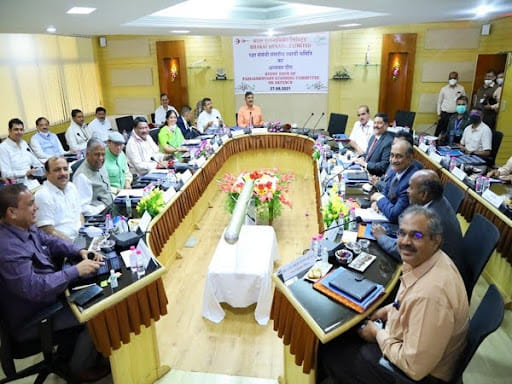
Committee on Public Undertakings: Composition
| Details | Description |
|---|---|
| Composition |
|
| Election Process |
|
| Term of Office |
|
| Appointment |
|
Functions of the Committee on Public Undertakings
- To examine the reports and accounts of Public Undertakings specified in the Fourth Schedule to the Rules of Procedure and Conduct of Business in Lok Sabha
- To examine the reports of the CAG on Public Undertakings.
- Examine whether the affairs of the Public Undertakings are being managed in accordance with sound business principles and prudent commercial practices.
- To exercise such other functions vested in the public accounts committee and the estimates committee in relation to public undertakings which are allotted to it by the Speaker from time to time.
Exceptions: The committee is not to examine and investigate any of the following
- Matters of major government policy as distinct from business or commercial functions of the public Undertakings.
- Matters of day to day administration.
- Matters for the consideration of which machinery is established by any special statute under which a particular Public Undertakings is established.
Limitations of the Committee on Public Undertakings
- The committee is restricted in its capacity to assess reports from a limited number of Public Sector Undertakings (PSUs), typically ranging from 10 to 12 annually.
- Its primary focus lies solely on reviewing reports, without any involvement in the operational aspects of public utilities. Consequently, its role primarily entails conducting post-event evaluations.
- The committee lacks technical proficiency and therefore does not engage in evaluating the technical facets of PSUs.
- All recommendations put forth by the committee are non-binding in nature, serving merely as advisory measures, with ministers retaining discretion in their implementation.
Conclusion
The Committee on Public Undertakings plays a vital role in ensuring accountability, transparency, and effective governance in the functioning of public undertakings and related subjects. It stands as a cornerstone of parliamentary oversight, dedicated to advancing the public interest and upholding the principles of good governance.
FAQs
Question: What is the Committee on Public Undertakings (COPU)?
Answer: The Committee on Public Undertakings (COPU) is a parliamentary committee in India responsible for examining the reports and accounts of public sector undertakings (PSUs). Established under the provisions of the Lok Sabha, the COPU focuses on the performance and efficiency of PSUs, ensuring accountability and transparency in their operations. It reviews the functioning of these undertakings and makes recommendations to improve their performance and service delivery.
Question: What is the composition of the COPU?
Answer: The COPU consists of a maximum of 22 members, including 15 members from the Lok Sabha and 7 from the Rajya Sabha. Members are elected by the respective houses of Parliament, ensuring representation from different political parties. This composition allows for a diverse range of perspectives in assessing the performance of public sector enterprises.
Question: What are the key functions of the COPU?
Answer: The key functions of the COPU include examining the reports of the Comptroller and Auditor General (CAG) relating to public undertakings, reviewing the financial performance and efficiency of these enterprises, and making recommendations for improving their operational efficiency. The committee also holds discussions with the management of public sector undertakings and conducts on-site inspections to better understand their functioning.
Question: How does the COPU contribute to accountability in public sector enterprises?
Answer: The COPU enhances accountability in public sector enterprises by scrutinizing their operations and ensuring that they adhere to principles of transparency and efficiency. By evaluating the performance of PSUs and holding them accountable for their actions, the COPU helps to identify areas for improvement and promotes best practices. This process fosters greater responsibility among public enterprises in serving the interests of the public and the government.
Question: What challenges does the COPU face in its functioning?
Answer: The COPU faces several challenges, including limited resources and time constraints that hinder thorough investigations. Additionally, the committee may encounter resistance from public sector undertakings in providing necessary information or access for evaluation. Political considerations can also impact the committee's effectiveness, as members may have varying interests based on their party affiliations. Addressing these challenges is essential for the COPU to fulfill its mandate effectively.
MCQs
1. What is the primary role of the Committee on Public Undertakings (COPU)?
A) To formulate policies for public enterprises
B) To examine reports and accounts of public sector undertakings
C) To manage public sector enterprises
D) To oversee budget allocations for ministries
Answer: (B) See the Explanation
Explanation: The primary role of the COPU is to examine reports and accounts of public sector undertakings to ensure accountability and efficiency.
2. How many members are there in the COPU?
A) 10
B) 15
C) 22
D) 30
Answer: (C) See the Explanation
Explanation: The COPU consists of a maximum of 22 members, including representatives from both the Lok Sabha and the Rajya Sabha.
3. Under which act was the COPU established?
A) Companies Act, 1956
B) Lok Sabha Rules of Procedure
C) Constitution of India
D) Public Accounts Committee Act
Answer: (B) See the Explanation
Explanation: The COPU was established under the Lok Sabha Rules of Procedure to ensure effective oversight of public sector undertakings.
4. Which of the following is NOT a function of the COPU?
A) Reviewing the efficiency of public sector undertakings
B) Approving budgets for PSUs
C) Examining CAG reports related to PSUs
D) Making recommendations for improvement
Answer: (B) See the Explanation
Explanation: The COPU does not approve budgets for public sector undertakings; its role is to review performance and make recommendations.
5. What is one of the challenges faced by the COPU?
A) Excess funding
B) Political neutrality
C) Limited resources and time constraints
D) Oversight of private enterprises
Answer: (C) See the Explanation
Explanation: One of the challenges faced by the COPU is limited resources and time constraints, which can hinder thorough investigations.
GS Mains Questions and Model Answers
Q1: Evaluate the role of the Committee on Public Undertakings (COPU) in enhancing accountability in public sector enterprises.
Answer: The Committee on Public Undertakings (COPU) plays a vital role in enhancing accountability within public sector enterprises by scrutinizing their operations and financial performance. By examining reports from the Comptroller and Auditor General (CAG) and holding discussions with the management of these enterprises, the COPU ensures that public sector undertakings operate efficiently and transparently. Its recommendations for improvement contribute to better governance and operational effectiveness, safeguarding public interests. Furthermore, the COPU's efforts to highlight inefficiencies and promote best practices foster a culture of accountability among public enterprises, ultimately leading to more responsible use of taxpayer resources and improved service delivery to citizens.
Q2: Discuss the challenges faced by the COPU in fulfilling its mandate effectively.
Answer: The COPU faces several challenges in fulfilling its mandate effectively, including bureaucratic hurdles, limited resources, and time constraints. The complexity of corporate governance issues requires extensive investigation and expertise, which may not always be available within the committee. Additionally, political considerations and party affiliations can influence the functioning of the COPU, impacting its objectivity and effectiveness. The lack of access to necessary information from public sector undertakings can further hinder the COPU's ability to conduct thorough evaluations. Addressing these challenges requires enhancing institutional capacities, increasing transparency, and ensuring that the COPU operates independently from political pressures to maintain its effectiveness in overseeing public enterprises.
Q3: Analyze the impact of the COPU on the functioning of public sector undertakings in India.
Answer: The COPU has a significant impact on the functioning of public sector undertakings (PSUs) in India by promoting transparency, accountability, and performance improvement. Through its oversight functions, the COPU identifies inefficiencies and malpractices within PSUs, encouraging management to adopt corrective measures. The committee's reports often serve as a catalyst for policy reforms and operational changes, fostering a culture of performance-oriented governance. Furthermore, the COPU's engagement with stakeholders ensures that public enterprises are held accountable for their actions, thereby enhancing public trust in these institutions. Ultimately, the COPU's influence leads to better management practices, increased efficiency, and improved service delivery from public sector undertakings.
Previous Year Questions on COPU
1. UPSC CSE Prelims 2021:
Question: What is the primary function of the Committee on Public Undertakings?
A) To formulate policies for public sector enterprises
B) To examine reports of public sector undertakings
C) To manage government budgets
D) To conduct audits of private firms
Answer: (B)
Explanation: The primary function of the COPU is to examine reports and accounts of public sector undertakings to ensure accountability and efficiency.
2. UPSC CSE Mains 2020 (GS Paper 2):
Question: "Assess the challenges faced by the Committee on Public Undertakings in overseeing public sector enterprises."
Answer: The Committee on Public Undertakings faces several challenges in effectively overseeing public sector enterprises, including limited resources and bureaucratic obstacles that hinder timely evaluations. The complexity of corporate governance issues necessitates thorough investigations, which may be hampered by a lack of access to necessary information from public enterprises. Additionally, political pressures and party affiliations may impact the committee's objectivity and functioning. To address these challenges, enhancing transparency, providing adequate resources, and ensuring independent operation of the COPU are essential for its effective oversight of public sector undertakings.
*email: contactus@prepp.in
Download the PREPP App and attempt FREE IAS Exam Mock Tests and get complete study material!

Full Test - 04: UPSC CSE Prelims CSAT (Paper-II)
Full Test - 03: UPSC CSE Prelims CSAT (Paper-II)
UPSC CSE Prelims 2026 GS Paper 1 Question Paper (24-May-2026)
UPSC CSE Prelims 2026 CSAT Paper 2 Question Paper (24-May-2026)

17 February 2025 | The Hindu Must Read Articles | Current Affairs

16 February 2026 | The Hindu Must Read Articles | Current Affairs

13 February 2026 | The Hindu Must Read Articles | Current Affairs









Comments