Departmental Standing Committees - Indian Polity Notes
There are total 24 Departmental Standing Committees. Each consists of 31 Members, out of which 21 are from the Lok Sabha and 10 are from Rajya Sabha to be nominated by the Speaker and Chairman respectively. All central Ministries/ Departments of the Government of India are under the jurisdiction of these committees. UPSC has previously asked questions on these committees under the Indian Polity and Governance section of GS paper 2. Therefore students should prepare this topic thoroughly.
Table of Contents
- Historical Background of Departmental Standing Committees
- Need for Departmental Standing Committees
- Structure of Departmental Standing Committees
- 24 Departmental Standing Committees
- Functions of the Departmental Standing Committees
- Challenges Faced by Departmental Standing Committees
- Steps to Increase the Effectiveness of the Departmental Standing Committees
- Conclusion
- FAQs
- MCQs
Historical Background of Departmental Standing Committees
- The idea of establishing Department-related Parliamentary Standing Committees was first discussed at the Presiding Officers' Conference in 1978
- On the recommendations of the Rules Committee of the Lok Sabha,17 Departmental Standing Committees were set up in 1993.
- In 2004, their number was increased to 24.
Need for Departmental Standing Committees
- The Establishment of these committees was a response to the growing complexity and scale of government activities, which made it increasingly difficult for Parliament to effectively fulfill its constitutional role of holding the Executive accountable.
- By creating specialized committees focused on specific areas of governance, Parliament aimed to enhance its oversight and scrutiny functions, thus strengthening democratic governance and accountability in the country.
- They assist the Parliament to ensure better financial accountability of the Executive.
|
“Without Parliamentary committees, a Parliamentary democracy would be rendered incomplete. It is through Departmental Standing Committees citizens keep a check on government finances.” |
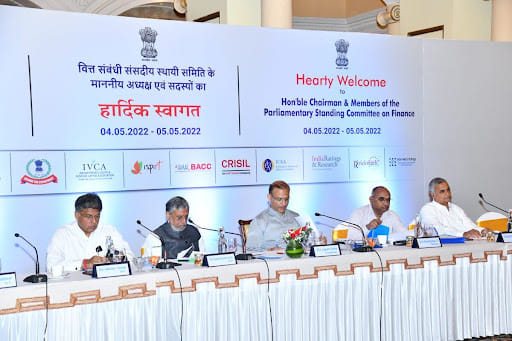
Structure of Departmental Standing Committees
- As discussed in the introduction, each committee consists of not more than 31 Members; 10 Members nominated by the Chairman and 21 Members nominated by the Speaker from respective Houses.
- A Minister can not be nominated as a member of the Committee as the very purpose of the committee is to ensure accountability of the executive.
- The chairman of each of the committees is appointed by the Presiding officers from among the members of the respective Committees.
- Like membership of the Committees, the Chairmanship is also shared between the ruling party/parties and the major opposition parties.
- Out of 24, 8 committees are serviced by the Rajya Sabha Secretariat and 16 committees by the Lok Sabha Secretariat.
- The tenure of the members of the committee is one year.
24 Departmental Standing Committees
Below given table mentions the Departmental Standing Committees under the Lok Sabha as well as Rajya Sabha.
| Committees under Rajya Sabha | Committees under Lok Sabha |
|---|---|
|
|
Functions of the Departmental Standing Committees
Under Rules of Procedure and Conduct of Business, each of the Standing Committees shall have the following functions
- To consider the Demands for Grants of the related Ministries/Departments.
- To examine Bills, pertaining to the related Ministries/Departments, referred to the Committee by the Chairman or the Speaker.
- To consider the Annual Reports of the Ministries/Departments.
- To consider national basic long term policy documents presented to the Houses, if referred to the Committee.
Challenges Faced by Departmental Standing Committees
- Opaque Minutes: The lack of publication of committee minutes creates transparency issues, as the public remains unaware of the committee's deliberations and decisions, hindering accountability.
- Non-Binding Recommendations: The non-binding nature of the committee's recommendations undermines their impact, as they can be disregarded by the government.
- Limited Research Support: Committees often lack dedicated research support, relying instead on general staff, which may impede their ability to conduct in-depth analysis and produce informed recommendations.
- Ministerial Referral Dominance: While parliamentary rules stipulate that bills are referred by the Speaker or Chairman, in practice, the relevant minister often dominates this process, potentially influencing the scope and direction of scrutiny.
- Incomplete Bill Referrals: Not all bills are referred to departmental standing committees, leading to uneven scrutiny and potentially overlooking important legislative proposals.
- Short Tenure for Specialization: The one-year tenure of committees allows limited time for members to develop expertise in specific policy areas, potentially compromising the depth and quality of scrutiny.
- Weak Attendance and Overloaded Committees: Poor attendance of MPs at committee meetings, coupled with committees tasked with oversight of multiple ministries, dilutes their effectiveness and capacity to conduct thorough scrutiny.
Steps to Increase the Effectiveness of the Departmental Standing Committees
- Enhance Transparency: Mandate the publication of committee minutes and proceedings to ensure transparency and accountability. Eg. Use of digital platforms.
- Invest in Research Support: Allocate resources to provide standing committees with dedicated research support staff and access to expert advice. This will enable them to conduct a thorough analysis and produce well-informed recommendations.
- Comprehensive Bill Referral: Review existing criteria for bill referral to ensure all significant legislation undergoes scrutiny by relevant committees, promoting comprehensive oversight of government actions.
- Extend Committee Tenure: Consider extending the tenure of committees to allow members more time to specialize in specific policy areas, enhancing their expertise and effectiveness.
- Universal Referral of Bills: Mandate that all legislative bills are referred to Departmental Standing Committees (DRSCs) for comprehensive scrutiny, ensuring thorough examination of proposed laws and promoting parliamentary oversight.
- Accountability for Attendance: Hold MPs accountable for their attendance at DRSC meetings by linking allowances and remuneration to their participation.
Conclusion
By strengthening DRSCs, Parliament can fulfill its constitutional mandate of ensuring executive accountability, promoting transparency, and safeguarding the interests of the public. It is imperative that Parliament continues to adapt and improve the functioning of DRSCs to meet the evolving needs of democratic governance in India.
FAQs
Q1: What are Departmental Standing Committees in the Indian Parliament?
Answer: Departmental Standing Committees are permanent committees in the Indian Parliament that oversee specific ministries and departments. Their primary role is to scrutinize government policies, budgets, and bills, ensuring accountability and better governance.
Q2: How many Departmental Standing Committees are there in the Indian Parliament?
Answer: Currently, there are 24 Departmental Standing Committees in the Indian Parliament, each responsible for monitoring the functioning of various ministries and departments.
Q3: What is the composition of a Departmental Standing Committee?
Answer: Each Departmental Standing Committee comprises members from both the Lok Sabha (15 members) and the Rajya Sabha (10 members), making a total of 31 members. These members are nominated by the Speaker of the Lok Sabha and the Chairman of the Rajya Sabha.
Q4: What is the main function of the Departmental Standing Committees?
Answer: The main function of the Departmental Standing Committees is to examine bills, budgets, and policies related to the ministries they oversee. They provide recommendations to improve legislation and ensure effective governance through detailed scrutiny.
Q5: How do Departmental Standing Committees strengthen parliamentary accountability?
Answer: By reviewing government policies, scrutinizing the annual budget, and discussing bills in detail, the Departmental Standing Committees ensure that ministers and government officials are held accountable for their actions, promoting transparency and informed decision-making in governance.
MCQs
- How many members are typically there in a Departmental Standing Committee of the Indian Parliament?
a) 25
b) 30
c) 31
d) 35
Answer: (C) See the Explanation
- Departmental Standing Committees were introduced in which year?
a) 1990
b) 1993
c) 2000
d) 2002
Answer: (B) See the Explanation
- What is the primary function of the Departmental Standing Committees?
a) Review of judicial appointments
b) Scrutiny of budgets and policies
c) Amendment of the Constitution
d) Conduct of impeachment trials
Answer: (B) See the Explanation
- Who nominates the members of the Departmental Standing Committees?
a) The President of India
b) The Speaker of Lok Sabha and Chairman of Rajya Sabha
c) Prime Minister of India
d) Election Commission of India
Answer: (B) See the Explanation
- Which of the following ministries does NOT have a dedicated Departmental Standing Committee?
a) Ministry of Defence
b) Ministry of Railways
c) Ministry of Corporate Affairs
d) Ministry of Education
Answer: (C) See the Explanation
GS Mains Questions and Model Answers
Q1: Discuss the role of Departmental Standing Committees in enhancing the effectiveness of Parliament’s functioning.
Answer: Departmental Standing Committees play a crucial role in improving the effectiveness of Parliament by providing in-depth scrutiny of government policies, budgets, and bills. These committees allow for focused examination of each ministry’s functioning, providing Parliament with informed recommendations. By offering expert reviews of legislation before it is passed, they contribute to better policy-making and ensure that government spending is closely monitored. This promotes transparency and accountability, as ministers and officials are required to justify their decisions and performance before the committees. Additionally, these committees reduce the burden on the full Parliament, enabling more detailed and focused discussions on important issues. In this way, Departmental Standing Committees contribute to the efficiency and thoroughness of legislative oversight.
Q2: Analyze the impact of Departmental Standing Committees on parliamentary accountability in India.
Answer: Departmental Standing Committees have a significant impact on strengthening parliamentary accountability in India. These committees act as watchdogs, holding the government accountable for its policies and expenditures. By scrutinizing bills, budgets, and the performance of ministries, they ensure that government actions are aligned with the needs of the public. The committee members, drawn from both Houses of Parliament, provide a platform for in-depth debate and bipartisan recommendations, enhancing transparency in decision-making. The committees also engage in consultations with experts and stakeholders, providing valuable insights that might otherwise be overlooked. By ensuring thorough review and oversight, these committees help prevent hasty or ill-considered decisions, promoting a more accountable and responsible government.
Q3: Evaluate the challenges faced by Departmental Standing Committees in fulfilling their mandate in Indian parliamentary democracy.
Answer: While Departmental Standing Committees play an essential role in India’s parliamentary democracy, they face several challenges. First, the limited time available to review complex policies and budgets restricts the committees’ ability to conduct thorough scrutiny. Often, the committees must work under tight deadlines, which may compromise the quality of their reports. Second, the recommendations made by these committees are not binding on the government, reducing their overall influence. Third, the lack of adequate research support and access to data can hinder the committees’ ability to assess policies comprehensively. Lastly, political considerations and party affiliations may affect the objectivity of discussions, particularly when ministers are required to defend government policies. Addressing these challenges requires strengthening the institutional support for the committees and providing them with sufficient time and resources to perform their functions effectively.
Previous Year Questions on Departmental Standing Committees
1. UPSC CSE 2018
Question: Discuss the role of parliamentary committees in ensuring effective legislative oversight and accountability in India.
Answer: Parliamentary committees, including Departmental Standing Committees, play a pivotal role in ensuring legislative oversight and accountability in India. These committees provide a forum for detailed discussion and examination of bills, budgets, and policies, which is not always possible in the full Parliament due to time constraints. By conducting thorough reviews, the committees help ensure that legislation is well-considered and that government spending is justified. The committees are bipartisan, involving members from various political parties, which enhances the depth and quality of deliberations. Additionally, parliamentary committees act as a check on the executive by holding ministers and officials accountable for their decisions and actions. This scrutiny promotes transparency and reduces the likelihood of arbitrary decision-making, ensuring that government policies serve the public interest.
2. UPSC CSE 2019
Question: Analyze the effectiveness of Departmental Standing Committees in reviewing and scrutinizing government policies and budgets.
Answer: Departmental Standing Committees are critical in reviewing and scrutinizing government policies and budgets in India. These committees allow for specialized and focused examination of the functioning of various ministries, providing informed recommendations to Parliament. One of their primary responsibilities is to assess the annual budget allocations of ministries, ensuring that resources are used efficiently and align with policy goals. Through this process, the committees hold the government accountable for its financial management and policy decisions. Additionally, the committees engage in consultations with experts, stakeholders, and civil society organizations, which enriches the quality of their reviews. However, the effectiveness of these committees is sometimes constrained by time limitations, lack of binding authority over their recommendations, and inadequate research support. Despite these challenges, Departmental Standing Committees remain a vital part of India’s parliamentary oversight mechanism, contributing significantly to transparent and accountable governance.
*email: contactus@prepp.in
Download the PREPP App and attempt FREE IAS Exam Mock Tests and get complete study material!

Full Test - 04: UPSC CSE Prelims CSAT (Paper-II)
Full Test - 03: UPSC CSE Prelims CSAT (Paper-II)
UPSC CSE Prelims 2026 GS Paper 1 Question Paper (24-May-2026)
UPSC CSE Prelims 2026 CSAT Paper 2 Question Paper (24-May-2026)

17 February 2025 | The Hindu Must Read Articles | Current Affairs

16 February 2026 | The Hindu Must Read Articles | Current Affairs

13 February 2026 | The Hindu Must Read Articles | Current Affairs









Comments