Presiding Officers of the Indian Parliament - Indian Polity Notes
Presiding officers play a pivotal role in ensuring the smooth functioning of the Indian Parliament and upholding parliamentary democracy in the country. Each House of Parliament has its own presiding officer. There are Speaker and a Deputy Speaker for the Lok Sabha and a Chairman and a Deputy Chairman for the Rajya Sabha. A panel of chairpersons for Lok Sabha and a panel of vice-chairpersons for Rajya Sabha are also appointed to preside over the House in the absence of presiding officers. This article explains the Presiding officers of the Indian Parliament which is important for UPSC IAS exam preparation.
Table of Contents
- List of Presiding Officers of Parliament
- Presiding Officers of the Parliament - Speaker of Lok Sabha
- Powers and Duties of Speakers
- Presiding Officers of the Parliament - Deputy Speaker of Lok Sabha
- Speaker Pro Tem
- Panel of Chairpersons of Lok Sabha
- Chairman of Rajya Sabha
- Deputy Chairman of Rajya Sabha
- A panel of Vice-Chairpersons of Rajya Sabha
- Issues with the Presiding Officers
- Conclusion
- FAQs
- MCQs
List of Presiding Officers of Parliament
- Speaker of Lok Sabha
- Deputy Speaker Of Lok Sabha
- Chairman of Rajya Sabha
- Deputy Chairman of Rajya Sabha
- Panel of Chairpersons of Lok Sabha
- Panel of Vice-Chairpersons of Rajya Sabha
|
Each House of Parliament has its own presiding officer. There are Speaker and a Deputy Speaker for the Lok Sabha and a Chairman and a Deputy Chairman for the Rajya Sabha |
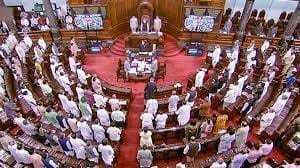
Presiding Officers of the Parliament - Speaker of Lok Sabha
- Speaker is the head of the Lok Sabha and also the principal spokesperson of the House, elected by the Lok Sabha from amongst its members.
- The Speaker of the Lok Sabha derives the powers and duties from three sources, that is, the Constitution of India, the Rules of Procedure and Conduct of Business of Lok Sabha, and Parliamentary Conventions (residuary powers that are unwritten or unspecified in the Rules).
- He is provided with security of tenure, and can be removed from office by an effective majority (majority of all the then membership of the House)
- His salaries and allowances are charged on the Consolidated Fund of India.
- His conduct in the House can’t be discussed except on a substantive motion. His powers of maintaining order and decorum can not be questioned in any court.
- Unlike the Speaker of the House of Commons in Britain, the Speaker of the Lok Sabha in India does not resign from his party.
Powers and Duties of Speakers
- Maintains order and decorum in the house for conducting its business and regulating its proceedings.
- Final interpreter of the provisions of the Constitution of India, the Rules of Procedure and Conduct of Business of Lok Sabha and the parliamentary precedents, within the House.
- Presides over a joint sitting of the two Houses of Parliament.
- Can adjourn the House or suspend the meeting in the absence of quorum. (quorum for meeting of the House is one-tenth of the total strength of the House)
- Decides whether a bill is a money bill or not and his decision in this regard is final.
- Exercises casting vote in case of tie to resolve a deadlock.
- Can allow the secret sitting of the House at the request of the Leader of the House.
- Decides matters of disqualification of MP on the ground of defection under the Tenth schedule. The decision of speaker in this regard is subject to judicial review.
- Appoint the chairperson of all Parliamentary Committees.
Historical Background of Speaker and Deputy Speaker
|
Presiding Officers of the Parliament - Deputy Speaker of Lok Sabha
- The Deputy Speaker is also elected by the Lok Sabha after the election of the speaker on a day decided by the Speaker of Lok Sabha.
- The Deputy Speaker performs the duties of the Speaker when the Speaker’s Office is vacant. He also presides over the House in the absence of the Speaker.
- When he presides over the House in absence of the Speaker, he has the same powers as the Speaker.
- Presides over the Joint sitting of both Houses in the absence of Speaker.
- He is directly responsible to the house and not subordinate to the speaker.
- The Deputy Speaker’s terms of office and grounds for removal, the procedure for removal, provision of salary and allowances are same as that of the Speaker.
- He/she resigns by writing to the speaker.
- Whenever he is appointed as a member of a parliamentary committee, he automatically becomes its chairman.
- From the 11th Lok Sabha, there has been consensus that the post of Speaker will go to the member of the ruling party and the post of Deputy Speaker will go to the main opposition party.
Speaker Pro Tem
- It is a temporary office exists for a few days.
- The speaker of the previous Lok Sabha resigns just before the first sitting of the new Lok Sabha. Therefore the President appoints a member (by convention the senior most) to preside over the first session known as Pro Tem Speaker.
- The oath of Speaker Pro Tem is administered by the President.
- His main duty is to administer oath to the new members and to enable the House to elect new Speaker
Panel of Chairpersons of Lok Sabha
- Under the Rules of Lok Sabha, the Speaker nominates from amongst the members a panel of not more than ten chairpersons.
- Any of them can preside over the House in the absence of the Speaker or the Deputy Speaker and has the same powers as the Speaker when so presiding. He/she holds office until a new panel of chairpersons is nominated.
- When a member of the panel of chairpersons is also not present, any other person as determined by the House acts as the Speaker.
- But a member of the panel of chairpersons cannot preside over the House, when the office of the Speaker or the Deputy Speaker is vacant.
- During such time, the Speaker’s duties are to be performed by such members of the House as the President may appoint for the purpose.
Chairman of Rajya Sabha
- The presiding officer of the Rajya Sabha is known as the Chairman.
- Article 64 of the Constitution says that the Vice-President shall be ex officio Chairman of the Rajya Sabha.
- During any period when the Vice-President acts as President , he does not perform the duties of the office of the Chairman of Rajya Sabha.
- The Chairman of the Rajya Sabha can be removed from his office only if he is removed from the office of the Vice-President.
- As a presiding officer, the powers and functions of the Chairman in the Rajya Sabha are similar to those of the Speaker in the Lok Sabha.
- Unlike Speaker, the Chairman is not the member of the House. He too can cast a vote in the case of an equality of votes and not in the first instance.
- Like the speaker, the salaries and allowances of the Chairman are also fixed by the Parliament and are charged on the Consolidated Fund of India and thus are not subject to the annual vote of Parliament.
- The Vice-President cannot preside over a sitting of the Rajya Sabha when a resolution for his removal is under consideration. However, he/she can be present and speak in the House and can take part in its proceedings, without voting.
- During any period when the Vice-President acts as President or discharges the functions of the President, he/she is not entitled to any salary or allowance payable to the Chairman of the Rajya Sabha but is paid the salary and allowance of the President during such a time.
Deputy Chairman of Rajya Sabha
- The Deputy Chairman is elected by the Rajya Sabha itself from amongst its members.
- It is a constitutional position created under Article 89 of the Constitution.
- Whenever the office of the Deputy Chairman falls vacant, the Rajya Sabha elects another member to fill the vacancy.
- The Deputy Chairman vacates his office in any of the following three cases:
- If he ceases to be a member of the Rajya Sabha.
- If he resigns by writing to the Chairman.
- If he is removed by a resolution passed by a majority of all the then members of the Rajya Sabha. Such a resolution can be moved only after giving 14 days’ advance notice.
- The Deputy Chairman performs the duties of the Chairman's office when it is vacant or when the Vice-President acts as President or discharges the functions of the President.
- He/she also acts as the Chairman when the latter is absent from the sitting of the House and in both the cases, he/she has all the powers of the Chairman.
- The Deputy Chairman is not subordinate to the Chairman and is directly responsible to the Rajya Sabha.
- Like the Chairman, the Deputy Chairman, while presiding over the House, cannot vote in the first instance- he/she can only exercise a casting vote in the case of a tie.
- Further, when a resolution for the removal of the Deputy Chairman is under consideration of the House, He/She cannot preside over a sitting of the House, though he/she may be present.
- When the Chairman presides over the House, the Deputy Chairman is like any other ordinary member of the House. He/she can speak in the House, participate in its proceedings and vote on any question before the House.
- The Deputy Chairman is entitled to a regular salary and allowance, fixed by Parliament and is charged on the Consolidated Fund of India.
A panel of Vice-Chairpersons of Rajya Sabha
- Under the Rules of Rajya Sabha, the Chairman nominates from amongst the members a panel of vice-chairpersons and holds office until a new panel of vice-chairpersons is nominated.
- Any one of them can preside over the House in the absence of the Chairman or the Deputy Chairman.
- He/she has the same powers as the Chairman when so presiding.
- When a member of the panel of vice-chairpersons is also not present, any other person as determined by the House acts as the Chairman.
- A member of the panel of vice-chairpersons cannot preside over the House, when the office of the Chairman or the Deputy Chairman is vacant.
- During such time, the Chairman's duties are to be performed by such members of the House as the president may appoint for the purpose.
Issues with the Presiding Officers
- Role under Anti-Defection Law: Presiding officers of Lok Sabha and Rajya Sabha have the power to disqualify MPs on the ground of defection. They have been accused of being discriminatory in deciding the petitions of defections. Eg. Karnataka MLAs disqualification case 2019, Manipur MLA disqualification case 2020.
- Maintaining Order: Presiding Officers often face the challenge of maintaining order and decorum in the house, particularly during heated debates or contentious issues.
- Biased Behavior: There have been instances where Presiding Officers have been accused of displaying bias towards members of their own party or coalition. This perception can undermine the impartiality of the position and erode public trust in the functioning of the parliament.
- Selective Enforcement of Rules: There have been instances where the Presiding officer has been accused of selectively enforcing parliamentary rules, favoring the ruling party's agenda while stifling opposition's voices.
- Ignoring Opposition's Concerns: In some cases, the Speaker has been criticized for ignoring legitimate concerns raised by the opposition parties and not allowing proper discussions or debates on important issues.
- Misuse of Powers: Sometimes Presiding officers are accused of misusing the powers conferred by statute. Eg. arbitrary certification of the controversial Aadhaar Act as the money bill.
Conclusion
Presiding Officers are expected to uphold the highest standards of parliamentary behavior and decorum. Any behavior that falls short of these standards, such as unprofessional conduct or disrespect towards members, can lead to criticism and loss of credibility. It is essential for Presiding Officers to uphold the principles of democracy and ensure that the parliament functions as an effective forum for legislative debate and decision-making.
FAQs
Q1: Who are the presiding officers of the Indian Parliament?
Answer: The presiding officers of the Indian Parliament include the Speaker and Deputy Speaker of the Lok Sabha, and the Chairperson (Vice President) and Deputy Chairperson of the Rajya Sabha. These officers are responsible for ensuring the smooth functioning of parliamentary proceedings.
Q2: What is the role of the Speaker of the Lok Sabha?
Answer: The Speaker of the Lok Sabha is responsible for maintaining order and decorum in the House, overseeing debates, and ensuring that parliamentary rules are followed. The Speaker also has the power to decide on matters such as defection under the Anti-Defection Law.
Q3: How is the Deputy Speaker of the Lok Sabha elected?
Answer: The Deputy Speaker of the Lok Sabha is elected by the members of the House from among themselves, following the election of the Speaker. The Deputy Speaker performs the Speaker’s duties when the Speaker is absent.
Q4: Who presides over the Rajya Sabha?
Answer: The Vice President of India serves as the ex-officio Chairperson of the Rajya Sabha. In the absence of the Chairperson, the Deputy Chairperson, who is elected by the members of the Rajya Sabha, presides over the sessions.
Q5: What is the role of the Deputy Chairperson of the Rajya Sabha?
Answer: The Deputy Chairperson of the Rajya Sabha assists the Chairperson and presides over the House in their absence. The Deputy Chairperson is elected from among the members of the Rajya Sabha.
MCQs
- Who among the following is the ex-officio Chairperson of the Rajya Sabha?
a) President of India
b) Speaker of the Lok Sabha
c) Prime Minister
d) Vice President of India
Answer: (D) See the Explanation
The Vice President of India is the ex-officio Chairperson of the Rajya Sabha and presides over its sessions.
- Who decides on disqualification matters under the Anti-Defection Law in the Lok Sabha?
a) Prime Minister
b) Speaker of the Lok Sabha
c) President
d) Deputy Speaker
Answer: (B) See the Explanation
The Speaker of the Lok Sabha has the authority to decide matters related to disqualification under the Anti-Defection Law.
- How is the Deputy Speaker of the Lok Sabha chosen?
a) Appointed by the President
b) Nominated by the Prime Minister
c) Elected by the members of the Lok Sabha
d) Appointed by the Speaker
Answer: (C) See the Explanation
The Deputy Speaker is elected from among the members of the Lok Sabha by the members themselves.
- In the absence of the Chairperson, who presides over the sessions of the Rajya Sabha?
a) Deputy Chairperson
b) Speaker of the Lok Sabha
c) President of India
d) Chief Justice of India
Answer: (A) See the Explanation
In the absence of the Chairperson (Vice President), the Deputy Chairperson presides over the sessions of the Rajya Sabha.
- Who maintains order and decorum during the sessions of the Lok Sabha?
a) President of India
b) Speaker of the Lok Sabha
c) Deputy Speaker of the Lok Sabha
d) Leader of the Opposition
Answer: (B) See the Explanation
The Speaker of the Lok Sabha is responsible for maintaining order and decorum during the sessions of the House.
GS Mains Questions and Model Answers
Q1. Discuss the role of the Speaker of the Lok Sabha in the functioning of Indian democracy.
Answer: The Speaker of the Lok Sabha plays a pivotal role in ensuring the smooth functioning of India’s parliamentary democracy. As the presiding officer of the Lok Sabha, the Speaker maintains order and decorum during debates, ensuring that members adhere to parliamentary rules and procedures. The Speaker’s impartiality is critical to the functioning of the House, as they ensure that all members, regardless of political affiliation, are given a fair opportunity to express their views.
In addition to moderating debates, the Speaker has significant powers in matters of disqualification under the Anti-Defection Law, where they decide whether a member should be disqualified for defecting from their party. The Speaker also chairs the Business Advisory Committee, which decides the agenda for parliamentary sessions. By exercising these functions, the Speaker upholds the dignity of the House and facilitates the effective functioning of India’s parliamentary system.
Q2. Analyze the powers and responsibilities of the Chairperson of the Rajya Sabha in maintaining legislative discipline.
Answer: The Chairperson of the Rajya Sabha, who is also the Vice President of India, holds a crucial position in maintaining the discipline and order of the Upper House of Parliament. As the presiding officer, the Chairperson ensures that the legislative procedures are followed, and debates are conducted in a dignified and orderly manner. The Chairperson decides who may speak during sessions, regulates discussions, and ensures that all viewpoints are heard.
In addition to these duties, the Chairperson has the power to interpret and enforce the rules of procedure. However, the Chairperson is not entitled to vote on any matters, except in the case of a tie, when they cast a decisive vote. The Chairperson’s neutrality is essential in fostering a climate of fairness and respect in the Rajya Sabha. The Deputy Chairperson assists in this role when the Chairperson is absent. Together, they ensure the effective functioning of the Rajya Sabha as a legislative body.
Q3. Evaluate the significance of the Deputy Speaker and Deputy Chairperson in the functioning of the Indian Parliament.
Answer: The roles of the Deputy Speaker of the Lok Sabha and the Deputy Chairperson of the Rajya Sabha are significant in ensuring the uninterrupted functioning of the Indian Parliament. Both officers act as the presiding officers in the absence of the Speaker and Chairperson, respectively, and their presence ensures that parliamentary proceedings are not disrupted.
The Deputy Speaker of the Lok Sabha is elected by the members of the House and plays an important role in assisting the Speaker. In the Speaker’s absence, the Deputy Speaker moderates debates and ensures that rules and procedures are followed. Similarly, the Deputy Chairperson of the Rajya Sabha, elected by the members of the Upper House, performs the Chairperson’s duties in their absence. Both positions are essential to the continuity and smooth operation of the legislative process, contributing to the effective governance of the country.
Previous Year Questions on Presiding Officers Of Parliament
1. UPSC CSE Mains 2018
Question. Discuss the role of the Speaker of the Lok Sabha in maintaining neutrality and impartiality in parliamentary proceedings.
Answer: The Speaker of the Lok Sabha holds a position of great responsibility, requiring them to act with impartiality and neutrality in all parliamentary matters. The Speaker is expected to rise above party politics to ensure that all members of the House are treated fairly and that the rules of procedure are adhered to. This neutrality is essential for maintaining the credibility of parliamentary proceedings and ensuring that the House functions smoothly.
The Speaker’s role in moderating debates, maintaining decorum, and ensuring that both the government and the opposition have an equal opportunity to express their views is vital to the democratic process. In matters such as disqualification under the Anti-Defection Law, the Speaker’s impartiality is particularly important, as their decision can have significant political implications. The Speaker’s ability to maintain fairness and balance in such situations is crucial to upholding the principles of democracy and parliamentary integrity.
2. UPSC CSE Mains 2019
Question. Analyze the challenges faced by the presiding officers of the Indian Parliament in ensuring legislative efficiency and decorum.
Answer: The presiding officers of the Indian Parliament, including the Speaker of the Lok Sabha and the Chairperson of the Rajya Sabha, face several challenges in ensuring legislative efficiency and maintaining decorum in the House. One of the primary challenges is dealing with disruptions during parliamentary sessions, which can hinder the smooth functioning of legislative business. The presiding officers must strike a balance between allowing members to express their opinions and ensuring that debates are conducted in a structured and orderly manner.
Another challenge is maintaining neutrality, especially in highly polarized political environments. The presiding officers are often under pressure from various political factions, and any perception of bias can undermine the credibility of their role. Additionally, they must ensure that the rules of procedure are strictly followed, while also adapting to the evolving needs of the legislature. Despite these challenges, the presiding officers play a crucial role in upholding the dignity of Parliament and ensuring that it functions as an effective institution of democracy.
*email: contactus@prepp.in
Download the PREPP App and attempt FREE IAS Exam Mock Tests and get complete study material!
UPSC IAS : CSAT - Mini Live Test

Live Test : UPSC CSE Prelims CSAT (Paper-II) (Oct 20 - 23)
Full Test - 04: UPSC CSE Prelims CSAT (Paper-II)
Full Test - 03: UPSC CSE Prelims CSAT (Paper-II)
UPSC CSE Prelims 2026 GS Paper 1 Question Paper (24-May-2026)
UPSC CSE Prelims 2026 CSAT Paper 2 Question Paper (24-May-2026)

17 February 2025 | The Hindu Must Read Articles | Current Affairs

16 February 2026 | The Hindu Must Read Articles | Current Affairs

13 February 2026 | The Hindu Must Read Articles | Current Affairs









Comments