Millets - Environment Notes
Millets are a type of small-grained cereal food crop that is highly resistant to drought and other extreme weather conditions and is grown with minimal chemical inputs such as fertilizers and pesticides. Most millet crops are native to India and are popularly known as Nutri-cereals because they provide the majority of the nutrients required for normal human body functioning. Millets have been designated as "Nutritional Cereals" by the Ministry of Agriculture and Farmers Welfare. In this article, we will discuss Millets which will be helpful for UPSC exam preparation.
| To Read update on this topic: |
|
Table of Contents |
What are Millets?
- Millets are a diverse group of small-seeded grasses that are widely grown around the world as cereal crops or grains for fodder and human food.
- The majority of millets belong to the Paniceae tribe, but some millets also belong to other taxa.
- Millets are important crops in Asia and Africa's semi arid tropics (particularly India, Mali, Nigeria, and Niger), accounting for 97% of millet production.
- This crop is popular because of its high productivity and short growing season in hot, dry conditions.
- Millets are native to many parts of the world.
- Sorghum and pearl millets are the most widely grown millets and are important crops in India and parts of Africa.
- Finger millet, proso millet, and foxtail millet are also important crop species.
- Millets may have been consumed by humans for approximately 7,000 years and may have played a "key role in the rise of multi-crop agriculture and settled farming societies."
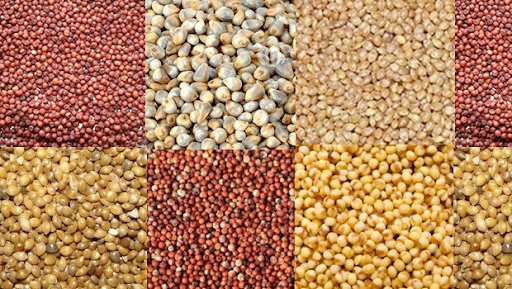
Millets
|
|
|
|---|---|
| Cereals | Cotton |
| Spices and Condiments | Stem Fibres |
| Grain Legumes | Narcotics |
| Sugar Crops | Forage Crops |
| Starch Crops | Grasses |
| Fibre Crops | Plantation Crops |
Cultivation of millets
- Pearl millet is one of the two major crops grown in the semiarid, impoverished, and less fertile agricultural regions of Africa and Southeast Asia.
- Millets are not only adapted to poor, dry, infertile soils, but they are also more reliable under these conditions than most other grain crops.
- This has contributed to the popularity of millet production, particularly in western African countries bordering the Sahara.
- Millets, on the other hand, respond positively to high fertility and moisture. Irrigation and soil supplements can increase millet grain production by 2-4 times per hectare.
- Improved millet breeds with increased disease resistance can significantly increase farm yield.
Millets in India
- The three major millet crops grown in India today are jowar (sorghum), bajra (pearl millet), and ragi (finger millet).
- In addition, India grows a diverse range of bio-genetically diverse and indigenous varieties of "small millets" such as kodo, kutki, chenna, and sanwa.
- Rajasthan, Andhra Pradesh, Telangana, Karnataka, Tamil Nadu, Maharashtra, Gujarat, and Haryana are among the major producers.
Major Millets
Sorghum (Jowar)
- The majority of sorghum protein is prolamin (kaffirin), which has the unique property of decreasing digestibility when cooked, which may be beneficial to certain dietary groups.
- Sorghum proteins are significantly less digestible than other cereal proteins after cooking, which may be beneficial to certain dietary groups.
- It is high in protein, fibre, thiamine, riboflavin, folic acid, and carotene.
- It is high in potassium, phosphorus, and calcium, and contains adequate amounts of iron, zinc, and sodium.
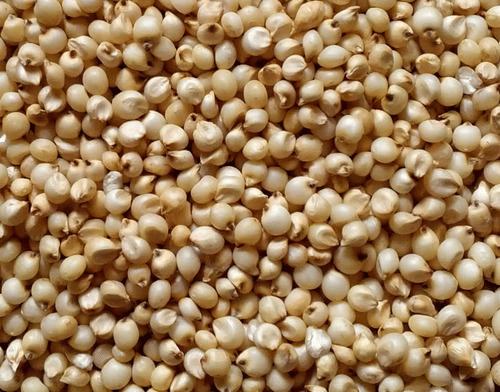
Sorghum
Pearl Millet (Bajra)
- Pearl millet has a high proportion of proteins (12-16%) and lipids (4-6%).
- It has 11.5% dietary fibre. It lengthens the time food travels through the digestive tract. Reduce the risk of inflammatory bowel disease as a result.
- Pearl millet contains more niacin than any other cereal.
- It also contains folicate, magnesium, iron, copper, zinc, and vitamins E and B-complex. In comparison to other millets, it has a high energy content.
- It is also high in calcium and unsaturated fats, both of which are beneficial to health.
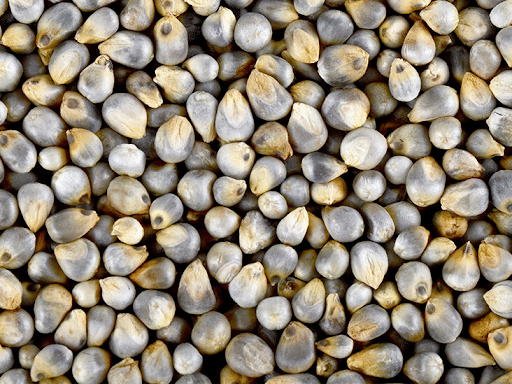
Pearl Millet
Finger Millet (Ragi)
- The calcium content of finger millet is the highest (300-350 mg/100g).
- Ragi has the highest mineral content.
- It has lower levels of protein (6-8%) and fat (1.5-2%).
- The sulphur-rich amino acid content of finger millet proteins distinguishes them.
- The grains have excellent malting properties and are widely used as weaning foods.
- It has a high antioxidant activity.
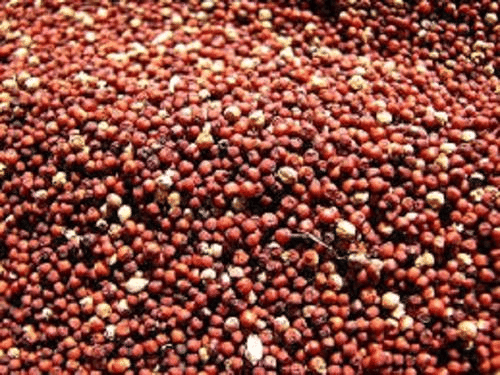
Finger Millet
Advantages of Millet Production
- Millets were previously known as coarse grains, but due to their nutritious value, they are now known as nutria-millets or nutria-cereals.
- Millets are known as "wonder grains" or "future crops" because they can thrive in severe conditions and are drought-resistant crops that require less external inputs.
- Millets are multipurpose plants. It is grown for both food and fodder, ensuring food/livelihood security for millions of households and contributing to farming's economic efficiency.
- Millets assist in climate change mitigation by lowering CO2 levels in the atmosphere.
- Millets can also aid with health issues including obesity, diabetes, and lifestyle issues because they are gluten-free, have a low glycemic index, and are strong in dietary fibre and antioxidants.
- Millets are Nutri-cereals that are abundant in nutrients such as protein, essential fatty acids, dietary fibre, B-Vitamins, and minerals such as calcium, iron, zinc, potassium, and magnesium.
- It has the potential to offer nutritional security and guard against nutritional deficit, particularly in children and women.
- It will also be vital for climate change mitigation strategies in the drylands, as well as for smallholder and marginal farmers.
Importance of Millets in the Environment and Climate Change
- Millets are known for their climate-resilient characteristics, which include adaptation to a wide range of ecological conditions, reduced irrigation requirements, improved growth and productivity in low nutrient input conditions, less reliance on synthetic fertilisers, and low vulnerability to environmental stresses.
- Millets can withstand many of the negative effects of climate change better than most other food crops.
- They can grow in almost any soil, whether sandy or acidic. They don't require much fertiliser or irrigation.
- Intercropping millets with other crops is especially beneficial because the fibrous roots of millet plants help improve soil quality, control water run-off, and aid soil conservation in erosion-prone areas, thereby restoring natural ecosystems.
- They can withstand high temperatures, floods, and droughts because they are hardy crops.
- Millets, as a C4 cereal, convert more carbon dioxide to oxygen, helping to mitigate climate change through their low carbon footprint of 3,218 kilogramme equivalent of carbon dioxide per hectare, compared to wheat and rice, which have 3,968kg and 3,401kg, respectively, on the same measure.
- Thus, millets can help to reduce atmospheric carbon dioxide and contribute to climate change mitigation.
Millet Cultivation in India - Challenges
- No market to sell millet crops: In certain village regions, farmers do not have a market to sell their harvests.
- Because there is no economic market or demand nearby, they must seek specific tiny stores to sell crops in bulk. This also makes crop distribution problematic.
- Millets have low bulk pricing in India and a high MRP, which encourages farmers to reduce millet output and plant other crops instead to make a higher revenue.
- However, because millets have a high MRP, the public typically prefers to buy other inexpensive grains instead.
- Government schemes and efforts are unable to reach farmers: All schemes and plan advantages are restricted to major cities, thus farmers are unaware of the programmes.
- Low crop output and high labour intensity: Growing millets needs heavy physical effort that is difficult for a single person to perform. Add to that the fact that certain millets are low in production.
- Difficult post-harvest processes exacerbate these issues.
- The easy availability of other grains, such as rice, thanks to a well-developed Public Distribution System, creates stiff competition for millet demand in India. As a result, cereals such as rice became the region's primary meal.
- Across the country, there is a general lack of knowledge about how to incorporate tiny millets into the daily meal/staple food.
- Inadequate investment in millet product development, marketing, and advertising.
- Improperly located appropriate processing units near millet fields: leads local farmers to transport their produce to distant locations.
Government Efforts to Promote Millets Production
- Millets are being promoted through technology dissemination, quality seeds through millet seed hubs, awareness generation, a minimum support price, and inclusion in PDS.
- In Karnataka and Telangana, efforts are being made to include nutrient-rich smaller millets in mid-day meal schemes.
- Millet awareness is spreading quickly in urban areas such as Kolkata, Mumbai, and Delhi, among others.
- Millets were designated as "Nutri-Cereals" by the Union Agriculture Ministry in April 2018 due to their "high nutritive value" and "anti-diabetic properties."
- The year 2018 was designated as the "National Year of Millets," and the UN General Assembly passed a resolution sponsored by India designating 2023 as the "International Year of Millets."
- The Millet Mission of the Government of India is part of the National Food Security Mission (NFSM), which was established in October 2007.
- The Millet Mission of the Centre will focus on developing farm-gate processing and empowering farmers through collectives, as well as value-addition and produce aggregation.
“Millet in Minutes” products
|
Way forward
- There is a need to build a decentralised model of processing capabilities so that producers may profit at the community and regional levels.
- There is a need to encourage the production of additional millets by giving price assistance to farmers since these grains have a social, nutritional, and environmental component.
- Millets might help governments save money on health and nutrition.
- Dedicated programmes with adequate training and capacity-building activities that encourage farmers to diversify away from loss-making crops and toward millets can be a timely means to draw farmers away from the region's suffering can be a timely strategy to pull farmers away from the region's anguish.
Conclusion
Millet farming should be encouraged because of their climate resilience, short cropping duration, and ability to grow in poor soils, hilly terrains, and with little rain. Because of their accessibility to the poor, they can play an important role in providing nourishment to people of all income levels and assisting rainfed farming systems in climate adaptation.
FAQs
Question: What are millets and why are they important for the environment?
Answer: Millets are a group of small-seeded cereal grains that belong to the grass family. They are highly nutritious and include varieties such as pearl millet, finger millet, and sorghum. Millets are important for the environment because they require minimal water, are drought-resistant, and grow well in arid and semi-arid regions. They have a low carbon footprint compared to other crops like rice and wheat, making them a sustainable choice for agriculture, especially in regions facing water scarcity.
Question: How do millets contribute to sustainable agriculture?
Answer: Millets contribute to sustainable agriculture by being hardy crops that require fewer inputs such as water, fertilizers, and pesticides. They are resistant to pests and diseases, reducing the need for chemical interventions. Millets also improve soil health through their deep root systems, which prevent soil erosion and enhance soil fertility. Their cultivation can help diversify cropping systems, improve biodiversity, and reduce dependence on water-intensive crops like rice.
Question: What are the nutritional benefits of millets?
Answer: Millets are highly nutritious, rich in proteins, fiber, vitamins, and minerals. They are an excellent source of essential amino acids, especially for vegetarians, and are known for their high content of magnesium, phosphorus, iron, and calcium. Millets also have a low glycemic index, making them a healthy choice for managing blood sugar levels. They are gluten-free, making them suitable for people with celiac disease or gluten intolerance.
Question: Why is there a renewed focus on millets in India?
Answer: There is a renewed focus on millets in India due to their environmental and health benefits. Millets are well-suited to India's diverse agro-climatic conditions, especially in drought-prone areas. The Indian government has promoted millets as part of its strategy to improve food security, combat climate change, and encourage sustainable farming practices. Additionally, millets are being recognized for their nutritional value, making them an important component of healthy diets.
Question: What are the challenges in promoting millet cultivation?
Answer: Despite their numerous benefits, millet cultivation faces several challenges. These include limited awareness among farmers about the potential of millets, lack of market demand, and the dominance of water-intensive crops like rice and wheat. The infrastructure for processing and distributing millets is also underdeveloped. Additionally, the government and agricultural extension services need to do more to provide farmers with incentives, training, and resources to switch to millet farming.
MCQs
- Which of the following is a major environmental benefit of millet cultivation?
a) Requires high water usage
b) Drought-resistant and requires fewer inputs
c) Contributes to soil degradation
d) Requires large-scale industrial processing
Answer: (b) See the Explanation
Explanation: Millets are drought-resistant crops that require minimal water, making them a sustainable choice for agriculture, especially in arid regions.
- What is the primary nutritional advantage of millets over other grains?
a) High sugar content
b) High in proteins, fiber, and essential minerals
c) High fat content
d) Rich in gluten
Answer: (b) See the Explanation
Explanation: Millets are rich in proteins, fiber, and essential minerals such as magnesium, phosphorus, and iron, making them a healthy food option.
- Which of the following is a variety of millet?
a) Wheat
b) Barley
c) Pearl millet
d) Rice
Answer: (c) See the Explanation
Explanation: Pearl millet is one of the commonly grown varieties of millet, known for its nutritional benefits and environmental resilience.
- Why are millets considered a sustainable choice for farming in dry regions?
a) They require a high amount of fertilizer
b) They are pest-resistant and low-maintenance
c) They grow in wet and flooded conditions
d) They need large amounts of water to grow
Answer: (b) See the Explanation
Explanation: Millets are pest-resistant, drought-tolerant, and require minimal water, making them ideal for dry and semi-arid regions.
- What is a major challenge in promoting millet cultivation?
a) Excessive water usage
b) Lack of processing and market infrastructure
c) High pesticide use
d) Limited nutritional value
Answer: (b) See the Explanation
Explanation: One of the challenges in promoting millet cultivation is the underdeveloped infrastructure for processing and distributing millets.
GS Mains Questions and Model Answers
Q1: Explain the role of millets in promoting environmental sustainability and agricultural resilience.
Answer: Millets play a crucial role in promoting environmental sustainability and agricultural resilience. They are hardy crops that require minimal water, making them ideal for cultivation in arid and semi-arid regions where water scarcity is a major concern. Millets are drought-resistant and can grow in poor soils with minimal inputs such as fertilizers and pesticides. Their deep root systems help prevent soil erosion, enhance soil fertility, and maintain ecological balance. Moreover, millets contribute to biodiversity by diversifying crop systems and reducing dependency on water-intensive crops like rice and wheat. By promoting millet cultivation, we can reduce the environmental impact of agriculture and make farming more resilient to climate change.
Q2: Discuss the health benefits of millets and how they can contribute to improving food security in India.
Answer: Millets offer significant health benefits, making them a valuable addition to diets, especially in India where malnutrition remains a concern. Millets are rich in proteins, dietary fiber, vitamins, and minerals such as iron, calcium, and magnesium, which are essential for overall health. They have a low glycemic index, making them an excellent choice for individuals with diabetes or those looking to manage blood sugar levels. Furthermore, millets are gluten-free, making them a healthy alternative for people with celiac disease or gluten intolerance. In terms of food security, millets can play an important role in ensuring the nutritional well-being of vulnerable populations, especially in regions facing food shortages and water scarcity. By promoting millet cultivation, India can diversify its food sources, reduce dependence on staple crops, and improve access to nutritious food, especially in drought-prone areas.
Q3: Evaluate the challenges and opportunities in promoting millet cultivation in India.
Answer: While millet cultivation offers numerous benefits, it faces several challenges that hinder its widespread adoption. One of the primary challenges is the limited awareness among farmers about the environmental and economic advantages of millets. Additionally, millets often face competition from rice and wheat, which have established markets and government support. The lack of proper infrastructure for processing and marketing millets further limits their accessibility to consumers. However, there are significant opportunities for promoting millet cultivation in India. Given their resilience to climate change and low water requirements, millets are ideal for dryland farming, particularly in states facing water scarcity. Government initiatives, such as the promotion of millets under the National Food Security Mission and the creation of millet-processing units, can help create a market for millets. Furthermore, increasing public awareness about their nutritional benefits and introducing millets in school and government-run programs can enhance their consumption. With the right policy support and market infrastructure, millets can become a key crop for sustainable agriculture and improved food security in India.
Previous Year Questions on Millets
1. UPSC CSE 2020
Question: Assess the role of millets in achieving food security and sustainable agriculture in India.
Answer: Millets play a significant role in achieving food security and sustainable agriculture in India due to their resilience to climatic changes and their minimal environmental impact. Millets are drought-resistant crops that require less water compared to traditional staples like rice and wheat, making them ideal for regions facing water scarcity. They are also highly nutritious, providing essential vitamins and minerals, which are vital for addressing malnutrition. By diversifying crop production and promoting millets, India can reduce its dependency on water-intensive crops and enhance food security. Sustainable farming practices, such as growing millets, help restore soil health, prevent erosion, and support long-term agricultural productivity.
2. UPSC CSE 2019
Question: Discuss the potential of millets to contribute to India’s nutritional security and environmental sustainability.
Answer: Millets have the potential to greatly contribute to both nutritional and environmental sustainability in India. Nutritionally, millets are rich in proteins, fibers, and essential minerals, making them an important food source for combating malnutrition. They are particularly beneficial for rural and marginalized populations where access to nutrient-rich foods is limited. From an environmental perspective, millets are highly water-efficient and can grow in poor soil conditions, reducing the strain on water resources and preserving soil fertility. As India faces challenges such as climate change and water scarcity, promoting millet cultivation offers a dual solution: enhancing food security while promoting sustainable agricultural practices. With increased awareness and government support, millets can play a critical role in achieving both nutritional security and environmental sustainability.
Download the PREPP App and attempt FREE IAS Exam Mock Tests and get complete study material!

Full Test - 04: UPSC CSE Prelims CSAT (Paper-II)
Full Test - 03: UPSC CSE Prelims CSAT (Paper-II)
UPSC CSE Prelims 2026 GS Paper 1 Question Paper (24-May-2026)
UPSC CSE Prelims 2026 CSAT Paper 2 Question Paper (24-May-2026)

17 February 2025 | The Hindu Must Read Articles | Current Affairs

16 February 2026 | The Hindu Must Read Articles | Current Affairs

13 February 2026 | The Hindu Must Read Articles | Current Affairs









Comments