Forage Crops - Agriculture Notes
Forage crops are grasses, legumes, crucifers, and other crops that are grown and used to make hay, pasture, fodder, and silage. Forage crops and pastures are the foundation of long-term agriculture. Forage is vegetative matter, either fresh or preserved, used as animal feed. In this article, we will discuss Forage Crops which will be helpful for UPSC exam preparation.
|
Table of Contents |
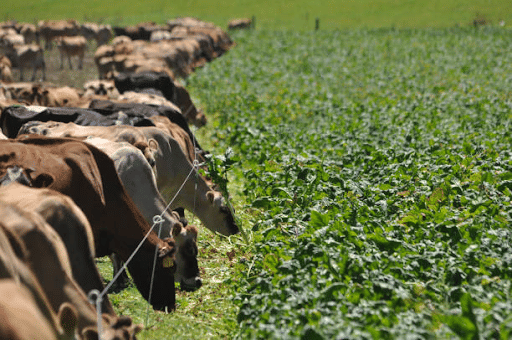
Forage Crops
What is Forage?
- Forage is plant material (primarily plant leaves and stems) consumed by grazing livestock.
- Historically, forage meant only plants eaten directly by animals as pasture, crop residue, or immature cereal crops, but it is now used more broadly to include similar plants cut for fodder and carried to the animals, particularly as hay or silage.
- While the term forage has a broad definition, the term forage crop is used to define annual or biennial crops grown for grazing or harvesting as a whole crop.
- Common Forages include:
- Grasses
- Herbaceous legumes
- Tree legumes
- Silage
- Crop residue
|
|
|
|---|---|
| Cereals | Spices and Condiments |
| Millets | Cotton |
| Grain Legumes | Stem Fibres |
| Sugar Crops | Narcotics |
| Starch Crops | Grasses |
| Fibre Crops | Plantation Crops |
What are Forage Crops?
- Forage crops serve as the foundation of sustainable agriculture.
- Forages, defined as the edible parts of plants other than separated grain that provide feed for grazing animals or can be harvested for feeding, play an important role in the beef cattle industry while also improving crop diversity, wildlife habitat, and soil ecosystem services.
- Forage crops can be an important tool for producers if the right crop is chosen.
- Careful management is required to ensure that the crop is fully utilized during its most productive and nutritious stages of growth.
- Pests and diseases must also be managed to reduce their impact on productivity.
- A well-planned grazing strategy is critical for maximizing the productive potential of a fodder crop.
- Forage crops can be grown solely for hay or silage production or grazed before being set aside for fodder conservation.
- The timing of both grazing events and cutting for hay or silage is critical for optimizing the quality and quantity of conserved fodder.
Classification of Forage Crops
- Annual forage crops are easier to establish seed in because they germinate, grow, and mature in one growing season.
- Biennial forage crops require two growing seasons: vegetative growth in the first season and flowering in the second season.
- Perennial forage crops can live for more than a year and can go dormant for a short period of time before resuming germination from crowns, rhizomes, and so on.
Forage Crops - Salient Features
- They are grown with greater spacing and a higher seed rate.
- Dense growth to suffocate weeds and prevent soil erosion.
- Improve soil health by incorporating more organic residues into the soil.
- Crop duration can be adjusted, and the risk of adverse weather conditions can be reduced.
- The ability to regenerate and persist reduces the need for frequent sowing and tillage.
- Crop management differs depending on the purpose of growing forages and the mode of utilisation.
- Greater adaptability with the ability to grow under stressful conditions.
- Intensive cropping necessitates a high nutrient and water requirement.
- Multifaceted nature capable of providing consistent income and employment.
- Secondary production is necessary for economic viability (livestock products).
- Storage, transportation, processing, and conservation are all time-consuming.
- Shy seed producer, low harvest index, and limited seed multiplication ratio.
- In the case of multicast and/or perennial forages, as well as forage cum-seed crops, the cost of cultivation decreases with each subsequent cut.
Common Frage Crops
| Forage Crops | Description |
|---|---|
| Oat (Avena sativa) |
|
| Sorghum |
|
| Pearl Millet |
|
| Maize |
|
| Berseem |
|
| Lucerne |
|
| Cowpea |
|
Establishment of Forage Crops
- When trying to establish a forage crop, soil nutrition, weed control, and sowing or seeding are all important factors to consider.
- Good soil nutrient levels are essential for establishing vigorous forage crops.
- While a paddock's fertilizer history can provide an indication of the likely levels of key nutrients, the only way to be certain of the soil nutrient profile is to conduct a soil test.
- A forage crop can be established using conventional, minimum till, and no till sowing methods.
- Whatever method is used, good soil-to-seed contact is critical for good seed germination.
- Weed control is best done prior to or during sowing to reduce competition with the establishing crop.
- Whether or not the forage crop is part of a continuous rotation will influence both crop selection and weed control options.
Advantages of Forage Crops in Agriculture
- Forage crops with grass root systems can improve soil organic matter content.
- Forage crops are high in vitamins, fiber, and proteins, which help animals' metabolic activity.
- Mineral-rich forage crops benefit poultry bone, eggshell formation, fluid balance, and hormone production.
- Supplements warm-season perennial grasses, improving the seasonal distribution of forage production throughout the year.
- Weed development is reduced by forage crops.
- It helps to reduce soil erosion.
Conclusion
Forage crops are plants that are grown specifically to be grazed by livestock or stored as hay or silage. Forage crops aid in meeting production targets for attributes such as growth or weight gain, as well as compensating for seasonal shortfalls in feed demand and supply. They can also help to maintain ground cover, prevent erosion, accumulate nitrogen in the soil, and improve land condition. Forage crops can be a valuable tool for farmers if the right crop is chosen and carefully managed during establishment and grazing to ensure maximum productivity.
FAQs
Question: What are forage crops, and why are they important in agriculture?
Answer: Forage crops are plants grown primarily for animal feed, particularly for herbivores like cattle, sheep, and goats. They play a crucial role in livestock agriculture by providing essential nutrients, promoting animal health, and enhancing productivity. Forage crops contribute to soil health by improving soil structure and preventing erosion. They also play a vital part in sustainable farming systems, allowing for efficient use of resources and supporting biodiversity.
Question: What are the different types of forage crops?
Answer: Forage crops can be classified into several types based on their growth habits and uses: 1. **Grasses:** Common examples include Bermuda grass, ryegrass, and fescue, known for their high digestibility and palatability. 2. **Legumes:** Such as alfalfa, clover, and peas, which enrich the soil with nitrogen and provide protein-rich feed. 3. **Cereal Crops:** Some cereal crops like oats and barley can also be used as forage when harvested at the appropriate stage. 4. **Mixed Forages:** Combinations of grasses and legumes that enhance nutritional value and resilience.
Question: How do forage crops contribute to sustainable agriculture?
Answer: Forage crops contribute to sustainable agriculture by improving soil health through root systems that enhance soil structure and organic matter. They help in nutrient cycling by fixing atmospheric nitrogen (in the case of legumes), reducing the need for synthetic fertilizers. Forage crops also support biodiversity by providing habitats for various organisms and enhancing the ecosystem's resilience. Additionally, they play a crucial role in livestock production systems, allowing farmers to maintain animal health and productivity while managing resources efficiently.
Question: What are the challenges faced in forage crop production?
Answer: Forage crop production faces several challenges, including climate variability, which affects growth patterns and yields. Pest and disease outbreaks can significantly impact forage quality and quantity. Additionally, soil degradation and poor management practices can lead to reduced forage availability. Farmers may also struggle with the integration of forage crops into existing cropping systems, and lack of access to quality seeds or technical knowledge can hinder production. Addressing these challenges requires sustainable management practices, research, and support systems.
Question: How can farmers improve the quality of forage crops?
Answer: Farmers can improve the quality of forage crops through several practices: 1. **Selection of Varieties:** Choosing high-yielding and disease-resistant varieties adapted to local conditions. 2. **Soil Management:** Implementing practices such as crop rotation, cover cropping, and the use of organic amendments to enhance soil fertility. 3. **Proper Grazing Management:** Rotational grazing allows for regrowth and prevents overgrazing, ensuring sustainable forage availability. 4. **Irrigation and Fertilization:** Using adequate irrigation and balanced fertilization to promote healthy growth. 5. **Timely Harvesting:** Harvesting at the right stage maximizes nutritional content and palatability.
MCQs
1. What are forage crops primarily grown for?
A) Human consumption
B) Fuel production
C) Animal feed
D) Soil erosion control
Answer: (C) See the Explanation
Explanation: Forage crops are primarily grown for animal feed, providing essential nutrients for livestock.
2. Which of the following is a legume forage crop?
A) Timothy grass
B) Alfalfa
C) Ryegrass
D) Fescue
Answer: (B) See the Explanation
Explanation: Alfalfa is a well-known legume forage crop, rich in protein and nutrients.
3. What is a major benefit of including legumes in forage systems?
A) Increase soil acidity
B) Enhance nitrogen fixation
C) Decrease biodiversity
D) Require more water
Answer: (B) See the Explanation
Explanation: Legumes enhance nitrogen fixation, improving soil fertility and benefiting subsequent crops.
4. What is a common challenge in forage crop production?
A) High market prices
B) Pest and disease outbreaks
C) Excessive moisture
D) Low nutritional value
Answer: (B) See the Explanation
Explanation: Pest and disease outbreaks are common challenges that can significantly impact the quality and quantity of forage crops.
5. How can farmers enhance the quality of their forage crops?
A) By overgrazing
B) By selecting appropriate varieties
C) By neglecting soil management
D) By harvesting too early
Answer: (B) See the Explanation
Explanation: Farmers can enhance the quality of forage crops by selecting appropriate high-yielding and disease-resistant varieties.
GS Mains Questions and Model Answers
Q1: Discuss the role of forage crops in sustainable agriculture.
Answer: Forage crops play a crucial role in sustainable agriculture by supporting livestock production, enhancing soil health, and promoting biodiversity. They provide a reliable source of nutrition for livestock, which is essential for meat and dairy production. Additionally, forage crops contribute to soil health by improving soil structure and fertility through root systems that prevent erosion and promote organic matter. The inclusion of diverse forage species in cropping systems fosters ecological balance, encouraging beneficial insects and microorganisms. Sustainable grazing practices using forage crops can lead to improved land management, reduced dependence on chemical fertilizers, and a lower carbon footprint, thereby contributing to environmentally friendly agricultural practices.
Q2: Analyze the challenges and opportunities in forage crop production in the context of climate change.
Answer: Climate change poses significant challenges to forage crop production, including altered precipitation patterns, increased temperatures, and the prevalence of pests and diseases. These factors can affect forage yield and quality, leading to food insecurity for livestock and, consequently, for human populations reliant on animal products. However, climate change also presents opportunities for innovation in forage crop management. Developing drought-resistant and heat-tolerant forage varieties can enhance resilience to changing climatic conditions. Implementing adaptive management practices, such as rotational grazing and intercropping, can mitigate adverse effects and improve soil health. As climate change continues to affect agriculture, focusing on sustainable forage crop production will be vital for maintaining food security and supporting livestock farming.
Q3: Evaluate the importance of research and development in improving forage crop varieties.
Answer: Research and development play a critical role in enhancing forage crop varieties to meet the evolving demands of agriculture and livestock production. Advances in genetic research allow for the development of high-yielding, disease-resistant, and nutrient-dense forage species that can thrive under diverse environmental conditions. Improved varieties can significantly increase productivity while reducing the reliance on chemical fertilizers and pesticides, promoting sustainable agricultural practices. Additionally, research into forage management practices can help farmers optimize production systems and improve the nutritional quality of feed, directly impacting livestock health and productivity. Thus, investing in research and development is essential for achieving long-term food security and sustainable agricultural practices.
Previous Year Questions on Forage Crops
1. UPSC CSE Prelims 2021:
Question: What is the primary purpose of forage crops?
A) Fuel production
B) Soil erosion control
C) Animal feed
D) Human consumption
Answer: (C)
Explanation: The primary purpose of forage crops is to provide animal feed, particularly for livestock.
2. UPSC CSE Mains 2019 (GS Paper 1):
Question: "Evaluate the role of forage crops in promoting sustainable agriculture." Discuss in detail.
Answer: Forage crops play an essential role in promoting sustainable agriculture by supporting livestock production, enhancing soil health, and increasing biodiversity. They provide a dependable source of nutrition for livestock, which is critical for meat and dairy production. Furthermore, forage crops contribute to soil health by improving its structure and fertility, preventing erosion through robust root systems, and fostering organic matter. The integration of diverse forage species encourages ecological balance, which promotes beneficial insects and microorganisms. Sustainable grazing practices utilizing forage crops lead to better land management, reduced chemical fertilizer dependence, and a lower carbon footprint, thus fostering environmentally friendly agricultural methods.
Download the PREPP App and attempt FREE IAS Exam Mock Tests and get complete study material!

Full Test - 04: UPSC CSE Prelims CSAT (Paper-II)
Full Test - 03: UPSC CSE Prelims CSAT (Paper-II)
UPSC CSE Prelims 2026 GS Paper 1 Question Paper (24-May-2026)
UPSC CSE Prelims 2026 CSAT Paper 2 Question Paper (24-May-2026)

17 February 2025 | The Hindu Must Read Articles | Current Affairs

16 February 2026 | The Hindu Must Read Articles | Current Affairs

13 February 2026 | The Hindu Must Read Articles | Current Affairs









Comments