Classification of Crops Based on growing season - Agriculture Notes
India is a peninsular country with a monsoon climate, and India has a wide range of seasons. These seasons, in turn, provide different weather conditions to crops, resulting in a different cropping pattern in India. Crops are classified into the following groups based on their season: Kharif crops, Rabi crops, and Zaid crops. In this article, we will discuss the Classification of Crops Based on the growing season which will be helpful for UPSC exam preparation.
|
Table of Contents |
What is Crop?
- A crop is a plant that can be grown and harvested on a large scale for profit or subsistence.
- Most crops are grown in agriculture or aquaculture. Crops may include macroscopic fungus (such as mushrooms) and marine macroalga (e.g. seaweed).
- The majority of crops are harvested for human consumption or as livestock fodder.
- Some crops are often gathered from the wild in a form of intensive gathering (e.g. ginseng, yohimbe, and eucommia).
- Horticulture, floriculture, and industrial crops are important non-food crops. Plants used in horticulture include those used in other crops (e.g. fruit trees).
- Floriculture crops include bedding plants, houseplants, flowering garden and pot plants, cut cultivated greens, and cut flowers.
- Industrial crops are grown for clothing (fibre crops such as cotton), biofuel (energy crops such as algae fuel), or medicine (medicinal plants).
Importance of Plant Classification
- To become acquainted with crops.
- To comprehend the soil and water needs of various crops.
- To learn about crop adaptability
- To understand crop growing habits
- Understanding the climatic requirements of various crops.
- To understand the economic produce of the crop plant and its application.
- to learn about the crop's growing season
- Overall, to understand the actual conditions needed for plant cultivation.
Crop classification based on season
- India is a peninsular country with a monsoon climate. As a result, India has a wide range of seasons. These seasons, in turn, provide different weather conditions to crops, resulting in a different cropping pattern in India.
- Crops are classified into the following groups based on their season:
- Kharif crops
- Rabi crops
- Zaid crops
Seasonal classification
Kharif/Rainy/Monsoon crops
- Crops grown during the monsoon months of June to October-November require warm, wet weather during the main period of crop growth, as well as short day length for flowering.
- Kharif crops, also known as monsoon crops or fall crops, are grown and harvested during the monsoon season.
- One of the most crucial characteristics of kharif crops is that they require a lot of water and hot weather to thrive well.
- Cotton, rice, jowar, and bajra are a few examples.
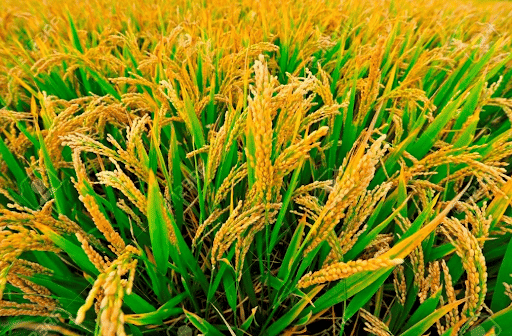
Kharif crop - Rice
Rabi/winter/cold season crops
- It requires a winter season to grow well from October to March. Crops grow well in cold, dry weather. Flowering requires longer day length.
- Rabi means spring in Arabic. Rabi crops are crops that are cultivated in the winter and harvested in the spring.
- They differ from other crops in that they require a warm atmosphere for seed germination and maturation and a cold environment for growth.
- Wheat, gramme, sunflower, and other grains are examples.
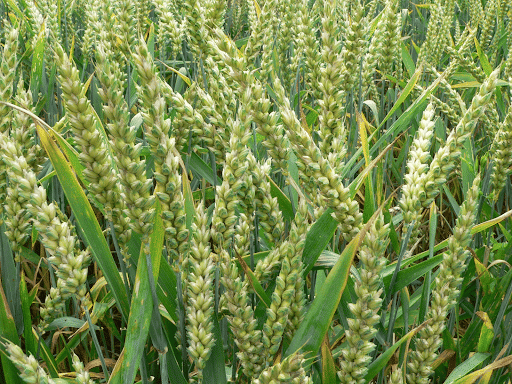
Rabi crop - Wheat
Summer/Zaid crops
- Zaid, or summer crops, are planted between the Kharif and Rabi harvests, between March and July.
- Because these crops are mainly cultivated on irrigated land, farmers do not have to wait for the monsoon.
- Warm daytime temperatures are required for the main growth period, and longer ay length is required for flowering.
- For example, groundnuts, watermelons, pumpkins, and gourds.
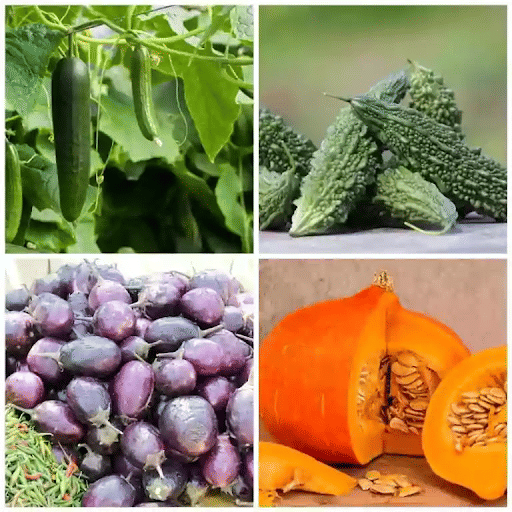
Zaid Crops
Conclusion
The division of crops into Rabi, Kharif, and Zaid crops is critical; it ensures the availability of food throughout the year for the human population. Farmers, as we all know, maintain crop rotation simply by knowing the season of the crops. Because the majority of farmers in India are uneducated, this system allows them to grow crops by the environmental requirements of the crops.
FAQs
Question. How are crops classified based on the growing season?
Answer: Crops are primarily classified based on their growing season into two broad categories:
- Kharif crops: These are monsoon crops that are sown at the beginning of the rainy season (typically from June to September) and harvested at the end of the monsoon (usually from September to November). Kharif crops require a lot of moisture and are grown during the monsoon months. Examples include rice, maize, soybean, and cotton.
- Rabi crops: These are winter crops sown at the beginning of the winter season (usually from October to December) and harvested in spring (around March to April). Rabi crops are typically grown in cooler, drier conditions. Examples include wheat, barley, mustard, and peas.
Question. What are the key characteristics of Kharif crops?
Answer: Kharif crops are characterized by:
- Sown during the monsoon: These crops are planted in the rainy season (June to September).
- High water requirement: Kharif crops need abundant rainfall and moisture.
- Shorter growth cycle: These crops typically have a relatively shorter growing period, ranging from 3 to 6 months.
- Examples: Major Kharif crops include rice, maize, soybean, and cotton.
- Harvest period: These crops are harvested by the end of the monsoon season, around September to November.
Question. What are Rabi crops and how are they different from Kharif crops?
Answer: Rabi crops are grown during the winter season (October to March), which is the dry period. The key differences between Rabi and Kharif crops include:
- Sowing season: Rabi crops are sowed in the winter months (October to December), while Kharif crops are sowed in the monsoon season (June to September).
- Water requirement: Rabi crops generally require less water than Kharif crops and are more suited to the cooler, drier conditions.
- Examples: Rabi crops include wheat, barley, mustard, and peas.
- Harvest period: Rabi crops are typically harvested in spring (March to April), unlike Kharif crops, which are harvested by the end of the monsoon season.
Question. Can a crop be classified into both Kharif and Rabi seasons?
Answer: Yes, certain crops can be grown in both Kharif and Rabi seasons depending on the region, climate, and water availability. These crops are known as Zaid crops:
- Zaid crops: These are typically sown between the Rabi and Kharif seasons (March to June) and harvested before the monsoon rains arrive.
- Examples: Zaid crops include watermelon, cucumber, melon, and vegetables like tomatoes and pumpkins.
Question. Why is the classification of crops based on the growing season important for agriculture?
Answer: The classification of crops based on the growing season is important because it helps farmers make decisions about:
- Crop rotation: Farmers can plan and rotate crops based on seasonal cycles, ensuring better soil health and maximizing productivity.
- Water management: Understanding the water needs of different crops during different seasons helps in efficient water usage, especially in regions with variable rainfall.
- Yield optimization: By selecting crops suited to specific seasons, farmers can increase their crop yields and ensure consistent harvests throughout the year.
- Market planning: Different crops are harvested in different seasons, and this classification helps farmers plan for when to sell their produce in the market, ensuring better prices.
MCQs
- Which of the following is a Kharif crop?
A) Wheat
B) Mustard
C) Rice
D) Barley
Answer: (C) See the Explanation
Rice is a Kharif crop and is typically sown during the monsoon season (June to September) and harvested after the monsoon ends (September to November).
- What is the typical growing season for Rabi crops?
A) June to September
B) October to March
C) March to June
D) December to May
Answer: (B) See the Explanation
Rabi crops are typically grown during the winter months (October to March) and harvested in spring (March to April).
- Which of the following crops is grown in both Kharif and Rabi seasons?
A) Cotton
B) Soybean
C) Wheat
D) Tomato
Answer: (D) See the Explanation
Tomato can be grown in both Kharif and Rabi seasons, depending on the climatic conditions and water availability.
- Which of the following is a characteristic of Kharif crops?
A) Grown during the winter season
B) Require high moisture
C) Sown in October
D) Require less water
Answer: (B) See the Explanation
Kharif crops require abundant moisture and are sown during the monsoon season when there is heavy rainfall.
- Which of the following is NOT a Rabi crop?
A) Wheat
B) Mustard
C) Soybean
D) Barley
Answer: (C) See the Explanation
Soybean is a Kharif crop and is typically sown during the monsoon season (June to September), not the Rabi season.
GS Mains Questions and Model Answers
Q1: Analyze the significance of crop classification based on the growing season for agricultural productivity in India.
Answer: The classification of crops based on their growing season—Kharif, Rabi, and Zaid—plays a crucial role in enhancing agricultural productivity in India. It helps in crop rotation, which maintains soil fertility by reducing the depletion of specific nutrients. This classification allows farmers to optimize the use of water resources, especially in regions with unpredictable rainfall. By aligning crops with the seasons, farmers can ensure a higher yield, which translates to better income and food security. Additionally, understanding the growing season helps in planning the marketability of crops, as different crops are harvested at different times, thus reducing market competition. It also aids in minimizing the risk of crop failure, as different crops have varied climatic and water requirements. Therefore, this classification system ensures a more sustainable, efficient, and productive agricultural system in India.
Q2: What are the challenges faced by farmers in India due to the growing seasons of crops, and how can these challenges be addressed?
Answer: Farmers in India face several challenges related to the growing seasons of crops, including:
- Irregular rainfall: The timing of the monsoon can be unpredictable, affecting Kharif crops that depend on regular rainfall.
- Water scarcity: The Rabi season often coincides with lower water availability, which affects irrigated crops like wheat.
- Climate change: Shifting weather patterns can disrupt the growing seasons of both Kharif and Rabi crops, leading to crop failures or reduced yields. To address these challenges, farmers need to adopt climate-resilient farming practices, use water-efficient irrigation techniques, and shift to crops that are more drought-resistant. Government policies should focus on providing predictable irrigation systems and insurance schemes to mitigate risks from weather uncertainty. Additionally, promoting research into crop varieties that can thrive under varying conditions will help farmers adapt to changing climate scenarios.
Q3: Evaluate the role of crop diversification based on the growing season in improving agricultural sustainability in India.
Answer: Crop diversification plays a vital role in improving agricultural sustainability in India, especially when based on the growing season. By diversifying the crops grown in different seasons—Kharif, Rabi, and Zaid—farmers can reduce the risk of crop failure due to weather uncertainties, disease outbreaks, and market fluctuations. Crop diversification helps in optimizing the use of water resources, as different crops have different water requirements. It also aids in improving soil health by reducing the depletion of specific nutrients and preventing soil erosion. For instance, growing leguminous crops in the Rabi season can help fix nitrogen in the soil, benefiting subsequent crops. Furthermore, diversification increases income security, as farmers can earn from multiple crops harvested at different times of the year. However, successful diversification requires awareness, access to quality seeds, and market infrastructure to ensure profitable returns for farmers.
Previous Year Questions on Classification of Crops Based on Growing Season
1. UPSC 2020
Question: Discuss the impact of the classification of crops based on growing season on India's agricultural economy.
Answer: This question required candidates to examine how the classification of crops into Kharif, Rabi, and Zaid influences agricultural productivity, economic stability, and income generation in India.
2. UPSC 2019
Question: Analyze the importance of crop rotation based on the growing season for sustainable agriculture in India.
Answer: The question asked candidates to analyze the role of crop rotation in maintaining soil fertility and ensuring sustainable agriculture by utilizing crops suited for different growing seasons.
Download the PREPP App and attempt FREE IAS Exam Mock Tests and get complete study material!

Full Test - 04: UPSC CSE Prelims CSAT (Paper-II)
Full Test - 03: UPSC CSE Prelims CSAT (Paper-II)
UPSC CSE Prelims 2026 GS Paper 1 Question Paper (24-May-2026)
UPSC CSE Prelims 2026 CSAT Paper 2 Question Paper (24-May-2026)

17 February 2025 | The Hindu Must Read Articles | Current Affairs

16 February 2026 | The Hindu Must Read Articles | Current Affairs

13 February 2026 | The Hindu Must Read Articles | Current Affairs









Comments