Fibre Crops - Agriculture Notes
Fibre crops are field crops grown for their fibres, which are traditionally used to make paper, cloth, or rope. Fiber crops are distinguished by a high concentration of cellulose, which is responsible for their strength. Fibre crops must be able to produce large amounts of cellulose that can be extracted relatively easily for downstream processing in order to be economically viable. Fiber crops are an important economic crop group. They manufacture fibre as a raw material for a variety of applications. Fibers, such as viscose, can be chemically modified (used to make rayon and cellophane). In this article, we will discuss Fibre Crops which will be helpful for UPSC exam preparation.
|
Table of Contents |
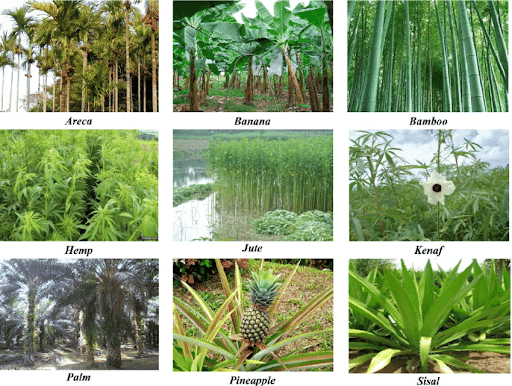
Natural Fibre Crops
What are Fibre Crops?
- Fibre crops or plant fibres are a type of natural fibre because they are obtained naturally and directly from various sources of plants and their products.
- These fibre crops have exceptional length, width, tenacity, uniformity, spinning pliability, and flexibility.
- Cotton, jute, coir, hemp, and flax are some of the plant fibres available.
- Fibres are sclerenchyma cells that are associated with vascular tissues and are a component of the plant skeleton. The cells are long and have pointed ends.
- They are raw materials that are available in the form of thin, long continuous threads and flexible strands that are spun into yarn and made into fabrics.
- Natural fibres were used in the manufacture of cloth, paper, ropes, and other items prior to the introduction of synthetic fibres.
- These natural fibres in the manufacturing industries came from fibre crops. Because of the presence of cellulose, these fibres are very strong.
- There are three types of fibre crops: textile fibres, cordage fibres, and filling fibres.
- Fibre crops can be classified into the following types based on the part(s) of the plant from which fibres are extracted:
- seed fibre (e.g. cotton, coconut husk coir, kapok, milkweed, and luffa),
- bast fibre (e.g. flax, hemp, kenaf, jute, nettle, and ramie),
- leaf fibre (e.g. sisal, abaca, yucca, phorm (jarrah).
|
|
|
|---|---|
| Cereals | Cotton |
| Millets | Stem Fibres |
| Grain Legumes | Narcotics |
| Sugar Crops | Forage Crops |
| Starch Crops | Grasses |
| Spices and Condiments | Plantation Crops |
Process of Fibre Crop
- In the past, old textiles were recycled to obtain fibres. Nowadays, fibre is obtained from the fibre plant.
- The extraction process used is determined by the type of fibre.
- Microbes are used in retting to produce bast fibres. Bacteria help remove soft tissues from the fibre plant.
- As the machines remove the product from the plant, the hard fibres are obtained through decortication and the soft fibres are obtained through ginning.
Fibre Crops and Fibres Obtained
- Many fibre-producing plants produce bast fibres, seed fibres, and leaf fibres.
- Bast fibres can be found in fibre crops such as hemp, hoop vine, papyrus, nettles, and others.
- Fibres can also be obtained from the leaves of plants such as Abaca, Yucca, Sisal, and bowstring hemp.
- Fibres can also be found in the fruits and seeds of crops or plants such as cotton, coconut, luffa, bamboo, and milkweed.
Significance of Fibre Crops
- In addition to being sources of natural fibre, most fibre crops contain other parts that have been used for a variety of purposes, such as human food and food additives, animal feed, raw materials for biofuel production, and heating fuel.
- In addition to the role of fibre crops in human health and welfare, the medicinal properties of several traditional fibre crops are gaining popularity.
- Hemp (Cannabis sativa) of the bast fibre category, for example, contains a wide range of pharmacologically active compounds, some of which have been used to treat chronic rheumatoid arthritis, glaucoma, asthma, and mental disorders in humans.
- Flax has medicinal properties as a skin moisturiser, pain reliever, and treatment for lung disease and diuresis.
- Similarly, ramie, another bast fibre crop, can stop bleeding, relieve pain, reduce inflammation, and slow the proliferation of cancer cells.
- Crop fibres, being biodegradable, have also been used as alternatives to xenobiotic compounds such as plastics.
- Hemp and ramie fibres, for example, have been developed into environmentally friendly mulch for crop and vegetable fields.
- This type of mulch has a number of desirable properties, including being biodegradable, having high permeability and water retention, and promoting the growth of beneficial soil microorganisms.
- Indeed, such natural fibre-based mulch has been regarded as an excellent replacement for petroleum-based polyethene plastic covers.
Examples of Fibre Crops
Cotton
- Cotton fibre is derived from the Cotton plant. It is a tropical plant that is primarily grown in areas with black soil and warm weather.
- Cotton is a flowering plant in the Malvaceae family that belongs to the genus Gossypium.
- Gujarat, Madhya Pradesh, Maharashtra, Punjab, and Rajasthan are India's cotton-producing states.
- Cotton fibres are derived from the cotton plant's seeds. It is known as the fabric of life because it is inexpensive, widely available, extremely durable, easy to care for, and good for the environment.
- It is widely used in the production of clothing such as shirts, trousers, and other materials all over the world.
Jute
- Jute is a long, soft, and shiny vegetable fibre.
- Jute fibres have long been a part of West Bengal and Bangladesh culture.
- They are primarily made up of cellulose and lignin. As a result, it's also known as lingo-cellulosic fibre.
- It is the most affordable natural fibre and has numerous applications.
- It is used to make jute bags, sacks, coarse clothing, slippers, curtains, chairs, carpets, tables, floor mats, and other items.
Coir
- Coir is a naturally occurring plant fibre extracted from the coconut plant.
- This coir fibre is primarily made from coconut husks and is commonly used to make floor mats, brushes and gunny bags, or sacks and ropes.
Hemp
- Hemp is a soft, durable, naturally produced plant fibre cultivated from Cannabis plants.
- These plants were cultivated in modern times for industrial purposes such as biodegradable plastics, construction, food, fuel, paper, textiles, pharmaceuticals, and so on.
- It is one of the fastest-growing plants and was among the first to be spun into fibre around 10,000 years ago.
- Even today, there is a high demand for this product, which is used to make ropes, sacks, and other items.
Flax
- Flax is also known as common flax seeds or linseed. Linum is a genus in the Linaceae family.
- They are native to India from the eastern Mediterranean and were widely cultivated in ancient Ethiopia and Egypt.
- These plant fibres are the oldest, dating back to 30,000 BC.
- The fibres extracted from these plants are used to make handkerchiefs, ropes, and high-quality papers.
Conclusion
Throughout history, fibre crops have played important roles. While technological advances over the last two centuries have resulted in artificial fibres replacing a significant proportion of natural plant fibre for human usage, there is a renewed interest in natural fibres from fibre crops in many parts of the world due to our increased recognition of their environmental and human health benefits.
FAQs
Question: What are fibre crops, and why are they important?
Answer: Fibre crops are plants that are grown specifically for their fibres, which are used in the production of textiles, ropes, and other materials. Examples include cotton, jute, and flax. These crops are important as they provide raw materials for the textile industry, contribute to the economy, and support rural livelihoods.
Question: Which are the major fibre crops grown in India?
Answer: The major fibre crops grown in India include cotton, jute, and coir. Cotton is the most widely cultivated fibre crop and is essential for the textile industry. Jute, known as the 'Golden Fibre,' is used for making sacks and ropes. Coir is obtained from coconut husks and is used in making mats and ropes.
Question: What climate conditions are ideal for growing cotton?
Answer: Cotton requires a warm climate with temperatures between 21°C to 30°C. It grows best in areas with a long frost-free period, plenty of sunshine, and moderate rainfall (about 600 to 800 mm annually). Well-drained loamy soils are considered ideal for cotton cultivation.
Question: What are the economic benefits of fibre crops?
Answer: Fibre crops contribute significantly to the economy by supporting the textile and manufacturing industries. They provide employment opportunities for millions of farmers and workers in the agro-processing sector. Exports of fibre products also bring in substantial foreign exchange revenue.
Question: How is jute different from other fibre crops?
Answer: Jute is known as the 'Golden Fibre' due to its natural shine and economic importance. Unlike cotton, jute is primarily grown in areas with high humidity and heavy rainfall, such as West Bengal and Bangladesh. It is used to make eco-friendly products like bags, ropes, and mats and is biodegradable, making it environmentally sustainable.
MCQs
1. Which of the following is a major fibre crop in India?
A) Wheat
B) Cotton
C) Rice
D) Sugarcane
Answer: (B) See the Explanation
Explanation: Cotton is a major fibre crop in India and plays a crucial role in the country's textile industry. It is extensively grown in states like Maharashtra, Gujarat, and Telangana.
2. What is the primary use of jute fibres?
A) Making bread
B) Weaving clothes
C) Making sacks and ropes
D) Cooking oil extraction
Answer: (C) See the Explanation
Explanation: Jute fibres are primarily used for making items like sacks, ropes, and mats. It is an essential crop for eco-friendly products due to its biodegradable nature.
3. Which of the following conditions is ideal for growing cotton?
A) Cold, frosty weather
B) High rainfall and low sunlight
C) Warm weather with moderate rainfall
D) Desert-like conditions
Answer: (C) See the Explanation
Explanation: Cotton grows best in warm weather with moderate rainfall. It requires plenty of sunshine and a long frost-free period for optimal growth.
4. Which state in India is known for producing the most jute?
A) Punjab
B) Gujarat
C) West Bengal
D) Tamil Nadu
Answer: (C) See the Explanation
Explanation: West Bengal is the largest producer of jute in India due to its favorable climate with high humidity and ample rainfall, which are ideal for jute cultivation.
5. Which fibre crop is known as the 'Golden Fibre'?
A) Cotton
B) Silk
C) Jute
D) Coir
Answer: (C) See the Explanation
Explanation: Jute is referred to as the 'Golden Fibre' because of its golden, silky appearance and economic importance, especially in making eco-friendly products.
GS Mains Questions and Model Answers
Q1: Discuss the significance of fibre crops in the Indian agricultural economy and their impact on the textile industry.
Answer: Fibre crops hold significant importance in India's agricultural economy due to their role in supporting the textile industry, which is a major contributor to the country's GDP and employment. Cotton, the most widely grown fibre crop, is essential for the production of textiles and garments. Jute, known as the 'Golden Fibre,' is used for making eco-friendly products such as sacks and ropes. These crops provide livelihoods to millions of farmers and workers in both rural and urban areas. The cultivation and processing of fibre crops contribute to foreign exchange earnings through exports. However, challenges such as fluctuating global prices, climate dependency, and the need for improved farming practices require attention to ensure sustainable growth in this sector.
Q2: Evaluate the challenges faced by fibre crop farmers in India and suggest measures to overcome them.
Answer: Farmers cultivating fibre crops in India face various challenges, including unpredictable weather patterns, pest infestations, and inadequate irrigation facilities. Cotton, for example, is prone to bollworm attacks, which can severely impact yields. Jute farmers often struggle with waterlogged fields and high input costs. To overcome these challenges, the government and agricultural institutions need to promote the use of pest-resistant crop varieties, provide subsidies for modern farming equipment, and improve access to water resources through efficient irrigation systems. Educating farmers about best practices in crop management and the benefits of crop insurance can also mitigate risks and enhance productivity.
Q3: How does the cultivation of fibre crops contribute to environmental sustainability?
Answer: The cultivation of certain fibre crops, such as jute and coir, contributes positively to environmental sustainability. Jute is biodegradable and can replace synthetic fibres in many applications, reducing plastic pollution. It also helps in carbon sequestration, thus mitigating climate change impacts. Coir, derived from coconut husks, is another eco-friendly fibre that is renewable and biodegradable. Promoting the use of these sustainable fibres in industries can reduce dependency on non-biodegradable materials and support the development of a greener economy. Implementing sustainable farming practices, such as organic cultivation, further enhances the environmental benefits of fibre crop production.
Previous Year Questions on Fibre Crops
1. UPSC CSE Prelims 2018:
Question: Which fibre crop is primarily known for its eco-friendly properties and is often referred to as the 'Golden Fibre'?
A) Silk
B) Cotton
C) Jute
D) Coir
Answer: (C)
Explanation: Jute is known as the 'Golden Fibre' due to its eco-friendly properties and economic importance. It is biodegradable and used to produce various sustainable products.
2. UPSC CSE Mains 2019 (GS Paper 3):
Question: "Analyze the role of fibre crops in supporting sustainable agriculture and reducing environmental impact."
Answer: Fibre crops like jute and coir play a crucial role in supporting sustainable agriculture by providing renewable and biodegradable alternatives to synthetic fibres. Jute cultivation is particularly beneficial as it contributes to soil health through crop rotation and requires minimal chemical inputs. These fibres help reduce environmental pollution by replacing plastic products and aiding in carbon sequestration. Expanding the use of such eco-friendly fibres and promoting sustainable farming practices can lead to reduced environmental impact, supporting global efforts to combat climate change and promoting sustainable development in the agricultural sector.
Download the PREPP App and attempt FREE IAS Exam Mock Tests and get complete study material!

Full Test - 04: UPSC CSE Prelims CSAT (Paper-II)
Full Test - 03: UPSC CSE Prelims CSAT (Paper-II)
UPSC CSE Prelims 2026 GS Paper 1 Question Paper (24-May-2026)
UPSC CSE Prelims 2026 CSAT Paper 2 Question Paper (24-May-2026)

17 February 2025 | The Hindu Must Read Articles | Current Affairs

16 February 2026 | The Hindu Must Read Articles | Current Affairs

13 February 2026 | The Hindu Must Read Articles | Current Affairs









Comments