Grain Legumes - Agriculture Notes
Grain legumes are Fabaceae plants whose dry seeds are eaten by humans. They prevent malnutrition in food-deficit areas and reduce diet-related diseases such as obesity, diabetes, and heart disease in food-surplus areas. Grain legumes benefit from a unique symbiotic relationship with Rhizobium, which eliminates the need for legumes to access soil sources of fixed nitrogen, but seed yield can be hampered by the plants' susceptibility to environmental stress. The global contribution of grain legumes to diets could be significantly increased by addressing consumption barriers such as low digestibility, antinutritional factors, and stigmatisation as poor food. In this article, we will discuss Grain Legumes which will be helpful for UPSC exam preparation.
|
Table of Contents |
About Grain Legumes
- Grain legumes, also known as pulses, are plants in the Leguminosae (or Fabaceae) family that are grown primarily for their edible seeds.
- These mature seeds are harvested and sold dry to be used as food or feed, or to be processed into various products.
- Because these plants are legumes, they can fix atmospheric nitrogen for their own needs as well as soil enrichment, lowering the cost of fertiliser inputs in crop farming.
- Crops harvested green for forage and vegetables, as well as those grown for grazing or green manure, are excluded.
- Grain legumes and pulses are high in protein and B vitamins, as well as carbohydrates.
- Beans, soybeans, peas, chickpeas, peanuts, lentils, lupins, mesquite, carob, tamarind, alfalfa, and clover are some well-known legumes.
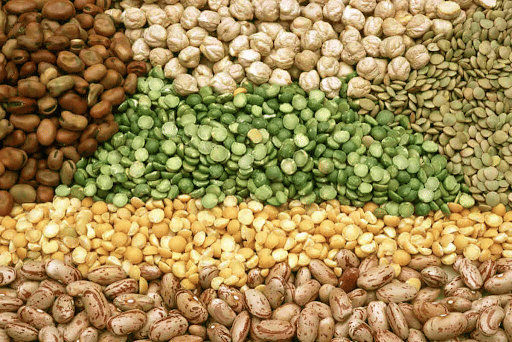
Grain Legumes
|
|
|
|---|---|
| Cereals | Cotton |
| Millets | Stem Fibres |
| Spices and Condiments | Narcotics |
| Sugar Crops | Forage Crops |
| Starch Crops | Grasses |
| Fibre Crops | Plantation Crops |
Importance of Grain Legumes
- The Leguminosae are one of humanity's most important plant families. They are the most important staple foods, and legume seed provides humans with a highly nutritious food resource.
- Furthermore, they are less expensive than animal products.
- As a result, they are consumed globally as major protein staples, particularly in low-income countries.
- Indeed, grain legumes appear to have specific therapeutic properties for phytotherapeutic use that have been described in traditional medicine books, and they are also an important component of the Mediterranean diet pattern.
- As a result, grain legumes may effectively contribute to a balanced diet and may help to prevent common illnesses such as diabetes, cardiovascular disease, and cancer.
- Peas, beans, lentils, chickpeas, and other plants that are used as food in various culinary forms are considered legumes.
- Legumes are a good source of cholesterol-free proteins.
- Legumes have a protein content that ranges between 20% and 30% of their energy, but the quality of legume protein is often underestimated due to their low sulphur amino acid content.
- However, the relatively low sulphur amino acid content (methionine, cysteine) may provide an advantage in terms of calcium retention.
- The hydrogen ions produced by sulphur amino acid metabolism cause bone demineralization and calcium excretion in the urine, indicating that legumes have a beneficial effect on bone health.
- Furthermore, the amounts of another essential amino acid, lysine, are much higher than in cereal grains, with legume and cereal proteins being nutritionally complementary in terms of lysine and sulphur amino acid contents.
- Furthermore, legumes are high in dietary fibre, which gives them low glycemic indexes.
Nutritional Value of Grain Legumes
- In terms of micronutrients, legumes are a good source of folate, iron, zinc, and calcium, though iron bioavailability is low. In general, legumes are high in complex B vitamins like thiamin, niacin, and folic acid, but low in vitamins A and E.
- Currently, legumes are being studied extensively for their content of antinutrient components such as trypsin inhibitors, hydrolase inhibitors, phytate, oligosaccharides, lectins, tannins, saponins, and isoflavones, among others.
- However, some of these antinutritive components have been linked to beneficial effects in the prevention of chronic diseases.
- As a result, in addition to providing proteins and dietary fibre, legumes may be an excellent source of natural antioxidants for disease prevention and health promotion, as well as their potential use as functional ingredients in the food industry for processing into nutraceuticals and health food.
Grain Legumes and Soil Health
- Legumes improve soil quality by increasing soil natural matter, increasing soil porosity, recycling nutrients, improving soil structure, reducing soil pH, diversifying the microscopic lives in the soil, and addressing disease and weed issues associated with grass-type crops.
- The gains are related to increased soil aggregate stability.
- Glomalin, a protein found in the roots of legumes and other plants, acts as a "glue" that holds soil together in stable aggregates.
- This aggregate stability expands pore space and tilth, lowering soil erodibility and crusting.
- Several legumes produce vigorous taproots that may reach 6-8 feet deep and half an inch in diameter, opening up passageways deep into the earth. Earthworms and the tunnels they dig are inspired by nitrogen-rich legume leftovers.
Conclusion
Grain legumes are valued for their contribution to dietary protein and micronutrient intake, as well as their benefits in providing income and replenishing soil fertility. They are easily stored and transported. They have the potential to benefit developing countries where future food demand is increasing and undernutrition and obesity coexist.
FAQs
Question: What are grain legumes, and why are they important in agriculture?
Answer: Grain legumes are plants that produce edible seeds, such as peas, lentils, chickpeas, and beans. They are crucial for sustainable agriculture because they fix nitrogen in the soil, improving soil fertility and reducing the need for synthetic fertilizers. Additionally, they provide high-protein food for humans and livestock.
Question: How do grain legumes contribute to soil health?
Answer: Grain legumes are nitrogen-fixing crops that enhance soil health. Through a symbiotic relationship with Rhizobium bacteria, they convert atmospheric nitrogen into a form that plants can use. This process reduces the dependency on chemical fertilizers and improves the overall nutrient content of the soil.
Question: What are the major grain legumes grown in India?
Answer: The major grain legumes grown in India include pulses like chickpeas, lentils, pigeon peas, and mung beans. These legumes play a vital role in Indian agriculture by providing a source of protein and supporting sustainable farming practices by improving soil fertility.
Question: What role do grain legumes play in food security?
Answer: Grain legumes are a key component of food security as they are a rich source of protein, especially in regions where animal-based protein is scarce. They contribute to balanced nutrition, support sustainable agricultural practices, and provide food in both drought-prone and resource-poor areas.
Question: What are the challenges in cultivating grain legumes?
Answer: Grain legume cultivation faces several challenges, including susceptibility to pests and diseases, inadequate irrigation infrastructure, and the need for proper soil management. Additionally, climate change and unpredictable rainfall patterns pose a threat to their consistent production in many regions.
MCQs
1. Which of the following is a primary benefit of cultivating grain legumes in agriculture?
A. Increased soil erosion
B. Nitrogen fixation in the soil
C. Increased pesticide use
D. Decreased soil fertility
Answer: (B) See the Explanation
Grain legumes are nitrogen-fixing plants, meaning they convert atmospheric nitrogen into a form that is usable by plants. This process enriches the soil, improving its fertility without the need for synthetic fertilizers.
2. Which of the following is NOT considered a grain legume?
A. Chickpea
B. Lentil
C. Wheat
D. Pigeon pea
Answer: (C) See the Explanation
Wheat is a cereal grain, not a legume. Grain legumes include chickpeas, lentils, and pigeon peas, which are known for their ability to fix nitrogen and improve soil fertility.
3. What is the primary purpose of cultivating grain legumes in crop rotation systems?
A. To prevent soil erosion
B. To improve soil nitrogen levels
C. To increase pesticide usage
D. To reduce water consumption
Answer: (B) See the Explanation
Grain legumes are often used in crop rotation systems to improve soil nitrogen levels. Through nitrogen fixation, they help restore soil nutrients, reducing the need for chemical fertilizers and improving soil health for subsequent crops.
4. Which of the following is a major challenge faced by grain legume farmers in India?
A. High yield potential
B. Low protein content
C. Pest and disease susceptibility
D. Excessive irrigation
Answer: (C) See the Explanation
Grain legumes are often vulnerable to pests and diseases, including fungal infections and insect damage. These challenges can reduce yield and affect crop quality, posing a significant issue for farmers.
5. How do grain legumes contribute to sustainable agriculture?
A. By increasing the use of chemical fertilizers
B. By reducing the need for water
C. By fixing nitrogen and improving soil fertility
D. By promoting monoculture farming
Answer: (C) See the Explanation
Grain legumes contribute to sustainable agriculture by fixing nitrogen in the soil, which reduces the need for synthetic fertilizers. This natural process enhances soil fertility and promotes environmentally friendly farming practices.
GS Mains Questions and Model Answers
Q1. Discuss the significance of grain legumes in India’s agricultural sustainability.
Answer: Grain legumes play a crucial role in ensuring agricultural sustainability in India. These crops not only provide high-protein food for humans and livestock but also improve soil health through nitrogen fixation. By incorporating legumes into crop rotation systems, farmers can reduce the dependency on chemical fertilizers, minimize soil degradation, and boost overall productivity. Additionally, grain legumes are well-suited to India’s varied climates, making them resilient to changing weather patterns. Their cultivation supports biodiversity and enhances food security, particularly in regions with limited access to animal-based protein sources.
Q2. Analyze the challenges faced by grain legume farmers in India and suggest measures to address these issues.
Answer: Grain legume farmers in India face several challenges, including pest and disease attacks, poor irrigation infrastructure, and insufficient access to quality seeds. Climate change and erratic rainfall patterns further exacerbate these problems. To address these issues, the government and agricultural agencies need to focus on providing better pest management solutions, promoting the use of drought-resistant legume varieties, and improving irrigation facilities. Additionally, increasing awareness among farmers about sustainable farming practices and offering financial support for the adoption of modern farming techniques can help improve legume production and reduce losses.
Q3. Evaluate the potential of grain legumes in enhancing India’s food security.
Answer: Grain legumes have significant potential to enhance food security in India, especially in rural and semi-urban areas. As a rich source of protein, they provide a nutritious alternative to animal-based protein, which is often expensive and inaccessible to lower-income groups. Legumes are also climate-resilient crops, which makes them an important tool in ensuring food security in the face of climate change. Their ability to fix nitrogen in the soil contributes to sustainable agriculture, which is crucial for long-term food production. By improving access to grain legumes and encouraging their cultivation, India can address both nutritional gaps and environmental sustainability challenges.
Previous Year Questions on Grain Legumes
1. UPSC CSE Prelims 2020
Question: Grain legumes are an important component of sustainable agriculture. Which of the following is the primary benefit of incorporating them into crop rotations?
A. Increased use of chemical fertilizers
B. Nitrogen fixation and improved soil health
C. Reduction in water usage
D. Enhanced crop monoculture
Answer: B
Explanation: Grain legumes are important for their ability to fix nitrogen in the soil, which enhances soil fertility and reduces the need for chemical fertilizers. This process is essential in sustainable agriculture as it promotes soil health and increases long-term productivity.
2. UPSC CSE Mains 2021 (GS Paper 3)
Question: Grain legumes are considered vital for food security and sustainable agriculture in India. Discuss the challenges in their cultivation and suggest solutions to improve production.
Answer: Grain legumes face multiple challenges, such as susceptibility to pests and diseases, lack of irrigation infrastructure, and the effects of climate change. To address these issues, the government must improve pest management systems, promote drought-resistant varieties, and expand irrigation networks. Encouraging crop diversification and offering financial incentives to farmers adopting sustainable practices can also enhance production.
Download the PREPP App and attempt FREE IAS Exam Mock Tests and get complete study material!

Full Test - 04: UPSC CSE Prelims CSAT (Paper-II)
Full Test - 03: UPSC CSE Prelims CSAT (Paper-II)
UPSC CSE Prelims 2026 CSAT Paper 2 Question Paper (24-May-2026)
UPSC CSE Prelims 2026 GS Paper 1 Question Paper (24-May-2026)

17 February 2025 | The Hindu Must Read Articles | Current Affairs

16 February 2026 | The Hindu Must Read Articles | Current Affairs

13 February 2026 | The Hindu Must Read Articles | Current Affairs









Comments