Wetland Farming - Agriculture Notes
Wetland refers to the soil that has been flooded or irrigated by a lake, pond, or canal, and the land is always submerged. Wetland agriculture is a type of farming practiced on or near water bodies as farmland. They build raised farm beds on lands near water systems. This is an intensive type of farming that necessitates constant attention and systematic treatment. This article will explain to you about Wetland Farming which will be helpful in preparing the Agriculture Syllabus for the UPSC Civil Service exam.
|
Table of Contents |
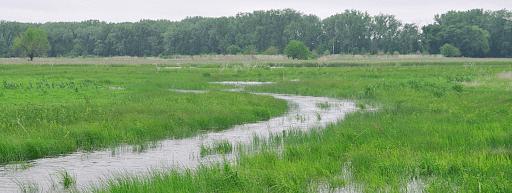
A Typical Wetland Farm
What is a Wetland?
- A wetland is a separate habitat that is permanently (for years or decades) or seasonally flooded by water (for weeks or months).
- Flooding causes oxygen-free (anoxic) processes to predominate, particularly in soils.
- Wetlands are among the most biologically diverse environments on the planet, supporting a varied spectrum of plant and animal species.
- Wetland ecosystems are transitional zones between terrestrial and aquatic ecosystems (Ecotone).
|
|
|
|---|---|
| Farming Systems | Diversified Farming |
| Dry land farming | Rain fed farming |
| Mixed Farming | Specialized Farming |
What is Wetland Farming?
- Wetland farming is the process of cultivating crops in soils that are flooded by natural water flow for the majority of the year. Major crops such as rice, jute, and sugarcane are usually grown in a wetland.
- Wetland farming is a type of agriculture carried out on or next to a body of water.
- Raised agricultural beds are used in wetlands farming, which uses adjacent land to waterways.
- This type of farming is intensive and needs ongoing attention and methodical maintenance.
- Due to the abundance of peat in these areas, wet farming will result in soil that has undergone oxidation and subsidence.
- Rice fields and grain fields on river floodplain soils are two prominent examples of how agriculture has been practiced in wetlands for ages.
Importance of Wetlands
- A variety of local and migratory bird species, as well as aquatic flora and wildlife, reside in wetland.
- Wetlands are a crucial resource for eco-friendly travel.
- They filter sediments and nutrients from surface water, as well as purify the water.
- They support local climate stabilization, groundwater recharge, and nutrient recycling:
- by regulating the rate of runoff, play a significant part in flood reduction.
- by protecting shorelines from erosion and pollution by acting as a riparian buffer.
- They serve as a genetic storehouse for numerous plant species (especially rice).
- They support fertile soils, reduce erosion, retain sediments and nutrients, and reduce the risk of salinity and acid sulphate soils.
- Encourages aquaculture or grazing.
- Provides a variety of raw materials such as timber, stock feed, salt, peat, and firewood
- Acts as natural filters in the treatment of waste water.
Challenges to Wetlands
- Changes in natural hydrological regimes influence wetlands' biodiversity and ecosystem functions.
- Reduced water availability, changing hydro-period, loss of linkage with biodiversity areas, restricted nitrogen exchange, and other factors all contribute to the degradation of natural hydrological regimes.
- Catchment degradation depletes the water holding capacity in wetlands thus affecting wetland ecosystems.
- The majority of India's inland wetlands have been overrun by exotic species, which have grown to be a nuisance and have had a significant impact on the local biota and ecological conditions.
- Example: Hyacinth (water hyacinth) is an invasive species introduced in india.
- Other factors like unsustainable harvest of wetland resources, overgrazing, unsustainable water abstraction, mining (e.g. salt, sand or laterite) also affects the wetland Ecosystem in India.
Difference Between Dry Land and Wetland Farming
| Dry Land Farming | Wetland Farming |
|---|---|
| In India, dryland farming is typically practiced in areas with less than 75 cm of annual rainfall. | Wetland farming is practiced in areas with more than 75 cm of annual rainfall. |
| Drought is a problem in dry land farming because there is a lack of moisture in the soil even during the rainy season. | Flood and soil erosion are problems in wetland farming because the soil is wet during the rainy season and there is an abundance of water. |
| Many methods are used in dryland farming to conserve soil moisture and make efficient use of rainwater even during the rainy season. | Wetland agriculture does not require as many methods. |
| Majority of Gujarat, Rajasthan, and Maharashtra have significant dry land areas. | Bihar, Uttar Pradesh, West Bengal, and other states have significant wetlands farming areas. |
| In dryland farming, coarse and drought-resistant crops such as ragi are grown. | In wetland farming, various water-intensive and fine crops such as paddy and jute are grown. |
| Ragi, Bajra, moong, gramme, and guar (fodder crops) are important dry land crops. | Rice, jute, and sugarcane are important wetland crops. |
National Wetlands Conservation Programme (NWCP)
- The National Wetlands Conservation Program aims to protect wetlands around the country.
- The National Wetlands Conservation Programme was implemented in 1985-86.
- Wetland management is the responsibility of state governments/UT administrations because the land resources belong to them.
- The Ministry has designated 115 wetlands in 24 States and 2 Union Territories of the nation for conservation and management under the National Wetlands Conservation Programme (NWCP).
- It also provides state governments with guidelines, financial and technical aid.
- The criteria for identifying wetlands of national significance under the NWCP are the same as under the Ramsar Convention on Wetlands.
- The overall coordination of wetland conservation programs is the responsibility of the central government.
Conclusion
Wetlands have been used for agriculture for thousands of years. They provide a variety of valuable ecosystem services, such as food and clean water provision, soil retention, and nutrient cycling. Thus, wetlands must be protected and wetland farming must be encouraged in order for mankind to make use of the countless benefits, or "ecosystem services," that they provide, such as freshwater supply, food and building materials, biodiversity, flood control, groundwater recharge, and climate change mitigation.
FAQs
Q1: What is wetland farming?
Answer: Wetland farming involves cultivating crops in wetland areas, utilizing the unique ecological conditions of these regions to enhance agricultural productivity.
Q2: What are the benefits of wetland farming?
Answer: It improves soil fertility, enhances biodiversity, helps in water conservation, and can provide habitat for wildlife.
Q3: Which crops are typically grown in wetland farming?
Answer: Common crops include rice, certain vegetables, and aquatic plants that thrive in water-saturated soils.
Q4: How does wetland farming contribute to food security?
Answer: By utilizing otherwise unproductive land, it increases agricultural output and provides a source of livelihood for communities.
Q5: What challenges does wetland farming face?
Answer: Challenges include water management, soil salinity, climate change impacts, and competition for land use.
MCQs
- Which of the following is a primary benefit of wetland farming?
a) Decreased biodiversity
b) Soil degradation
c) Enhanced water conservation
d) Increased salinity
Answer: (C) See the Explanation
- What is a common crop grown in wetland farming?
a) Wheat
b) Maize
c) Rice
d) Barley
Answer: (C) See the Explanation
- How does wetland farming support biodiversity?
a) By reducing habitat areas
b) By promoting monoculture
c) By providing habitats for various species
d) By increasing pollution
Answer: (C) See the Explanation
- What challenge is commonly faced in wetland farming?
a) Overabundance of freshwater
b) High soil fertility
c) Soil salinity
d) Lack of crop diversity
Answer: (C) See the Explanation
- Which of the following practices is beneficial for wetland farming?
a) Monoculture
b) Crop rotation
c) Use of chemical fertilizers only
d) Excessive water extraction
Answer: (B) See the Explanation
GS Mains Questions and Model Answers
Q1: Evaluate the role of wetland farming in enhancing agricultural productivity and sustainability.
Answer: Wetland farming plays a significant role in enhancing agricultural productivity by utilizing the unique characteristics of wetland ecosystems. This practice improves soil fertility through the natural deposition of nutrients and enhances biodiversity by providing habitats for various species. Furthermore, wetland farming supports water conservation and management, crucial in regions facing water scarcity. Sustainable practices in wetland farming can mitigate environmental impacts while ensuring food security, thus contributing to a balanced ecosystem and promoting resilience against climate change.
Q2: Discuss the challenges associated with wetland farming and potential solutions.
Answer: Wetland farming faces several challenges, including soil salinity, water management issues, and competition for land use. Salinity can hinder crop growth, while inadequate water management can lead to drought or flooding. To address these challenges, integrated water resource management practices can be implemented to ensure optimal use of water resources. Additionally, developing salt-tolerant crop varieties and promoting agro-ecological practices can enhance the sustainability of wetland farming. Stakeholder involvement in decision-making is essential for balancing agricultural needs with environmental conservation.
Q3: Analyze the impact of climate change on wetland farming and its implications for food security.
Answer: Climate change poses significant threats to wetland farming through altered precipitation patterns, rising temperatures, and increased flooding. These changes can affect crop yields and the viability of wetland ecosystems. The increased frequency of extreme weather events can disrupt farming activities, leading to potential food shortages. To mitigate these impacts, adaptive strategies such as diversifying crops, implementing resilient farming practices, and investing in climate-smart agriculture are crucial. By addressing these challenges, wetland farming can continue to play a vital role in ensuring food security in a changing climate.
Previous Year Questions on Wetland Farming
1. UPSC CSE 2019
Question: "Discuss the significance of wetland ecosystems in agricultural practices."
Answer: Wetland ecosystems are critical for sustainable agriculture as they provide essential services such as water filtration, flood control, and habitat for diverse species. The rich biodiversity within wetlands supports various crops, particularly rice, which thrives in wet conditions. Additionally, wetlands enhance soil fertility through natural nutrient cycling, contributing to higher agricultural productivity. The integration of wetland farming practices can improve resilience against climate change by promoting biodiversity and sustaining water resources, thus playing a vital role in food security and environmental health.
2. UPSC CSE 2021
Question: "Examine the relationship between wetland farming and food security in India."
Answer: Wetland farming is intrinsically linked to food security in India, as wetlands cover a significant portion of the country's agricultural land. These ecosystems support the cultivation of staple crops like rice and provide essential resources for livelihoods. By utilizing wetland areas, farmers can enhance production while promoting biodiversity and environmental sustainability. However, challenges such as soil salinity, water scarcity, and climate change threaten the viability of wetland farming. Addressing these challenges through sustainable practices and policy support is crucial for ensuring food security and maintaining ecological balance.
Download the PREPP App and attempt FREE IAS Exam Mock Tests and get complete study material!

Full Test - 04: UPSC CSE Prelims CSAT (Paper-II)
Full Test - 03: UPSC CSE Prelims CSAT (Paper-II)
UPSC CSE Prelims 2026 CSAT Paper 2 Question Paper (24-May-2026)
UPSC CSE Prelims 2026 GS Paper 1 Question Paper (24-May-2026)

17 February 2025 | The Hindu Must Read Articles | Current Affairs

16 February 2026 | The Hindu Must Read Articles | Current Affairs

13 February 2026 | The Hindu Must Read Articles | Current Affairs









Comments