Specialized Farming - Agriculture Notes
Specialized Farming refers to a farm where 50% or more of the entire production's income comes from a single activity. The main objective behind specialized farming is to generate more income. Specialized farming is best suited to specific soil, climate, topography, and other physical conditions such as market type. This article will explain to you about Specialized Farming which will be helpful in preparing the Agriculture Syllabus for the UPSC Civil Service exam.
|
Table of Contents |
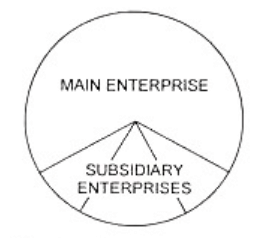
Specialized Farming
What is Specialized Farming?
- A specialized farm is one that derives 50% or more of its receipts/income from a single source. For example crops, cattle, dairy, poultry, etc.
- We can define specialisation as the production of only one commodity for market, so that the farmer is primarily dependent on a single source of income.
- For this farming, specialized market channels and stable economic conditions are required.
- Names are frequently given to primary crops or businesses whose farm income is greater than 50% of the total farm income.
- A farm that earns 50% or more of its income from sugarcane is classified as a sugarcane farm, while one that earns 50% or more of its income from vegetables is classified as a vegetable farm.
- Such farming offers labor and skill efficiency, as well as benefits for improved land use, farm management, marketing, food processing, transportation, and financing.
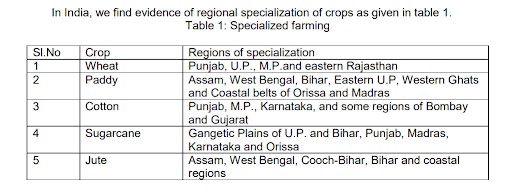
Specialization of Crops in India
|
|
|
|---|---|
| Wetland farming | Diversified Farming |
| Dry land farming | Rain fed farming |
| Mixed Farming | Farming Systems |
Specialized Farming - Advantages
- Better Use of Land: It is more advantageous to grow crops on land that is best suited for specialized streams.
- Better Marketing: As it enables the product to be graded, processed, stored, transported, and financed, it offers better marketing opportunities.
- Less Equipment and Labour: Specialized Farming usually does not require specialized equipment and highly skilled workers.
- Increased Efficiency & Skill of the Labor: Specialization makes it possible for a worker to be more effective and skilled at completing a certain number of tasks.
- Easy Maintenance: As specialized farming focuses more on a single activity, it is simple to manage farm records.
- Large Output: A relatively large volume of output results from high production intensity.
- Better Management: With fewer businesses to manage on the farm, sources of waste are more likely to be found and eliminated.
Specialized Farming - Disadvantages
- Seasonal Less Demand: When a crop fails and the market price of the commodity drops, there is less demand for the product.
- Lack of Soil Fertility: Due to a lack of crop rotation, soil fertility cannot be maintained.
- Irregular income: The farm's income is inconsistent because they only receive payments once or twice a year.
- Improper Resource Utilization: Productive resources such as land, labour, and capital are underutilised unlike diversified farming where the focus is on varied fields.
- Knowledge of Other Activities: Because a single activity is so specialized, understanding other businesses is irrelevant.
- Due to a lack of livestock on the farm, farm byproducts cannot be fully utilised.
- The general understanding of farm enterprises becomes limited.
Conclusion
Though specialized farming assists farmers in generating more income and reduces associated issues, it does not come without its challenges. Above all, specialized farming does not assist in meeting all of the farmer's family's food needs. A trend toward specialised farming is visible in areas with unique market outputs and where economic conditions have been fairly consistent for a long time.
FAQs
Question: What is specialized farming?
Answer: Specialized farming refers to agricultural practices that focus on the cultivation of specific crops or the raising of particular types of livestock to optimize production and profitability. This approach allows farmers to concentrate their resources, knowledge, and efforts on a limited range of products, enhancing efficiency and potentially leading to higher quality outputs. Examples include organic farming, horticulture, viticulture (grape growing), and dairy farming, where specific techniques and practices are applied to maximize yield and quality.
Question: What are the advantages of specialized farming?
Answer: The advantages of specialized farming include:
- Increased Efficiency: Focusing on specific crops or livestock can lead to better use of resources and time.
- Enhanced Quality: Specialized techniques can improve the quality of the produce, making it more appealing to consumers.
- Higher Profit Margins: By targeting niche markets, farmers can often command higher prices for specialized products.
- Better Knowledge and Expertise: Farmers can develop deeper expertise in their chosen field, improving overall management practices.
- Market Adaptability: Specialized farms can quickly adapt to changing market demands and trends.
Question: What are some common types of specialized farming?
Answer: Common types of specialized farming include:
- Organic Farming: Focuses on growing crops without synthetic fertilizers or pesticides.
- Horticulture: Involves the cultivation of fruits, vegetables, and ornamental plants.
- Viticulture: The study and cultivation of grapevines, primarily for winemaking.
- Dairy Farming: Specializes in the production of milk and dairy products.
- Aquaculture: The farming of aquatic organisms such as fish, crustaceans, and plants.
Question: What challenges do specialized farms face?
Answer: Specialized farms encounter several challenges, including:
- Market Vulnerability: Relying on a single product can make farmers susceptible to market fluctuations and changes in consumer preferences.
- Dependency on Specific Inputs: Specialized farming often requires specific seeds, feed, or techniques, which may be costly or hard to obtain.
- Environmental Risks: Focusing on one type of farming can lead to soil degradation, pest outbreaks, or increased susceptibility to diseases.
- Initial Investment Costs: Transitioning to specialized farming methods may involve significant initial costs for training and equipment.
- Regulatory Challenges: Farmers may need to navigate complex regulations related to specialized practices, such as organic certification.
Question: How does specialized farming contribute to sustainable agriculture?
Answer: Specialized farming contributes to sustainable agriculture by promoting efficient use of resources, reducing waste, and often utilizing practices that enhance environmental health. By focusing on specific crops or livestock, farmers can implement tailored management strategies that improve soil health and biodiversity. Specialized practices, such as organic farming, reduce the use of harmful chemicals, supporting ecological balance. Additionally, specialized farms often emphasize local markets, reducing the carbon footprint associated with transportation and encouraging community-supported agriculture. Overall, specialized farming can lead to more sustainable food systems by prioritizing quality and environmental stewardship.
MCQs
1. What is the primary focus of specialized farming?
A) Crop diversity
B) Monoculture of specific crops
C) Livestock management only
D) Large-scale farming
Answer: See the Explanation
Explanation: The primary focus of specialized farming is on the monoculture of specific crops or the focused management of certain types of livestock.
2. Which of the following is an example of specialized farming?
A) Mixed farming
B) Horticulture
C) Extensive agriculture
D) Subsistence farming
Answer: See the Explanation
Explanation: Horticulture is an example of specialized farming as it focuses on the cultivation of specific fruits, vegetables, and ornamental plants.
3. What is a potential disadvantage of specialized farming?
A) Diversification
B) Market vulnerability
C) Increased biodiversity
D) Resource efficiency
Answer: See the Explanation
Explanation: A potential disadvantage of specialized farming is market vulnerability, as reliance on a single product can expose farmers to risks from market fluctuations.
4. How does specialized farming support sustainable agriculture?
A) By promoting monoculture
B) By enhancing local markets
C) By increasing dependency on pesticides
D) By focusing solely on profit
Answer: See the Explanation
Explanation: Specialized farming supports sustainable agriculture by enhancing local markets, reducing chemical usage, and implementing practices that improve environmental health.
5. What is a common type of specialized farming?
A) Livestock grazing
B) Mixed crop and livestock
C) Organic farming
D) Dryland farming
Answer: See the Explanation
Explanation: Organic farming is a common type of specialized farming that emphasizes the use of organic methods for growing crops without synthetic chemicals.
GS Mains Questions and Model Answers
Q1: Evaluate the significance of specialized farming in India's agricultural landscape.
Answer: Specialized farming plays a crucial role in India's agricultural landscape by enhancing productivity and economic viability. It allows farmers to focus on specific crops or livestock, optimizing resource use and increasing yields. This targeted approach can lead to higher quality produce, which can command better prices in the market, thus improving farmers' income. Additionally, specialized farming can help in addressing specific market demands and consumer preferences, promoting niche products that differentiate Indian agriculture in the global market. The success of specialized farming is evident in sectors like horticulture and organic farming, which have gained prominence and contributed to sustainable agricultural practices while supporting rural livelihoods.
Q2: Discuss the challenges faced by farmers engaged in specialized farming.
Answer: Farmers engaged in specialized farming face several challenges, including market vulnerability due to reliance on a single product, which can be susceptible to price fluctuations and changing consumer preferences. Initial investment costs for specialized equipment and seeds can also pose financial barriers, particularly for smallholder farmers. Additionally, specialized farming practices may require advanced knowledge and skills, making it essential for farmers to access training and resources. Environmental risks, such as pest outbreaks or soil depletion, are also significant concerns. To mitigate these challenges, it is crucial to provide support in the form of extension services, access to credit, and market information, enabling farmers to adapt and thrive in a competitive agricultural environment.
Q3: Analyze the impact of climate change on specialized farming practices in India.
Answer: Climate change poses significant risks to specialized farming practices in India by altering weather patterns, affecting crop yields, and increasing the frequency of extreme weather events. Changes in temperature and precipitation can disrupt the growth cycles of specialized crops and livestock, leading to reduced productivity. For example, horticultural crops that require specific climatic conditions may suffer from heat stress or insufficient water availability. Additionally, climate change can exacerbate pest and disease pressures, posing further challenges to farmers. To address these impacts, farmers may need to adopt climate-resilient practices, such as diversifying crops, implementing water-saving technologies, and using integrated pest management strategies. Government policies and support systems should focus on promoting sustainable practices that enhance the adaptability of specialized farming to changing climatic conditions.
Previous Year Questions on Specialized Farming
1. UPSC CSE Prelims 2021:
Question: What is the primary focus of specialized farming?
A) Crop diversity
B) Monoculture
C) Extensive farming
D) Organic gardening
Answer: (B)
Explanation: The primary focus of specialized farming is on monoculture, where a single crop is cultivated extensively to optimize production.
2. UPSC CSE Mains 2019 (GS Paper 1):
Question: "Evaluate the role of specialized farming in enhancing food security in India." Discuss its implications for rural development.
Answer: Specialized farming plays a pivotal role in enhancing food security in India by allowing farmers to increase the production of specific food items that meet the demand of a growing population. By focusing on high-yield crops or livestock, specialized farmers can contribute to the overall food supply and nutritional diversity. The implications for rural development are significant, as specialized farming can improve farmers' incomes and livelihoods, support local economies, and create jobs in the agricultural sector. However, to ensure that specialized farming effectively contributes to food security, it is essential to address the challenges of market access, price volatility, and environmental sustainability, promoting resilience within rural communities.
Download the PREPP App and attempt FREE IAS Exam Mock Tests and get complete study material!

Full Test - 04: UPSC CSE Prelims CSAT (Paper-II)
Full Test - 03: UPSC CSE Prelims CSAT (Paper-II)
UPSC CSE Prelims 2026 GS Paper 1 Question Paper (24-May-2026)
UPSC CSE Prelims 2026 CSAT Paper 2 Question Paper (24-May-2026)

17 February 2025 | The Hindu Must Read Articles | Current Affairs

16 February 2026 | The Hindu Must Read Articles | Current Affairs

13 February 2026 | The Hindu Must Read Articles | Current Affairs









Comments