Tillage - Agriculture Notes
Tillage is a method of preparing the soil for crop production by manipulating it. The goal is to manage soil properties such as water retention, temperature, infiltration, and evapotranspiration. Tillage is an important practice for producing high-quality agricultural products. It is the agricultural preparation of soil through various types of mechanical agitation, such as digging, stirring, and overturning. Tillage methods are generally classified as either primary or secondary. This article will explain to you about Tillage which will be helpful in preparing the Agriculture Syllabus for the UPSC Civil Service exam.
|
Table of Contents |
What is Tillage?
- Tillage is man's oldest and most fundamental agricultural activity, preparing virgin or fallow land for crop cultivation.
- Tillage is the mechanical manipulation of soil with tools and implements in order to create ideal conditions for seed germination, seedling establishment, and crop growth.
- Tilth is the physical state of soil that results from tillage (or is the result of tillage). A coarse tilth, fine tilth, or moderate tilth is possible, based on the crop requirements and the soil where we are cultivating.
- Primary tillage is deeper and more thorough, whereas secondary tillage is shallower and sometimes more selective in location.
- Primary tillage, such as ploughing, produces a rough surface finish, whereas secondary tillage, such as that required to make a good seedbed for many crops, produces a smoother surface finish.
- Harrowing and rototilling frequently combine primary and secondary tillage.
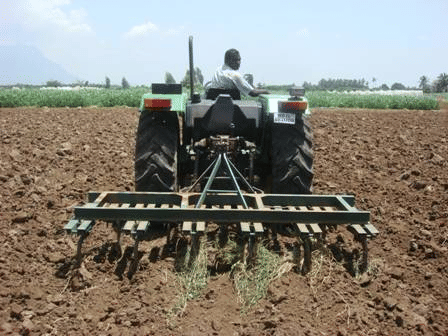
Tillage
|
|
|
|---|---|
| Types of tillage | Blind tillage |
| Clean tillage | Zero tillage (No tillage) |
Types of Tillage
Tillage operations may be grouped into:
- Primary tillage
- Secondary tillage
Primary tillage
- The first soil tillage after harvest is known as primary tillage.
- It is usually done when the soil is wet enough to allow ploughing and strong enough to provide adequate traction.
- This could be done immediately following crop harvest or at the start of the next wet season.
- Some soil types are ploughed dry when enough power is available.
- Ploughing is the process of breaking up compact soil with various ploughs.
- Primary tillage is accomplished with a country plough, mould board plough, bose plough, tractor, and power tiller.
Secondary tillage
- Secondary tillage refers to the tillage operations performed on the soil after primary tillage to improve soil tilth.
- It is done for a variety of reasons such as, clod size reduction, control of weeds, fertiliser incorporation, and surface levelling of soil.
- Harrowing and planking are done for these purposes.
- Secondary workings are typically shallower and gentler than primary tillage.
*For detailed notes of this topic, check this link Types of tillage
Other Types of Tillage
Clean Tillage
- It refers to the process of working the soil of an entire field in such a way that no living plant is left undisturbed.
- It is used to control weeds, pathogens in the soil, and pests.
*For detailed notes of this topic, check this link Clean tillage
Blind Tillage
- This is tillage done after seeding or planting the crop (in a sterile soil) at the pre-emergence stage of the crop plants or while they are in the early stages of growth so that crop plants (cereals, tuber crops, etc.) are not damaged but extra plants and broad leaved weeds are uprooted.
*For detailed notes of this topic, check this link Blind tillage
No Tillage (Zero Tillage)
- This method involves planting a new crop in the residues of the previous crop without any prior soil tillage or seed bed preparation, and it is feasible when all weeds are controlled with herbicides.
*For detailed notes of this topic, check this link Zero tillage (No tillage)
Benefits of Tillage
Physical Benefits
- To create a suitable seedbed for planting, cut loose, shelter the dense soil to the desired depth, and break the clods and crust to the desired extent.
- To cover and pack soil around seeds or planting propagates.
- To enhance soil's ability to receive rain or irrigation water, retain and release moisture for crop plants, or increase percolation or drying of excess soil water.
- Redistribute soil constituents such as soil particles, organic matter, microorganisms, moisture, and air.
- To keep the soil in good structural condition.
- Crop residues, green manure, and other organic manure fertilisers will be incorporated.
- To prepare the land surface so that irrigation and drainage water can be distributed easily, quickly, and uniformly.
- To improve soil aeration, especially in non-capillary spaces.
- To reduce soil erosion, degradation, and depletion.
- To change the soil's thermal capacity.
Chemical Benefits
- To hasten the weathering of soil.
- To increase the availability of plant nutrients by promoting organic matter decomposition, mineralization, and other processes.
- To remove toxic gases from the prolonged reduced soil conditions and to cleanse the soil of any agrochemical harm.
- Reclaiming troubled soils.
Biological Benefits
- Controlling soil-borne insect pests, pathogens, and larger soil animals such as rodents.
- To improve nutrient distribution.
- The moist zone of the soil is affected to improve root growth by reducing soil penetration resistance and promoting root respiration.
- To create an ideal environment that promotes early and uniform growth and seedling establishment.
- To improve crop plant anchorage and underground development of storage roots and stems.
- To promote the growth and activity of soil-dwelling flora and fauna, including symbiotic bacteria.
- To create appropriate conditions for necessary field operations, such as planting and harvesting quickly, smoothly, and uniformly.
Negative Impact of Tillage
- While one of the reasons farmers use tillage is to increase the number of available nutrients in the soil, recent research has found that the process has a negative impact on soil quality.
- This is because the tillage process fractures the soil, disrupting its structure. This increases the rate of surface runoff while also increasing soil erosion.
- Increased surface runoff can be harmful to farmers who live in areas with low rainfall because increased levels of runoff lower the water table, exacerbating the effects of droughts.
- The churned-up soil is also more vulnerable to wind and rain, which blows and washes away the soil because it no longer has a strong structure.
- Tillage also removes crop residue, which normally protects the topsoil from the force of raindrops.
- As a result, higher percentages of topsoil are removed, lowering soil quality, reducing fertility, and polluting nearby bodies of water as the eroded soil deposits itself.
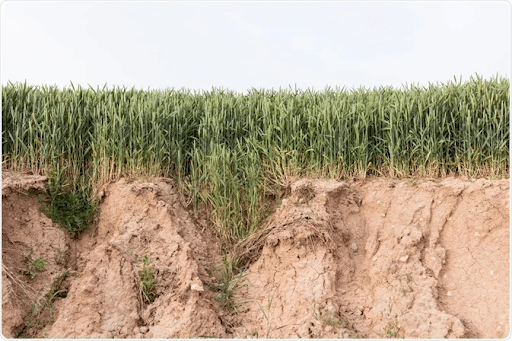
Negative Impact of Tillage
Impact of Tillage on Global Warming
- One significant disadvantage of using tillage techniques is that it contributes to global warming.
- Carbon dioxide is normally stored in soil, but the process of churning it up releases this normally trapped carbon dioxide into the atmosphere, increasing greenhouse gas emissions.
- If agriculture stopped using this method, the carbon would remain in the ground, and agricultural emissions would be significantly reduced.
- New digital tools are being developed to assist farmers in weed control and herbicide application.
- Alternatives to tillage are likely to be investigated further; for example, researchers are currently investigating the benefits of non-tillage methods in growing a variety of crops.
Conclusion
Land preparation, also known as soil tillage, is one of the most costly and critical operations performed on a farm each season. Land preparation encompasses a wide range of soil disturbances, from zero-tillage, which minimises soil disturbance, to completely puddled soil, which destroys soil structure. It is critical to have clearly defined short and long-term objectives when selecting a tillage system. Agriculture will likely move away from tillage techniques in the future, relying on new technologies to maintain the benefits of tillage while avoiding the carbon emissions and soil damage associated with the process.
FAQs
Question: What is tillage in agriculture?
Answer: Tillage is the agricultural preparation of soil by mechanical agitation of various types, such as digging, stirring, and overturning. It helps in loosening the soil, improving aeration, increasing water absorption, and facilitating the incorporation of fertilizers, organic matter, and plant residues into the soil. Tillage is an essential activity for seedbed preparation and for controlling weeds and pests in crops.
Question: What are the two main types of tillage?
Answer: The two main types of tillage are:
- Conventional tillage: It involves deep plowing, turning the soil over, and breaking it down to a fine tilth to prepare the seedbed.
- Conservation tillage: It minimizes soil disturbance by leaving crop residue on the soil surface, which helps prevent erosion and retain moisture.
Question: Why is tillage important for soil health?
Answer: Tillage is important for improving soil health as it helps break down compacted soil layers, promotes better root penetration, and enhances the infiltration of water and air into the soil. It also helps in managing weeds and pests and promotes better nutrient uptake by plants. However, excessive tillage can lead to soil degradation, reduced organic matter, and erosion, so it should be practiced with care to maintain soil health.
Question: What are the disadvantages of excessive tillage?
Answer: Excessive tillage can result in soil degradation, loss of soil structure, erosion, and depletion of organic matter. It can also lead to compaction of deeper soil layers, reducing root growth and water retention. Over-tilling can also disturb beneficial soil organisms, reduce biodiversity, and contribute to carbon emissions through the breakdown of organic material.
Question: What is no-till farming?
Answer: No-till farming is a method of growing crops without disturbing the soil through tillage. Instead, seeds are directly sown into the soil, leaving the soil undisturbed. This method helps conserve moisture, reduce soil erosion, and preserve soil structure. It also minimizes the use of fuel and machinery, making it more sustainable in the long term.
MCQs
1. Which of the following is a benefit of conservation tillage?
A) Increases soil compaction
B) Reduces water retention
C) Prevents soil erosion
D) Destroys organic matter
Answer: (C) See the Explanation
Explanation: Conservation tillage helps prevent soil erosion by leaving crop residue on the soil surface, which protects it from wind and water erosion, improves water retention, and increases soil organic matter.
2. What is the primary purpose of tillage in agriculture?
A) Soil preservation
B) Seedbed preparation
C) Pest control
D) Erosion prevention
Answer: (B) See the Explanation
Explanation: The primary purpose of tillage is to prepare a suitable seedbed by loosening the soil, facilitating root growth, and ensuring proper seed planting depth.
3. No-till farming is best suited for which of the following?
A) Crop residue management
B) Heavy clay soils
C) Soil erosion control
D) High water retention soils
Answer: (C) See the Explanation
Explanation: No-till farming is particularly beneficial for soil erosion control. By not disturbing the soil, crop residues are left to protect the soil from wind and water erosion, which is especially useful in areas prone to erosion.
4. Which type of tillage involves minimal disturbance to the soil?
A) Deep tillage
B) Conservation tillage
C) Conventional tillage
D) Shallow tillage
Answer: (B) See the Explanation
Explanation: Conservation tillage involves minimal soil disturbance and leaves crop residues on the soil surface to reduce erosion, improve soil health, and conserve moisture.
5. What is the main disadvantage of excessive tillage?
A) Soil erosion
B) Improved water retention
C) Increased soil biodiversity
D) Enhanced organic matter
Answer: (A) See the Explanation
Explanation: Excessive tillage can lead to soil erosion as it disturbs the soil structure and removes protective cover, making it more susceptible to wind and water erosion.
GS Mains Questions and Model Answers
Q1: Analyze the role of tillage in modern agriculture. Discuss the advantages and disadvantages of conventional tillage versus no-till farming.
Answer: Tillage plays a vital role in preparing the soil for planting, controlling weeds, and improving water and air movement in the soil. Conventional tillage, which involves deep plowing, breaks up the soil and prepares a fine seedbed, but it also disrupts soil structure, reduces organic matter, and increases the risk of soil erosion. On the other hand, no-till farming eliminates the need for soil disturbance, preserving soil structure and organic matter, enhancing water retention, and reducing erosion. However, no-till farming may require greater initial investment in equipment and can sometimes lead to increased weed pressure. Sustainable farming practices must balance the benefits of tillage and conservation techniques to ensure long-term soil health.
Q2: Discuss the environmental implications of excessive tillage. How can conservation tillage help mitigate these effects?
Answer: Excessive tillage can result in environmental problems such as soil erosion, degradation of soil structure, loss of organic matter, and increased carbon emissions. It disturbs soil organisms and leads to the compaction of deeper soil layers. Conservation tillage, which involves minimal soil disturbance and leaving crop residues on the soil surface, can help mitigate these effects by improving water retention, enhancing soil organic matter, preventing erosion, and promoting the biodiversity of soil organisms. This practice reduces fuel consumption, lowers carbon emissions, and is more sustainable in the long term.
Q3: Explain the difference between conventional tillage and no-till farming. How do they affect soil health and agricultural productivity?
Answer: Conventional tillage involves frequent disturbance of the soil to break up compacted layers and prepare seedbeds, which may help with weed control but also leads to soil erosion, depletion of organic matter, and compaction of deeper soil layers. No-till farming eliminates soil disturbance, which helps maintain soil structure and organic matter but may require more advanced techniques for weed control. While conventional tillage can lead to short-term productivity increases, no-till farming is a more sustainable option for maintaining long-term soil fertility, water retention, and biodiversity, albeit with potential trade-offs in the form of higher initial costs and more complex weed management.
Previous Year Questions on Tillage
1. UPSC CSE Prelims 2021:
Question: Which of the following is a key feature of no-till farming?
A) Disturbance of soil structure
B) Use of plowing for soil preparation
C) Leaving crop residues on the soil surface
D) Increase in water usage
Answer: (C)
Explanation: No-till farming involves leaving crop residues on the soil surface to help prevent erosion, improve water retention, and preserve soil structure.
2. UPSC CSE Mains 2019 (GS Paper 3):
Question: Examine the relationship between tillage practices and soil erosion. How do no-till farming practices contribute to soil conservation?
Answer: Tillage practices, particularly conventional ones, contribute to soil erosion by disturbing the soil structure, making it more susceptible to wind and water erosion. No-till farming, by contrast, helps prevent soil erosion by maintaining soil structure and keeping crop residues on the surface. This practice not only reduces erosion but also enhances water retention and organic matter in the soil, contributing to long-term soil health and sustainability.
Download the PREPP App and attempt FREE IAS Exam Mock Tests and get complete study material!

Full Test - 04: UPSC CSE Prelims CSAT (Paper-II)
Full Test - 03: UPSC CSE Prelims CSAT (Paper-II)
UPSC CSE Prelims 2026 GS Paper 1 Question Paper (24-May-2026)
UPSC CSE Prelims 2026 CSAT Paper 2 Question Paper (24-May-2026)

17 February 2025 | The Hindu Must Read Articles | Current Affairs

16 February 2026 | The Hindu Must Read Articles | Current Affairs

13 February 2026 | The Hindu Must Read Articles | Current Affairs









Comments