Permaculture - Agriculture Notes
The term "permaculture" refers to a planned system of farming and habitation that tries to emulate the interdependencies and sustainability of natural ecosystems. When compared to intensive agriculture, which eventually renders land unusable for farming and steadily reduces the amount of land suitable for human habitation, permaculture is considered the superior method. The goal of permaculture is to maximize the use of land so that it can be used productively for food production or personal subsistence by future generations. It incorporates techniques from a variety of fields, including organic farming, agroforestry, composting, mulching, integrated farming, sustainable development, and applied ecology. This article will explain you Permaculture which will be helpful in preparing the Agriculture Syllabus for the UPSC Civil Service exam.
|
Table of Contents |
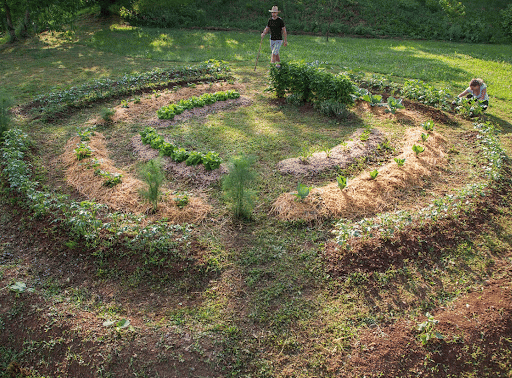
Permaculture Gardens
What is Permaculture?
- In the 1970s, two Australians by the names of Bill Mollison and David Holmgren coined the term "permaculture."
- The term is a contraction and combining of the words permanent agricultural or permanent culture.
- It is defined as a design system for creating human environments that are sustainable.
- It designs integrated systems of food production, housing, appropriate technology, and community development on the basis of ecology.
- Permaculture is based on the idea of caring for the earth and interacting with nature in mutually beneficial ways.
- The design of ecological landscapes that produce food is a central theme in Permaculture.
- The use of multi-purpose plants, cultural practices such as sheet mulching and trellising, and the incorporation of animals to recycle nutrients and graze weeds are all highlighted.
- The permaculture ideology has roots in the ancient Indian way of living in the Indian environment.
- According to the permaculture principles, one should observe and engage with nature, get a yield, capture and store energy, take inspiration from natural patterns, produce zero waste, accept criticism, and regulate oneself.
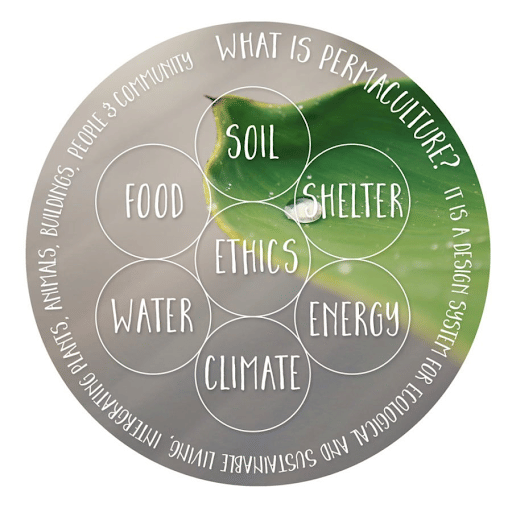
Permaculture Design System
Permaculture - Key Features
- It is one of the most comprehensive, integrated systems analysis and design methodologies available anywhere in the world.
- It can be used to create productive ecosystems for human use or to help degraded ecosystems recover their health and wildness.
- It can be used in any ecosystem, regardless of how degraded it is.
- Traditional knowledge and experience are valued and validated.
- Sustainable agriculture practices and land management techniques and strategies from around the world are incorporated.
- It serves as a link between traditional and emerging earth-tuned cultures.
- It advocates for pesticide-free organic agriculture.
- It seeks to maximize symbiotic and synergistic interactions among site components.
- It is designed for a specific location, client, and culture.
Permaculture - Core Values
- Care for Planet: It entails understanding that the Earth is the source of all life and may perhaps be a living being herself, and treating her with respect as such.
- Care for People: This includes supporting and assisting one another in making lifestyle changes that do not endanger ourselves or the environment and realising that we are an integral part of the Earth rather than something separate from it.
- Fair Share: By ensuring that the Earth's finite resources are used in an equal and sensible manner, it aims to restrict consumption.
Permaculture - Principles
Observe and Interact
- To better understand the various parts of nature's system, this entails observing nature and creating distinct point of views.
Catch and Store Energy
- This principle stands for creating systems that gather and store resources while they are in abundance so they can be used in times of need or when the resources become rare.
Obtain a Yield
- According to this idea, we must always make ourselves useful and strive to receive beneficial compensation for the task we accomplish.
Apply Self-regulation and Feedback
- This principle states that in order for systems to continue to serve the correct purpose and satisfactorily as they are supposed to, we as humans must continually discourage incorrect behaviour or activity.
- Negative feedback is eliminated by this idea. It states that any feedback should be applied to improve the system.
Use and Value Renewables
- This idea educates people to make the best use of nature's abundance to lessen their consumption habits and reliance on non-renewable energy sources.
- It also aims to use and value renewable sources.
Produce No Waste
- According to this principle, nothing should be wasted if value is assigned to each resource and it is used as effectively as possible.
- Reduced spending, resource depletion, and reliance on new resources, commodities, and utilities would all arise from this.
Design from Patterns to Details
- According to this principle, our environment is made up of patterns. By studying patterns and according to the permaculture principle "observe and interact," one can start to comprehend how patterns connect all events.
- The patterns seen in nature allow energy to circulate, allow life to be self-sustaining and self-perpetuating, and are a natural reaction to their surroundings.
- If one does not stick to these natural rhythms, he/she blocks the flow of energy and create more labour and lesser yields.
- As we continue to notice patterns in nature and in society, we may use these patterns as the foundation for our designs and continue to make improvements.
Integrate Don’t Segregate
- The proper items should be put in the right places in order to maintain order, according to this notion.
- This is due to its conviction that things are associated with one another and frequently cooperate with one another to help one another.
Use Small, Slow Solutions
- The goal of this principle is to emphasise the value of and efficiency of smaller systems.
- According to this, managing small, slow systems is simpler than managing fast ones, which improves the use of local resources and advances the development of more sustainable outcomes.
Use and Value Diversity
- To lessen exposure to a multitude of threats and to both exploit and explore the uniqueness of nature, this idea compels us to embrace and respect diversity.
Use Edges and Value the Marginal
- According to this principle, yield can be increased or improved by utilising the most varied, useful, and productive components through edges and giving margins a value.
Creatively Use and Respond to Change
- This principle advocates keeping a close watch on the systems and taking the best possible action when it's time to intervene.
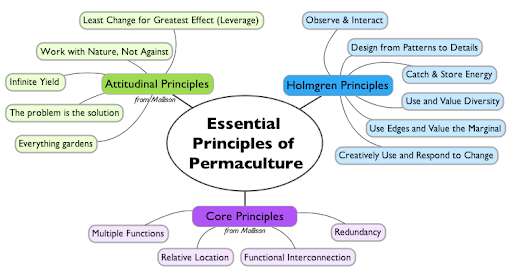
Principles of Permaculture
How Permaculture is Different from Organic Farming?
- Organic agriculture and permaculture are sometimes mistaken terms. Permaculture incorporates a complex and dynamic system, may be practised at different levels, and can be done in a variety of methods, therefore it is more than that.
- Additionally, it goes beyond organic gardening and farming methods because it links the home and garden to produce a system with less of an environmental impact.
- Organic farming often uses closed-production systems, whereas permaculture uses an open-production system where energy is efficiently used by one element before being transferred to be used by another part before leaving the system.
- While permaculture takes a holistic approach to mimic nature by maintaining water, soil, and genetic capital, organic farming is opposed to the use of chemical inputs and environmental interference.
- Permaculture is largely relied on observation whereas organic farming is based on unique naturally determined farming norms. This explains why permaculture may be adapted to a variety of situations.
- In terms of yield, permaculture produces a larger range of goods, including food, recreation, fuel, and habitat, whereas organic farming produces fewer goods but with better yields per item.
- Produce matures all at once in organic farming, while it matures and is used at different periods throughout the year under permaculture.
- While permaculture focuses entirely on integrated pest and disease management, organic farming requires constant monitoring of pests and disease control.
- While in organic farming the garden is primarily used for production, in permaculture the garden is used to help nature thrive (by providing shade, deflecting wind, filtering air, etc.).
- In organic farming, the water source is used for irrigation, however in permaculture, it greatly influences the design of the garden.
- Finally, in permaculture, the produce and harvest must be shared with the working animals. In organic farming, the entire harvest is delivered to the market or consumed for human use
Permaculture - Advantages
- Due to its emphasis on preserving natural resources and encouraging the growth of resilient communities that can withstand the effects of climate change and other global environmental challenges, permaculture can assist us in achieving a number of conservation and sustainability-related goals.
- When permaculture principles are used, self-sustaining systems are built that require less effort.
- This happens because these systems allow nature to flow naturally without the need for intensive agricultural operations, which uses less energy overall.
- By enhancing biodiversity and protecting wildlife by providing solutions for soil fertility, water conservation, climate change mitigation, and animal habitat, permaculture aids in preserving wildlife and optimising biodiversity.
- As part of permaculture, a variety of perennial and annual plant combinations are grown for mutual support of one another's needs for food.
- Because of this, there is less need for chemical fertilisers, pesticides, and herbicides, which improves the health of the soil.
- When one needs to design a tiny space with a high output, permaculture works well. Thus, it aids in space conservation.
- Better health outcomes, preventing water shortages, reducing pollution, lowering risks to farmers owing to a lack of dependency on monoculture, etc. are additional advantages.
Permaculture - Limitations
- Since permaculture calls for changes to infrastructure and agricultural practises, it can be expensive and challenging to integrate into society as a whole.
- Farmers will experience issues as a result of permaculture's short- and long-term gains. The short-term losses involve making a significant investment and waiting for a long time before seeing the results.
- For those nations whose food security is reliant on agricultural yields, it might be problematic. This is due to the fact that permaculture is a new idea and its crop yields are uncertain.
- It could have severe effects on the local populace if it does not produce enough food yields.
- It's possible that permaculture is not viable and appropriate for mass manufacturing.
- It takes a lot of time because there is a lot of work to be done and there aren't as many machines involved. The farmers might find it less appealing as a result.
- The use of chemical pesticides, which can easily lead to the spread of bacteria and pests and the loss of crop yields, is not a part of permaculture.
- Other restrictions include farmers' ignorance about permaculture and their lack of accustomedness to such a method.
Common Permaculture Practices
-
Agroforestry
- Agroforestry is a permaculture approach that combines trees or shrubs with livestock or crops. The name is derived from the union of agriculture and forestry.
- These two seemingly disparate fields collaborate to create systems that are more sustainable, healthy, profitable, and productive.
- Forest farming is classified as agroforestry, but it is actually a separate permaculture topic. However, the basic idea is to create your food forest using a seven-layered system.
- A canopy layer, low tree layer, shrub layer, herbaceous layer, rhizosphere, ground cover layer, and vertical layer are all included.
- It is intended to resemble naturally occurring forests, but it incorporates nut and fruit trees, vegetables, herbs, and other plants that are beneficial to humans.
- Silvopastoral and silvoarable are two other agroforestry systems. Silvopastoral systems include trees and foraging livestock, whereas silvoarable systems include trees and companion crops.
- All types of agroforestry have one thing in common: they can help to improve crop production, diversify farm income, and provide crop protection and other benefits.
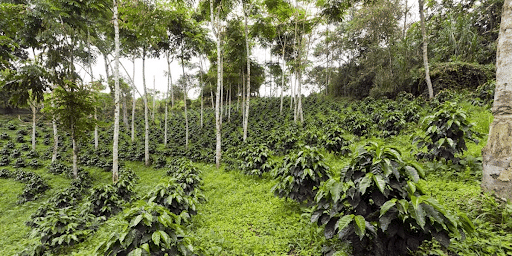
Agroforestry
-
Rainwater/Greywater Harvesting
- Instead of letting rainwater run off your property, you can collect and store it for later use. This is a practical application of the permaculture principle of "catch and store energy."
- The majority of rainwater is collected from roofs. To harvest rainwater, simply connect a large tank to your downspout and collect the water instead of letting it soak into the ground and go to waste.
- Stormwater harvesting is another method of water catchment. It differs from rainwater harvesting in that it collects stormwater from creeks, drains, and other waterways rather than roofs.
- Rainwater and stormwater can both be used for a variety of purposes, including irrigation and livestock water, as well as drinking water if properly treated first.
- Greywater is a final source of reusable water on the farm. This is water derived from domestic or farm activities such as bathing, washing dishes, or doing laundry.
- Because it contains soaps and detergents, greywater cannot be reused for drinking water, but it can be used for landscape irrigation and other purposes.
-
Cell Grazing
- Grazing is commonly regarded as a negative activity that, if not done responsibly, has the potential to devastate the environment. Allowing livestock to overgraze an area can also have negative consequences.
- Cell grazing (also known as rotational grazing) is the preferred method in permaculture. This entails regularly moving groups of livestock between different fields, pastures, or forests.
- Cell grazing can be done effectively with either ruminant animals (such as cows, goats, and sheep) or non-ruminant animals (such as pigs, rabbits, or flocks of geese).
- When done responsibly, grazing animal disturbances can actually improve the ecology and allow plants to regrow more quickly.
- Cell grazing entails closely monitoring livestock and their interactions with the land.
- Even vegans and others who are opposed to using animals for meat, milk, or fibre can keep livestock for grazing by employing conservation grazing.
- This is the practise of feeding invasive plants to animals such as sheep and goats or allowing them to replace your lawnmower to keep grass short. Because the animals are closely monitored, their welfare is maximised.
- Farmers can ensure that their livestock receive adequate quality and quantity of water, and their nutrition can be managed and supplemented as needed.
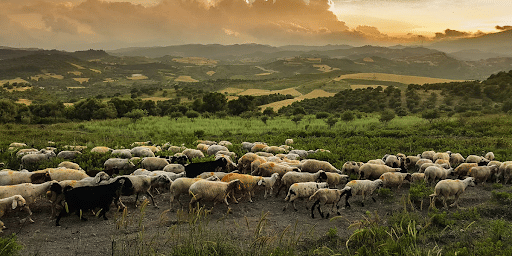
Cell Grazing
-
Sheet Mulching
- Mulching, which is simply any type of protective cover placed on top of the soil to retain water and prevent weed growth, is already used by many farmers and gardeners.
- Commonly used materials include wood chips, cardboard, plastic, stones, and other natural materials.
- Sheet mulching is a no-dig organic technique that attempts to mimic the soil buildup that occurs naturally in forests, specifically how leaves cover the ground.
- Sheet mulching is most commonly done with alternating layers of "green" and "brown" materials.
- Fallen leaves, shredded paper and cardboard, pine needles, wood chips, and straw are examples of brown materials.
- Manure, grass clippings, worm casings, vegetable scraps, hay, coffee grounds, and compost are examples of green materials.
- Sheet mulching improves soil fertility by adding nutrients and organic matter, suppressing weed growth, regulating temperatures and protecting against frost, reducing erosion and evaporation, and absorbing rainfall.
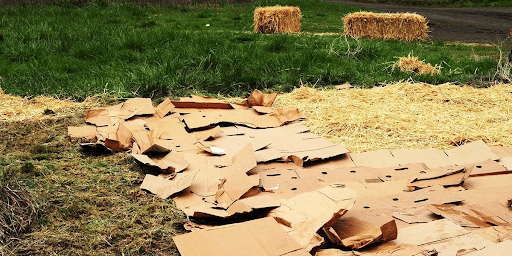
Sheet Mulching
-
Natural Building
- In a permaculture system, try to use as many recycled or salvaged materials as possible.
- There are numerous renewable resources on the property that you may be able to use in your next construction project.
- Most people overlook readily available materials such as clay, rocks, wood, reeds, straw, and sand.
- Subsoil, water, straw, and lime, for example, can be combined to make cob. This building material is not only inexpensive, but it is also fireproof, resistant to seismic activity, and strong enough to be used to construct entire houses.
- Despite being made of natural materials, cob is extremely weather resistant. A cob structure will last a very long time if properly maintained.
- Because cob can be moulded into any shape you want, it allows for some very unique architecture that isn't possible with bricks or other traditional building materials.
-
No-Till or Minimum Till Farming
- The goal of minimum-till or no-till farming is to leave the soil undisturbed. Instead of disturbing the soil before planting, it is simply left alone.
- This aids in water retention, prevents carbon from leaving the soil, improves soil quality, and reduces the number of weed seeds brought closer to the surface to germinate.
- The soil is disturbed by conventional farming. This releases carbon dioxide into the atmosphere while over-oxygenating the soil.
- Loosening the soil in this way can cause erosion and nutrient runoff, as well as the destruction of beneficial fungi networks in the soil.
- Tilling is something that, with the right techniques, can be reduced or even eliminated entirely in some systems.
-
Intercropping and Companion Farming
- Intercropping is the combination of two or more plant species that have mutually beneficial effects.
- Companion planting, for example, involves growing strong-smelling plants and herbs like basil, oregano, chives, or garlic alongside main crops like tomatoes, carrots, or cabbage.
- Many of these strong-smelling companion plants are repulsive to pests. Not only that, but some of them actually improve the growth and flavour of the plants with which they are paired.
- Others help to loosen the soil or provide other benefits.
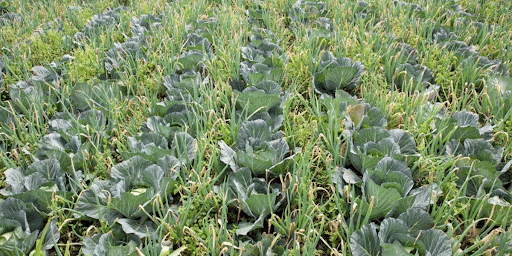
Intercropping and Companion Farming
Permaculture in India
- According to studies, permaculture is seen as a social movement, and India shares similar traits as well.
- The youth are choosing alternative agricultural approaches as they become more aware of the nation's agrarian dilemma, the difficulties farmers confront, and the expected threats from climate change.
- In India, over 40% of all food produced is wasted. In comparison to a traditional farm, an intensive permaculture garden can produce up to 35 times as much food per square metre with less than 20% of the resources. Permaculture may therefore contribute to the abundance of every bioregion.
- According to FAO, India's present methods currently require 1.4 acres of land to feed one person annually.
- But with the help of permaculture, a family of four may have all their food needs met on just 1.5 acres of land.
- Even a 1% improvement in productivity per acre in India will have a significant impact in terms of resilience. It, therefore, has enormous potential in India.
Conclusion
Permaculture can play a significant role in improving biodiversity by boosting the spatial, vertical, and temporal diversity of species, even though it may not be a quick fix for all the issues farmers confront. The long-term advantages provided by permaculture may aid human society in developing a self-sustaining farming method.
|
|
|
|---|---|
| Agriculture Notes | Cropping |
| Tillage | Watershed Management |
| Scope and Importance of Agriculture | Problems of Indian Agriculture |
FAQs
Question: What is permaculture?
Answer: Permaculture is an innovative agricultural approach that focuses on designing sustainable and self-sufficient agricultural ecosystems. It integrates land, resources, people, and the environment through the use of natural patterns and principles. The term "permaculture" combines "permanent" and "agriculture," reflecting the goal of creating agricultural systems that are resilient and sustainable over time. Permaculture emphasizes biodiversity, soil health, and ecological balance, enabling farmers to produce food while minimizing environmental impact.
Question: What are the key principles of permaculture?
Answer: The key principles of permaculture include:
- Observation and Interaction: Understanding and observing natural ecosystems to design effective permaculture systems.
- Catch and Store Energy: Utilizing natural resources efficiently, such as rainwater harvesting and solar energy.
- Design from Patterns to Details: Recognizing patterns in nature and using them to inform design decisions.
- Integrate Rather Than Segregate: Promoting cooperation between different elements of the system, such as plants, animals, and humans.
- Use and Value Diversity: Encouraging biodiversity to enhance resilience and productivity within the ecosystem.
- Use Small and Slow Solutions: Favoring smaller, more manageable systems that are easier to maintain and adapt.
- Value Renewable Resources: Utilizing resources that regenerate naturally to ensure sustainability.
- Design for Resilience: Creating systems that can withstand environmental changes and stresses.
Question: How does permaculture benefit the environment?
Answer: Permaculture benefits the environment in several ways:
- Soil Health: By implementing practices like composting and cover cropping, permaculture enhances soil fertility and structure, promoting healthier plant growth.
- Biodiversity: Permaculture encourages a diverse range of plants and animals, which helps build resilient ecosystems that are less susceptible to pests and diseases.
- Water Conservation: Techniques such as swales and rain gardens help manage water runoff and promote groundwater recharge, minimizing erosion and water waste.
- Carbon Sequestration: Well-designed permaculture systems can sequester carbon in the soil and vegetation, contributing to climate change mitigation.
- Reduced Chemical Inputs: By relying on natural pest control and organic practices, permaculture reduces the need for chemical fertilizers and pesticides, promoting cleaner ecosystems.
Question: What are some common practices in permaculture?
Answer: Common practices in permaculture include:
- Companion Planting: Growing different plants together that benefit each other, such as planting marigolds to deter pests from vegetable crops.
- Forest Gardening: Mimicking natural forest ecosystems by layering plants of different heights to maximize space and biodiversity.
- Polyculture: Cultivating multiple species in the same space to create a resilient agricultural system.
- Rainwater Harvesting: Collecting and storing rainwater for irrigation and other uses, reducing dependency on groundwater.
- Composting: Recycling organic waste to create nutrient-rich soil amendments that enhance soil fertility.
Question: How can individuals start implementing permaculture practices?
Answer: Individuals can start implementing permaculture practices by following these steps:
- Education: Learning about permaculture principles and techniques through books, online courses, or local workshops.
- Observation: Spending time observing natural ecosystems to understand how they function and how elements interact.
- Start Small: Implementing permaculture in small areas, such as home gardens or community spaces, to experiment with different techniques.
- Plan and Design: Creating a design for the space that incorporates permaculture principles, considering factors like sun exposure, water flow, and plant compatibility.
- Community Involvement: Engaging with local permaculture groups or networks to share knowledge and resources, and collaborate on projects.
MCQs
1. What is the primary focus of permaculture?
A) Industrial agriculture
B) Sustainable and self-sufficient agriculture
C) Urban development
D) Chemical farming
Answer: (B) See the Explanation
Explanation: The primary focus of permaculture is to create sustainable and self-sufficient agricultural ecosystems that integrate land, resources, and people.
2. Which of the following is NOT a principle of permaculture?
A) Observe and interact
B) Use and value diversity
C) Encourage monoculture
D) Design from patterns to details
Answer: (C) See the Explanation
Explanation: Encouraging monoculture is NOT a principle of permaculture; rather, permaculture promotes diversity within agricultural systems.
3. What is one of the major benefits of implementing permaculture practices?
A) Increased reliance on chemical fertilizers
B) Enhanced soil health
C) Reduction in biodiversity
D) Higher water usage
Answer: (B) See the Explanation
Explanation: One of the major benefits of implementing permaculture practices is enhanced soil health, which is achieved through natural amendments and sustainable practices.
4. Which of the following practices is common in permaculture?
A) Forest gardening
B) Extensive monoculture
C) Chemical pest control
D) Soil depletion
Answer: (A) See the Explanation
Explanation: Forest gardening is a common practice in permaculture that mimics natural ecosystems to maximize biodiversity and yield.
5. How can individuals contribute to permaculture?
A) Ignoring natural ecosystems
B) Implementing permaculture techniques in personal gardens
C) Supporting industrial agriculture
D) Avoiding community involvement
Answer: (B) See the Explanation
Explanation: Individuals can contribute to permaculture by implementing permaculture techniques in their personal gardens and engaging with their communities.
GS Mains Questions and Model Answers
Q1: Analyze the importance of permaculture in addressing food security and environmental sustainability.
Answer: Permaculture plays a crucial role in addressing food security by promoting sustainable agricultural practices that can yield food without depleting natural resources. Through techniques such as companion planting, soil enhancement, and biodiversity, permaculture enhances resilience against pests and diseases, ensuring stable food production even in the face of environmental challenges. Additionally, permaculture emphasizes the use of renewable resources and ecological balance, reducing the reliance on chemical fertilizers and pesticides, which can harm ecosystems. By fostering a harmonious relationship between agriculture and the environment, permaculture contributes to long-term sustainability and the ability to produce food for future generations, ultimately supporting global food security.
Q2: Discuss the challenges faced in implementing permaculture practices on a larger scale.
Answer: Implementing permaculture practices on a larger scale faces several challenges, including a lack of awareness and understanding of permaculture principles among conventional farmers. Many may be hesitant to adopt practices that diverge from traditional agricultural methods due to perceived risks or economic constraints. Additionally, the initial transition to permaculture can require significant time and investment, which may deter farmers from making the shift. Infrastructure and market access also pose challenges, as farmers may need support to access markets that favor sustainable products. Overcoming these challenges requires targeted education, access to resources, and supportive policies that encourage the adoption of permaculture practices.
Q3: Evaluate the potential of permaculture to mitigate climate change impacts.
Answer: Permaculture has significant potential to mitigate climate change impacts through its focus on sustainable land use and biodiversity. By promoting practices that enhance soil health, such as composting and cover cropping, permaculture increases soil carbon sequestration, which helps reduce atmospheric carbon dioxide levels. Additionally, the emphasis on diverse cropping systems within permaculture enhances ecosystem resilience to climate stresses, such as drought and extreme weather events. The reduction of chemical inputs and reliance on renewable resources further minimizes the ecological footprint of agriculture. By fostering ecological balance and improving the adaptive capacity of agricultural systems, permaculture serves as a viable strategy for mitigating climate change while ensuring food security.
Previous Year Questions on Permaculture
1. UPSC CSE Prelims 2021:
Question: Which of the following is a key feature of permaculture?
A) Intensive monoculture
B) Sustainable agricultural practices
C) Reliance on chemical fertilizers
D) Globalization of farming
Answer: (B)
Explanation: A key feature of permaculture is the use of sustainable agricultural practices that enhance ecological balance and biodiversity.
2. UPSC CSE Mains 2019 (GS Paper 1):
Question: "Assess the role of permaculture in promoting sustainable agriculture and addressing global food challenges." Discuss its implications.
Answer: Permaculture plays a vital role in promoting sustainable agriculture by emphasizing ecological principles and practices that work in harmony with nature. By focusing on biodiversity, soil health, and efficient resource use, permaculture offers solutions to address global food challenges, particularly in the context of climate change and environmental degradation. The implications of adopting permaculture are far-reaching, as it not only contributes to food security through resilient agricultural systems but also supports conservation efforts and mitigates the impacts of climate change. By fostering community engagement and cooperation, permaculture enhances social equity in food production and distribution, making it a compelling model for sustainable development.
Download the PREPP App and attempt FREE IAS Exam Mock Tests and get complete study material!

Full Test - 04: UPSC CSE Prelims CSAT (Paper-II)
Full Test - 03: UPSC CSE Prelims CSAT (Paper-II)
UPSC CSE Prelims 2026 GS Paper 1 Question Paper (24-May-2026)
UPSC CSE Prelims 2026 CSAT Paper 2 Question Paper (24-May-2026)

17 February 2025 | The Hindu Must Read Articles | Current Affairs

16 February 2026 | The Hindu Must Read Articles | Current Affairs

13 February 2026 | The Hindu Must Read Articles | Current Affairs









Comments