Satellite Launching Systems – Science & Technology Notes
ISRO (Indian Space Research Organisation) has achieved many milestones over the course of more than five decades, from building India's first satellite, Aryabhata, in 1975 to launching India's first satellite, Rohini, into orbit. It has also established notable milestones, such as launching 104 satellites in a single rocket (PSLV-C37) in 2017, which remains a world record. In this article, we will discuss in detail regarding Satellite Launching Systems which will be helpful for UPSC exam preparation.
Table of Contents
- Satellite Launching System
- Process of Satellite Launch Vehicle
- Launch Vehicles Used by ISRO
3.1 Satellite Launch Vehicle-3 (SLV-3)
3.2 Augmented Satellite Launch Vehicle (ASLV)
3.3 Polar Satellite Launch Vehicle (PSLV)
3.4 Geosynchronous Satellite Launch Vehicle Mark II (GSLV Mk II)
3.5 Geosynchronous Satellite Launch Vehicle Mk III (LVM3)
3.6 Small Satellite Launch Vehicle (SSLV)
3.7 Reusable Launch Vehicle - Technology Demonstrator (RLV-TD)
3.8 Scramjet Engine - TD
3.9 Sounding Rockets - Conclusion
- FAQs
- MCQs
What is a Satellite Launching System?
- A launch vehicle is a rocket-powered vehicle that transports a spacecraft beyond the Earth's atmosphere, either into orbit around the Earth or to another destination in outer space.
- Since the 1950s, launch vehicles have been used to send crewed spacecraft, uncrewed space probes, and satellites into space.
- Launch Vehicles transport and launch satellites or spacecraft into orbit.
- The development of launch vehicles in India began in the early 1970s. In 1980, the first experimental Satellite Launch Vehicle (SLV-3) was developed.
- ASLV, an augmented version of this, was successfully launched in 1992.
- With the operationalization of the Polar Satellite Launch Vehicle (PSLV) and Geosynchronous Satellite Launch Vehicle (GSLV), India has made tremendous strides in launch vehicle technology to achieve self-reliance in the satellite launch vehicle programme.
- To achieve high accuracy in satellite placement, a combination of accuracy, efficiency, power, and meticulous planning is required.
Process of Satellite Launch Vehicle
- The rockets have powerful propulsion systems that generate the massive amounts of energy needed to lift heavy objects like satellites into space while overcoming the earth's gravitational pull.
- Satellites are equipped with one or more instruments that perform the scientific work for which they are launched into space. Their operational life can sometimes last decades.
- However, rockets or launch vehicles are rendered useless once launched. The sole purpose of rockets is to deliver satellites to their intended orbits.
- Rockets have a number of detachable energy-producing components.
- To power the rocket, various types of fuel are burned. When their fuel runs out, they detach from the rocket and fall off, frequently exploding in the atmosphere due to air friction and being destroyed.
- Only a small portion of the original rocket reaches the satellite's intended destination.
- When the satellite is finally ejected, this final section of the rocket either becomes space debris or burns off after falling into the atmosphere.
Launch Vehicles Used by ISRO
ISRO's Launch Vehicle Programme is spread across several centres.
- The Vikram Sarabhai Space Centre in Thiruvananthapuram is in charge of the design and development of launch vehicles.
- The liquid and cryogenic stages for these launch vehicles are developed by the Liquid Propulsion Systems Centre and the ISRO Propulsion Complex, which are located in Valiamala and Mahendragiri, respectively.
- Satish Dhawan Space Centre, SHAR, is India's space port and is in charge of launcher integration. It houses two operational launch facilities for the launch of ISRO's launch vehicles.
1) Satellite Launch Vehicle-3 (SLV-3)
- Satellite Launch Vehicle-3 (SLV-3) was India's first experimental satellite launch vehicle, a four-stage vehicle weighing 17 tonnes and standing 22 metres tall, capable of launching 40 kg payloads into Low Earth Orbit (LEO (Low Earth Orbit)).
- SLV-3 was successfully launched from Sriharikota Range (SHAR) on July 18, 1980, when the Rohini satellite, RS-1, was placed in orbit, making India the sixth member of an exclusive club of space-faring nations.
- To steer the vehicle in flight along a predetermined trajectory, SLV-3 used open loop guidance (with stored pitch programme).
- The SLV-3's first experimental flight in August 1979 was only partially successful.
- Aside from the July 1980 launch, there were two more launches in May 1981 and April 1983, both of which orbited Rohini satellites equipped with remote sensing sensors.
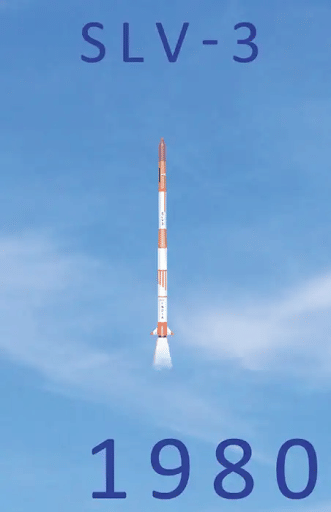
SLV-3
2) Augmented Satellite Launch Vehicle (ASLV)
- The 24 m tall ASLV was configured as a five stage, all-solid propellant vehicle with a lift off weight of 40 tonnes, with a mission of orbiting 150 kg class satellites into 400 km circular orbits.
- The Augmented Satellite Launch Vehicle (ASLV) Programme aimed to triple the payload capacity of the SLV-3 to 150 kg for Low Earth Orbit (LEO).
- Building on the experience gained from the SLV-3 missions, the ASLV proved to be a low-cost intermediate vehicle for demonstrating and validating critical technologies required for future launch vehicles such as strap-on technology, inertial navigation, a bulbous heat shield, vertical integration, and closed loop guidance.
- Four developmental flights were carried out as part of the ASLV programme.
- The first developmental flight occurred on March 24, 1987, followed by the second on July 13, 1988.
- The third developmental flight, ASLV-D3, was launched successfully on May 20, 1992.
- ASLV-D4, launched on May 4, 1994.
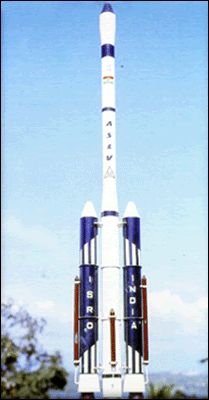
Augmented Satellite Launch Vehicle (ASLV)
3) Polar Satellite Launch Vehicle (PSLV)
- The Polar Satellite Launch Vehicle (PSLV) is India's third generation launch vehicle. It is the first Indian launch vehicle to have liquid stages.
- PSLV emerged as India's dependable and versatile workhorse launch vehicle after its first successful launch in October 1994.
- Numerous Indian and foreign customer satellites have been launched by the vehicle.
- Furthermore, the vehicle successfully launched two spacecraft, "Chandrayaan-1 in 2008 and Mars Orbiter Spacecraft in 2013," which later travelled to the Moon and Mars.
- PSLV-C48 is the 50th launch of the PSLV programme.
- PSLV earned the moniker "workhorse of ISRO" by reliably delivering various satellites into low-Earth orbit, particularly the IRS Series of satellites.
- PSLV has also been used to launch various satellites into geosynchronous and geostationary orbits, such as satellites from the IRNSS Constellation, due to its unrivalled dependability.
- Because the PSLV can launch multiple payloads into orbit, multi-payload adaptors are used in the payload fairing.
- The PSLV's long track record of success and multi-satellite launch capability has cemented its position in the global market as a dependable, versatile, and cost-effective launcher.

Polar Satellite Launch Vehicle (PSLV)
4) Geosynchronous Satellite Launch Vehicle Mark II (GSLV Mk II)
- Geosynchronous Satellite Launch Vehicle Mark II (GSLV Mk II) is an Indian launch vehicle designed to place communication satellites in geostationary transfer orbit using a cryogenic third stage.
- Initially, cryogenic stages supplied by Russian GK were used. Later cryogenic stages were developed in-house and inducted beginning with GSLV D5 in January 2014.
- This operational fourth-generation launch vehicle consists of three stages and four liquid strap-ons.
- The third stage of the GSLV Mk II is the flight-proven indigenously developed Cryogenic Upper Stage (CUS).
- Since January 2014, the vehicle has had six consecutive successes.
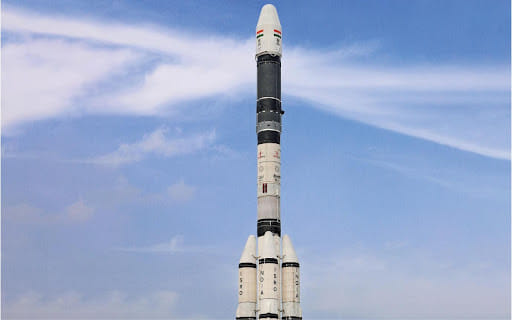
GSLV Mk II
5) Geosynchronous Satellite Launch Vehicle Mk III (LVM3)
- LVM3 is a three-stage vehicle with two solid strap-on motors (S200), one liquid core stage (L110), and a cryogenic upper stage with high thrust (C25).
- With 204 tonnes of solid propellant, the S200 solid motor is one of the world's largest solid boosters.
- The liquid L110 stage has 115 tonnes of liquid propellant and a twin liquid engine configuration, whereas the C25 Cryogenic upper stage has a fully indigenous high thrust cryogenic engine (CE20) with a propellant loading of 28 tonnes.
- The vehicle's overall length is 43.5 metres, with a gross lift-off weight of 640 tonnes and a payload fairing diameter of 5 metres.
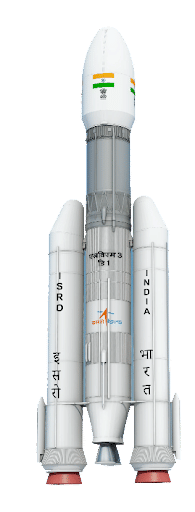
LVM3
6) Small Satellite Launch Vehicle (SSLV)
- Small Satellite Launch Vehicle (SSLV) is a three-stage launch vehicle with three solid propulsion stages and a terminal stage powered by liquid propulsion.
- SSLV has a diameter of 2m and a length of 34m, with a lift off weight of 120 tonnes.
- SSLV can launch a 500kg satellite into a 500km planar orbit from SDSC/SHAR.
- SSLV's key characteristics include low cost, quick turn-around time, flexibility in accommodating multiple satellites, launch on demand capability, minimal launch infrastructure requirements, and so on.
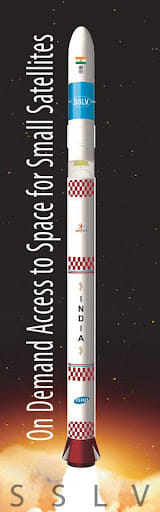
Small Satellite Launch Vehicle (SSLV)
7) Reusable Launch Vehicle - Technology Demonstrator (RLV-TD)
- The Reusable Launch Vehicle - Technology Demonstrator (RLV-TD) is one of ISRO's most technologically challenging projects aimed at developing critical technologies for a fully reusable launch vehicle to enable low-cost access to space.
- The RLV-TD's configuration is similar to that of an aircraft, combining the complexity of both launch vehicles and aircraft.
- The winged RLV-TD was designed to serve as a flying test bed for various technologies such as hypersonic flight, autonomous landing, and powered cruise flight.
- This vehicle will be scaled up in the future to become the first stage of India's reusable two-stage orbital launch vehicle.
- The fuselage (body) of the RLV-TD is made up of a nose cap, double delta wings, and twin vertical tails.
- Elevons and Rudder, which are symmetrically placed active control surfaces, are also included.
- A conventional solid booster (HS9) designed for low burn rate propelled this technology demonstrator to Mach 5.
- RLV-TD successfully flew from SDSC SHAR Sriharikota on May 23, 2016, validating critical technologies such as autonomous navigation, guidance and control, reusable thermal protection system, and re-entry mission management.
- Objectives of RLV-TD are:
- Hypersonic aero thermodynamic characterisation of wing body
- Evaluation of autonomous Navigation, Guidance and Control (NGC) schemes
- Integrated flight management
- Thermal Protection System Evaluation
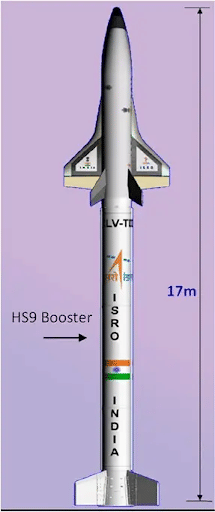
RLV-TD
8) Scramjet Engine - TD
- On August 28, 2016, the first experimental mission of ISRO's Scramjet Engine towards the realisation of an Air Breathing Propulsion System was successfully completed from Satish Dhawan Space Centre SHAR, Sriharikota.
- After a 300-second flight, the vehicle landed in the Bay of Bengal, about 320 kilometres from Sriharikota.
- The vehicle was successfully tracked during its flight from Sriharikota's ground stations.
- This flight successfully demonstrated critical technologies such as supersonic ignition of air breathing engines, supersonic flame retention, air intake mechanism, and fuel injection systems.
- ISRO's Scramjet engine runs on hydrogen as fuel and oxygen from the atmosphere as an oxidizer.
- This was ISRO's Scramjet engine's first short duration experimental test, with a hypersonic flight at Mach 6.
- ISRO's Advanced Technology Vehicle (ATV), an advanced sounding rocket, served as the solid rocket booster for the supersonic testing of Scramjet engines. At lift-off, the ATV carrying Scramjet engines weighed 3277 kg.
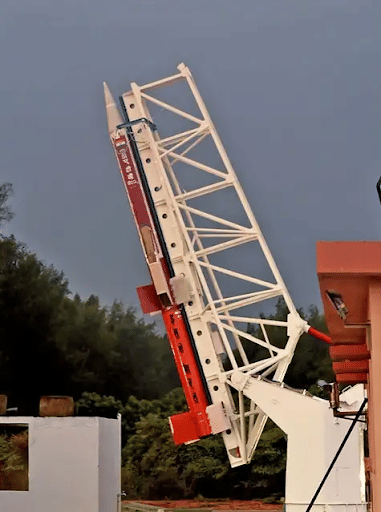
Scramjet Engine – TD
9) Sounding Rockets
- Sounding rockets are one- or two-stage solid-propellant rockets that are used for probing the upper atmosphere and conducting space research.
- They also serve as low-cost platforms for testing or proving prototypes of new components or subsystems for use in launch vehicles and satellites.
- ISRO began launching indigenously built sounding rockets in 1965, and the experience gained was invaluable in mastering solid propellant technology.
- The Rohini Sounding Rocket (RSR) Programme consolidated all sounding rocket activities in 1975.
- The RH-75 rocket, with a diameter of 75mm, was the first truly Indian sounding rocket, followed by the RH-100 and RH-125 rockets.
- The sounding rocket programme served as the foundation for ISRO's launch vehicle technology edifice.
- Coordination campaigns can be carried out by simultaneously launching sounding rockets from various locations. It is also possible to launch multiple sounding rockets on the same day.
- As of now, three operational sounding rocket versions are available, with payload ranges ranging from 8 to 100 kg and apogee ranges ranging from 80 to 475 km.
- RH-200
- RH-300-Mk-II
- RH-560-MK-II
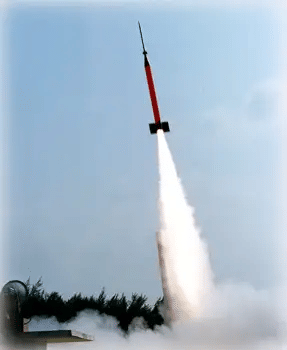
Sounding Rockets
Conclusion
Since its inception in the world of space exploration, Indian scientists, in collaboration with ISRO, have taken it to a new level where so much development in space in a developing country is an outstanding achievement. The launch vehicles developed by India are not only efficient, but one of the most important aspects of these vehicles is their cost-effectiveness. All of India's vehicles, such as the PSLV, are low on budget but high on India's space exploration venture.
| Other Relevant Links | |
|---|---|
| Science & Technology Policy in India | Scientific Policy Resolution 1958 |
| Science & Technology Policy of 1983 | Science & Technology Policy of 2003 |
| Science, Technology and Innovation Policy 2013 | New Initiatives Aligned with the National Agenda |
| India and World collaboration in science projects | National Intellectual Property Rights Policy |
FAQs
Question: What is a satellite launching system?
Answer: A satellite launching system is a set of technologies and equipment used to send satellites into space. It involves a launch vehicle (rocket), ground facilities, and other support infrastructure for satellite deployment into orbit.
Question: What are the key components of a satellite launching system?
Answer: The key components of a satellite launching system include the launch vehicle (rocket), payload (satellite), ground control stations, tracking systems, and launch platforms or pads.
Question: How do satellite launching systems work?
Answer: Satellite launching systems work by using powerful rockets to propel satellites into space. These rockets carry the satellite to a designated orbit, where they are deployed and begin their intended functions, such as communication or Earth observation.
Question: What types of rockets are used in satellite launching systems?
Answer: The main types of rockets used in satellite launching systems are expendable launch vehicles (ELVs), reusable launch vehicles (RLVs), and hybrid rockets. ELVs are commonly used for satellite launches, whereas RLVs are being developed for cost-efficiency.
Question: Which countries have developed advanced satellite launching systems?
Answer: Countries like the United States, Russia, China, India, and Japan have developed advanced satellite launching systems. These countries have space agencies that are capable of launching satellites into various orbits.
MCQs
1. What is the primary function of a satellite launching system?
A) To monitor space weather
B) To send astronauts to the moon
C) To send satellites into space
D) To track other celestial bodies
Answer: (C) See the Explanation
Explanation: The primary function of a satellite launching system is to send satellites into space, where they are deployed in orbit for various purposes such as communication, observation, or research.
2. What is the role of a launch vehicle in a satellite launching system?
A) To control the satellite's function in orbit
B) To carry the satellite into space
C) To communicate with the satellite
D) To track the satellite's position
Answer: (B) See the Explanation
Explanation: The launch vehicle carries the satellite into space, providing the necessary propulsion to reach the desired orbit where the satellite can begin its operations.
3. What are expendable launch vehicles (ELVs) used for?
A) To reduce the cost of launches
B) To launch satellites with reusable parts
C) To send satellites into space only once
D) To send crewed missions to space
Answer: (C) See the Explanation
Explanation: Expendable launch vehicles (ELVs) are used to send satellites into space, but they are discarded after each launch. They are not reusable and are commonly used for one-time satellite launches.
4. Which of the following is a key characteristic of reusable launch vehicles (RLVs)?
A) They are used only once
B) They are designed to be used multiple times
C) They use solid fuel only
D) They are cheaper than expendable vehicles
Answer: (B) See the Explanation
Explanation: Reusable launch vehicles (RLVs) are designed to be used multiple times, unlike expendable launch vehicles (ELVs). This design helps reduce the cost of launches over time.
5. Which space agency developed the Falcon 9, a reusable launch vehicle?
A) ISRO
B) NASA
C) SpaceX
D) Roscosmos
Answer: (C) See the Explanation
Explanation: SpaceX developed the Falcon 9, a reusable launch vehicle, which has significantly reduced the cost of satellite launches and set new standards for space travel.
GS Mains Questions and Model Answers
Q1: Analyze the importance of satellite launching systems in space exploration. Discuss the developments in launch vehicle technology and their impact on satellite deployment.
Answer: Satellite launching systems are critical for space exploration as they allow for the placement of satellites into the correct orbit, enabling communication, weather forecasting, and Earth observation. Recent developments in launch vehicle technology, such as the advent of reusable launch vehicles (RLVs), have reduced the cost of satellite deployment, making space more accessible. Innovations like the SpaceX Falcon 9 and ISRO's GSLV Mk III are setting new standards in terms of cost-efficiency and reliability, paving the way for more frequent and affordable satellite launches. These advancements have also spurred international cooperation in space exploration, with satellite launches becoming more accessible to countries and private companies alike.
Q2: Discuss the role of India’s space agency ISRO in the global satellite launching market. How has its approach to launch vehicle technology contributed to its success?
Answer: ISRO has emerged as a key player in the global satellite launching market, known for its cost-effective launch vehicle technology. ISRO's development of the Polar Satellite Launch Vehicle (PSLV) and the Geosynchronous Satellite Launch Vehicle (GSLV) has allowed it to launch satellites for both India and international clients at a fraction of the cost compared to other space agencies. The PSLV, in particular, has been a workhorse for ISRO, enabling India to become the first country to launch 104 satellites in a single mission. By focusing on innovation and cost reduction, ISRO has gained a competitive edge in the global space market, becoming a preferred partner for launching satellites.
Q3: How do technological advancements in satellite launching systems affect global space exploration and the future of space missions?
Answer: Technological advancements in satellite launching systems have revolutionized global space exploration by making satellite launches more affordable and frequent. The development of reusable launch vehicles (RLVs) such as SpaceX's Falcon 9 has significantly reduced costs and opened up space exploration to private players. These advancements enable more frequent and diverse missions, including human exploration of the Moon, Mars, and beyond. Moreover, they allow for faster deployment of communication satellites, environmental monitoring systems, and scientific instruments, thereby accelerating scientific discoveries and global collaboration in space research. As satellite launching technology continues to evolve, space missions are expected to become more efficient, paving the way for a new era of space exploration.
Previous Year Questions on Satellite Launching Systems
1. UPSC CSE Mains 2020 (GS Paper 3):
Question: "Explain the role of India’s space program in the development of satellite launching systems. How has ISRO contributed to global satellite deployment?"
Answer: ISRO has played a major role in the development of satellite launching systems with its successful satellite launch vehicles like PSLV and GSLV. These technologies have enabled India to launch satellites for various nations and have established ISRO as a reliable player in the global satellite deployment market. ISRO’s cost-effective approach has made satellite launches affordable for countries with limited space budgets, thus promoting global space collaboration.
2. UPSC CSE Mains 2021 (GS Paper 3):
Question: "Evaluate the significance of satellite launching systems and their impact on space exploration and commercial satellite deployment."
Answer: Satellite launching systems are fundamental to space exploration, providing the necessary technology to place satellites in orbit. The development of more efficient and cost-effective launch vehicles, like ISRO’s PSLV and SpaceX’s Falcon 9, has not only advanced space exploration but has also opened the commercial satellite deployment market. The ability to launch satellites at lower costs allows for frequent launches, leading to rapid advancements in communication, weather forecasting, and Earth observation technologies.
Download the PREPP App and attempt FREE IAS Exam Mock Tests and get complete study material!

Full Test - 04: UPSC CSE Prelims CSAT (Paper-II)
Full Test - 03: UPSC CSE Prelims CSAT (Paper-II)
UPSC CSE Prelims 2026 GS Paper 1 Question Paper (24-May-2026)
UPSC CSE Prelims 2026 CSAT Paper 2 Question Paper (24-May-2026)

17 February 2025 | The Hindu Must Read Articles | Current Affairs

16 February 2026 | The Hindu Must Read Articles | Current Affairs

13 February 2026 | The Hindu Must Read Articles | Current Affairs









Comments