Duration of Lok Sabha – Indian Polity Notes
The Lok Sabha is a non-permanent body. It is directly elected by the people using the universal adult franchise. It is also known as the Popular House or the Lower House. The Lok Sabha (House of People) was duly established for the first time on 17 April 1952, following the first General Elections, which were held from 25 October 1951 to 21 February 1952. In this article, we will discuss more about the Duration of Lok Sabha.
|
Table of Contents |
Duration Of Lok Sabha - In Normal Circumstances And During Emergency
- The normal term of Lok Sabha is five years, beginning with the date of its first meeting following the general elections, and ending with an automatic dissolution.
- However, the President has the authority to dissolve the Lok Sabha at any time, including before the end of the five-year term, and this cannot be challenged in court.
- Furthermore, during a period of national emergency, the Lok Sabha's term can be extended by a law of Parliament for one year at a time for any length of time.
- This extension, however, cannot last longer than six months after the emergency has ended.
- The Lok Sabha has been dissolved several times before the end of its term. For example, the 12th Lok Sabha elected in 1998 got dissolved in 1999.
|
The normal term of Lok Sabha is five years, beginning with the date of its first meeting following the general elections, and ending with an automatic dissolution. |
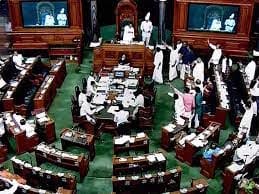
Constitutional Provisions
The 42nd Constitutional Amendment Act, 1976, extended the normal life of Lok Sabha to six years but the 44th Constitutional Amendment Act, 1978, has again set it at five years as the original constitution envisaged (Article 83).
Conclusion
Despite the ups and downs of Indian politics, the Lok Sabha has remained a beacon of political and social principles, a melting pot of cultural diversity. Along with the Rajya Sabha, it serves as a symbol of India's sovereign, socialist, secular, and democratic republic.
FAQs
Question: What is the duration of the Lok Sabha as per the Indian Constitution?
Answer: The duration of the Lok Sabha, the lower house of the Indian Parliament, is five years from the date of its first meeting after the general elections. However, the Lok Sabha can be dissolved before the completion of its five-year term by the President of India on the advice of the Prime Minister. This five-year period can be extended only during an emergency situation as declared under Article 352 of the Constitution, but this is a temporary measure. The general election for the new Lok Sabha is typically held every five years, but the President has the power to dissolve the Lok Sabha earlier if the political situation demands it.
Question: How can the term of the Lok Sabha be extended?
Answer: The term of the Lok Sabha can be extended beyond five years during a national emergency. According to Article 83 of the Indian Constitution, the term of the Lok Sabha may be extended for a period not exceeding one year at a time during an emergency, but this extension cannot last for more than six months after the emergency is over. The President may extend the term of the Lok Sabha if advised by the Prime Minister, but the extension is temporary and only for the duration of the emergency. Once the emergency is lifted, the Lok Sabha must be dissolved and elections must be held.
Question: What is the significance of the Lok Sabha’s duration in the Indian democratic system?
Answer: The duration of the Lok Sabha plays a crucial role in maintaining the democratic process and governance in India. A five-year term ensures that the government has a stable mandate to carry out its policies and legislative agenda. It also allows the people of India to hold their representatives accountable through periodic elections. The constitutionally fixed duration ensures that the government remains in power only for a specified term, encouraging transparency, responsiveness, and political accountability. The Lok Sabha's duration ensures that the elected representatives remain focused on their duties while providing a mechanism for voters to change the government based on their performance.
Question: Can the Lok Sabha be reconstituted before its term ends?
Answer: Yes, the Lok Sabha can be reconstituted before the completion of its five-year term. This occurs when the President dissolves the Lok Sabha on the advice of the Prime Minister. Dissolution means the termination of the Lok Sabha's current term, and a new election is conducted to form a new house. This can happen if the sitting government loses its majority or if the Prime Minister feels that early elections are required to resolve a political impasse. However, this power to dissolve the Lok Sabha is not arbitrary and must be exercised in accordance with the political situation, as per the Constitution.
Question: What is the process for electing members to the Lok Sabha?
Answer: Members of the Lok Sabha are elected through direct elections by the people of India. The country is divided into constituencies, with each constituency electing one member to the Lok Sabha using a first-past-the-post voting system. The general election is held every five years, and each citizen who is 18 years or older is eligible to vote. The political party that wins a majority of the seats in the Lok Sabha forms the government, and the leader of that party becomes the Prime Minister. The election process is overseen by the Election Commission of India, which ensures free and fair elections.
MCQs
1. What is the term duration of the Lok Sabha according to the Indian Constitution?
A) Three years
B) Four years
C) Five years
D) Six years
Answer: (C) See the Explanation
Explanation: According to the Indian Constitution, the Lok Sabha has a fixed term of five years, unless it is dissolved earlier by the President of India.
2. Under what circumstance can the term of the Lok Sabha be extended beyond five years?
A) By a unanimous vote in the Lok Sabha
B) During a national emergency
C) With the consent of the Rajya Sabha
D) Only with the approval of the state legislatures
Answer: (B) See the Explanation
Explanation: The term of the Lok Sabha can be extended beyond five years during a national emergency, as per the provisions of Article 83 of the Indian Constitution, but it cannot exceed a year at a time.
3. What is the maximum duration the Lok Sabha can be extended during an emergency?
A) Six months
B) One year
C) Two years
D) Five years
Answer: (B) See the Explanation
Explanation: The duration of the Lok Sabha can be extended by up to one year during a national emergency. The extension can be done for successive periods, but each extension cannot exceed one year.
4. What happens if the Lok Sabha is dissolved before its term ends?
A) A new government is formed immediately
B) Fresh elections are held
C) The President appoints a new Prime Minister
D) The Rajya Sabha takes over the duties of the Lok Sabha
Answer: (B) See the Explanation
Explanation: If the Lok Sabha is dissolved before the end of its term, fresh elections are held to form a new Lok Sabha. The dissolution of the Lok Sabha does not automatically result in the formation of a new government.
5. Who decides to dissolve the Lok Sabha before the completion of its term?
A) The Speaker of the Lok Sabha
B) The President of India
C) The Prime Minister
D) The Chief Justice of India
Answer: (B) See the Explanation
Explanation: The President of India has the authority to dissolve the Lok Sabha on the advice of the Prime Minister. This dissolution is not arbitrary and is typically done when the government loses its majority or requires fresh elections to resolve political issues.
GS Mains Questions and Model Answers
Q1: Discuss the importance of the Lok Sabha's five-year term in the context of India's democratic structure. How does this duration ensure political stability?
Answer: The five-year term of the Lok Sabha is a critical feature of India's democratic structure as it provides a fixed period for the elected government to carry out its policies, programs, and legislative agenda. This five-year cycle allows political stability by ensuring regular elections, providing the public with an opportunity to assess the government's performance and make decisions based on that. The set term helps maintain a balance between the need for governance and accountability, preventing any party from remaining in power indefinitely. Furthermore, it upholds the principle of periodic elections, allowing citizens to exercise their democratic rights while ensuring that the government is responsive to public needs. By offering a stable electoral period, the five-year term also contributes to the overall consistency and continuity in governance, which is essential for the functioning of India’s federal structure.
Q2: Analyze the potential consequences of early dissolution of the Lok Sabha. What impact does it have on governance and the electoral process?
Answer: Early dissolution of the Lok Sabha can have significant consequences on governance and the electoral process. On the one hand, it may be necessary in cases where the government loses its majority or if there is political instability that cannot be resolved through regular parliamentary procedures. However, early dissolution disrupts the legislative process and can lead to a lack of continuity in policymaking. The government is unable to complete its legislative agenda, which may have long-term implications for development and governance. From an electoral perspective, early dissolution may also lead to higher election costs and political uncertainty, especially if the new elections do not result in a clear mandate. Furthermore, it can also strain the democratic process by forcing voters to go to the polls unexpectedly, potentially leading to voter fatigue and decreased participation in elections.
Q3: Evaluate the role of the Lok Sabha in shaping India’s federal structure. How does its duration and reconstitution impact the political landscape?
Answer: The Lok Sabha plays a vital role in shaping India’s federal structure as it represents the will of the people at the national level. Its composition, functions, and powers help maintain the balance of power between the Union and the states. The five-year term of the Lok Sabha ensures that the government remains accountable to the people, allowing for periodic elections that reflect the changing political landscape. The reconstitution of the Lok Sabha through regular elections ensures that new issues, regional aspirations, and emerging political dynamics are adequately represented in the national discourse. Moreover, the Parliament, with its reconstitution, plays a crucial role in the functioning of India’s federal system by enacting laws that address both national and regional concerns, maintaining the delicate balance between central and state governments. The regular process of reconstitution through elections ensures that the political landscape evolves with the changing needs of the population, contributing to a dynamic and responsive governance system.
Previous Year Questions on Lok Sabha
1. UPSC CSE Prelims 2020:
Question: What is the maximum duration for which the term of the Lok Sabha can be extended?
A) One year
B) Two years
C) Three years
D) Five years
Answer: (A)
Explanation: The term of the Lok Sabha can be extended for a maximum period of one year during a national emergency, as per Article 83 of the Indian Constitution.
2. UPSC CSE Mains 2021 (GS Paper 2):
Question: "Examine the role and functions of the Lok Sabha in India’s political system. How does its term impact the legislative process?"
Answer: The Lok Sabha plays a crucial role in shaping India's political system as the lower house of Parliament, representing the people directly through general elections. It is responsible for enacting laws, approving budgets, and providing oversight of the executive. The five-year term of the Lok Sabha ensures political stability, regular elections, and accountability, allowing voters to assess the government's performance. However, the political landscape may be impacted if the Lok Sabha is dissolved early, leading to instability. Despite this, the regular elections and the reconstitution of the Lok Sabha every five years ensure that the government remains responsive to the people's needs and upholds democratic principles.
*email: contactus@prepp.in
Download the PREPP App and attempt FREE IAS Exam Mock Tests and get complete study material!
UPSC IAS : CSAT - Mini Live Test

Live Test : UPSC CSE Prelims CSAT (Paper-II) (Oct 20 - 23)
Full Test - 04: UPSC CSE Prelims CSAT (Paper-II)
Full Test - 03: UPSC CSE Prelims CSAT (Paper-II)
UPSC CSE Prelims 2026 GS Paper 1 Question Paper (24-May-2026)
UPSC CSE Prelims 2026 CSAT Paper 2 Question Paper (24-May-2026)

17 February 2025 | The Hindu Must Read Articles | Current Affairs

16 February 2026 | The Hindu Must Read Articles | Current Affairs

13 February 2026 | The Hindu Must Read Articles | Current Affairs









Comments