Difference Between Powers and Position of Lok Sabha & Rajya Sabha – Indian Polity Notes
The Lok Sabha is India's Lower house of Parliament. It is also known as the House of the People because its members are elected directly in general elections. The Rajya Sabha on the other hand is the body in the Indian Union that represents the states. It is also known as the Upper House of Parliament. In this article we will discuss more about the Difference Between the Powers and Positions of Lok Sabha & Rajya Sabha.
|
Table of Contents |
Difference Between Powers And Positions of Lok Sabha & Rajya Sabha
| Lok Sabha | Rajya Sabha |
|---|---|
| The Lok Sabha is not a permanent House of Parliament. It is dissolved at the end of its five-year term. However, the President, on the advice of the Council of Ministers, has the authority to dissolve it before the five-year period is up. | Rajya Sabha is a permanent House that cannot be dissolved. Every two years, one-third of its members retire, and the remaining seats are filled by new members. |
| The Lok Sabha can have a maximum of 552 members. 530 members are elected from the states, and 20 are elected from the union territories. The President appoints the remaining two members from the Anglo-Indian community. | The Rajya Sabha has a total of 250 members. It is a representative House of States, but the states are not equally represented. The seats are allotted to different states based on population. 12 members of the House are nominated by the President from among those with special knowledge or experience in the fields of literature, science, art, and social service. |
| Members of the Lok Sabha are directly elected by the people using a secret ballot and the universal franchise. | Members of the Rajya Sabha are elected on the basis of proportional representation by the Legislative Assemblies of the respective States. |
| The Lok Sabha's Speaker and Deputy Speaker are members of the House who are elected by the members of the Lok Sabha. | The Rajya Sabha Chairman is not a member of this House. The Rajya Sabha is chaired by the Vice-President of India on an ex-officio basis. However, the Rajya Sabha's Deputy-Chairman is elected by the Rajya Sabha members from among its members. |
| Money Bills can only be introduced in the Lok Sabha. | Money Bills are not permitted to be introduced in the Rajya Sabha. |
| In the case of Money Bills, the Lok Sabha is not obligated to accept Rajya Sabha's recommendations. It is the true and final authority. | In the case of Money Bills, the Rajya Sabha can only make recommendations, which the Lok Sabha may or may not accept. The Rajya Sabha has 14 days to consider the Money Bills, and if it does not act within that time, the Bill is deemed to have been passed in the manner in which it was passed by the Lok Sabha. |
| The Council of Ministers are responsible only to the Lok Sabha and can be removed by it if a no-confidence motion is passed. | The Council of Ministers are not accountable to Rajya Sabha and hence cannot be removed by it through a no-confidence motion. |
| The Lok Sabha lacks the authority to declare a State List item of national importance. | It has the authority to declare a subject included on the State List as a matter of national importance by passing a resolution supported by at least two-thirds of the members present and voting. |
| The Lok Sabha does not have the authority to create new All India Services. | The Rajya Sabha has the authority to establish All India Services by passing a resolution that is supported by at least two-thirds of the members present and voting. |
| The Lok Sabha can either approve or reject a proposal for the removal of the Vice President, but it cannot initiate such a proposal. | The proposal to remove the Vice President can be introduced only in the Rajya Sabha. |
| Lok Sabha does not have this opportunity as Rajya Sabha is not subject to dissolution. | The Rajya Sabha approves the declaration of Emergency if and when the Lok Sabha is dissolved and the declaration of Emergency is in effect. |
|
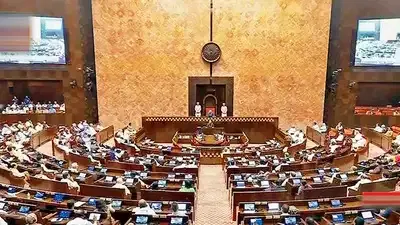
"The Lok Sabha and Rajya Sabha, while both essential pillars of India's Parliament, serve distinct roles and wield unique powers.” |
Conclusion
There are some powers and functions where Lok Sabha is superior to Rajya Sabha such as the introduction and adoption of money bills, as well as the removal of a cabinet via a no-confidence motion. Rajya Sabha has been given exclusive powers in certain areas such as it can declare a state subject to be of national importance and facilitating central legislation. Then there are a number of areas where both Houses have equal authority such as the adoption of bills other than money bills, approval of proclamation of emergency, moving of adjournment, etc. Together, these two houses contribute to a balanced and comprehensive legislative process in India.
FAQs
Question: What is the primary difference between the Lok Sabha and Rajya Sabha?
Answer: The primary difference is that Lok Sabha is the lower house of Parliament, representing the people, and members are directly elected by citizens of India. Rajya Sabha, the upper house, represents the states and union territories, and its members are indirectly elected by the elected members of state legislative assemblies.
Question: How does the tenure of Lok Sabha and Rajya Sabha differ?
Answer: Lok Sabha members serve for a term of five years, after which the house is dissolved for general elections. Rajya Sabha is a permanent body and is not subject to dissolution; one-third of its members retire every two years, with each member serving a six-year term.
Question: Can the Rajya Sabha initiate Money Bills?
Answer: No, the Rajya Sabha cannot initiate Money Bills. Money Bills can only be introduced in the Lok Sabha. The Rajya Sabha can suggest amendments to a Money Bill, but the final decision rests with the Lok Sabha.
Question: What role does the Rajya Sabha play in the legislative process?
Answer: The Rajya Sabha reviews and debates bills passed by the Lok Sabha. It can suggest amendments, and for most bills, its approval is necessary. However, in the case of Money Bills, the Rajya Sabha has limited powers.
Question: What is the role of Lok Sabha in a No-confidence Motion?
Answer: A No-confidence Motion can only be introduced and passed in the Lok Sabha. If the motion is passed, the Council of Ministers, headed by the Prime Minister, must resign, as they no longer have the confidence of the majority in the Lok Sabha.
MCQs
- Which of the following can only be initiated in the Lok Sabha?
a) Constitutional Amendment Bills
b) Money Bills
c) Ordinary Bills
d) Adjournment Motions
Answer: (B) See the Explanation
Money Bills can only be initiated in the Lok Sabha. The Rajya Sabha may suggest amendments but cannot reject or amend the bill without the Lok Sabha's approval.
- The tenure of a Rajya Sabha member is:
a) 5 years
b) 6 years
c) Permanent
d) 2 years
Answer: (B) See the Explanation
A Rajya Sabha member serves a six-year term, and one-third of the members retire every two years. The Rajya Sabha is a permanent body that is not subject to dissolution.
- A No-confidence Motion can only be introduced in which house of Parliament?
a) Lok Sabha
b) Rajya Sabha
c) Either Lok Sabha or Rajya Sabha
d) Joint Session of Parliament
Answer: (A) See the Explanation
A No-confidence Motion can only be introduced in the Lok Sabha. If passed, the ruling government must resign.
- How many members of the Rajya Sabha are nominated by the President of India?
a) 10
b) 12
c) 15
d) 20
Answer: (B) See the Explanation
The President of India nominates 12 members to the Rajya Sabha, representing fields like art, literature, science, and social services.
- Which of the following powers is exclusive to the Lok Sabha?
a) Passing Constitutional Amendment Bills
b) Approving the President’s rule
c) Passing a Money Bill
d) Impeaching the President
Answer: (C) See the Explanation
The Lok Sabha has exclusive power to pass Money Bills, which the Rajya Sabha can only delay or suggest amendments to.
GS Mains Questions and Model Answers
Q1: Examine the role of the Rajya Sabha as a revising chamber in the Indian parliamentary system. How does it act as a check on the Lok Sabha?
Explanation: This question requires an examination of the Rajya Sabha's role as a revising chamber. The Rajya Sabha reviews and amends bills passed by the Lok Sabha, acting as a check to prevent hasty legislation. It ensures that the interests of the states are considered in the legislative process, particularly through its ability to suggest amendments and delay bills. While it has less power in financial matters, the Rajya Sabha's role in passing constitutional amendments and other significant bills makes it an essential part of the legislative system.
Q2: Discuss the significance of the Lok Sabha in maintaining the accountability of the government. How does its role differ from that of the Rajya Sabha?
Explanation: This question requires a discussion of the Lok Sabha's role in ensuring government accountability. As the directly elected house, the Lok Sabha holds the government accountable through mechanisms such as the No-confidence Motion and its control over financial matters. The government's survival depends on the confidence of the Lok Sabha. In contrast, the Rajya Sabha does not have the power to introduce or pass a No-confidence Motion, and its role in holding the government accountable is limited. The question also requires a comparison of the differing powers of the two houses.
Q3: Analyze the relevance of having a bicameral legislature in India. How do the Lok Sabha and Rajya Sabha complement each other in the legislative process?
Explanation: This question asks for an analysis of the importance of a bicameral legislature, with the Lok Sabha representing the people and the Rajya Sabha representing the states. The answer should focus on how the two houses complement each other, with the Lok Sabha introducing and passing most legislation, and the Rajya Sabha acting as a reviewing body that ensures thorough debate and state representation. The division of powers, particularly in financial matters, should also be highlighted to show how the two houses work together to create a balanced and representative legislative process.
Previous Year Questions on Difference Between Powers and Position of Lok Sabha & Rajya Sabha
1. UPSC CSE 2019
Q1: Compare the powers and functions of the Lok Sabha and the Rajya Sabha in the legislative process of India.
Answer: The Lok Sabha and Rajya Sabha both play crucial roles in the legislative process, but their powers and functions differ. The Lok Sabha, being the directly elected house, has greater control over financial matters. Money Bills can only be introduced in the Lok Sabha, and while the Rajya Sabha can suggest amendments, it cannot reject them. The Lok Sabha also holds the power to pass a No-confidence Motion, which can force the resignation of the government. On the other hand, the Rajya Sabha represents the states and serves as a revising chamber, reviewing, amending, and approving bills passed by the Lok Sabha. The two houses share equal powers in passing ordinary and constitutional amendment bills, except in financial matters.
2. UPSC CSE 2020
Q2: Why is the Rajya Sabha considered a permanent house, and how does it maintain continuity in the Indian Parliament?
Answer: The Rajya Sabha is considered a permanent house because it is not subject to dissolution. Unlike the Lok Sabha, which has a fixed five-year term, the Rajya Sabha has a system of staggered retirement, where one-third of its members retire every two years. This system ensures continuity in the legislative process, even when the Lok Sabha is dissolved for general elections. The presence of the Rajya Sabha allows for a stable legislative body that can continue its work uninterrupted, ensuring ongoing representation for the states in the Indian Parliament.
*email: contactus@prepp.in
Download the PREPP App and attempt FREE IAS Exam Mock Tests and get complete study material!
UPSC IAS : CSAT - Mini Live Test

Live Test : UPSC CSE Prelims CSAT (Paper-II) (Oct 20 - 23)
Full Test - 04: UPSC CSE Prelims CSAT (Paper-II)
Full Test - 03: UPSC CSE Prelims CSAT (Paper-II)
UPSC CSE Prelims 2026 GS Paper 1 Question Paper (24-May-2026)
UPSC CSE Prelims 2026 CSAT Paper 2 Question Paper (24-May-2026)

17 February 2025 | The Hindu Must Read Articles | Current Affairs

16 February 2026 | The Hindu Must Read Articles | Current Affairs

13 February 2026 | The Hindu Must Read Articles | Current Affairs









Comments