Deputy Speaker of Lok Sabha - Indian Polity Notes
Deputy Speaker of Lok Sabha has constitutional status under Article 95. He/She is supposed to perform the duties of speaker, if the office of Speaker is vacant and during the absence of the Speaker from any sitting of the House. Deputy Speaker is the second-highest ranking authority of the Lok Sabha, elected by the Lok Sabha from amongst its members right after the election of the Speaker. Ananthasayanam Ayyangar had the distinction of being the first Deputy Speaker of the Lok Sabha. It's regrettable that for the very first time, Lok Sabha has not elected the Deputy Speaker for its entire duration.
This article explains about the Deputy Speaker of Lok Sabha which is important for UPSC IAS exam preparation.
| To Read update on this topic: |
|
Table of Contents |
Constitutional Provisions
| Article | Subject Matter |
|---|---|
| Article 93 | Provides provisions for the election of both the Speaker and the Deputy Speaker. |
| Article 94 | Vacation and resignation of, and removal from, the offices of Speaker and Deputy Speaker. |
| Article 95 | Provision of power of the Deputy Speaker or other person to perform the duties of the office of, or to act as, Speaker. |
| Article 96 | Speaker or the Deputy Speaker not to preside while a resolution for his removal from office is under consideration |
| Article 97 | Salaries and allowances of the Chairman and Deputy Chairman and the Speaker and Deputy Speaker. |
Election of The Deputy Speaker
- The Deputy Speaker is elected from amongst its members by the Lok Sabha itself.
- After the election of the Speaker, the deputy speaker is also elected.
- As per the Rules of Procedure and Conduct of Business in Lok Sabha, “The Deputy Speaker election shall be held on such date as the Speaker may fix.
- According to the convention, the post of the deputy speaker is given to the opposition party in India.
|
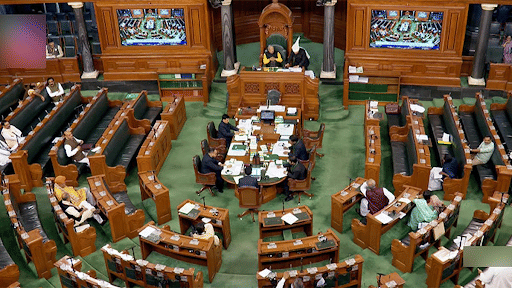
Under Article 95 of the Constitution, Deputy Speaker performs the duties of the speaker, if the office of Speaker is vacant and during the absence of the Speaker from any sitting of the House. |
Term of Office and Removal
- The Deputy Speaker remains in office during the life of the Lok Sabha i.e. for five years.
- In the following three cases The Deputy Speaker may vacate his/her office earlier:
- If he ceases to be a member of the Lok Sabha
- If he resigns by writing resignation to the Speaker
- If he was removed from office by a resolution passed by a majority vote of all the then members of the Lok Sabha.
- Before introduction of such a resolution a 14 days advance notice should be given to the deputy speaker.
Power & Function of Deputy Speaker of Lok Sabha
- The Deputy Speaker performs the duties of the Speaker when the Speaker’s Office is vacant. He also presides over the House in the absence of the Speaker.
- When he presides over the House in absence of the Speaker, he has the same powers as the Speaker.
- Presides over the Joint sitting of both Houses in the absence of Speaker.
- He is directly responsible to the house and not subordinate to the speaker.
- Whenever he is appointed as a member of a parliamentary committee, he automatically becomes its chairman.
- From the 11th Lok Sabha, there has been consensus that the post of Speaker will go to the member of the ruling party and the post of Deputy Speaker will go to the main opposition party.
17th Lok Sabha to End Without a Deputy Speaker
- In accordance with Article 93 of the Indian Constitution, the Lok Sabha is required to choose two members a speaker and a deputy speaker at the beginning of its term. However, the 17th Lok Sabha, which commenced its term in May 2019, has reached its conclusion without filling the deputy speaker position.
- A position conventionally held by a member of the opposition party. This development has sparked concerns among opposition parliamentarians and experts, who view it as a departure from established democratic norms.
- The failure to appoint a deputy speaker will undermine the opposition's role in the parliamentary process.
- Legal challenges have arisen over the failure to appoint a deputy speaker, with the Supreme Court issuing notices to the Union government and several state assemblies, highlighting the constitutional obligation to fill the position and maintain the integrity of parliamentary procedures.
Conclusion
The role of the Deputy Speaker of Lok Sabha is pivotal in ensuring the smooth functioning of the lower house of Parliament. Charged with upholding parliamentary procedures, maintaining order during debates, and presiding over the chamber in the absence of the Speaker, the Deputy Speaker plays a crucial role in facilitating constructive dialogue and decision-making processes. Deputy Speaker of Lok Sabha symbolizes the commitment to democratic values and the rule of law, serving as a cornerstone of India's parliamentary democracy. The absence of a deputy speaker throughout the tenure of the 17th Lok Sabha represents a departure from established democratic norms and parliamentary conventions.
FAQs
Question: Who is the Deputy Speaker of the Lok Sabha?
Answer: The Deputy Speaker of the Lok Sabha is a member of the Lok Sabha who is elected by the members to assist and act as the presiding officer of the House in the absence of the Speaker. The Deputy Speaker ensures the smooth functioning of parliamentary proceedings and upholds the decorum of the House.
Question: How is the Deputy Speaker of the Lok Sabha elected?
Answer: The Deputy Speaker of the Lok Sabha is elected by the members of the Lok Sabha from among themselves. The election is conducted soon after the new Lok Sabha is formed, and it usually follows a motion moved by a member and seconded by another, with voting if required.
Question: What are the functions and powers of the Deputy Speaker?
Answer: The Deputy Speaker presides over the sessions of the Lok Sabha in the absence of the Speaker, maintaining order and conducting the proceedings. They have the authority to interpret parliamentary rules, decide on points of order, and ensure compliance with the procedures. The Deputy Speaker also plays a role in various parliamentary committees.
Question: Can the Deputy Speaker be removed from office?
Answer: Yes, the Deputy Speaker can be removed from office by a resolution passed by a majority of all the members of the Lok Sabha. The motion for removal must be moved with at least 14 days' notice.
Question: Is the Deputy Speaker always from the ruling party?
Answer: Traditionally, the position of Deputy Speaker is offered to a member from the opposition or a party different from the ruling government, reflecting parliamentary democracy's inclusive character. However, this practice may vary depending on the political context.
MCQs
- The Deputy Speaker of the Lok Sabha is elected by:
A) The President of India
B) The members of the Lok Sabha
C) The Rajya Sabha members
D) The Speaker of the Lok Sabha
Answer: (B) See the Explanation
The Deputy Speaker is elected by the members of the Lok Sabha from among themselves.
- The Deputy Speaker's primary role is to:
A) Represent India internationally
B) Assist and preside over sessions in the absence of the Speaker
C) Lead the ruling party
D) Make national policies
Answer: (B) See the Explanation
The Deputy Speaker presides over Lok Sabha sessions in the absence of the Speaker.
- The Deputy Speaker can be removed from office by:
A) The President with immediate effect
B) A majority vote in the Lok Sabha after a 14-day notice
C) A motion by the Prime Minister
D) A joint parliamentary committee
Answer: (B) See the Explanation
The removal requires a majority vote in the Lok Sabha with a 14-day notice.
- Traditionally, the Deputy Speaker is chosen from:
A) The ruling party only
B) The opposition or a different party
C) The judiciary
D) The Council of Ministers
Answer: (B) See the Explanation
Traditionally, the Deputy Speaker is selected from a party different from the ruling government to maintain a balance.
- In the absence of the Speaker, the Deputy Speaker's main responsibility is to:
A) Lead the government
B) Preside over the Lok Sabha sessions
C) Amend the Constitution
D) Represent India at the UN
Answer: (B) See the Explanation
The Deputy Speaker presides over the proceedings of the Lok Sabha when the Speaker is absent.
GS Mains Questions and Model Answers
Q1: Discuss the constitutional and functional role of the Deputy Speaker of the Lok Sabha in maintaining parliamentary democracy.
Answer: The Deputy Speaker of the Lok Sabha, elected by the members from among themselves, plays a significant constitutional and functional role in maintaining parliamentary democracy. The Deputy Speaker assists the Speaker in conducting the proceedings of the House and presides over sessions in their absence, ensuring parliamentary decorum and adherence to rules. They interpret parliamentary procedures, decide points of order, and often participate in various parliamentary committees. The role reflects the inclusive nature of India's democracy, as the position is traditionally offered to a member from the opposition, fostering a sense of balance and neutrality in parliamentary functions.
Q2: Analyze the significance of electing the Deputy Speaker from a party different from the ruling government.
Answer: Electing the Deputy Speaker from a party different from the ruling government underscores India's commitment to inclusive and balanced parliamentary democracy. This practice ensures that parliamentary proceedings are conducted impartially, without favoritism toward the ruling party. It also promotes constructive opposition engagement and strengthens checks and balances within the legislative process. By involving members from different political backgrounds in key positions, the practice fosters political pluralism and cooperation, enhancing the democratic ethos of the Lok Sabha.
Q3: Explain the procedure for the removal of the Deputy Speaker of the Lok Sabha and its significance in a parliamentary democracy.
Answer: The Deputy Speaker of the Lok Sabha can be removed from office by a resolution passed by a majority of all the members of the Lok Sabha, with at least 14 days' notice. This procedure ensures that the removal process is deliberate and considered, preventing arbitrary or politically motivated actions. It reflects the principle of collective responsibility and accountability in a parliamentary democracy, ensuring that high offices are held with the confidence of the House. The process emphasizes transparency and provides safeguards against misuse of power, reinforcing the credibility and stability of parliamentary institutions.
Previous Year Questions on Deputy Speaker of Lok Sabha
1. UPSC CSE 2020
Question: Evaluate the role of the Deputy Speaker in ensuring impartiality and order during parliamentary proceedings.
Answer: The Deputy Speaker plays a critical role in ensuring impartiality and order during parliamentary proceedings by presiding over sessions in the absence of the Speaker. They are responsible for maintaining decorum, enforcing parliamentary rules, and ensuring that debates and discussions are conducted fairly. The Deputy Speaker's role, often filled by a member from the opposition, adds to the credibility and neutrality of the legislative process. Their impartiality prevents any undue influence from the ruling party and promotes balanced representation of diverse political views, thereby upholding the democratic principles of transparency and accountability.
2. UPSC CSE 2019
Question: Discuss the challenges faced by the Deputy Speaker in maintaining the balance of power within the Lok Sabha.
Answer: The Deputy Speaker faces several challenges in maintaining the balance of power within the Lok Sabha, including managing partisan debates, ensuring impartiality despite political affiliations, and upholding parliamentary decorum amid contentious issues. As a key figure in maintaining legislative order, the Deputy Speaker must navigate political pressures and maintain neutrality, particularly when presiding over sensitive debates or motions. Balancing the interests of the ruling party and the opposition, addressing disruptions, and ensuring adherence to parliamentary rules are integral to the role. Effective leadership, impartiality, and a strong understanding of legislative procedures are necessary to meet these challenges and maintain the integrity of the House.
*email: contactus@prepp.in
Download the PREPP App and attempt FREE IAS Exam Mock Tests and get complete study material!

Full Test - 04: UPSC CSE Prelims CSAT (Paper-II)
Full Test - 03: UPSC CSE Prelims CSAT (Paper-II)
UPSC CSE Prelims 2026 GS Paper 1 Question Paper (24-May-2026)
UPSC CSE Prelims 2026 CSAT Paper 2 Question Paper (24-May-2026)

17 February 2025 | The Hindu Must Read Articles | Current Affairs

16 February 2026 | The Hindu Must Read Articles | Current Affairs

13 February 2026 | The Hindu Must Read Articles | Current Affairs









Comments