Amending Act of 1786 - Indian Polity Notes
|
"Lord Cornwallis, assuming the position of Governor-General in 1786, sought enhanced powers. The Amending Act of 1786 aimed to augment the authority of the Governor-General and establish rules for situations of non-concurrence between the council and the Governor-General."
|
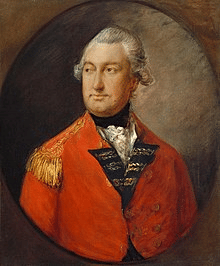
The Amending Act of 1786 was passed by the British Government to invest more power into the Governor-General to override the decision of his council and act without its concurrence in extraordinary conditions. Lord Cornwallis was taking up the role of the Governor-General and wanted more powers vested in him. The Amending Act of 1786 is a direct result of that. In this article, let us see the historical background behind the Amending Act of 1786, its objectives, key provisions of the Act and its significance.
|
Table of Contents |
Historical Background
- Lord Cornwallis was appointed Governor-General of Bengal in 1786.
- To take the position, he made two demands:
- he should be given the right to overturn his council's decision in extraordinary instances, and he should be given the power to override his council's decision.
- He'd be the Commander-in-Chief as well.
- Lord Cornwallis was named Governor-General and Commander-in-Chief. He is credited with reorganising the British army and government as well as instituting land, court, and administrative reforms.
- He demanded that the Governor-powers General's be expanded so that he might, in exceptional circumstances, override the majority of his Council and act on his own unique responsibility.
Objectives of the Amendment Act of 1786
- The primary objective was to enlarge the powers vested in the Governor-General.
- Another objective was to list rules in case of non-concurrence between the council and Governor-General.
Key Provisions of Amendment Act of 1786
- The Act allowed the unification of the offices of the Governor-General and Commander in Chief.
- It gave overriding powers to the Governor-General over his council in extraordinary situations.
- It provided that the King’s approval for selecting the Governor-General was not required anymore.
- The Amendment Act recognized and confirmed the powers of the Court of Directors in the appointment of Commander in Chief, Governor-General and the Councillors.
- If the Governor-General or Governor had to utilize the extraordinary power to overturn the majority of the Council, both sides would have to declare their viewpoints on the disputed matter in writing.
- If the Governor-General or Governor finally decided to act on his own, he would be personally liable for any step taken without the Council's approval.
Significance
- Lord Cornwallis got the power of working as Both Governor-General & Commander in Chief and he became the first effective ruler under the authority of the Board of Control and the Court of Directors.
- Due to this power, Lord Cornwallis reorganized the judicial system and bought administrative reforms and Permanent Settlement in Bengal.
Defects
Though it vested the extraordinary power to override the Council’s decision, the personal liability clause in case of actions taken without Council approval weakened the Amendment Act of 1786.
Conclusion
The Amendment Act 1786 gave near-absolute power to the Governor-General. Due to this Lord Cornwallis was able to bring judicial administration reforms, Codify civil and criminal laws and took up reforms in public services. Some of the well-known Judicial reforms under Lord Cornwallis are the reorganization of districts, the appointment of the collector, the establishment of Mal Adalats and Registrar Courts.
FAQs
Question: What was the significance of the Amending Act of 1786?
Answer: The Amending Act of 1786 was significant because it allowed Lord Cornwallis to hold both the position of Governor-General and Commander-in-Chief of the British forces in India. This amendment strengthened the authority of the Governor-General and established clearer military control.
Question: Who was appointed under the provisions of the Amending Act of 1786?
Answer: Lord Cornwallis was appointed as the Governor-General of Bengal and the Commander-in-Chief of British India under the Amending Act of 1786. This dual role was crucial in consolidating administrative and military power under a single authority.
Question: How did the Amending Act of 1786 impact the governance of British India?
Answer: The Amending Act of 1786 centralized power by granting the Governor-General the authority to override the decisions of his Council in cases of military or political importance. This marked a shift toward greater centralization of authority in British India.
Question: Why was the Amending Act of 1786 necessary?
Answer: The Amending Act of 1786 was necessary to address administrative challenges in India and to ensure that the Governor-General had sufficient military authority to maintain control over British territories. It helped to resolve conflicts between the Governor-General and the Council.
Question: What was one of the key powers granted to the Governor-General under the Amending Act of 1786?
Answer: One of the key powers granted to the Governor-General under the Amending Act of 1786 was the ability to act on his own authority in matters of military importance, even if the Council disagreed. This power ensured that the Governor-General could make quick decisions in times of crisis.
MCQs
1. Which Governor-General was directly impacted by the Amending Act of 1786?
A) Warren Hastings
B) Lord Cornwallis
C) Lord Wellesley
D) Lord Dalhousie
Answer: B See the Explanation
Explanation: The Amending Act of 1786 specifically impacted Lord Cornwallis, as it allowed him to serve as both Governor-General and Commander-in-Chief of the British forces in India.
2. What was the primary purpose of the Amending Act of 1786?
A) To increase the powers of the East India Company
B) To reduce the power of the Governor-General
C) To give the Governor-General military authority
D) To establish the post of Viceroy
Answer: C See the Explanation
Explanation: The primary purpose of the Amending Act of 1786 was to grant the Governor-General military authority, particularly by making the Governor-General also the Commander-in-Chief of the British forces in India.
3. Which of the following was a key provision of the Amending Act of 1786?
A) Abolition of the Council
B) Division of Bengal
C) Dual control of the British government and East India Company
D) The Governor-General's ability to override the Council
Answer: D See the Explanation
Explanation: The Amending Act of 1786 empowered the Governor-General to override the decisions of his Council in cases of military or political importance, centralizing authority under the Governor-General.
4. Under which act did the Governor-General of India gain the power to serve as Commander-in-Chief?
A) Regulating Act of 1773
B) Pitt's India Act of 1784
C) Amending Act of 1786
D) Charter Act of 1813
Answer: C See the Explanation
Explanation: The Amending Act of 1786 gave the Governor-General the power to serve as Commander-in-Chief of the British forces in India, a key change aimed at strengthening British control in the region.
5. Which conflict necessitated the introduction of the Amending Act of 1786?
A) Anglo-Mysore Wars
B) Anglo-Maratha Wars
C) First Anglo-Sikh War
D) French and Indian War
Answer: A See the Explanation
Explanation: The Amending Act of 1786 was introduced during a period of ongoing conflicts, such as the Anglo-Mysore Wars, where strong military leadership was needed to maintain British control over Indian territories.
GS Mains Questions and Answers
Q1: Discuss the significance of the Amending Act of 1786 in the consolidation of British power in India.
Answer: The Amending Act of 1786 was a pivotal moment in the consolidation of British power in India. It gave the Governor-General, Lord Cornwallis, significant military and administrative authority by combining the roles of Governor-General and Commander-in-Chief. This allowed for swift decision-making in times of military crisis, particularly during the Anglo-Mysore Wars. The act also enabled the Governor-General to override the Council in matters of military or political importance, marking a shift towards a more centralized system of governance. This centralization of power strengthened British control over India and laid the groundwork for future administrative reforms.
Q2: Analyze how the Amending Act of 1786 affected the balance of power between the Governor-General and his Council.
Answer: The Amending Act of 1786 altered the balance of power by granting the Governor-General the authority to act independently of the Council in matters of military or political importance. This was a departure from earlier arrangements where the Governor-General was bound by the decisions of his Council. The act allowed for more decisive action during times of military conflict, particularly in the face of challenges like the Anglo-Mysore Wars. However, it also concentrated power in the hands of the Governor-General, reducing the influence of the Council and centralizing authority under the British administration in India.
Q3: Evaluate the impact of the Amending Act of 1786 on the military governance of British India.
Answer: The Amending Act of 1786 had a profound impact on the military governance of British India by making the Governor-General also the Commander-in-Chief of the British forces. This consolidation of power ensured that military and administrative decisions were aligned, allowing for more effective governance during times of conflict. The act came during the Anglo-Mysore Wars, a time when strong military leadership was essential. By granting the Governor-General the power to override the Council in military matters, the act centralized decision-making and strengthened British military control in India, setting a precedent for future governance.
Previous Year Questions on the Amending Act of 1786
1. UPSC CSE Prelims 2018:
Question: Which of the following acts allowed the Governor-General of India to serve as the Commander-in-Chief of the British forces?
A) Charter Act of 1813
B) Regulating Act of 1773
C) Amending Act of 1786
D) Pitt's India Act of 1784
Answer: C
Explanation: The Amending Act of 1786 allowed the Governor-General of India to also serve as the Commander-in-Chief of the British forces, a move that centralized military and administrative power.
2. UPSC CSE Mains 2019 (GS Paper 1):
Question: "Analyze the impact of the Amending Act of 1786 on British military control in India."
Answer: The Amending Act of 1786 played a crucial role in consolidating British military control in India by making the Governor-General also the Commander-in-Chief of the British forces. This move allowed for more streamlined decision-making during military conflicts, such as the Anglo-Mysore Wars. The act enabled the Governor-General to act independently in matters of military importance, strengthening British authority and setting the stage for future military and administrative consolidation.
*email: contactus@prepp.in
Download the PREPP App and attempt FREE IAS Exam Mock Tests and get complete study material!

Full Test - 04: UPSC CSE Prelims CSAT (Paper-II)
Full Test - 03: UPSC CSE Prelims CSAT (Paper-II)
UPSC CSE Prelims 2026 GS Paper 1 Question Paper (24-May-2026)
UPSC CSE Prelims 2026 CSAT Paper 2 Question Paper (24-May-2026)

17 February 2025 | The Hindu Must Read Articles | Current Affairs

16 February 2026 | The Hindu Must Read Articles | Current Affairs

13 February 2026 | The Hindu Must Read Articles | Current Affairs









Comments