The Crown Rule (1858 - 1947) - Indian Polity Notes
Crown Rule refers to direct control of the British crown over Indian administration from 1857 to 1947. After the revolt of 1857, the British Crown took over the administration of India from the East India Company by the Government of India Act 1858. This legislation handed over the powers related to government, territories and revenues from East India Company to the British Crown. Many renowned administrators such as Lord Minto, Lord Chelmsford, and Lord Irwin were responsible for groundbreaking statutes during the Crown Rule. In this article, we will look at the different statutes which were enacted during the Crown Rule which are important for UPSC prelim as well as mains examination.
|
Table of Contents |
Historical Background
- The Revolt of 1857 was more than a Sepoy Mutiny; it was an expression of the Indian people's anger, resentment, and accumulated complaints against British rule.
- It was evident that there was a need for a shift in the way individuals were managed.
- As a result, the British government decided to liquidate the East India Company and administer India directly.
- From 1858 until 1947, India was governed by the British Crown.
The different laws enacted during the Crown Rule are given below:
*click the relevant links to read more about it.
|
“Crown Rule brought modernization and infrastructure development but was tainted by exploitation and suppression, leaving a complex legacy of progress and pain in India's history."
|
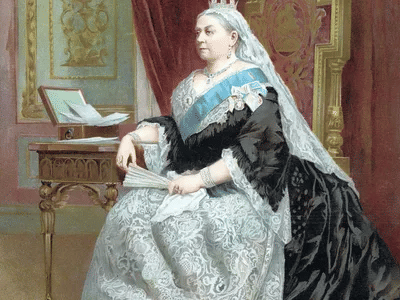
The Government Of India Act 1858
- The company's rule came to an end after the 1857 uprising, and the British properties in India were returned to the British Crown.
- The Indian Secretary of State's office was established. He was aided by a 15-member Indian Council.
- He was in charge of the Indian administration, and the Viceroy was his agent. The Governor-General was also given the title of Viceroy (Lord Canning).
- The Board of Control and the Court of Directors were both disbanded.
*For detailed notes of this topic, check this link The Government of India Act (1858) - Indian Polity UPSC notes.
Indian Councils Act 1861
- In the Viceroy's Councils, Indians were represented. Indians were elected to the Legislative Council. ;the Raja of Benaras, the Maharaja of Patiala and Sir Dinkar Rao.
- Indians were allowed to participate in the Viceroy's Executive Council as non-official members.
- The portfolio system was acknowledged.
- Decentralization began with the restoration of legislative powers to the presidencies of Madras and Bombay.
*For detailed notes of this topic, check this link The Indian Councils Act (1861) - Indian Polity UPSC notes.
Indian Councils Act 1892
- Nominations (indirect elections) were implemented.
- The number of Legislative Councils has increased. Legislative councils were given new responsibilities, such as budget discussion and questioning of the government.
* For detailed notes of this topic, check this link The Indian Councils Act (1892) - Indian Polity UPSC notes.
Indian Councils Act 1909
- For the first time, direct elections to legislative councils were held.
- The Imperial Legislative Council took the place of the Central Legislative Council.
- The legislative council now has a total of 60 members, up from 16 previously.
- The idea of a common electorate was widely welcomed.
- An Indian was appointed to the Viceroy's Executive Council for the first time. (Law Member Satyendra Prasad Sinha)
* Read more about The Indian Councils Act (1909) (Morley-Minto Reforms) - Indian Polity UPSC notes
The Government Of India Act 1919 (Montague-chelmsford Reforms)
- Subjects were divided into two categories: central and provincial.
- In provincial administrations, diarchy was instituted, with executive councilors in charge of the reserved list and ministers in control of the transferred list of topics.
- The ministers were chosen from among the legislative council's elected members and were accountable to the legislature.
- At the center, a bicameral legislature was established for the first time. (Rajya Sabha and Lok Sabha were afterward renamed Rajya Sabha and Lok Sabha, respectively.)
- It required three Indians to serve on the Viceroy's executive council.
- For the first time in India, this act provided for the establishment of a public service commission.
- This act expanded the right to vote, allowing around 10% of the people to exercise their right to vote.
*Read more about The Government of India Act (1919) (Montague-Chelmsford Reforms) - Indian Polity UPSC notes
The Government Of India Act 1935
- British India and the princely states were proposed to form an all-India federation. However, this never came to pass.
- The subjects were split between the central government and the provinces. The Federal List was in charge of the Centre, the Provincial List was in charge of the Provinces, and there was a Concurrent List that catered to both.
- Diarchy was abolished at the provincial level and replaced by monarchy at the national level.
- Provinces were given more authority, and bicameral legislatures were established in six of the eleven provinces.
- The Indian Council was abolished, and a federal court was constituted.
- Burma and Aden were cut off from the rest of India.
- The RBI was established as a result of this act.
- This Act was in effect till the new Indian Constitution took its place.
*Read more about The Government of India Act (1935) - Indian Polity UPSC notes
Indian Independence Act 1947
- India was declared sovereign and independent.
- The Viceroy and Governors were given the title of constitutional (nominal) rulers.
- Establish responsible governments at the national and provincial levels.
- Both legislative and executive authorities have been delegated.
*Read more about The Indian Independence Act, 1947 - Indian Polity UPSC notes
Conclusion
The period from 1858 to 1947 marked a transformative chapter in Indian history under the Crown rule. The British Crown's assumption of direct control from the East India Company ushered in significant political, social, and economic changes. While the administration brought about modernization and infrastructural development, it was also marred by exploitation, suppression. The eventual attainment of independence in 1947 marked the end of the Crown Rule. The different laws which were enacted during the Crown Rule became a source of the modern-day constitution India developed.
FAQs
Question: What was the significance of the Government of India Act 1858?
Answer: It marked the transfer of power from the East India Company to the British Crown, making India a formal British colony.
Question: What reforms did the Government of India Act 1935 introduce?
Answer: It introduced provincial autonomy, a federal structure, and extended the electoral franchise, laying the groundwork for India’s independence.
Question: How did the Montague-Chelmsford Reforms impact Indian politics?
Answer: These reforms expanded Indian representation in provincial governments and introduced dyarchy, a dual system of governance.
Question: What were the main features of the Indian Councils Act of 1909?
Answer: The 1909 Act allowed Indians to be elected to legislative councils and introduced separate electorates for Muslims.
Question: What was the impact of the Indian Independence Act 1947?
Answer: It led to the partition of India into two independent dominions, India and Pakistan, and marked the end of British colonial rule.
MCQs
1. Which of the following acts introduced dyarchy in Indian provinces?
A. Government of India Act 1858
B. Government of India Act 1919
C. Indian Councils Act 1892
D. Indian Independence Act 1947
Answer: (B) See the Explanation
The Government of India Act 1919 introduced dyarchy, dividing provincial subjects into 'reserved' and 'transferred.'
2. Who was the first Viceroy of India after the Government of India Act 1858?
A. Lord Curzon
B. Lord Ripon
C. Lord Canning
D. Lord Dalhousie
Answer: (C) See the Explanation
Lord Canning became the first Viceroy of India after the passage of the Government of India Act 1858.
3. The Morley-Minto Reforms of 1909 introduced which significant feature in Indian politics?
A. Dyarchy
B. Provincial autonomy
C. Separate electorates
D. Federal system
Answer: (C) See the Explanation
The Morley-Minto Reforms of 1909 introduced separate electorates for Muslims, a key development in communal politics.
4. Which act provided the legal framework for India's partition?
A. Government of India Act 1935
B. Indian Independence Act 1947
C. Montague-Chelmsford Reforms
D. Indian Councils Act 1861
Answer: (B) See the Explanation
The Indian Independence Act of 1947 led to the partition of India into two independent dominions, India and Pakistan.
5. The Government of India Act 1935 proposed a federation including which entities?
A. Princely states and British provinces
B. British provinces only
C. Princely states only
D. India and Burma
Answer: (A) See the Explanation
The 1935 Act proposed a federation comprising both princely states and British provinces, though it was never fully implemented.
GS Mains Questions and Model Answers
Q1: Discuss the significance of the Government of India Act 1935 in the context of India's journey toward independence.
Answer: The Government of India Act 1935 laid the foundation for federalism and provincial autonomy. Though incomplete, it transferred significant powers to Indian legislators and introduced a broader electoral franchise, setting the stage for India's eventual independence. The act also paved the way for the drafting of the Indian Constitution.
Q2: Analyze the impact of the Montague-Chelmsford Reforms on Indian governance.
Answer: The Montague-Chelmsford Reforms of 1919 represented a milestone in Indian self-governance, introducing dyarchy at the provincial level. While it expanded Indian participation in governance, it also maintained significant British control over crucial areas, such as defense and finance, leading to dissatisfaction among Indian leaders.
Q3: Evaluate the role of the Indian Councils Act 1909 in shaping communal politics in India.
Answer: The Indian Councils Act 1909 introduced separate electorates for Muslims, marking the beginning of communal representation in Indian politics. This system sowed the seeds of religious division, which later played a role in the partition of India in 1947. However, it also increased Indian participation in governance.
Previous Year Questions on Government of India Acts
1. UPSC CSE Prelims 2021
Question: Which of the following introduced separate electorates for Muslims in India?
A. Indian Councils Act 1861
B. Indian Councils Act 1909
C. Government of India Act 1935
D. Indian Independence Act 1947
Answer: B
Explanation: The Indian Councils Act 1909 (Morley-Minto Reforms) introduced separate electorates for Muslims, a key development in Indian politics.
2. UPSC CSE Mains 2018 (GS Paper 1)
Question: Examine the role of the Government of India Act 1935 in the constitutional development of India.
Answer: The Government of India Act 1935 played a significant role in India’s constitutional development by proposing a federal system, introducing provincial autonomy, and expanding the electorate. While it fell short of Indian aspirations for complete self-rule, it laid the groundwork for the post-independence constitutional framework.
*email: contactus@prepp.in
Download the PREPP App and attempt FREE IAS Exam Mock Tests and get complete study material!

Full Test - 04: UPSC CSE Prelims CSAT (Paper-II)
Full Test - 03: UPSC CSE Prelims CSAT (Paper-II)
UPSC CSE Prelims 2026 GS Paper 1 Question Paper (24-May-2026)
UPSC CSE Prelims 2026 CSAT Paper 2 Question Paper (24-May-2026)

17 February 2025 | The Hindu Must Read Articles | Current Affairs

16 February 2026 | The Hindu Must Read Articles | Current Affairs

13 February 2026 | The Hindu Must Read Articles | Current Affairs









Comments