The Charter Act 1853 - Indian Polity Notes
Charter Act 1853 was passed in the British Parliament to renew the East India Company's charter. Unlike the previous charter acts of 1793, 1813 and 1833 which renewed the charter for 20 years; this act did not mention the time period for which the company charter was being renewed.The Charter Act of 1853 renewed the powers of the Company and allowed it to retain territories and revenues of Indian territories in the trust of the Crown for an unspecified period. It ended the patronage system and established an open competition system for civil servant recruitment.The Charter Act of 1853 has its major significance as it marks the beginning of the Parliamentary system in India. The topic “Charter Act of 1853” is an important part of the UPSC/IAS Exam Indian Polity and Governance syllabus which is discussed in this article in detail.
|
Table of Contents |

The Charter Act (1853) - Historical Background
- Undue expenditure and unnecessary delay in dispatch business due to the presence of the Court of Directors and Board of control.
- Territorial and political changes in India after the Act of 1833 as the British East India Company had already annexed Sind and Punjab and a number of other Indian states.
- There were also concerns raised about the role of the Governor-General of India as Governor of Bengal as it lead to certain decisions in favor of Bengal
- There was also a demand for decentralization of powers and for giving the Indians a share in the management of their own affairs.
- It was under the above circumstances that the British parliament decided to renew the East India Company’s charter in the year 1853.
- Company in the preceding year appointed two Committees to look into the affairs of the Company. On the basis of their reports, the Charter Act of 1853 was framed and passed.
|
Charter Act 1853 was the last charter act passed for the East India Company, which made the winding up of Company Rule certain.
|
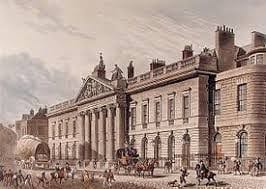
The Charter Act (1853) - Objective
The Charter Act of 1853 renewed the powers of the Company and allowed it to retain territories and revenues of Indian territories in trust for the crown. However, this Charter Act did not grant commercial privileges for the specific period of time as the preceding Charter Acts had provided.
The Charter Act (1853) – Key Provisions
Legislative powers
- For the first time, the legislative and executive functions of the Governor-General's Council were separated.
- It provided for the addition of six new members to the Council, known as legislative councilors.To put it another way, it created a distinct Governor General's Legislative Council, which was later known as the Indian (Central) Legislative Council.
- It acted as a mini-Parliament, following the same procedures as the British Parliament.
- For the first time, legislation was considered a distinct government function, needing specialized apparatus and procedures.
- The procedure of the Governor-General’s Council in matters of legislation was to be the same as followed by the British Parliament. Members could ask the question and discuss the policies of the Executive Council
- The right to veto a bill passed by the Council in its legislative capacity was given to the Executive Council.
- The legislative business was conducted in public and the discussion was oral.
- Bills were referred to the Select Committee rather than to any individual member.
Salary of the members
The Charter Act of 1853 provided that the salaries of the members of the Boards of Control, its Secretary, and other officers would be fixed by the British government but would be paid by the Company.
Reduce in Number of Directors and their Power
- The number of the members of the Court of Directors was reduced from 24 to 18 out of which 6 were to be nominated by the Crown.
- By the Act of 1853, the Court of Directors was disposed of their power of patronage, and the high posts were made subjects to the competitive examinations where no discriminations would be made on the basis of caste, creed, and religion.
- The Macaulay Committee of 1854, which was the Committee for the Indian Civil Service, enforced this scheme.
- The Court of Directors was empowered to constitute a new Presidency.
- The Court of Directors, by the Act also could alter the boundaries of the existing states and incorporate the newly acquired state. This provision was made to create a separate Lieutenant Governorship for Punjab in the year 1859.
Powers regarding Law Commission
- The Act empowered the British Crown to appoint a Law Commission in England to examine the drafts and reports of the Indian Law Commission which had ceased to exist by then.
- Law member was now made full member of the Governor-General’s Executive Council
- The representatives from the Provinces were to be civil servants of not less than ten years standing.
Power with respect to Presidency
- Provision was made for the appointment of a separate Governor for the Presidency of Bengal and until that was made, the Court of Directors might authorize the Governor-General of India in Council to appoint a covenant servant of ten years standing as the Lieutenant-Governor of the province. The latter appointment was made as it was the cheaper of the two.
- Power was given to the Court of Directors to constitute a new Presidency. Power was also given to alter and regulate from time to time the limits of the various provinces. This power was used to create Punjab into a Lieutenant-Governorship.
Open Competition System
- It established an open competition system for civil servant selection and recruitment.
- As a result, the covenanted civil service was made available to Indians as well.
- In 1854, the Macaulay Committee (the Committee on Indian Civil Service) was formed.
The Charter Act (1853) - Significance
- The Charter Act of 1853 indicated clearly that the rule of the Company was not going to last for a long time.
- One of the key features is the clear distinction between the Legislative and Executive council which marks the beginning of the Parliamentary system in India
- The Governor-General was relieved of the administrative duties of Bengal and instead worked for the Government of India.
- The Charter act of 1853 provides for the creation and functioning of the Legislative Council which is considered as an important constitutional measure
The Charter Act (1853) - Criticism
- The exclusion of the Indians from the Legislative Council was one of the major defects of the Charter Act 1853
- As the Charter Act of 1853 did not give the East India Company the right to govern India for another 20 years, it gave an opportunity to the Home Government to step in and take the place of the East India Company in India. This process was hastened by the happenings of 1857, or the so-called 'Mutiny'.
Conclusion
The Charter Act of 1853 was the last charter act passed for the East India Company. The act did not grant commercial privileges for a specific period of time as the preceding Charter Acts had provided. The Charter Act of 1853 marks the beginning of the Parliamentary system in India. The Governor-General was relieved of administrative duties of Bengal and instead worked for the Government of India. This process was hastened by the happenings of 1857, or the so-called 'Mutiny'.
FAQs
Question: What was the Charter Act of 1853?
Answer: The Charter Act of 1853 was the last in the series of Charter Acts passed by the British Parliament that renewed the East India Company’s rule in India. It was significant for introducing several reforms in the administration and governance of British India.
Question: What were the key provisions of the Charter Act 1853?
Answer: Key provisions of the Charter Act 1853 included the introduction of competitive exams for the Indian Civil Services (ICS), the expansion of the legislative council, and the separation of the legislative and executive functions of the government.
Question: How did the Charter Act 1853 change the Indian Civil Services?
Answer: The Charter Act 1853 introduced an open competition system for recruitment into the Indian Civil Services (ICS), making it more merit-based rather than based on nominations from the East India Company.
Question: What impact did the Charter Act 1853 have on the legislative system in India?
Answer: The Act expanded the legislative council of India, adding new members, including four representatives from the provinces of Madras, Bombay, Bengal, and North-Western Provinces, thus making it the first attempt at a representative form of government in India.
Question: Why is the Charter Act of 1853 considered a significant milestone in the history of British India?
Answer: The Charter Act of 1853 is significant because it laid the groundwork for the modern Indian civil services and legislative framework. It was the first Act that did not specify a fixed term for the East India Company's rule, signaling the eventual shift towards Crown rule in India.
MCQs
- What was a major reform introduced by the Charter Act of 1853?
a) Abolition of slavery
b) Introduction of competitive exams for the Indian Civil Services
c) Division of Bengal
d) Creation of the Indian National Congress
Answer: (B) See the Explanation
The Charter Act 1853 introduced competitive exams for recruitment into the Indian Civil Services, replacing the old nomination-based system.
- The Charter Act of 1853 expanded the legislative council by including members from which provinces?
a) Bengal, Madras, Bombay, and North-Western Provinces
b) Delhi, Bengal, Assam, and Punjab
c) Orissa, Rajasthan, Gujarat, and Bihar
d) Sindh, Punjab, Kerala, and Bengal
Answer: (A) See the Explanation
The Act included representatives from Bengal, Madras, Bombay, and North-Western Provinces, marking the beginning of a more representative legislative system in India.
- The Charter Act of 1853 was the first to:
a) Introduce a Governor-General for India
b) Introduce direct elections for the legislative council
c) Separate the legislative and executive functions of the government
d) Abolish the Zamindari system
Answer: (C) See the Explanation
The Charter Act 1853 was the first to separate the legislative and executive functions, marking a significant change in the administration of British India.
- The Charter Act of 1853 was different from previous Charter Acts because:
a) It was the first to not specify a fixed period for the East India Company’s rule
b) It abolished the East India Company
c) It introduced direct British Crown rule over India
d) It established the Indian National Congress
Answer: (A) See the Explanation
Unlike previous Charter Acts, the Act of 1853 did not specify a fixed term for the renewal of the East India Company's rule, reflecting uncertainty about the future of the company’s role in India.
- Which of the following was a direct consequence of the Charter Act 1853?
a) The 1857 Revolt
b) Establishment of competitive exams for ICS
c) Abolition of the monarchy
d) Introduction of Zamindari system
Answer: (B) See the Explanation
One of the most significant outcomes of the Charter Act 1853 was the introduction of competitive exams for recruitment into the Indian Civil Services (ICS), making the system merit-based.
GS Mains Questions and Model Answers
Q1: Analyze the role of the Charter Act of 1853 in shaping the legislative and administrative framework of British India.
Answer: The Charter Act of 1853 played a crucial role in shaping the legislative and administrative framework of British India. By separating the legislative and executive functions within the Governor-General’s Council, the Act introduced a more formal and structured approach to lawmaking in India. This change marked a significant departure from the earlier system, where the Governor-General and his council held both executive and legislative powers. Additionally, the Act’s introduction of open competition for the Indian Civil Services allowed Indians to participate in the administration, setting the stage for the gradual inclusion of Indians in governance. These reforms laid the foundation for modern legislative institutions and administrative processes in India.
Q2: Discuss the impact of the introduction of open competition for the Indian Civil Services through the Charter Act of 1853.
Answer: The introduction of open competition for the Indian Civil Services through the Charter Act of 1853 was a significant reform in the administration of British India. It marked the end of the patronage-based system, where appointments were made based on favoritism and connections. Open competition allowed Indians to enter the prestigious Indian Civil Services (ICS) for the first time, although it remained difficult for many due to the exams being conducted in England. This reform introduced merit-based selection and increased the professionalism and efficiency of the administrative services. Over time, the inclusion of Indians in the civil services contributed to the rise of Indian nationalism and demands for greater participation in governance.
Q3: Examine the constitutional significance of the Charter Act of 1853 in the evolution of British parliamentary control over India.
Answer: The Charter Act of 1853 is constitutionally significant as it marked the beginning of British parliamentary control over Indian legislation. By creating a separate legislative council and introducing formal legislative procedures, the Act established a framework for British parliamentary oversight in Indian governance. The Act also provided for a limited form of representation in the legislative council, setting a precedent for future reforms that would expand Indian participation in lawmaking. The separation of legislative and executive powers under the Act laid the groundwork for the gradual development of representative institutions in India, which eventually culminated in the establishment of parliamentary democracy after independence.
Previous Year Questions on The Charter Act 1853
1. UPSC CSE 2018
Q1: Discuss the significance of the Charter Act of 1853 in the development of the Indian Civil Services.
Answer: The Charter Act of 1853 marked a turning point in the development of the Indian Civil Services (ICS) by introducing competitive exams for recruitment. Prior to this, recruitment was based on nominations by the East India Company, which often led to favoritism and lack of meritocracy. The introduction of competitive exams made the ICS more inclusive, attracting talented individuals. This reform laid the foundation for the modern civil services in India and ensured a more efficient administration of the British Indian Empire.
2. UPSC CSE 2019
Q2: Explain how the Charter Act 1853 was a precursor to the eventual Crown rule in India.
Answer: The Charter Act of 1853 was a precursor to Crown rule because it was the first Charter Act that did not specify a fixed period for the East India Company’s rule. This indicated that the British government was reconsidering the company’s role in governing India. The Act also introduced significant reforms, such as competitive recruitment for the Indian Civil Services and a more representative legislative council, both of which paved the way for greater British governmental control over India’s administration, leading eventually to direct Crown rule after the 1857 Revolt.
*email: contactus@prepp.in
Download the PREPP App and attempt FREE IAS Exam Mock Tests and get complete study material!

Full Test - 04: UPSC CSE Prelims CSAT (Paper-II)
Full Test - 03: UPSC CSE Prelims CSAT (Paper-II)
UPSC CSE Prelims 2026 GS Paper 1 Question Paper (24-May-2026)
UPSC CSE Prelims 2026 CSAT Paper 2 Question Paper (24-May-2026)

17 February 2025 | The Hindu Must Read Articles | Current Affairs

16 February 2026 | The Hindu Must Read Articles | Current Affairs

13 February 2026 | The Hindu Must Read Articles | Current Affairs









Comments