Legislative Powers of President - Indian Polity Notes
Legislative powers of the President of India are integral to the functioning of the Indian parliamentary system. They ensure that the legislative process operates within the constitutional framework. In this article, we will discuss more about the Legislative Powers of the President.
Table of Contents

Constitutional Position Of President
- The primary responsibility of the President, as stated in his oath of office, is to preserve, safeguard, and defend the Indian constitution (Article 60 of the Indian constitution).
- The President is the common head of all independent constitutional bodies.
- All of his acts, recommendations (Article 3, Article 111, Article 274, and so on), and supervisory powers (Article 74(2), Article 78 c, Article 108, Article 111, and so on) over India's executive and legislative organisations must be utilised to preserve the constitution.
- Article 53 delegates powers to the President to carry out the business of government or state affairs, with the exception of functions delegated to any other authority by the Constitution.
- If the President violates any of the Constitution's mandatory provisions, he can be removed through the impeachment process.
|
The President of India, as the head of state, holds significant legislative powers that play a crucial role in the functioning of the Indian Parliament. |
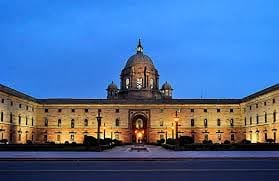
Legislative Powers Of President
- He has the authority to summon or prorogue Parliament as well as dissolve the Lok Sabha.
- He can also call a joint session of both Houses of Parliament, which is presided over by the Lok Sabha Speaker.
- He has the right to address Parliament at the start of the first session following each general election, as well as the first session of each year.
- He has the authority to send messages to the Houses of Parliament, whether related to a pending bill in the Parliament or otherwise.
- When the offices of both the Speaker and the Deputy Speaker become vacant, he has the authority to appoint any member of the Lok Sabha to preside over its proceedings.
- Similarly, he can appoint any Rajya Sabha member to preside over its proceedings if both the Chairman and Deputy Chairman's positions become vacant.
- He appoints 12 Rajya Sabha members from among those with special knowledge or practical experience in literature, science, art, and social service.
- He has the authority to appoint two members of the Anglo-Indian community to the Lok Sabha.
- In consultation with the Election Commission, he makes decisions on disqualifications of members of Parliament.
- Certain types of bills require his prior recommendation or permission to be introduced in Parliament.
- For example - A bill involving expenditure from the Consolidated Fund of India, or a bill involving the alteration of state boundaries or the creation of a new state.
- When a bill is sent to the President after it has been passed by Parliament, he has three options:
- give his assent to the bill;
- withhold his assent to the bill;
- return the bill to Parliament for reconsideration (if it is not a money bill).
- However, if the bill is reintroduced in Parliament, with or without amendments, the President must give his assent.
- When a bill passed by a state legislature is reserved by the governor for consideration by the President, the President has three options:
- give his assent to the bill;
- withhold his assent to the bill;
- direct the governor to return the bill to the state legislature for reconsideration (if it is not a money bill).
- It should be noted that the President is not required to give his assent if the bill is re-passed by the state legislature and re-sent to him for consideration.
- When the Parliament is not in session, he has the authority to issue ordinances. The Parliament must approve these ordinances within six weeks of its reassembly. He may also revoke an ordinance at any time.
- He presents to Parliament the reports of the Comptroller and Auditor General, Union Public Service Commission, Finance Commission, and others.
- He has the authority to enact laws to ensure the peace, progress, and good governance of the Andaman and Nicobar Islands, Lakshadweep, Dadra and Nagar Haveli, Daman and Diu, and Ladakh.
- In the case of Puducherry, the President has the authority to legislate through regulations only when the assembly is suspended or dissolved.
Conclusion
Legislative powers of the President of India are integral to the functioning of the Indian parliamentary system. They ensure that the legislative process operates within the constitutional framework and provide mechanisms for the executive branch to engage with and influence the legislative process. While many of these powers are exercised on the advice of the Council of Ministers, the President's role remains crucial in maintaining the balance and stability of the country's legislative functions.
FAQs
Q1: What are the legislative powers of the President of India?
Answer: The legislative powers of the President of India include summoning, proroguing, and dissolving Parliament, giving assent to bills, issuing ordinances when Parliament is not in session, and addressing Parliament at the start of the first session after each general election.
Q2: Can the President of India issue ordinances?
Answer: Yes, under Article 123 of the Indian Constitution, the President can issue ordinances when Parliament is not in session, and there is an urgent need for a law. However, these ordinances must be approved by Parliament within six weeks of reassembling.
Q3: What is the role of the President in the enactment of a bill?
Answer: The President can assent, withhold assent, or send a bill back to Parliament for reconsideration (except for money bills). If the same bill is passed again by Parliament, the President must give assent.
Q4: How does the President interact with Money Bills?
Answer: The President cannot return a Money Bill for reconsideration. However, Money Bills can only be introduced in the Lok Sabha with the President's prior recommendation.
Q5: What is the significance of the President's address to Parliament?
Answer: The President's address at the commencement of the first session after each general election and the first session each year outlines the government's policies and plans and is an important legislative formality.
MCQs
- Under which Article of the Indian Constitution can the President issue ordinances?
a) Article 123
b) Article 74
c) Article 110
d) Article 368
Answer: (A) See the Explanation
Article 123 empowers the President to issue ordinances when Parliament is not in session, and immediate legislative action is required.
- Which of the following powers is NOT a legislative power of the President of India?
a) Issuing ordinances
b) Vetoing bills
c) Dissolving the Lok Sabha
d) Appointing the Prime Minister
Answer: (D) See the Explanation
The appointment of the Prime Minister is an executive function of the President, while legislative powers include vetoing bills, issuing ordinances, and dissolving the Lok Sabha.
- A Money Bill can only be introduced in the Lok Sabha with whose recommendation?
a) Prime Minister
b) Speaker of the Lok Sabha
c) President of India
d) Finance Minister
Answer: (C) See the Explanation
A Money Bill can only be introduced in the Lok Sabha with the prior recommendation of the President.
- How long can an ordinance issued by the President remain valid without the approval of Parliament?
a) 3 months
b) 6 weeks
c) 1 year
d) Indefinitely
Answer: (B) See the Explanation
An ordinance issued by the President remains valid for a maximum of 6 weeks after Parliament reassembles, after which it must be approved or it will lapse.
- In which of the following cases is the President bound to give assent to a bill?
a) When a Money Bill is passed
b) When a Constitutional Amendment Bill is passed
c) When a bill is passed twice by both Houses
d) All of the above
Answer: (D) See the Explanation
The President must give assent to Money Bills, Constitutional Amendment Bills, and bills that have been passed twice by both Houses of Parliament.
GS Mains Questions and Model Answers
Q1. Discuss the legislative powers of the President of India and their significance in the parliamentary system.
Answer: The legislative powers of the President of India are outlined in the Constitution and play an important role in the functioning of the Indian parliamentary system. The President can summon, prorogue, and dissolve Parliament, ensuring the smooth functioning of legislative sessions. The President’s power to issue ordinances under Article 123 is crucial in cases where immediate legislative action is required when Parliament is not in session. Ordinances, however, must be approved by Parliament within six weeks of reassembling, reflecting the system’s checks and balances. The veto power of the President allows them to withhold assent or return bills (except Money Bills) for reconsideration, ensuring that legislative proposals are carefully reviewed. Additionally, the President’s address to Parliament at the start of each year or session outlines the government’s agenda, linking the executive with the legislative process. These powers ensure that the President plays an essential, though largely ceremonial, role in the legislative process, upholding constitutional and democratic principles.
Q2. Explain the process and conditions under which the President of India can issue an ordinance.
Answer: Under Article 123 of the Indian Constitution, the President of India has the power to issue ordinances when Parliament is not in session and immediate legislative action is necessary. The process begins when the Union Cabinet advises the President to promulgate an ordinance on a matter that requires urgent action. The ordinance holds the same force as a law passed by Parliament. However, it is a temporary measure and must be laid before both Houses of Parliament when they reassemble. The ordinance will lapse if not approved within six weeks of Parliament’s reassembly. This mechanism ensures that the President’s ordinance-making power is not misused and is subject to legislative scrutiny. The ordinance must also comply with the provisions of the Constitution, and it cannot be used to amend constitutional provisions. The power to issue ordinances is essential for dealing with unforeseen situations but is subject to parliamentary oversight.
Q3. Evaluate the veto power of the President in the context of the Indian legislative process.
Answer: The veto power of the President of India is an important aspect of the legislative process, allowing the President to withhold assent or return a bill for reconsideration (except for Money Bills). There are three types of vetoes: absolute veto, where the President refuses to sign a bill entirely; suspensive veto, where the President returns the bill for reconsideration; and pocket veto, where the President takes no action on the bill indefinitely. The pocket veto provides the President with significant discretion, as there is no time limit for taking action on the bill. The use of veto power is limited in scope, as the President must give assent if the bill is passed again by both Houses of Parliament. This ensures that the President’s role is primarily a check on hasty legislation rather than a decision-maker. The veto power reflects the balance between the executive and the legislature in India’s parliamentary system, ensuring that the President’s office acts as a constitutional safeguard without obstructing the legislative process.
Previous Year Questions on Legislative Powers of president
1. UPSC CSE Mains 2017
Question. Discuss the legislative powers of the President of India as provided under the Constitution.
Answer: The President of India holds several legislative powers as outlined in the Indian Constitution, serving as a vital link between the executive and legislative branches. One of the primary legislative powers of the President is the ability to summon, prorogue, and dissolve the Parliament, underlining their authority in convening legislative sessions. The President also plays a key role in the legislative process by giving assent to bills passed by Parliament. The President can withhold assent, return bills (except Money Bills), or use a pocket veto by delaying action on a bill. A significant power of the President is the authority to issue ordinances under Article 123 when Parliament is not in session. Ordinances have the same legal effect as acts of Parliament but must be approved by Parliament within six weeks of reassembly, ensuring checks and balances. The President also addresses Parliament at the commencement of the first session after general elections and the first session of each year, setting out the government’s policy and agenda. The legislative powers of the President, while largely ceremonial, ensure that the President remains an integral part of India’s parliamentary system.
2. UPSC CSE Mains 2019
Question. Explain the ordinance-making power of the President of India. How is it controlled by Parliament?
Answer: The ordinance-making power of the President of India, provided under Article 123 of the Constitution, allows the President to issue laws when Parliament is not in session, and there is an urgent need for legislative action. Ordinances have the same effect as laws passed by Parliament but are temporary in nature. The President issues ordinances based on the advice of the Union Cabinet. However, this power is not absolute and is subject to several controls by Parliament. Once Parliament reassembles, the ordinance must be laid before both Houses and must be approved within six weeks of reassembly. If Parliament does not approve the ordinance within this timeframe, it ceases to operate. Additionally, Parliament has the authority to disapprove or amend the ordinance. This system ensures that the ordinance-making power is not misused by the executive and remains a temporary measure to address urgent legislative needs. The President’s power to issue ordinances serves as an important tool for governance but is closely monitored by Parliament to maintain the balance of power.
*email: contactus@prepp.in
Download the PREPP App and attempt FREE IAS Exam Mock Tests and get complete study material!

Full Test - 04: UPSC CSE Prelims CSAT (Paper-II)
Full Test - 03: UPSC CSE Prelims CSAT (Paper-II)
UPSC CSE Prelims 2026 GS Paper 1 Question Paper (24-May-2026)
UPSC CSE Prelims 2026 CSAT Paper 2 Question Paper (24-May-2026)

17 February 2025 | The Hindu Must Read Articles | Current Affairs

16 February 2026 | The Hindu Must Read Articles | Current Affairs

13 February 2026 | The Hindu Must Read Articles | Current Affairs









Comments