Ordinance making power of the President (Article 123) - Indian Polity Notes
Article 123 of the Indian Constitution empowers the President to promulgate ordinances during the recess of the Parliament. Ordinances are essentially temporary laws that have the same effect as an Act of Parliament but are only valid for a limited period. It is issued by the President on the advice of the Council of Ministers. Its purpose is to deal with unforeseen circumstances. Ordinance Making power of the President is an important topic for the UPSC IAS exam preparation.
| To Read update on this topic: |
Table of Contents
- Historical Background
- Ordinance Making Power Of The President
- Limitations to the Ordinance Making Power of the President
- Ordinance making power of the President - Judicial Review
- Difference Between Ordinance Making Power Of President And Governor
- Recent Ordinance Promulgated By The President
- Issues Associated with Ordinance Making Power of the President
- Way Forward
- Conclusion
- FAQs
- MCQs
Historical Background
- The ordinance-making power of the Indian President has its roots in the Government of India Act, 1935, which provided for the Viceroy to promulgate ordinances during the recess of the Legislative Councils.
- This provision was inherited by independent India when it adopted the Indian Constitution in 1950.
- The framers of the Constitution envisaged that there might be circumstances when the government needed to enact laws urgently to deal with emergent situations, therefore ordinance-making power was included in the Indian Constitution.
- During the Constituent Assembly debates, the framers discussed this power extensively, considering its scope, limitations, and the need to ensure that it was not misused.
- There was a recognition of the importance of allowing the executive to act swiftly when necessary, balanced with the need to prevent arbitrary use of this power.
Ordinance Making Power Of The President
- Article 123 of the Indian Constitution empowers the President to promulgate the ordinances during the recess of the Parliament.
- An ordinance can also be issued when only one house is in session because law can be passed by two houses and not by one house alone.
- An ordinance enacted when both the houses are in session is void. Thus the ordinance making power of the President is not parallel power of the Legislation
- Ordinances must be approved by Parliament within six weeks of reassembling. They would also cease to operate even earlier than the prescribed six weeks, if both the Houses of Parliament pass resolutions disapproving it.
- Therefore maximum life of an ordinance can be six months and six weeks in case of non approval by the Parliament.
- If an ordinance is lapsed without being passed by Parliament, then the acts done under it before it ceases to operate, remain fully valid and effective.
- An ordinance may also be withdrawn by the President at any time. However, his ordinance-making authority is not discretionary. He can promulgate or withdraw an ordinance only on the advice of the council of ministers headed by the PM.
- It can amend or repeal any act of Parliament,even the tax laws.But it can not be issued to amend the Constitution.
- An ordinance can be only be issued only on those subjects on which parliament can make laws.It has the same limitations as an act of the Parliament.For example,ordinance can not abridge any of the Fundamental Rights.
|
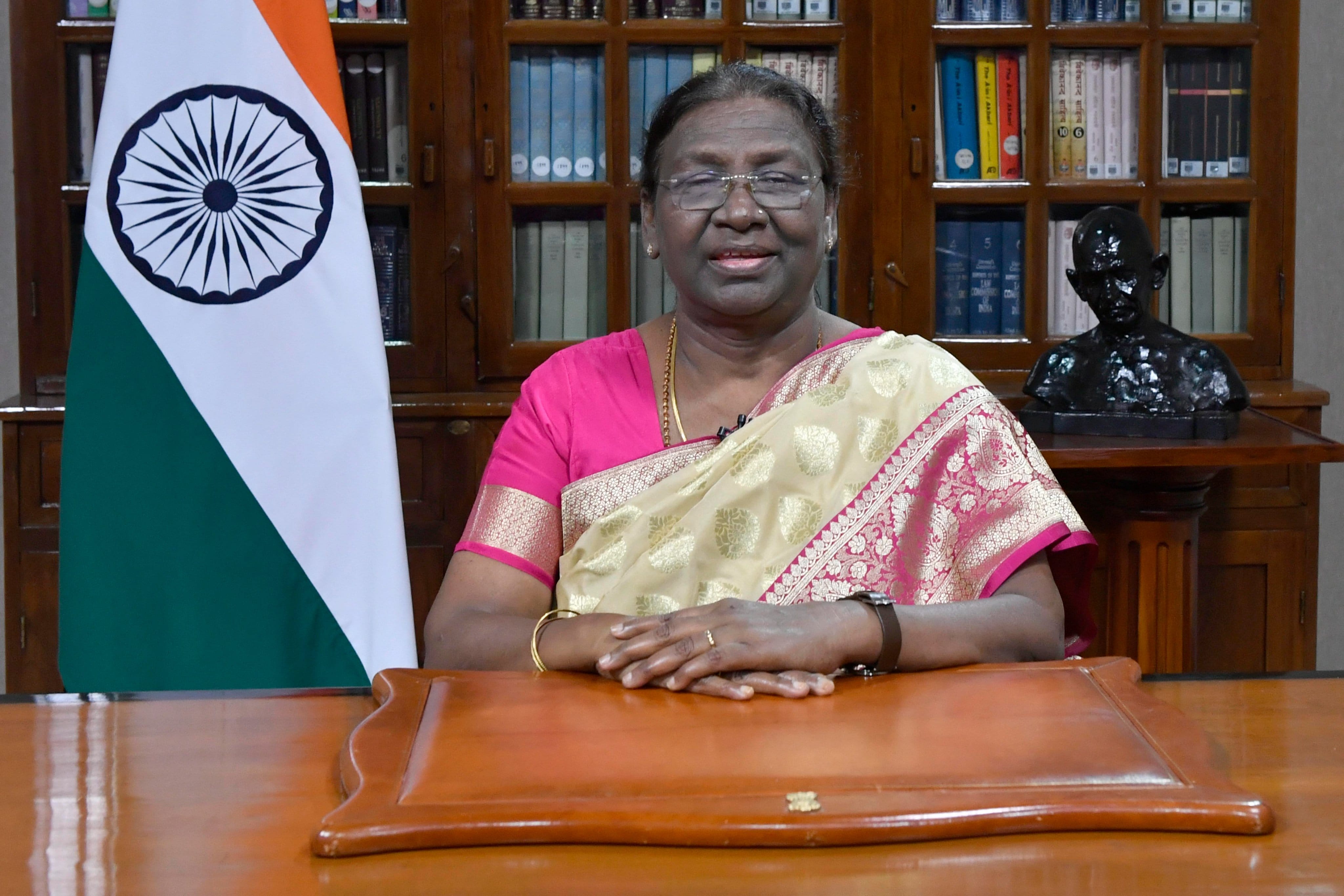
Article 123 of the Indian Constitution empowers the President to promulgate ordinances during the recess of the Parliament. |
Limitations to the Ordinance Making Power of the President
- Temporary Nature: Ordinances are meant to address urgent situations when Parliament is not in session. They have a temporary nature and must be approved by both houses of Parliament within a certain period after reconvening. If not approved, they cease to operate.
- Can be issued only during the recess of the Parliament:An ordinance can only be issued when either both or any one House is not in in session.An ordinance enacted when both the houses are in session is void.
- Can't be used to Amend the Constitution:It can not be issued to amend the Constitution.Any changes to the Constitution must be made through the prescribed amendment procedure laid down in the Constitution.
- Parliamentary Supremacy: While ordinances have the force of law, they are subject to the supremacy of Parliament. Once Parliament convenes, it can amend or repeal the ordinance, thereby limiting the duration and extent of the President's ordinance-making power.
- Subject to Judicial Review: The power of the President to promulgate ordinances is subject to judicial review.In Cooper case (1970), the Supreme Court held that the President’s satisfaction can be questioned in a court on the ground of malafide.
Ordinance making power of the President - Judicial Review
| Case/Amendment | Judicial Review of the Ordinance making power of the President |
|---|---|
| Cooper case (1970) | Supreme Court held that the President’s satisfaction can be questioned in a court on the ground of malafide. |
| 38th Amendment Act of 1975 | Made the President's satisfaction final and beyond judicial review. |
| 44th amendment Act of 1978 | Deleted the immunity provision and made President's satisfaction justiciable on the ground of malafide. |
| D.C. Wadhwa v. State of Bihar (1987) |
|
| Krishna Kumar Singh v. State of Bihar (2017) |
|
What Is The Difference Between Ordinance Making Power Of President And Governor?
| Ordinance Making Power of Governor (Article 213 ) | Ordinance Making Power of President (Article 123) |
|---|---|
|
|
|
|
|
|
|
|
|
|
Recent Ordinance Promulgated By The President
- The Criminal Law (Amendment) Ordinance, 2018:It provided for the death penalty for those convicted of raping girls below the age of 12 and increased the minimum punishment for rape from seven to ten years of imprisonment.
- The Muslim Women (Protection of Rights on Marriage) Ordinance, 2019: It criminalized the practice of instant Triple Talaq (Talaq-e-Biddat) among Muslims in India. The ordinance was later replaced by a bill and passed by both houses of Parliament.
- The Citizenship (Amendment) Ordinance, 2019: It amended the Citizenship Act, 1955 to grant citizenship to illegal immigrants belonging to Hindu, Sikh, Buddhist, Jain, Parsi, and Christian communities from Afghanistan, Bangladesh, and Pakistan, who entered India on or before December 31, 2014.
- The Epidemic Diseases (Amendment) Ordinance 2020 amended the Epidemic Diseases Act, 1897 which added the arrangements to punish those assaulting doctors or health labourers.
- The Farmers Produce Trade and Commerce (Promotion and Facilitation) Ordinance, The Farmers (Empowerment and Protection) Agreement on Price Assurance and Farm Services Ordinance, and the Ordinance to revise The Essential Commodities Act were brought in 2020 for for reforms in agricultural marketing.
Issues Associated with Ordinance Making Power of the President
- Bypassing the Legislature: Ordinance-making power allows the executive branch to bypass the legislature. Ordinances are promulgated by the President when Parliament is not in session, which means that the elected representatives do not have an opportunity to debate and discuss the proposed law.
- Ambiguity over the term emergency situation:What constitute an emergency situation to promulgate an ordinance is not clarified in the Constitution.
- Against the Principle of Separation of Power:Law making is the function of the executive.When executive make a law bypassing legislature and legislature scrutiny,it violates the Principle of Separation of Power:
- Excessive Misuse:The excessive use of ordinance making power undermines the principles of accountability and transparency in the legislative process.
- Undermining the Role of Parliament: The frequent use of ordinances can undermine the role of Parliament as the primary law-making body. It can diminish the importance of parliamentary debates and deliberations.
Way Forward
- Strengthening Legislative Oversight: Parliamentary committees can scrutinize the necessity and urgency of ordinances proposed by the executive and ensure they comply with constitutional provisions.
- Transparency and Reporting: Require the executive to provide regular reports to the legislature on the use of ordinance-making power, including reasons for promulgation, details of consultations, and any subsequent legislative action taken.
- Limitations on Ordinance Making: Narrow the scope of ordinance-making power to situations of genuine urgency.Clearly define the circumstances under which ordinances can be issued, preventing their use for matters that do not require immediate action.
- Political Accountability: Hold the executive accountable for the misuse of ordinance-making power through political processes such as debates, censure motions.
Conclusion
In most circumstances, the power to make ordinances is a contentious and debatable matter. It attempts to upset the balance of executive and legislative powers by introducing arbitrariness into the Constitutional System and undermining the rule of law. When an executive body exercises such ordinance-making authority, it displays disdain for the legislative.
FAQs
Question: What is the ordinance-making power of the President?
Answer: Article 123 of the Indian Constitution allows the President to promulgate ordinances when Parliament is not in session, with the same effect as a law passed by Parliament.
Question: For how long can an ordinance remain in force?
Answer: An ordinance remains in force for a maximum of six months and six weeks unless approved by Parliament or repealed earlier.
Question: Can the President issue an ordinance to amend the Constitution?
Answer: No, the President cannot issue an ordinance to amend the Constitution. Amendments must follow the constitutional amendment procedure.
Question: What is judicial review in the context of ordinances?
Answer: Ordinances are subject to judicial review, meaning courts can challenge their validity, especially if they violate constitutional provisions or fundamental rights.
Question: How can an ordinance be repealed?
Answer: An ordinance can be withdrawn by the President based on the advice of the Council of Ministers or can lapse if not approved by Parliament.
MCQs
1. Under which Article of the Indian Constitution can the President issue ordinances?
A) Article 74
B) Article 123
C) Article 356
D) Article 124
Answer: B See the Explanation
Explanation: Article 123 grants the President the power to issue ordinances when Parliament is not in session.
2. For how long can an ordinance last if Parliament does not reconvene?
A) Six months and six weeks
B) Three months
C) One year
D) Indefinitely
Answer: A See the Explanation
Explanation: Ordinances last for six months and six weeks unless approved by Parliament.
3. Which of the following is a limitation on the President’s ordinance-making power?
A) It can be issued anytime
B) It can amend the Constitution
C) It is subject to judicial review
D) It is not subject to parliamentary approval
Answer: C See the Explanation
Explanation: The President's ordinance-making power is subject to judicial review, meaning courts can question its validity.
4. Who advises the President on issuing an ordinance?
A) Parliament
B) Chief Justice of India
C) Council of Ministers
D) Vice-President
Answer: C See the Explanation
Explanation: The Council of Ministers, headed by the Prime Minister, advises the President on the issuance of ordinances.
5. Which case held that the President’s satisfaction in issuing an ordinance is not beyond judicial review?
A) A.K. Gopalan vs State of Madras
B) Maneka Gandhi vs Union of India
C) Cooper Case
D) Keshavananda Bharati Case
Answer: C See the Explanation
Explanation: In the Cooper case, the Supreme Court held that the President’s satisfaction can be reviewed in court if challenged.
GS Mains Questions and Answers
Q1: Examine the limitations of the President's ordinance-making power under Article 123 of the Indian Constitution.
Answer: The President’s ordinance-making power under Article 123 is limited to periods when Parliament is not in session and requires immediate action. Ordinances are temporary and must be approved within six weeks of Parliament reconvening. The power is subject to judicial review to prevent misuse. Additionally, ordinances cannot amend the Constitution or abridge fundamental rights. The Supreme Court has emphasized the need for genuine urgency before issuing an ordinance, and misuse, such as re-promulgation, has been criticized.
Q2: Discuss the role of judicial review in preventing the misuse of ordinance-making power by the President.
Answer: Judicial review plays a crucial role in preventing the misuse of ordinance-making power by ensuring that ordinances are issued in good faith and for urgent matters. In the Cooper case (1970) and Krishna Kumar Singh v. State of Bihar (2017), the Supreme Court held that the President’s satisfaction in issuing ordinances is subject to judicial scrutiny. This mechanism prevents the executive from bypassing the legislature and upholds the separation of powers by ensuring that ordinances align with constitutional principles.
Q3: Analyze the implications of repeated re-promulgation of ordinances in the Indian legal system.
Answer: Repeated re-promulgation of ordinances undermines the authority of Parliament, violating the principle of legislative supremacy. The Supreme Court in D.C. Wadhwa v. State of Bihar (1987) held that re-promulgating ordinances without legislative intent to pass them as permanent laws is unconstitutional. It leads to executive overreach and diminishes the legislative process. To uphold democratic values, ordinances must be scrutinized and converted into legislation or withdrawn once Parliament reassembles.
Previous Year Questions on Ordinance-Making Power
1. UPSC CSE Prelims 2015
Question: Under which Article of the Constitution can the President issue ordinances?
A) Article 74
B) Article 123
C) Article 356
D) Article 368
Answer: B
Explanation: Article 123 of the Constitution grants the President the power to issue ordinances when Parliament is not in session.
2. UPSC CSE Mains 2019 (GS Paper 2)
Question: Discuss the constitutional provisions related to the ordinance-making powers of the President. Highlight the judicial safeguards to prevent the misuse of these powers.
Answer: The President can issue ordinances under Article 123 when Parliament is not in session, and such ordinances hold the same force as law. However, they must be approved by Parliament within six weeks of reassembly. Ordinances are subject to judicial review, as clarified in the Cooper case (1970), where the Court ruled that the President’s satisfaction is not immune from scrutiny. The Supreme Court in D.C. Wadhwa v. State of Bihar (1987) further held that re-promulgation of ordinances without legislative intent violates constitutional principles.
*email: contactus@prepp.in
Download the PREPP App and attempt FREE IAS Exam Mock Tests and get complete study material!

Full Test - 04: UPSC CSE Prelims CSAT (Paper-II)
Full Test - 03: UPSC CSE Prelims CSAT (Paper-II)
UPSC CSE Prelims 2026 GS Paper 1 Question Paper (24-May-2026)
UPSC CSE Prelims 2026 CSAT Paper 2 Question Paper (24-May-2026)

17 February 2025 | The Hindu Must Read Articles | Current Affairs

16 February 2026 | The Hindu Must Read Articles | Current Affairs

13 February 2026 | The Hindu Must Read Articles | Current Affairs









Comments