Powers and Functions of the President - Indian Polity Notes
As head of the state,the President of India enjoys various powers and performs diverse functions.Executive,legislative,judicial,diplomatic and emergency powers make the President of India a pivotal figure in the country's governance.All the executive functions of the Union are carried on in the name of the President. But in this regard, it is to be noted that as per Article 74 the President shall act on the advice of his Council of Ministers. The UPSC Indian Polity and Governance Syllabus includes Powers and Functions of the President which is described in this article.
|
Table of Contents |

|
Article 53 states, the executive power of the union shall be vested in the President and it shall be exercised by him/her either directly or through officers subordinate to him/her. |
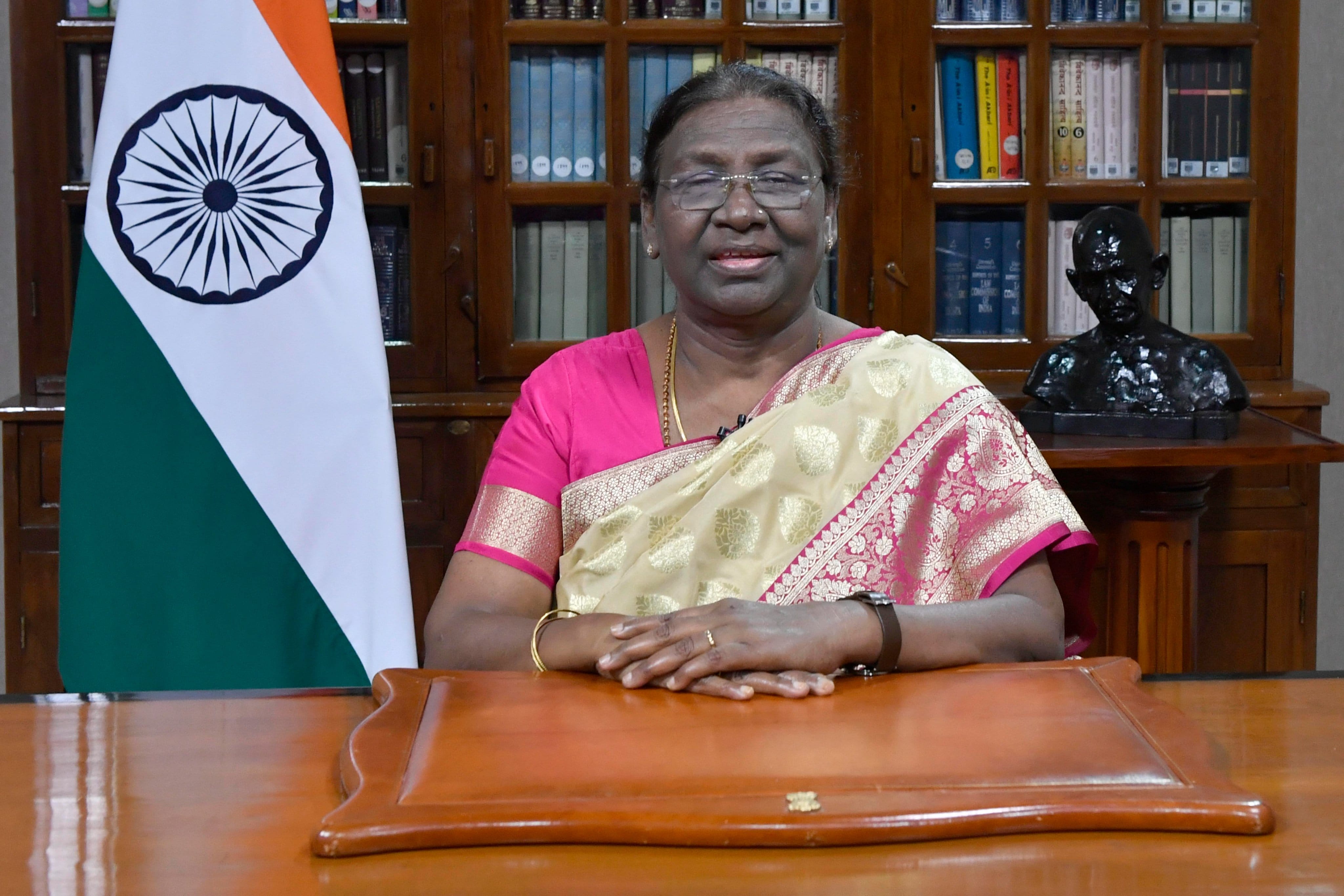
Powers And Functions Of The President - Constitutional Provisions
- The executive power of the union, Article 53 states, shall be vested in the President and it shall be exercised by him either directly or through officers subordinate to him, but always in accordance with the Constitution.
Meaning of Executive Power
- The expression executive power is nowhere defined in the Constitution. Ordinarily, it connotes the procedure of the Governmental function that remains after legislative and judicial functions are taken away.
- Broadly speaking “executive function” comprises both determinations of policy as well as carrying it into execution.
- The executive power may, therefore, be shortly defined as the power of carrying on the administration of the affairs to the State, expecting functions which are vested by the Constitution in the legislature and judiciary.
Powers And Functions Of The President - Administrative Powers
- The President can make rules specifying the manner in which the orders and the other instruments which are made and executed in his name shall be authenticated.
- The President appoints:
- The Prime Minister and other Ministers.
- The Attorney-General of India determines his remuneration.
- The Governors of the States.
- Comptroller and Auditor General of India, Chief Election Commissioner and other Election Commissioners, Chairman and members of the Union Public Service Commission, and Finance Commission of India chairman and members Judges of High Courts and Supreme Court.
- National Commissions of Scheduled Castes, Scheduled Tribes, Other Backward Classes as well as a commission to report on the administration of the Scheduled Areas, a commission on official Language and Special officer for Linguistic minorities.
- He can declare any area as a scheduled area and has powers with respect to the administration of scheduled areas and tribal areas.
- He appoints an inter-state council to center-state and inter-state cooperation.
- The President shall also have the power to remove:
- Ministers, individually.
- Attorney-General of India.
- The Governors of the States.
- The Chairman or a Member of the Public Service Commission of the Union or of a State, on the report of the Supreme Court.
- A judge of the Supreme Court or of the High Court or the Chief Election Commissioner or the Comptroller-General of India on an address of Parliament.
Powers And Functions Of The President - Legislative Powers
- The President summons the House of Parliament at least twice a year or prorogues either House of Parliament and dissolves the Lok Sabha. He may summon both the Houses to meet in a joint sitting for debating or voting on a bill in case of deadlock.
- He may address either house separately or both Houses jointly. At the commencement of the first session after every general election, the President delivers an address.
- He appoints speaker, deputy speaker of Lok Sabha, and chairman/deputy chairman of Rajya Sabha when the seats fall vacant.
- He nominated 12 members of the Rajya Sabha and two members to the Lok Sabha from the Anglo-Indian Community. However, in January 2020 the Anglo-Indian reserved seat in the Parliament and State Legislature of India was abolished by the 104th Constitutional Amendment Act, 2019.
- Every Bill passed by the Parliament must receive the President’s assent before it can become an Act. The President may give his assent or withhold his assent or return it for reconsideration by Parliament with his own suggestion, a Bill other than a Money or Constitutional Amendment Bill. Parliament may accept his suggestion or reject it but if it is again sent for the President's assent now the President has to give his assent.
- The President makes certain reports and statements to be laid before the Parliament.
- The Annual Financial Statement and the Supplementary Statement.
- The report of Comptroller and Auditor General relating to the accounts of the Government of India.
- Recommendation made by the Finance Commission.
- Report of the Union Public Service Commission, explaining the reasons where any advice of the Commission has not been accepted.
- The report of National Commissions of Scheduled Castes and Scheduled Tribes.
- The report of a Special officer for Linguistic minorities.
- The report of the commission on the backward classes.
Certain Bills need a prior permission of the President before introduction in the Parliament.
- Bill that seeks to alter the boundaries of the states and names of the states.
- Money Bill.
- Finance Bill.
- A Bill involving taxation or distribution of financial resources to the States.
- A Bill that seeks to restrict freedom of trade.
Powers And Functions Of The President - Veto Powers
When a Bill is passed by both the Houses of the Parliament, it is presented to the President to seek his assent. It cannot become an Act of Parliament until it receives the assent of the President. Under Article 111, the President has three options before him:
- He may give his assent to the bill in which case it immediately becomes an act;
- He may withhold his assent to the bill; or
- He may, in case of the bills other than money bills, return the bill for reconsideration of the House.
- The power of withholding a bill sent for assent of the President is called a veto power of the President. Different kinds of veto power have been provided to the President of India by the Constitution of India which are in the form of Absolute, Suspensive and Pocket veto.
| Type of Bill | Veto power of the President with respect to Bill passed by Parliament | Veto power of the President with respect to Bill passed by State Legislature |
|---|---|---|
| Ordinary Bill | 1.Can be ratified 2.can be rejected 3.can be returned | 1.Can be ratified 2.can be rejected 3.can be returned |
| Money Bill | 1.Can be ratified 2.can be rejected(but can not be returned) | 1.Can be ratified 2.can be rejected(but can not be returned) |
| Constitutional Amendment Bill | Can only be ratified | Constitutional Amendment Bill can not be introduced in the State Legislature. |
Powers And Functions Of The President - Ordinance Making Power
The President's power to issue ordinances is covered in Article 123. This is one of the several legislative authorities that the President enjoys. On the recommendation of the union cabinet, he issues an ordinance.
Powers And Functions Of The President - Emergency Powers
The President exercises certain extraordinary power to deal with an emergency situation which are as follows:
- National Emergency (Article 352).
- President Rule (Article 356).
- Financial Emergency (Article 360).
Powers And Functions Of The President - Financial Powers
He has control over the Contingency Fund of India to meet unforeseen expenses like flood, drought, war etc.
- His prior recommendation is a must in the introduction of the money bill and financial bill in the Parliament.
- His recommendation is a prerequisite to make a demand for grants.
- The President of India constitutes the Finance Commission after every five years.
- He also places before the Parliament the report of Comptroller and Auditor General relating to the accounts of the Government of India and recommendations made by the Finance Commission.
Powers And Functions Of The President - Diplomatic Powers
International Treaties and agreements that are approved by the Parliament are negotiated and concluded in the name of the President.
- He is the representative of India in international forums and affairs.
- He sends and receives ambassadors and other diplomatic representatives.
Powers And Functions Of The President - Military Powers
He is the Supreme Commander of the Armed Forces.
- He has the power to declare war and peace but his military power is subject to the regulation of law.
- He appoints Chief of the Army, Chief of the Navy and Chief of the Air Force.
Powers And Functions Of The President - Discretionary Powers
Although the Constitution after the 42nd Amendment Act made it mandatory or obligatory for the President to act on the advice of the Council of Ministers, even then, the practice of parliamentary governance created some circumstances when the President had to act as per his own wisdom, sense of justice and discretion.
- When no single party has a majority in the election of Lok Sabha or due to the sudden death of the incumbent Prime Minister then the President can use his discretion to appoint the Prime Minister.
- Dissolution of Lok Sabha on the advice of Council of Ministers which has lost majority in Lok Sabha or against whom a vote of no-confidence may have been passed.
- Under Article 74 he can send an advice of the Council of Ministers at his discretion back to it for its reconsideration.
- Under Article 78, he enjoys the right to be informed about the affairs of the State by the Prime Minister.
- He applies suspensive and pocket veto at his discretion.
- The President is faced with these kinds of situations more often from 1990 onwards with the emergence of coalition governments and minority governments.
Powers And Functions Of The President - Judicial Powers
The President has the power to appoint the Judges of the Supreme Court and High Courts. Under the Judicial powers, the President has what is called pardoning power. The power of granting pardon to persons, who have been tried and convicted of any offence.
- Where the punishment or sentence is by a court-martial.
- Where the punishment is for an offence against Union law.
- In all cases where a person is sentenced to death.
- The pardoning power to exercise on the aid and advice of the Council of Ministers. There are no specific guidelines to the President on the exercise of his pardoning powers.
Conclusion
The position of President is extremely significant, as the roles are critical to maintaining the nation's political unity and ensuring constitutional powers. The President cannot exercise his executive power without aid and advice from the Council of Ministers. However, the Office's importance is significantly larger than that, and it cannot be compared to that of any other high office or function.
FAQs
Question: What are the executive powers of the President of India?
Answer: The President appoints the Prime Minister, Council of Ministers, Governors, and other key officials, and oversees the administration of union territories and scheduled areas.
Question: Can the President of India veto a bill passed by Parliament?
Answer: Yes, the President has veto powers and may withhold assent, return a bill (except a Money Bill), or use the pocket veto.
Question: What is the ordinance-making power of the President?
Answer: Under Article 123, the President can issue ordinances when Parliament is not in session, with the same force as a law.
Question: When can the President declare an emergency in India?
Answer: The President can declare National, State (President’s Rule), and Financial Emergencies under Articles 352, 356, and 360, respectively.
Question: What are the judicial powers of the President?
Answer: The President can grant pardons, reprieves, respites, or commutations of sentences, particularly in cases involving the death penalty.
MCQs
1. Under which article can the President issue ordinances?
A) Article 123
B) Article 352
C) Article 74
D) Article 124
Answer: A See the Explanation
Explanation: The President’s ordinance-making power is specified in Article 123 of the Constitution.
2. Who advises the President on exercising executive powers?
A) Chief Justice of India
B) Parliament
C) Council of Ministers
D) Vice-President
Answer: C See the Explanation
Explanation: The Council of Ministers, led by the Prime Minister, advises the President on executive matters.
3. What type of veto can the President use without a time limit?
A) Absolute veto
B) Pocket veto
C) Suspensive veto
D) Constitutional veto
Answer: B See the Explanation
Explanation: The pocket veto allows the President to withhold assent without a specific time limit.
4. Which of the following can the President not veto?
A) Money Bill
B) Ordinary Bill
C) Constitutional Amendment Bill
D) State Legislation
Answer: A See the Explanation
Explanation: The President cannot return a Money Bill for reconsideration but must give assent or withhold it.
5. Who holds the power to declare war and peace?
A) Prime Minister
B) President
C) Parliament
D) Chief of Army Staff
Answer: B See the Explanation
Explanation: The President, as the Supreme Commander of the Armed Forces, has the power to declare war and peace, subject to parliamentary approval.
GS Mains Questions and Answers
Q1: Discuss the discretionary powers of the President of India in the context of Article 74.
Answer: The 42nd Amendment to the Constitution made the President bound by the advice of the Council of Ministers under Article 74. However, the President retains discretionary powers in cases of a hung Parliament, appointing the Prime Minister, and returning advice for reconsideration. The pocket veto and exercising the power during a no-confidence motion also reflect the President’s discretion. These powers ensure checks on the Council of Ministers in extraordinary circumstances.
Q2: Examine the role of the President in managing emergencies under the Indian Constitution.
Answer: The President can declare three types of emergencies under the Constitution: National Emergency (Article 352), State Emergency (President’s Rule, Article 356), and Financial Emergency (Article 360). These powers allow the President to assume exceptional control in matters of governance, law, and finance. While these powers are significant, they are subject to judicial scrutiny and parliamentary approval to prevent misuse.
Q3: Analyze the legislative powers of the President, focusing on veto powers and ordinance-making authority.
Answer: The President has the power to veto bills passed by Parliament, with options for absolute, suspensive, and pocket vetoes. Additionally, under Article 123, the President can issue ordinances when Parliament is not in session. However, ordinances must be approved within six weeks of the next session. These powers are essential for maintaining legislative checks and balances but must be exercised with caution to preserve democratic principles.
Previous Year Questions on President's Powers
1. UPSC CSE Prelims 2020
Question: Which article of the Indian Constitution gives the President the power to issue ordinances?
A) Article 143
B) Article 123
C) Article 74
D) Article 352
Answer: B
Explanation: Article 123 grants the President the authority to issue ordinances when Parliament is not in session.
2. UPSC CSE Mains 2018 (GS Paper 2)
Question: Discuss the legislative powers of the President with a focus on veto powers and ordinance-making.
Answer: The President's legislative powers include the ability to summon and prorogue Parliament, give assent to bills, and veto ordinary bills under certain conditions. The President's ordinance-making power under Article 123 allows for temporary laws when Parliament is not in session. These powers ensure that the executive can address urgent matters, but they are subject to constitutional checks, requiring parliamentary approval within a stipulated time.
*email: contactus@prepp.in
Download the PREPP App and attempt FREE IAS Exam Mock Tests and get complete study material!

Full Test - 04: UPSC CSE Prelims CSAT (Paper-II)
Full Test - 03: UPSC CSE Prelims CSAT (Paper-II)
UPSC CSE Prelims 2026 GS Paper 1 Question Paper (24-May-2026)
UPSC CSE Prelims 2026 CSAT Paper 2 Question Paper (24-May-2026)

17 February 2025 | The Hindu Must Read Articles | Current Affairs

16 February 2026 | The Hindu Must Read Articles | Current Affairs

13 February 2026 | The Hindu Must Read Articles | Current Affairs









Comments