Diplomatic Powers of President - Indian Polity Notes
The Indian President is the Head of the state and also known as the country's first citizen. He represents India in international forums. He is in charge of sending and receiving ambassadors. All foreign treaties and agreements are signed on the President's behalf and must be ratified by the parliament. These are Diplomatic powers of the president.
The Indian Polity and Governance Syllabus includes the Diplomatic powers of the President which is described in this article and it is important for the UPSC Exam.
|
Table of Contents |
Diplomatic Powers of the President
- The President is the face of Indian diplomacy and helps the country maintain friendly ties with countries all over the world.
- The President is the country's first citizen.
- Foreign Agreements: On behalf of the President, all foreign treaties and agreements are negotiated and signed.
- In practice, however, such negotiations are normally conducted by the Prime Minister and his Cabinet (especially the Foreign).Furthermore, such accords must be approved by Parliament.
- Representative: The President is India's representative in international forums and affairs, where his role is primarily ceremonial.
- Appointment: The President has the authority to appoint Indian Ambassadors to foreign nations.
- The President may also send and receive diplomats, i.e Indian Foreign Service officers.
|
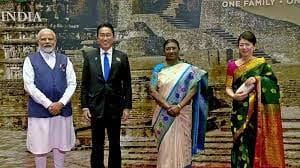
President of India holds several diplomatic powers, enabling the President to represent the nation in international affairs and to manage relationships with other countries. |
What is the Constitutional Position of the President?
- The President is the official executive and the head of state. At the centre, every executive activity is said to be taken in his name.
- This authority was granted to him via Article 53(1) of the Constitution, which provides that "executive power shall be vested in the President and shall be exercised by him directly or through subordinate officers."
- Articles 53, 74, and 75 of the Indian Constitution should be considered while assessing the President's constitutional status
Conclusion
These diplomatic powers allow the President of India to act as the nation's chief diplomat and symbol of sovereignty, ensuring that India's international relations and foreign policy are conducted with dignity and respect.
FAQs
Question: What are the primary diplomatic powers of the President of India?
Answer: The primary diplomatic powers of the President of India include representing India in international forums, appointing ambassadors and high commissioners to other countries, negotiating and signing treaties and agreements, and receiving foreign diplomats. The President also plays a key role in promoting India's interests abroad and maintaining diplomatic relations with other nations.
Question: How does the President exercise diplomatic powers in practice?
Answer: In practice, the President exercises diplomatic powers on the advice of the Council of Ministers, headed by the Prime Minister. Although the President is the formal head of state, real diplomatic decisions are taken by the Cabinet, ensuring that foreign policy is consistent with the government's political agenda.
Question: What is the role of the President in treaty-making?
Answer: The President has the authority to negotiate and conclude treaties with foreign countries, but such treaties must be ratified by the Parliament. This process ensures that legislative oversight is maintained, balancing executive power with democratic accountability.
Question: How does the President represent India at international forums?
Answer: The President represents India at international forums such as the United Nations and other multilateral organizations. This representation underscores India's commitment to global cooperation and diplomacy, reflecting the nation’s foreign policy objectives.
Question: In what ways can the President influence foreign policy?
Answer: While the President’s role is largely ceremonial in foreign policy, the President can influence it through personal diplomacy, participation in high-level meetings with foreign dignitaries, and through speeches that outline India’s stance on global issues. These actions can set the tone for India’s international relations.
MCQs
1. Which of the following is a diplomatic power of the President of India?
A) Appointment of the Prime Minister
B) Negotiation of treaties
C) Appointment of governors
D) Dissolution of the Lok Sabha
Answer: (B) See the Explanation
Explanation: The President of India has the power to negotiate treaties with foreign countries, which must be ratified by the Parliament to become effective, distinguishing this role from other powers primarily focused on domestic governance.
2. Who advises the President in matters of foreign diplomacy?
A) Chief Justice of India
B) Council of Ministers
C) Lok Sabha
D) Rajya Sabha
Answer: (B) See the Explanation
Explanation: The President acts on the advice of the Council of Ministers, headed by the Prime Minister, in all matters of foreign diplomacy, ensuring that foreign policy aligns with the government's agenda.
3. What must happen for treaties negotiated by the President to be effective?
A) They must be signed by the Prime Minister
B) They must be approved by the Parliament
C) They must be published in the Official Gazette
D) They must be endorsed by the Supreme Court
Answer: (B) See the Explanation
Explanation: Treaties negotiated by the President must be approved by the Parliament before they can be considered effective, ensuring legislative oversight and democratic accountability in foreign affairs.
4. Which of the following roles is NOT associated with the President's diplomatic powers?
A) Appointing ambassadors
B) Conducting foreign policy
C) Introducing bills in Parliament
D) Representing India in international forums
Answer: (C) See the Explanation
Explanation: Introducing bills in Parliament is not a diplomatic power; it is a legislative function primarily associated with the role of Members of Parliament, not the President.
5. How does the President's role in foreign relations reflect on India's sovereignty?
A) It undermines sovereignty
B) It reinforces sovereignty
C) It has no impact on sovereignty
D) It complicates sovereignty
Answer: (B) See the Explanation
Explanation: The President's role in foreign relations reinforces India's sovereignty by ensuring that international engagements are conducted under the constitutional framework, with accountability through the parliamentary system.
GS Mains Questions and Answers
Q1: Examine the significance of the President's diplomatic powers in shaping India’s foreign policy.
Answer: The President's diplomatic powers are significant in shaping India's foreign policy as they symbolize the nation’s sovereign status and global standing. While the actual conduct of foreign policy is managed by the executive branch led by the Prime Minister, the President's role in negotiating treaties, appointing ambassadors, and representing India at international forums adds legitimacy to diplomatic efforts. Furthermore, the President can influence public perception and discourse surrounding foreign policy through speeches and state visits, which can lead to greater national consensus on foreign engagements. This dual role of ceremonial representation and constitutional authority makes the President a key player in articulating and promoting India’s global interests.
Q2: Discuss the limitations of the President's powers in the context of Indian foreign relations.
Answer: Although the President holds significant diplomatic powers, these are largely ceremonial and executed on the advice of the Council of Ministers. This limitation means that the real control over foreign policy rests with the Prime Minister and the Cabinet. The President cannot unilaterally make decisions regarding foreign relations; all treaty negotiations and appointments are contingent upon government consensus. Furthermore, parliamentary oversight serves as a check on the President's powers, requiring legislative approval for treaties, which may restrict timely and decisive action in diplomatic matters. These limitations highlight the need for a collaborative approach between the executive and legislative branches in foreign relations, ensuring that India’s diplomatic efforts are effective and accountable.
Q3: Analyze how the President's role in diplomacy reflects the broader principles of the Indian Constitution.
Answer: The President's role in diplomacy reflects the broader principles of the Indian Constitution, particularly the separation of powers and the need for accountability in governance. As the constitutional head of state, the President represents the unity and integrity of the nation in international affairs, embodying the spirit of the Constitution. However, the requirement for the President to act on the advice of the Council of Ministers ensures that executive actions are aligned with democratic principles, preventing any overreach of authority. Moreover, the necessity of parliamentary approval for treaties emphasizes the Constitution's commitment to checks and balances, fostering a collaborative governance model. This interplay between ceremonial duties and constitutional mandates illustrates the essential role of the President in upholding democratic values while engaging with the global community.
Previous Year Questions on the Diplomatic Powers of the President
1. UPSC CSE Prelims 2020:
Question: Which of the following statements about the President of India’s role in foreign affairs is correct?
A) The President has the sole power to declare war.
B) The President negotiates treaties independently of the Cabinet.
C) The President appoints ambassadors and high commissioners.
D) The President is not involved in foreign diplomacy.
Answer: (C)
Explanation: The President of India appoints ambassadors and high commissioners, representing the nation in international relations. However, treaty negotiations and decisions related to war require the advice and consent of the Cabinet, emphasizing the collective responsibility of the government.
2. UPSC CSE Mains 2019:
Question: Assess the role of the President of India in maintaining diplomatic relations with foreign countries.
Answer: The President of India plays a pivotal role in maintaining diplomatic relations through the appointment of ambassadors and the negotiation of treaties, acting as a symbol of India's sovereignty and commitment to international cooperation. This role, while largely ceremonial, carries significant weight in fostering goodwill and facilitating dialogue between nations. The President's engagement in state visits and international summits enhances India’s profile globally, creating opportunities for collaboration. Furthermore, by acting on the advice of the Council of Ministers, the President ensures that diplomatic initiatives are reflective of the government's policies, promoting a unified national approach to foreign relations.
*email: contactus@prepp.in
Download the PREPP App and attempt FREE IAS Exam Mock Tests and get complete study material!

Full Test - 04: UPSC CSE Prelims CSAT (Paper-II)
Full Test - 03: UPSC CSE Prelims CSAT (Paper-II)
UPSC CSE Prelims 2026 GS Paper 1 Question Paper (24-May-2026)
UPSC CSE Prelims 2026 CSAT Paper 2 Question Paper (24-May-2026)

17 February 2025 | The Hindu Must Read Articles | Current Affairs

16 February 2026 | The Hindu Must Read Articles | Current Affairs

13 February 2026 | The Hindu Must Read Articles | Current Affairs









Comments