Absolute Veto - Indian Polity Notes
Absolute Veto refers to the power of the president to withhold his/her assent to the bill passed by the Parliament. Article 111 of the Indian Constitution explains the President's veto power. When a bill is submitted to the President for his assent,he has veto powers over such bills. Here the rationale behind the Veto Power is to prevent hasty and ill considered legislation to become an act.
Absolute Veto is an important topic for the UPSC IAS exam preparation.
|
Table of Contents |
Veto - Concept
- A "veto" typically refers to the power vested in certain individuals or bodies to reject or prohibit decisions made by others.
- In politics, it often refers to the ability of a president, governor, or other executive authority to reject a bill passed by the legislature, preventing it from becoming law.
- This power serves as a check and balance in governmental systems, ensuring that no single branch or entity has unchecked authority.
- The use of a veto can be a contentious issue, as it can lead to conflicts between branches of government and can impact the legislative process.
Types of Vetoes
There are three types of vetoes:
- Absolute Veto
- Suspension Veto
- Pocket Veto
Absolute Veto of the President
The following are the facts about the Indian President's absolute veto power:
- A law never sees the light of day when the President uses his absolute veto. Even after being passed by the Indian Parliament, the bill does not become law.
- In the following two circumstances, the President exercises his absolute veto.
- When the Parliament passes a Private member bill, the Council of Ministers can ask the President to use Absolute Veto.
- When the president's cabinet resigns before he can sign the law. The President's new cabinet may advise him not to sign the bill passed by the outgoing cabinet.
- The President of India has previously used his absolute veto. Dr. Rajendra Prasad, then President of India, used it in 1954, and then President R Venkataraman used it in 1991.
|
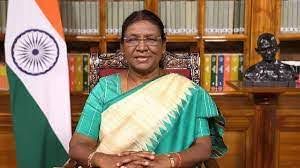
It refers to the Power of the president to withhold(reject) his assent to the bill passed by the Parliament. |
Constitutional Provision
- Article 111 of the Constitution establishes principles for the exercise of the presidential veto in a variety of scenarios.
- "When a Bill has been passed by the Houses of Parliament, it shall be delivered to the President, and the President shall-" according to Article 111.
- Give his approval to the Bill or veto it.
- He refuses to say yes or no.
- Returns the Bill (excluding the Money Bill) to Parliament with a request that it be reconsidered.
Conclusion
By using Absolute veto, the President can withhold the assent to the bill. In such cases, the bill gets rejected and it cannot become a law.
FAQs
Question: What is Absolute Veto in the Indian political system?
Answer: Absolute Veto refers to the power of the President of India to withhold assent to a bill, effectively rejecting it. This means that the bill cannot become a law. It is used in cases where the President feels that the bill does not merit becoming law.
Question: When can the President exercise Absolute Veto?
Answer: The President can exercise Absolute Veto in two situations: (1) when a private member's bill is passed by Parliament, and (2) when the cabinet resigns before the President gives assent to the bill, and the new cabinet advises against the assent.
Question: Is the Absolute Veto subject to judicial review?
Answer: No, the Absolute Veto exercised by the President is not subject to judicial review. The President's decision is final and cannot be challenged in a court of law.
Question: How is Absolute Veto different from Suspensive Veto?
Answer: Absolute Veto permanently rejects a bill, while Suspensive Veto temporarily returns the bill to Parliament for reconsideration. If Parliament passes the bill again with or without amendments, the President is bound to give assent.
Question: Can the Governor of a state exercise Absolute Veto?
Answer: Yes, the Governor can exercise Absolute Veto for state bills. However, the power is limited, and the Governor often acts based on the advice of the Council of Ministers or the President in certain cases.
MCQs
1. Which of the following best describes Absolute Veto?
A. Returning a bill for reconsideration
B. Withholding assent to a bill
C. Approving a bill with conditions
D. Referring the bill to the judiciary
Answer: (B) See the Explanation
Absolute Veto refers to the President withholding assent to a bill, preventing it from becoming law. This decision is final and cannot be overturned by Parliament.
2. When can the President of India exercise Absolute Veto?
A. On all government bills
B. On private member's bills
C. On money bills
D. On Constitutional amendment bills
Answer: (B) See the Explanation
The President can exercise Absolute Veto on private member's bills or in situations where the cabinet resigns before the assent is given and the new cabinet advises against it.
3. Which of the following is not a type of veto power of the President?
A. Absolute Veto
B. Suspensive Veto
C. Pocket Veto
D. Judicial Veto
Answer: (D) See the Explanation
Judicial Veto is not a veto power available to the President of India. The three types of veto powers available to the President are Absolute Veto, Suspensive Veto, and Pocket Veto.
4. Which of the following bills cannot be vetoed by the President?
A. Private member's bill
B. Money bill
C. Constitutional amendment bill
D. Ordinary bill
Answer: (C) See the Explanation
The President cannot veto a Constitutional amendment bill. Once passed by both Houses of Parliament by the requisite majority, the President is bound to give assent.
5. Which of the following is an instance where the President can use Absolute Veto?
A. A bill that has been passed by both Houses of Parliament
B. A private member's bill passed by Parliament
C. A Constitutional amendment bill
D. A money bill
Answer: (B) See the Explanation
The President can exercise Absolute Veto in the case of a private member's bill or when the cabinet resigns and the new cabinet advises against the assent.
GS Mains Questions and Model Answers
1. Discuss the significance of the President's veto powers in India's parliamentary system. How does Absolute Veto differ from other veto powers?
Answer: The veto powers of the President of India, including Absolute Veto, Suspensive Veto, and Pocket Veto, are significant checks in the parliamentary system. Absolute Veto permanently prevents a bill from becoming law, and it is typically used in rare cases, such as private member's bills. In contrast, Suspensive Veto allows the President to return the bill for reconsideration, and Pocket Veto involves withholding assent without any time limit. These powers enable the President to safeguard constitutional values and ensure that the legislative process aligns with the broader interests of the country.
2. Analyze the importance of the Absolute Veto power of the President in the context of India's federal structure.
Answer: The Absolute Veto power of the President plays a key role in India's federal structure by allowing the President to prevent certain legislation from becoming law. This veto power acts as a safeguard against hasty or controversial laws, particularly in cases involving private member's bills or when there is a change in government. It ensures that legislation is not passed without thorough consideration, maintaining a balance between the executive and legislative branches and preserving the federal structure of the Indian polity.
3. How does the exercise of Absolute Veto by the President reflect the checks and balances within India's constitutional framework?
Answer: The exercise of Absolute Veto by the President reflects the system of checks and balances embedded in India's constitutional framework. While Parliament holds the legislative authority, the President, through the Absolute Veto, can reject bills that may be unconstitutional or not in the national interest. This power, along with other veto powers, ensures that there is executive oversight over the legislative process, preventing arbitrary or flawed legislation from being enacted without proper scrutiny.
Previous Year Questions on Absolute Veto
1. UPSC CSE Prelims 2021
Question: Which type of veto power allows the President of India to withhold assent to a bill and prevent it from becoming law?
A. Pocket Veto
B. Suspensive Veto
C. Absolute Veto
D. Judicial Veto
Answer: C
Explanation: Absolute Veto allows the President to withhold assent to a bill, thereby preventing it from becoming law. This power is typically used in limited cases, such as private member's bills.
2. UPSC CSE Mains 2019 (GS Paper 2)
Question: "The President's veto powers serve as a check on the legislative process." Discuss this statement in the context of the Indian parliamentary system.
Answer: The President's veto powers, including Absolute Veto, Suspensive Veto, and Pocket Veto, serve as critical checks on the legislative process in India. These powers allow the President to review bills passed by Parliament and either withhold assent, return them for reconsideration, or delay their enactment. This ensures that the executive has the authority to prevent hasty or flawed legislation, maintaining a balance between the legislature and executive branches in India's parliamentary system.
*email: contactus@prepp.in
Download the PREPP App and attempt FREE IAS Exam Mock Tests and get complete study material!

Live Test : UPSC CSE Prelims CSAT (Paper-II) (Oct 20 - 23)
Full Test - 04: UPSC CSE Prelims CSAT (Paper-II)
Full Test - 03: UPSC CSE Prelims CSAT (Paper-II)
UPSC CSE Prelims 2026 GS Paper 1 Question Paper (24-May-2026)
UPSC CSE Prelims 2026 CSAT Paper 2 Question Paper (24-May-2026)

17 February 2025 | The Hindu Must Read Articles | Current Affairs

16 February 2026 | The Hindu Must Read Articles | Current Affairs

13 February 2026 | The Hindu Must Read Articles | Current Affairs









Comments